If you’re frustrated and overwhelmed by the sheer volume of weight loss information that exists on social media, then today’s “Core 4” Weight Loss Starter Kit is the antidote.
It’s the simplest weight loss strategy that actually works. And it’s something the world desperately needs because more than 90% of people who lose weight gain it all back within a few years!
Not because they’re lazy or broken or lack the necessary willpower.
But because they don’t have a simple and reliable plan like the “Core 4” strategy.
Most weight loss strategies are too complex, too “in the weeds,” and too focused on “stepping over dollars to pick up pennies.” And there’s too much conflicting weight loss advice that causes frustration, confusion, overwhelm, and weight gain.
The “Core 4” principles give you the simplest recipe for losing weight in the next 30 to 60 days. It might not be easy, but it will be simple.
Today’s guest, Certified Nutrition Coach Brooks Coleman, created the “Core 4” strategy in a direct attempt to make weight loss simpler and less confusing.
Brooks and I break down his “Core 4” strategy so you can understand what to focus on rather than getting stuck and focusing on things that sound cool but don’t move the needle on your scale.
If you’ve struggled to lose weight (or keep weight off after losing it), hit play.
Here’s what Brooks and I discuss:
- The extremely simple (but not easy) “Core 4” weight loss strategy that will help you look and feel better in 30 to 60 days (3:42)
- Why muscle is the “compound interest” of exercise (21:19)
- The dead-simple 2-part recipe for sustainable weight loss (12:38)
- Create your own “Core 4” Blueprint at (41:56) – I recommend taking notes here, so you actually implement the “Core 4” principles
The Better Man Podcast is an exploration of our health and well-being outside of our physical fitness, exploring and redefining what it means to be better as a man; being the best version of ourselves we can be, while adopting a more comprehensive understanding of our total health and wellness. I hope it inspires you to be better!



Use the RSS link to find the Better Man Podcast on other apps: http://feeds.libsyn.com/404744/rss
Episode 161 Highlights
- The insidious and pervasive “stepping over dollars to pick up pennies” weight loss mistake that causes confusion, overwhelm, and weight gain (3:22)
- Why do so many men gain weight by eating healthy foods? A Certified Nutrition Coach explains at (5:16)
- Here’s the “secret” behind why cutting carbs and fasting work so well for weight loss (7:07)
- Why exercising with the “fat burning mindset” is the wrong way to approach weight loss (and why a step counter in the BEST fat burning machine) (10:15)
- 3 scientific reasons the step counter is the single most overlooked health tool available (11:29)
- The dead-simple two part recipe for weight loss (12:38)
- How burning a lot of calories in the gym, particularly with cardio-based workouts, actually makes sustained weight loss more difficult (14:09)
- Why the calories burned from walking throughout the day “mean” more to your metabolism than the calories burned from a high intensity workout (15:17)
- Why your body prefers to lose muscle over fat (and why strength training is required if you want to look lean and strong after losing weight instead of looking skinny fat) (18:39)
- How muscle is the “compound interest” of exercise (21:19)
- The ONLY macronutrient you need to track (if you dial this one in, you can ignore the other two) (23:42)
- The counterintuitive way dialing in your diet allows you more leeway to enjoy sweet treats and salty snacks (38:12)

About Brooks Coleman
Brooks Coleman is a Certified Nutrition coach with 8 years in the industry. After spending 10 years trying to improve his health and body, falling prey to the binge and restrict, Yo-Yo diet fads all over the internet, he decided to take things into his own hands. He quit his job in corporate America to work in an exercise physiology lab and learn how to truly read and interpret research. There he gained experience in personal training, metabolic testing, and body composition analysis. Finding out what actually works, he found himself obsessing and losing balance with his routine…dedicating every waking moment to maximize his results. It worked, but the rest of his life was suffering. He wasn’t balanced. This led him to focus on the biggest levers that allowed him to get 80-90% of the results with much less obsession…so it actually would benefit other parts of his life. In 2022, he started DataFit and has since helped over 300 clients lose fat, build muscle and get fit for life in a sustainable way.
- Precision Nutrition Level 1 Nutrition Coach
- Renaissance Periodization Nutrition Coach
- Certified Metabolic Flexibility Coach
- Certified Mindset & Behavior Change Coach
Resources mentioned in this episode:
- 4 Week Fat Loss Challenge: If you’re a busy professional that wants to drop 5-10 pounds of body fat in the next 30 days, Brooks set up a free challenge exclusively for you and the Man Flow Yoga audience. Join the challenge here: https://datafit.net/challenge?el=mfy
- Follow Brooks on Instagram: @CoachBrooksColeman.
- Block Blue Light: If you want the same Blue Light Blocking Glasses I use (and you want to save some coin on your purchase), use my partner link: https://www.blockbluelight.com/?ref=manflowyoga
Dean Pohlman: Hey guys. It’s seen. Welcome to the Better Man podcast. Today’s episode is all about making weight loss simple. And to do this, I’ve got a friend of mine. His name is Brooks Coleman. His company is called Data Fed, and we’re going to be talking about the four core principles that you need to follow in order to lose weight.
Dean Pohlman: And we’re going to do this in a way where we break this all down and really make it simple, right. So we’re going to talk about these four concepts. We’re going to talk about what exactly goes into them. And at the end we’re actually going to go through this whole concept. So you can get out a notepad get out notes, whatever, and actually go through each of these things step by step.
Dean Pohlman: At the end of the episode. And we’ll give you a blueprint, basically for working on these four concepts so you can start to lose weight. And if you do this, you should notice results within your first 30 to 60 days. So, this is a really cool episode. I know a lot of you guys are focused on weight loss.
Dean Pohlman: I know a lot of you guys are kind of frustrated and overwhelmed by all the information available, and hopefully this breaks it down and makes it easy so you can understand what to focus on rather than getting, stuck and focusing on things that you don’t really need to. So I hope you guys enjoy this episode. I hope inspires you to be a better man.
Dean Pohlman: Here we go. Hey guys, it’s Dean. Welcome to the betterment podcast. Today I’ve got a friend of mine here. This is Brooks Coleman. His company is called Data Fit. And we’re going to be talking about making weight loss simple. So, Brooks, thanks for being here.
Brooks Coleman: Yes, thanks for having me. I’m excited.
Dean Pohlman: Yeah. So, so, so Brooks is part of a, a men’s kind of fitness mastermind group that I’ve been a part of for the last couple of years. So we get together every couple of weeks and we talk about, our life challenges. We talk about our business challenges. And you know, after years of meeting together and getting to know each other, we finally had the bright idea that, hey, you focus on weight loss.
Dean Pohlman: I have, you know, I have a community that wants to lose weight. Maybe you should come on the podcast and talk about weight loss with people. So, so we’re doing it now? Took a while, but anyways, we’re here and, I think this is a topic that just gets people really overwhelmed, right? Because there’s just so much information.
Dean Pohlman: I know, based on the questions that I hear from within the mental yoga community, that people aren’t thinking about it in a way that’s useful. You know, they see something on social media, they see something in the news or, you know, pop culture or wherever they’re seeing it, and they’re asking questions about these very kind of like 10% aspects of weight loss right there.
Dean Pohlman: You know, you’re you’re you’re asking questions that yeah, like, yes, one option A or option B, one of those is going to be a better option. But like you’re asking questions about something that is so beyond level one. And if you’re you know, and if you’re 50 pounds overweight, you know, or if you’re 25 pounds overweight or even 10 pounds overweight and you’re looking at this high level question instead of looking at the basics, you’re just like, it’s just yeah, like that is a thing.
Dean Pohlman: But like, you don’t need to worry about that yet. We need to go back to the basics. And so, so I understand that you have a, you know, a format that you like to teach people called the core four. So let’s let’s get into that. And I can sit here and take notes.
Brooks Coleman: Absolutely. Yeah. And my favorite term of, of what you’re just describing is everyone’s stepping over dollars to pick up pennies. Right. They’re like 99% of the things you’re seeing out there are just kind of getting people lost in the weeds. So, yeah, the core for really and this is like I want to point out that it’s extremely simple.
Brooks Coleman: That doesn’t mean it’s easy just because of, you know, our environment and all the highly processed foods we have and how most of us don’t have to move much in our day. So but really, what it all comes down to are, you know, the first two that are going to determine your weight are your calories, your calories in and your calories out.
Brooks Coleman: Everyone’s heard of the calorie deficit, right? But that truly is what makes any diet successful for bringing the scale down. So the primary levers that that you want to pull, there are your calories in on the food side. And what I recommend to people is just to get a, a watch or, a Garmin or a step counter and pay attention to their step count.
Brooks Coleman: And so there’s, there’s a couple primary reasons for that. Number one, well, big picture here. Basically if we control your calories in and we we control your steps, we’re we’re going to create a deficit and be burning more than we’re consuming. And I recommend people track their calories directly, at least for some amount of time. I you do not have to do it forever, but it just brings awareness to what you’re doing it.
Brooks Coleman: It shows you like, oh, this is because we can you can get lost all day on should I have brown rice or white rice? But until you really see the calorie content of your food, it really hits home. When you’re when you’re weighing it, measuring it, and putting it in an app, at least temporarily, to just really open your eyes because you can overeat on quote unquote healthy, clean food.
Brooks Coleman: You know, if you’re slamming almonds and cashews at your desk as a healthy snack, those are very calorie dense foods that that you can be really loading up on. So,
Dean Pohlman: Before you start, what is a calorie tracking app look like? Because I think a lot of people might hear that. Know I got that sounds like a lot of work. And so how long does it actually take? And like, what is it? You know, what does it take to actually do calorie tracking on an app?
Brooks Coleman: Yeah for sure. So the most popular one out there is is My Fitness Pal. There’s a lot of them. But essentially what you’re going to do and they’ve gotten a lot better likes, you know, ten, 20 years ago, you had to, like, use a journal and write this all out, but for now, you’re just going to. So you’re going to go in for your breakfast and you’re going to search like protein shake apple, you know, peanut butter, whatever.
Brooks Coleman: If it has a barcode you can just scan it and then it’s going to add it in. And then if it’s like an apple or whatever, you can put like a medium apple. But then what you can do for things that aren’t as straightforward like that is you can put it on an actual food scale. And I know this does sound a lot of work.
Brooks Coleman: It is going to be if it’s your first time doing it the first few days, it will take some time, but I’d say after just a couple weeks this is going to you can do this in five, ten, 15 minutes a day tops, because it’s like in reality most of us are eating the same meals most of the time.
Brooks Coleman: So it’s like, just copy and paste your meals. You’ll get way quicker at it. You’ll just have your go tos and it’ll it’ll get way easier. So. So yes, it is extra work up front, but in my opinion it’s the it’s the most efficient way to both build your awareness around your meal habits and also get results directly, because that’s really at the end of the day, what cutting carbs does.
Brooks Coleman: It just decreases the calories you’re eating. That’s what fasting does. It decreases the amount of time in the day you get to eat, so it decreases in all the calories you’re eating. So any given diet is doing that at the end of the day. So this way we can learn like, hey, you know, we can include those, tasty treat here and there if we want.
Brooks Coleman: This is just the trade off you’re making compared to having some fruits and veggies and some lean meats. Yeah.
Dean Pohlman: So when’s the best time? Like, when have you found with the people that you work with. One of the best time to track that. Like so you don’t forget and you end up like it’s Tuesday and you’re like, oh crap, what did I eat on Sunday night? You know, you have to have like two days. So what’s the best way to make sure you do it?
Dean Pohlman: Like at the right time?
Brooks Coleman: Bare minimum. I would at least do it daily by the end of the day. Okay. I really like even better. You just do it at the time you’re eating and then like, once you’re in the swing of things and the the best way would be like, go in the night before, you know, and if you have kind of pre planned out what you’re going to have, then you can just have it ahead of time.
Brooks Coleman: But you know, I’d say the most common for most people is just put it in when you do eat.
Dean Pohlman: Yeah. Well I was actually I was just thinking how most of us probably don’t take enough time to slow down and get into, you know, kind of a more parasympathetic state when we eat. So it might be a good idea to do it like you’ve got the food ready in front of you and you’re like, okay, let me track, let me like actually, you know, put it all out.
Dean Pohlman: Okay. So here’s my plate in front of me. I’m going to record all this. Now, you give your body a bit of time to kind of salivate over the food in front of you, which is going to help you digest more effectively. And you’ll actually absorb the nutrients. And then you can go on to your meal and, you know, it’s it’s the digital age.
Dean Pohlman: So a lot of people have to take a picture of their food anyways before they eat it. So you know, probably probably not as much within the yoga community. But, you know, I it was a bad joke. So all right, you were going to say the next part. So I’ll let you go to the next part. Now that I’ve kind of like answered my questions on that.
Brooks Coleman: Yeah for sure. And I will throw out there there are some pretty decent, picture calorie trackers. Like, I know it’s obviously not going to be perfect, but like, that would be better than nothing if you’re trying.
Dean Pohlman: To build a bed. I knew that, like, I knew that like, wave my camera in front of the food in front of me and then like, it tracks set. Now I’m like, great.
Brooks Coleman: Good. Yeah, yeah. Hopefully eventually it’s just like detecting it somehow from yourself.
Dean Pohlman: There’s no way that technology isn’t available within six months.
Brooks Coleman: Yeah, yeah, I don’t know. It’s it’ll be crazy.
Dean Pohlman: Is already working on it for sure.
Brooks Coleman: Yeah.
Dean Pohlman: Anyways.
Brooks Coleman: So okay. So yeah. So then, a lot of people are just focused on the calories in, right? Like, I need to create a calorie deficit. I need to lose weight. Let’s eat less. Well, that’s going to be very hard if you don’t move much. You know, pretty common sense. Like, the more you move, the more calories you’re going to burn.
Brooks Coleman: But where a lot of people go wrong is they think it’s all about their time in the gym. And I like people to focus on their time in the gym as creating a specific stimulus, not necessarily creating a bunch of calorie burn. It’s certainly going to create. It’s certainly going to burn some calories. But when I recommend for most people is just to use a step count.
Brooks Coleman: So that is going to be more flexible. You can piece it together throughout your day. You can get a walking pad for your desk. You can, you know, pace at your kids practice or where wherever you are and just really spread it out. And that’s going to do a few things. So first and foremost, cardio or time in the gym just doesn’t really move the needle of time.
Brooks Coleman: Like, for instance, if you go do 40 minutes on an elliptical, you know, you might burn like three, 400 calories. It’s pretty easy to eat back 3 or 400 calories, like that’s, you know, a sleeve of Oreos. You know, if we’re not paying attention to our nutrition, it’s just not going to move the needle much. But the step number, you’re not going to burn out.
Brooks Coleman: You’re much less likely to skip it. You can piece it together throughout the day and then like mega bonus points, it gets you outside. It gets you in sunlight. It gets you like some kind of mindfulness and like it really slows you down, helps you kind of chill out. So that really kind of creates just, you know, that sunlight in the morning is going to trigger better sleep at night.
Brooks Coleman: It kind of creates this cascade of like combating this all or nothing like intense like back and forth we can get into and keeps the ball rolling and keeps your momentum going for the long haul. And it’s, it’s it’s really nice, you know. So like aiming for 8000 minimum if you can get like 10 or 12 that’s great.
Brooks Coleman: But I would start it at about 8000 for most people. And then that frees up our time in the gym to focus on specific like adaptations we want to make with brain health, heart health, muscle mass. You know, obviously with yoga, where you’re getting all, all the great things that you’re getting all your, your members as well from that time in the gym so that you’re not, you know, tied to like, oh, I can’t make the gym today, all that stuff.
Brooks Coleman: So, so really the steps in the calories, if that’s all you did and you controlled those, you would you would lose weight. Of course, you need to adjust the calories according to what the scale is doing, but that’s a recipe for weight loss alone. Yeah. So yeah, I can I can stop there. But there’s a couple. There’s the next two pieces of the core four that are going to make sure you look better when you lose weight.
Dean Pohlman: I, I’ve got kind of two specific things, respond to. So the first thing was that the 8000 steps because. Right, everyone said, here’s 10,000 steps. And I remember, I interviewed Kelly Starrett for, I’m recently on the podcast to talk about his new book, Built to Last. And in that book, that’s where I learned, like, there’s a huge difference when you jump from like, zero steps a day to 6000 steps a day in terms of overall, like decreasing mortality risk and then like 6 to 8, there’s another jump.
Dean Pohlman: But like once you go from like 8000 to 10,000 or 10,000, 12,000, there isn’t a huge there isn’t a huge difference. So yeah, the idea that you have to do like 10,000 is like, yeah, that’d be great. But 8000 steps is a great number too. And like you were saying, kind of if you break it up throughout the day, right.
Dean Pohlman: It’s not a workout. So, you know, I have to do it all at once and you can find like, oh, I’m going to walk five minutes here and ten minutes here. And if you can do that throughout the day multiple times and like you said, getting sunlight with that, getting outside, getting the mindfulness benefits and yeah like that fits so much.
Dean Pohlman: That sets so well into the overall wellness equation that it’s definitely worth doing. And then the other question that I had was, you know, I’ve I’ve been I’ve been working with this guy for like the last probably like eight months. And he’s really big into spin classes and the, the needle for him for weight loss has just, like not been moving.
Dean Pohlman: And a couple months ago I was like, well, you know, like I knew when we first started we were he was doing lots of spin glass and I was like, well, you have this habit. It’s habit established, right? So I don’t want to I don’t want to say like, like, well, let’s stop, you know, exercising because you’re doing it all the time and you don’t struggle to do it.
Dean Pohlman: So I’m like, yeah, let’s keep that up. But then after a few months of working with them and like, still like, hey, like, things aren’t moving, I was like, hey, I think we need to shift spin classes to strength training because I know that you’re burning a lot of calories and you when you’re doing this, but it doesn’t sound like it’s working for you.
Dean Pohlman: So, you know, I’m curious if you can speak more to the, you know, the idea of, like, burning a lot of calories in the gym. And, and if that actually does translate into sustained weight loss.
Brooks Coleman: Yeah. Yeah. So a large piece of that question or this concept too is how much is the movement you’re doing increasing your appetite. So generally what we see is higher intensity exercise leads to a larger increase in your appetite throughout the day. So if we’re burning, you know, three, 4 or 500 calories at a very high intensity in the gym compared to three, 4 or 500 calories of walking, you might not realize it.
Brooks Coleman: And this is where tracking calories can be so valuable because you it’s it could be you can be eating to the same fullness, but because you’re so much more hungry from that high intensity exercise, you don’t even realize it. And you’re kind of just offsetting it, you know? And there are some a big part of this is that our metabolism isn’t it’s it’s a dynamic system.
Brooks Coleman: Right? So if we’re crushing ourselves in a spin class for an hour every morning and we’re not tracking our steps, when you decrease your calories and you want to lose weight, our metabolism adapts like it wants to keep us alive. It it thinks you’re starving. Like that’s what we’re built for, is to to combat a starvation environment.
Brooks Coleman: So if you’re not aware of your food, you’re not aware of your steps. You go in, you crush yourself for an hour in the mornings, which that cycling is. It’s very good for you. I’m not saying it’s bad, but it’s great for your brain. It’s great for your heart. It’s great for your lungs. It’s great for your for your mood.
Brooks Coleman: But if we’re not aware of your steps in your calories, that metabolic adaptation, as you maybe start to lose a little bit of weight, you might not move the rest of the day. You’re tired from your workout. You’re like, oh, I got my workout in. You don’t you know, all of a sudden you’re getting three, 4000 steps a day.
Brooks Coleman: And it’s like, that is kind of entirely, negated by that lack of movement the rest of the day and a little bit of increased appetite. The rest of the day. So it’s a very fine line. And so that’s usually what’s going on. People are kind of feeling good. They’re less likely to move the rest of the day because they got their workout in.
Brooks Coleman: They, they subconsciously just eat more and, and they’re not.
Dean Pohlman: Aware of it. Okay. So you’d much rather so in terms of decreasing appetite and in terms of the caloric intake picture, it would be better to, let’s say, burn 400 calories by walking for an hour versus, you know, burning 400 calories, doing a really intense workout because you’re going to want to make up that by eating more food.
Brooks Coleman: Yeah, yeah. And, and I, I do want to highlight too, like cardio is great for the the other benefits I mentioned, I just always recommend people get that baseline of steps in and a baseline of some strength training in before they start to layer that in. And yeah, on that note, like, you know, you can get great adaptations from maybe one really high intensity day a week for, for your heart, your VO2 max, all those things that are that are great for your health instead of doing that, like every workout, your your time in the gym is just going to be spent in better lifting weights.
Brooks Coleman: And you know, that’s this is kind of the back half. So it’s like those calories in the steps are going to control your, your weight loss. The back half is what percentage of the weight coming off your body is coming from fat versus muscle. So, muscles more expensive to keep around compared to fat. So think of, like, you know, your body’s losing weight.
Brooks Coleman: It’s like, once again, it wants to survive. So it wants to get rid of the most expensive tissue first, unless it has a reason to keep it around. So if you’re not lifting weights and telling your body, sending your body the signal like, hey, this is important, we use these muscles, those are going to be we’re going to get rid of those because it’s like we can get a lot more calories back not maintaining that muscle.
Brooks Coleman: So the good news is, just three days a week is usually what I recommend. Like 30 minutes is fantastic. Weight training like more classic. Just almost bodybuilding style. Like, a lot of things can work, but, that weight training is going to be the number one indicator to to impact how much of the weight you’re losing is coming from fat.
Brooks Coleman: So you keep your muscle. That’s what gets you that lean look. Not like a skinny fat look where we’re kind of just getting soft and flabby as we lose the weight because we’re losing a bunch of muscle mass.
Dean Pohlman: Got it. Okay, cool. Great explanation. Yeah, I think there’s a new, I think it’s a relatively new paradigm, where, you know, you talk to a lot of people who have fitness knowledge or fitness exposure from like, just pop culture or fitness knowledge and, you know, the last generation and the idea that you have to do cardio to lose weight is still like a really, you know, I talk with a ton of people who are like, oh, yeah, like, you know, I’m and I know I’m, I’m supposed to do cardio to lose weight.
Dean Pohlman: I’m like, well, actually, no, you just do strength training. To lose weight like cardio doesn’t really help that much compared to. Yeah, it’s like cardio great for like, like you were mentioning for, you know, for VO2 max, for heart health. But as far as, like, losing weight goes, it’s it’s not the most effective thing. It is it is strength training.
Brooks Coleman: So yeah. Yeah. 100% and yeah, I mean we can throw in that bucket of like those 1 to 10% things where, you know, the most, most common things are like some of these like incline walking at the three degree angle for 30 minutes first thing in the morning, fasted like everyone gets caught up in those, those specific mechanisms.
Brooks Coleman: But at the end of the day, it really is like, is this helping me burn calories? And and then on the food side, how many calories am I eating? And that’s the equation at the end of the day for for bringing the weight off.
Dean Pohlman: Yeah, I mean, I, I want to get into the, the third thing because I think what we’re kind of talking about it now, but I think there’s also something to, you know, the concept that when you’re rebuilding muscle, you’re also using more energy. So from that perspective, strength training is also you’re not just looking at the amount of calories that you burned during your strength training workout.
Dean Pohlman: You’re also considering that after the fact, your body needs to rebuild that muscle. And that also takes like that also means it’s going to take either stored energy or carbs that are readily available to rebuild, so that you’re also using energy that way. Right? Or am I overthinking? Yeah.
Brooks Coleman: Yeah, 100%. It’s kind of muscle is like the compound interest of of exercise. Right. Like it’s not just yeah, lifting weights burn some calories, not as many during the workout as, as cardio, but as you build muscle over time, your metabolic rate goes up and that means you’re burning more calories 24 seven like, literally while you sleep. The more muscle you have.
Brooks Coleman: And another misconception out there is that like, and I just mentioned this like that weight training is important to keep the muscle you have. A lot of people can actually gain some muscle while they lose the weight too. So, that’s super cool because then you’re only, you know, look even better at any given number on the scale and get even more fat loss.
Brooks Coleman: But as you add that muscle mass, you know, it can make a massive difference in how many calories you can eat every single day while losing weight or maintaining weight, which is obviously going to be a lot easier to stick to over time. Yeah.
Dean Pohlman: Okay, so so so far we’ve got concept one calories, caloric deficit, which is going to come from mainly from counting your steps and then just tracking your food. So that’s that’s like that’s hat. That’s half right. And then we started talking about the second half which is where is the fat loss coming from. And the importance of strength training.
Dean Pohlman: Right. Is there is there another part that you want to touch on.
Brooks Coleman: Yeah. One more. So the on the nutrition side, basically doing the same thing that weight training does. But on the nutrition side it’s protein intake. So, most people are familiar with the three macronutrients are fats, carbs and proteins. And, you know, on this note, a lot of people think they need to track for macros. Honestly, how many fats and carbs you’re eating don’t really matter if we control for your calories in protein.
Brooks Coleman: So I recommend people just track calories. Track protein. It’s way easier. You’re not playing like macro Tetris on your phone, trying to figure out exactly the perfect recipe of of foods to eat. So controlling for total calories in protein. Protein is basically just giving your muscle the it’s the building blocks of your muscle, so it breaks down into amino acids.
Brooks Coleman: That’s what builds up the muscle. So providing that is going to allow you to build or preserve muscle while you’re losing that weight. Yeah.
Dean Pohlman: And I think this is it’s kind of surprising how much protein most people should be taking. And you’ll hear like, you know, you’ll hear, like, wildly different recommendations in terms of protein intake, like in some circles, you hear like, well, you really only need, you know, half a half, you really only need, like, half a grant or like half a gram of protein per lean, lean, lean muscle mass.
Dean Pohlman: Right. Or and then you’ll hear other people who are like, hey, I actually you need a gram per body weight, like, so where where do you sit on this? And, like, is it even that matter? Should we does it even matter? Like, instead, should we be focusing on like a more round number or like what are your thoughts on that?
Brooks Coleman: Yeah, I so in general like about 0.7 is where there’s a, there’s some meta analyzes that basically take a ton of studies together and like see where it really tops out. And for most people, unless, you know, if you’re a bodybuilder trying to compete like that might be a different story. But most people I’d say point seven. Another way to do it is just like women aim for 120 men aim for 160.
Brooks Coleman: Like that’s going to get you there for most, most people. And so that is a big adjustment. And yeah, this is kind of cool where this helps out in a way because, you know, for for a guy, if you’re getting 160g of protein from like mostly meat, you’re going to be really like meat, Greek yogurt, those types of like whole foods.
Brooks Coleman: You’re going to be really cool. And that’s going to make the calories portion way easier to keep down just because you are so full.
Dean Pohlman: Yeah, I’ve talked to that. I’ve talked with a lot of people. And like even another good example is like my wife, like, and she she’s just doesn’t like protein, you know, she’s like, give her a salad. She’s super happy, but she doesn’t like protein. And, for a while she was doing a protein shake at the beginning every day.
Dean Pohlman: And it was like a huge game changer for her because she would have the protein shake with her. With her, you know, her coffee drink. And she was like, oh, yeah. I’m like, I’m not hungry. Like, I she would get through the whole, you know, the most of the day and she wouldn’t be hungry because she’s having protein at the beginning of the day.
Dean Pohlman: And I know that when I focus on protein, like, I have the same experience, like, and I’ve only recently started, I think, for, you know, long story short, I think now I’m, like, starting to. Okay, doing, like, you know, your job is the face of man yoga. I think you need to start taking, like, better care of yourself, too.
Dean Pohlman: And I’m like, okay, that makes sense. And so part of that is looking at my protein intake and realizing, oh, you know what? I was probably closer to like 100, maybe 120g or even like 100g protein today. And now looking at like, okay, if my goal is 160 or like 170, that means I need to find those that extra 30g of protein somewhere and really prioritizing, really prioritizing protein.
Dean Pohlman: So you said point seven, right? That’s and that’s kind of the number or 160g to make it simple. So what does 0.7 mean. So like let’s take a guy who’s like, I don’t know if you’re like, let’s say you’re 220 pounds, but you should be 190 pounds. Like what would point seven mean? Yeah.
Brooks Coleman: Sorry, sorry, I meant to clarify. Point zero. Take your body weight times to 0.7. Okay. So, 220 pound guy. That’s going to be, well, I guess a 200 pound guy. That’d be 140g. So 220 I think that’s what, 154. Yeah. If the only exception I give is if you have a lot of weight to lose, like if if a guy is like 300 pounds, or something like that, you can just go off your goal body weight to, like, if you’re 220 pounds and you want to get to 180, you could just aim for 180.
Brooks Coleman: Okay, but.
Dean Pohlman: What if it’s the other way around? What if your goal is like, I’m 160 pounds and I want to build up to like 175? Should I be eating like, a 175 pounder or like a 190 pounder? Or like what’s this is.
Brooks Coleman: Actually kind of counterintuitive. I always used to think like it’d be even more important when you’re gaining weight. It’s actually the opposite. It’s even less important. So I’d still go with the 0.7. And the reason for that is that when you’re building, you’re in a a calorie surplus. So instead of losing weight, you’re, you’re gaining you’re you have extra calories on board.
Brooks Coleman: So it’s less critical to like provide that muscle with those raw raw materials to build. Because like energy’s plentiful, we’re just less worried about partition partitioning, like getting those building blocks to to the muscle. So it actually stays the same. That’s one that like I wouldn’t change, you know, just go with like the point seven, whether you’re bulking, whether you’re cutting, whether you’re maintaining.
Dean Pohlman: Okay. Cool. By the way. So as I’m going through all this, I think it would be so valuable for us to just like literally go through all of these things step by step at the end. So if you’re listening to this and you are because you’re hearing this right now, we’re just going to go through this as like a worksheet at the end of this call.
Dean Pohlman: So you can do all this like get out a pen and paper and like we’ll just do it together. So, selfishly, I’m going to do it for myself too, because, you know, that’s how you learn anyways, right? You do for yourself. Each other’s all right. So we’ve got the protein intake. And then there’s, there’s one more part here, right.
Brooks Coleman: So that those are the core for the calories. The store, the, the weight training in the protein, that’s going to that’s going to change how much you weigh if adjusted properly. And we could go through that with the worksheet at the end or whatever you want to do. But yeah, and then the weight training and the protein intake is going to maximize fat loss.
Brooks Coleman: And then, you know, if you want like but those are what’s going to get you results in the next 30 days, 60 days, 90 days. However, like obviously if you can’t stick with it for as long, there’s a lot of factors that are going to impact how you feel, how easy it is to follow. And that opens up an entirely different conversation.
Brooks Coleman: So yeah.
Dean Pohlman: And that’s that’s where we’ve done a lot of, you know, and listen to the podcast for that’s where we’ve done some conversations where like we talk about why weight loss is so hard. We talk a lot like, listen, you know, some of the psychological factors. And then if you guys know me at all, you know that I love, you know, behavioral science and like talking about, well, how our habits actually formed and how can we create sustainable habits that actually last instead of, you know, making these big bag goals.
Dean Pohlman: Right? And then, you know, three days later, giving up because it’s too much.
Brooks Coleman: Yeah. Yeah, 100%. Yeah. Because that’s really like the the numbers are pretty, pretty crazy. Like, you know, less than 10% of people are successful with losing weight beyond a few years. Right. Wow. So a lot of a lot of the work. But that’s like those core for what I, I want people to just like, really just focus on that so they can drown everything out.
Brooks Coleman: And then, you know, open it up to talking about your food quality, like, what’s making up those calories. How is your sleep? You know, I, I usually throw how you like your sleep routine in the, in the third bucket of of how you’re failing to support long term adherence. But we also know lack of sleep will will sit, with the weight and the protein on how much fat versus muscle you’re losing.
Dean Pohlman: Yeah. And so you did talk about this other concept of like how you look, how you move, how you feel.
Brooks Coleman: Yeah yeah yeah yeah. So so I call the calories in the steps like that’s, that’s going to change how much you weigh. So that’s step one. All right. But we want to look good right. So the weights in the protein are going to change how you look along along that weight loss. So yeah category three would be how you feel.
Brooks Coleman: You know what’s going to support long term adherence. So that this isn’t just another 60 day thing where you regain the weight. So yeah, I’d, I’d, I’d throw sleep in there first with this and a big one I recommend, I don’t know how many of your listeners are parents, but yes, I always try to focus on sleep quality ahead of sleep quantity just because I totally get like most of my clients are parents.
Dean Pohlman: It’s not. Yeah. Welcome. Welcome to fatherhood, by the way. Yes. Thank you. Is how old is yours right now.
Brooks Coleman: Like she is six weeks on Monday.
Dean Pohlman: Six weeks. That’s exciting because six weeks to three months is like the really fun period. I don’t know if you know about this, but six weeks to like, three months is like the holy shit period. Really? Yes.
Brooks Coleman: Like, I’m, I’m I’m really excited for the newborn.
Dean Pohlman: Newborn phase is like, they’re great. They just like, they lay there and they sleep, right? Yeah. Yeah. That’s what like at like six weeks, they start to figure out like, oh, I can, like, make more noise and I can, I can like, stay awake more and I can mess with my parents. And I don’t know, every baby’s different.
Dean Pohlman: Right. But like, generally speaking, to six weeks to 12 cases like the. Okay, perhaps we made a mistake. There is.
Brooks Coleman: Okay, okay, fine. In a sarcastic way, I, I am excited, like, she’s totally just starting to, like, track a little bit.
Dean Pohlman: Okay.
Brooks Coleman: But I’m, like, so excited for her to, like, smile. You know.
Dean Pohlman: Like, she’s still.
Brooks Coleman: There’s still not, like, recognition yet, but, Yeah, I’ll brace myself.
Dean Pohlman: Yeah. So I think and and and, you know, I my experience are more talking about this but by experience like as the dad, smiling like I would go away for, for work for the day and come back and then dec on to hear my voice. And he’d smile. Right. Because he’s with mom all the day, all day.
Dean Pohlman: So when I come back and he’s like, oh, someone knew that, then you might get like a little smile. So yeah, the smiling is exciting. But anyways, okay, cool. So so quality, which is like a whole nother conversation. But like, Sleep. Okay. Anything else?
Brooks Coleman: Yeah. And you know, I’m sure you’ve had guests on with that, but, like, you know, I can rip through just a few quick hitters. This is the cool part of, like, focusing on it this way, because things start to reinforce each other. So, like getting your steps in, getting an outdoor walk in the mornings, that’s going to set your circadian rhythm, that’s going to set your timing for sleep later, good sleep quality, all those things.
Brooks Coleman: So like that’s where, you know, I just love steps as, like killing multiple birds with one stone. But anyways, I do recommend, like, some blue blockers after dark paired with that morning sunrise light in your eyes. Cutting caffeine off as early as possible, you know, get a line down routine of some sort that helps you, whether it’s, you know, yoga or some meditation or some breathwork or reading a book, whatever it may be.
Brooks Coleman: If you can. So I mentioned calories and protein total is what’s most important if you can keep your meal times consistent. So whatever it may be, if you are eating like three square meals, try to keep them consistent. And if you can eat that dinner, you know a decent, decently early so you’re not eating to to close to bed.
Brooks Coleman: Those are the things that are that are going to really support sleep quality and sleep consistency, especially if you can’t control, the amount you’re getting. So like six hours, that’s like very consistent and, and solid quality is going to be much better than, you know, there’s, there’s studies that showing that sleep regularity actually is, is more important for all cause mortality than sleep total.
Brooks Coleman: Which is crazy. So, sleep and then big one here is, is what’s making up the calories you’re eating. So it’s like, yeah, technically you can get fat loss results in the next few months if you ate McDonald’s every meal, if you controlled your calories, you you would have success. You’re gonna you’re you’re not going to feel good.
Brooks Coleman: You’re not going to be very full. You’re going to be way more hungry. You’re going to start to get nutrient deficiencies. It’s it’s not going to be great. So a good proxy for food quality is going to be aiming for a fiber target. So I would say 35g for most men, 25g for women. Getting that from mostly, you know, fruits, vegetables, whole grains, those types of things.
Brooks Coleman: That alone is going to really force you to be getting most of your meals from Whole Foods, you know, single ingredient foods, like the foods that most people, you know, they should probably be eating more of. So that’s like the biggest thing long term is especially as you want to move away from tracking your calories later as you work in, like you start to get a feel of like a solid rotation of the same meals, like, setting up your plate with a protein source, with a vegetable source, and with like a complex carbohydrates source, you can’t really go wrong.
Brooks Coleman: And it’s going to be a lot harder to overdo it on the calories. And then you can eventually move away from tracking your food because you’re just eating pretty well in general. So that’s a huge one. And that’s another one where it’s a big misconception that like a specific ingredient or like sugar or whatever it may be in processed foods are going to totally wreck your health.
Brooks Coleman: Well, if we’re getting most of our meals most of the time from these whole food sources, you have a lot more leeway to work in, you know, the treats with the family or whatever it may be from time to time. So from there, those are I mean, that’s honestly the big ones, like the sleep distress and the food quality.
Brooks Coleman: We could, you know, we could maybe talk supplements or. But honestly, I think that’s kind of the bulk of what’s going to support that long term change. Obviously, there’s the mindset and the behavior change in the psychology side. But as far as tactical things, like if you’re if you’re doing those things, you’re going to be in great shape.
Dean Pohlman: Okay. Okay, cool. And yeah, the one thing I did want to mention from here is like, yeah, I, I’ve, I’ve done a lot of one on one conversations and some one on one training and the the blue blockers after dark is like one thing that people don’t realize is super helpful. And if you don’t already have some, I highly recommend getting some blue light blocking glasses.
Dean Pohlman: Pretty sure the one that I use is it’s called like blue light blockers.com. I’m just double checking blue light blockers.com and up. It’s not that one, but might be blue light.
Brooks Coleman: But blue light.com.
Dean Pohlman: Blocked. Oh it’s blocked blue light. You’re right. Yeah. The one that I use is called block blue light.com. And you want to get the ones that are like the most amber lens that you can get, the ones that are going to block the most blue light. But if you do that, and you start wearing that when it starts to get dark, especially if you’re on the TV or you’re on your phone or something, you’re going to notice a big difference.
Dean Pohlman: And to the point that, like, now, if my wife has like freaking Love Island on at like 9:00, which she usually does, I’m like, I’m like averting my eyes or I’ve got my red light blockers, I’ve got my blue light blockers on because it just makes such a big difference. Like, you realize how harsh that light is and you’re like, I don’t want to go back to looking that at that at night.
Dean Pohlman: So I highly recommend Blue Light Bloggers. So yeah, the one that where the one that I’m recommending was that, block blue light. Yeah. Black blue light.com. And I think I have a code. So I use man for yoga and I think it gets 10% off. But yeah, those are good. And the earlier dinner time for sure.
Dean Pohlman: I think most people don’t realize that if you can eat earlier dinner and go to bed feeling more hungry, you’re going to sleep better. And that’s that’s a big portion.
Brooks Coleman: So yeah. Yeah, I, the, the light environment is it’s huge. It’s like people don’t realize. I mean, I think people are hearing about it more, but that’s usually my first those two things because it’s like anybody can just throw on blue blockers. And if you do that and get sunlight in the mornings, like on a walk, those two things alone are just going to help you.
Brooks Coleman: Like if you’re sleep’s on point, your motivation is better, your energy is better, your cravings come down, your appetite is more regulated. It’s going to make everything we just went through ten times easier. And it’s such a low barrier to entry. It’s like ten minutes outside in the morning. Blue offers at night. Within a couple nights you’re going to notice a difference.
Dean Pohlman: Yeah, I will say that, you know, sleep quality improvement does take time. So if it doesn’t happen in two nights, hopefully it does. But if it doesn’t, like just be prepared that it’s not like, I wear my blue blockers and now I’m getting two hours of deep sleep every night. You know, it’s probably not that dramatic that quick, but.
Dean Pohlman: All right. Should we recap this? Yeah, I’m kind of excited to recap okay. All right. So first off going back to the core for first thing we want to do is start tracking your calories in. So you’re going to download an app. You’re going to either at the end of the day or every meal, you’re going to start just logging what your food intake is.
Dean Pohlman: So that’s it tracking there. Apps are MyFitnessPal chronometer. Do you use any other ones that you might recommend?
Brooks Coleman: There’s a cool one actually called carbon that carb will adjust your calories for you according to what your weight is doing, which is super cool. I think it’s like seven bucks a month. But basically you obviously you have to be consistent with it, but you just put your weight in every morning or a few times a week, and then it’s going to calculate and automate.
Brooks Coleman: It’s going to take care of the adjustments on the calories for you. Okay.
Dean Pohlman: Cool. All right. So we got some options. Carbon chronometer MyFitnessPal. And then from there we want to start tracking our steps. And for steps you can do it on. You could just bring your iPhone with you. That’ll track steps. You could get you get a watch like Garmin I have an aura ring. But I noticed that it tracks all anything.
Dean Pohlman: And if my heart rate’s elevated, it’s like, oh, you’re walking. So I would like, sit at the. I would be in my office all day and it’s like you walk 14,000 steps today. I’m like, no, I didn’t so just be aware of like, you know, like accurate data for this, but so start tracking your steps. Aim for 8000 and then what is it like?
Dean Pohlman: Maybe it’s like is it 2000 steps every 15 or how how long does it take to walk a thousand steps?
Brooks Coleman: I think about ten minutes is a safe bet okay.
Dean Pohlman: So 8000 steps. We’re looking at 80 minutes a day of walking, which sounds like a lot. But if you add it up into little bits then that’s very manageable. So all right so we’re counting our steps. At a minimum we are walking for ten minutes in the morning and then figure out other times throughout the day when we can add in stats.
Dean Pohlman: When we count gym as like a gym workout, does that factor into steps somehow?
Brooks Coleman: Yeah, that that’s actually a great point. One tip I’ll give is like if you’re resting 1 to 2 minutes between your your lifts, at the gym, just go make a lap around the gym instead of sitting there and scrolling social media.
Dean Pohlman: So doomscrolling.
Brooks Coleman: Do, do a 5 to 10 minute warm up walking before your workout or after, like, really easy to add those in. Okay.
Dean Pohlman: All right. So we’re walking tracking walking. We’re finding pockets of the day and throughout our existing schedule to do more walking. Now we’re going into strength training. So we want to do three days for week 30 minutes strength training. There’s lots of different forms of strength training. So, you know, that means that could mean lifting weights. That could mean using resistance bands depending on your fitness level.
Dean Pohlman: That could also be using, you know, manual yoga. It could be going to a Pilates class. It could be going to like a mega former class. There’s, there’s lots of different options for strength training, but we’re looking at three days a week here.
Brooks Coleman: Yeah.
Dean Pohlman: And then next component is the protein intake. So for men 160g. So that’s kind of part of already the you know the nutrition tracking that we’re already doing. So adding that up after, you know, looking at your averages for a few days and then figuring out, okay, what’s missing here? One thing we didn’t touch on is, you know, obviously, we talked about how we talked about meat, protein, but if you aren’t a meat eater, what are the other, like big, meat protein sources that people can go for?
Brooks Coleman: Yeah. Good call. And one thing I’d say too, is like, it, it can take time to start getting it from Whole Foods. I would rather have you still hit a protein target with, like, all shakes at first and not hit it at all because it’s valuable. So you shakes as you need. If you are, if you can’t do dairy, the so like a whey protein is fine if you, if you can tolerate it like more than fine if you can’t, there are some great, like vegan blends now that have like a rice and a pea and like a few different, that are, that are great options.
Brooks Coleman: I’ve also heard that egg white protein powders are great for people that can’t tolerate whey. But as far as, like, whole food sources that we want to get most of our food from over time. Yeah. So any lean meats? Chicken, fish? Lean beef, pork. Nonfat Greek yogurt. I say nonfat only because it’s like it’s going to be lower calorie, higher protein to calorie ratio.
Brooks Coleman: So, like, Greek yogurt, cottage cheese, beef jerky. Yeah. I can’t think if I’m missing anything. And then if you’re vegan like it, it is probably going to take some supplementation. Eggs and egg whites are a great source, but, if you can’t do eggs either, it’s probably going to take supplementation. It’s going to be hard to get in.
Brooks Coleman: But, you know, you can do some soy or tofu or something like that, but it’s definitely tougher. So I would I’d recommend shakes in that scenario.
Dean Pohlman: Okay. Cool. All right. So we got the protein intake. Now moving over to the the other thing I’ll bring into that is also the fiber intake. So I think it sounds like if we can focus on hitting, you know, point seven grams of protein for your weight or about 160g for men. And if you can also do just 35g of fiber, then it sounds like we’re it sounds like we’re I mean, unless you’re really overeating at that point, it sounds like that’s going to move the needle.
Brooks Coleman: Yeah. Yeah. That those two. Yeah. I always recommend like calories, protein, fiber is is much better than, you know, fat, carbs, protein like the traditional breads approach.
Dean Pohlman: Cool. All right. And then sleep. So sleep quality and then you know, all the things that go into sleep, which again, as we discussed, is like there’s a few things here that you can do to improve sleep, right? Getting steps in the morning, getting outside, trying to regulate your circadian rhythm, turning off screens after gets dark or at least using blue blockers, eating consistent meal times, having an earlier dinner.
Dean Pohlman: Something that I try to be conscious of is, you know, I try to have at least 2 or 3 nights a week where I turn the TV off, or make my wife turn the TV off and just talk with her. Yeah. Because I find that just that, that human connection is, is really helpful. And then I get to check it off a box, like, thank you.
Dean Pohlman: If I have checked this off my box now I can go back to being a robot. But yeah, so, you know, thinking of different things that you can do other than watching TV, and the sleep and there’s so much else that goes into sleep. We’ll have to do that another time. But, Okay, cool. So.
Dean Pohlman: Sounds like we got your weight loss starter kit going here. Yeah.
Brooks Coleman: Yeah, absolutely. That’ll get it done.
Dean Pohlman: Yeah. And then, you know, it’s, you know, the thing about all this is like, yeah, we can, you know, you can have all the information, you can have everything. But ultimately like this is where having someone to to work with someone to keep you accountable really comes into play. Like, this is really helpful. And, and that’s, that’s exactly what you do.
Dean Pohlman: Right, folks. You’re, you’re focused on like actually one on one coaching to help people kind of implement this model.
Brooks Coleman: Yeah, I’d say like 98% of what we do is so much I mean, we do this and we make the adjustments and we use the tactics. But a lot of it is, yeah, support, accountability, conversations, planning together, how to make this happen in your in your realistically probably chaotic life so that most of us have.
Dean Pohlman: Yeah I think and that’s I mean it’s, it’s so helpful I mean yes, like all the information is there and you can sift through it, but just having someone who can like, let me do it for you. I just think I just think that so worth it. So anyways, I would, you know, recommend you check out Brooke’s check out data set.
Dean Pohlman: If this is your goal, if weight loss is your goal and things aren’t working, I think that’s the important thing, too. Like, if it’s not working, like, if you try to do this four times and like every time, you know, it’s like, oh, I just this time I’ll be more motivated. Like, no, you probably won’t. You know, it’s like and it’s so much of this isn’t motivation.
Dean Pohlman: You guys are here. We talk about this all the time that like, it’s not really about motivation. Motivation is a very physical resource. Motivation is motivation isn’t going to be the thing that makes you successful. So anyhow, if what you’ve done is not working, change it up. So anything else you do want to mention?
Brooks Coleman: Yeah. I mean, I, I couldn’t agree more. Like, you know, we, we focus on people’s values, their why, you know, all those types of things to, to really bring this as something that you’re not just doing for that external goal, which is a whole nother conversation, you know. Yeah, but but yeah, the, the mindset side, the mindfulness that, that really reinforces being able to, to really confront your own, your own blocks and things that will come up along the way, is, is super important.
Brooks Coleman: So, yeah, I just really agree. And, and, you know, if we want to talk another time about all that, there’s a whole nother rabbit hole to get into for sure.
Dean Pohlman: Yeah, yeah. We could, we should. There were my. I just went to a Fat Father project live. I did, some presentations there. And the big thing that struck me about that whole event was it wasn’t really focused on tactics. It was really focused on. Let’s figure out what are your beliefs about yourself, and let’s figure out how those are holding you back.
Dean Pohlman: And so I, I took that into the the wellness weekend that I did for mental yoga the week after that. And we had 35 guys, you know, after these exercises we did walking or like going from one person to the next saying like, what is your new belief about yourself? Like we talked about, what’s a challenge that you’re having or what’s your new belief about yourself different from the previous beliefs?
Dean Pohlman: That was probably holding you back, and it was just so cool to see all these guys go around and say, like, this is my new belief and feel the power in that. And yeah, if you look at behavior change and you read like if you’ve read Atomic Habits, right, like that’s, that’s the biggest one and it focuses first on like what are your beliefs about yourself?
Dean Pohlman: Like, yeah, we can talk about tactics. We can talk about well, if you do it in this room, then you’re more likely to do the next habit. If it’s in the same room. Right. But like ultimately you have to go to the source and like, what are your beliefs about yourself and how are those? Are those beliefs helping you or are they ultimately creating, an opportunity for self-sabotage or so self-conscious like subconscious self-sabotage that’s preventing you from being long term successful?
Brooks Coleman: Yeah, yeah, yeah. And that, you know, that’s.
Dean Pohlman: Where.
Brooks Coleman: I mean, obviously yoga is a great practice for it, but some sort of mindfulness incorporation into some part of your life. Well, you know, whether it’s meditation or breathwork or yoga or any of it, because it’s like most of these things by definition, like we’re not aware of them. And we got to bring that up to even be able to, to start to work with it and challenge it.
Dean Pohlman: Yeah. Well, I want to ask you questions about about you. I usually like, do that and stuff a second episode. So second episode, talk more about you. We’ll talk more about how you actually do mindfulness and why you got interested in this to begin with. So, I’m demanding that you come back for a second interview, right?
Brooks Coleman: Yeah. So we’ll happily do.
Dean Pohlman: So sweet. All right, guys, I hope you enjoyed this. Brooks, where can people find you?
Brooks Coleman: Instagram. The Brooks Coleman is my handle there. So that’s where you’ll find everything. Links, links in there. And that’s primarily where I am, so.
Dean Pohlman: Okay, cool. Anything you want to throw out to our audience as a freebie or a promo code or something to help them find their way over there?
Brooks Coleman: Actually, we got a free, we just put together a little spreadsheet of, like, literally the the basics here. It’s a it’s like a four week challenge, just to find your target calories to, to put in your weight every day and just see it all on one spreadsheet, just these core four things, like drown out the noise and and focus on just consistency for the long haul.
Brooks Coleman: So I could send the link over to that. It’s just super simple, but it has like a protein guide. It has like, a calorie calculator in there. So, okay. Yeah, yeah. Awesome. Perfect.
Dean Pohlman: Cool. Put that in the show notes. All right. Well, Brooks, thanks for your time. Hope you are, doing well with the newborn. Hope that sleep remains. You know, I don’t know. Oh, I hope it’s okay.
Brooks Coleman: I appreciate it. Yeah, it’s been decent. We’ll see how the next, the six week mark to three months goes. Yeah. I mean, yeah, a little nervous.
Dean Pohlman: Yeah. I just talked a deal this morning, and he’s he’s got some bad news, like. Yeah. You know, all babies are different. So hopefully you got to, you know. Anyways. All right, guys, I hope you enjoyed this episode. I hope inspires you to be a better man. Check the links. Check the show notes. For links, and all that stuff.
Dean Pohlman: And, make sure you subscribe. So you come back for next week. Hope this inspires you to be a better man. I’ll see you on the next episode. All right, guys, I hope you enjoyed that episode. Hopefully this breaks through some of the over information and the overall overwhelming aspects of weight loss and breaks it into some simple, you know, actionable steps that you can use to start losing weight.
Dean Pohlman: I highly recommend that you check out that four week challenge that Brooks mentioned. To make this simple, if you’re already part of the man community, I want to say thank you for being here. Hopefully, this is helpful in your overall weight loss journey in addition to the community that we already have, through the Mansi yoga app, the members area, and also through a private Facebook group.
Dean Pohlman: So I encourage you to check that out for support. If you guys are not already part of the community, you can learn more and sign up at Mental yoga.com/join. That gets you access to all the workouts, tutorials, wellness information, and the community. And then if you’re enjoying this podcast, please leave a review. You can do that on Apple Podcast, on Spotify, wherever you listen.
Dean Pohlman: We do a video versions of this podcast on the Betterment Podcast YouTube channel, and there’s also ad free video versions in the mental yoga app and members area. That’s what I got for you today, guys. Thanks for listening. I hope you enjoyed this. Hope it inspires you to be a better man and I’ll see you on the next episode.
[END]Want to improve your sexual wellness, get stronger erections, and last longer in bed? Then join the FREE 7-Day Sexual Wellness Challenge here: https://shrtlnk.co/uA27H
Want to unlock more flexibility and strength, reduce your risk of injury, and feel your absolute best over the next 7 days? Then join the FREE 7-Day Beginner’s Yoga for Men Challenge here: https://ManFlowYoga.com/7dc.
Tired of doing a form of yoga that causes more injuries than it helps prevent? The cold, hard truth is men need yoga specifically designed for them. Well, here’s some good news: You can start your 7-day free trial to Man Flow Yoga by visiting https://ManFlowYoga.com/join.
Like what you’re hearing? Sign up for the mailing list:
Rate & Review
If you enjoyed today’s episode of The Better Man Podcast, hit the subscribe button on Apple, Spotify, or wherever you listen, so future episodes are automatically downloaded directly to your device.
You can also help by providing an honest rating & review over on Apple Podcasts. Reviews go a long way in helping us build awareness so that we can impact even more people. THANK YOU!
More Podcast Content
Building A Life That Matters | Brian Dubow (Hit of Happiness) | Better Man Podcast Ep. 163
Brian Dubow joins the show to share his journey from empty success to authentic joy. After a quarter-life crisis revealed his…
How To Navigate Coming Out Late In Life | David Cotton | Better Man Podcast Ep. 162
David Cotton’s story proves it is never too late to come out. After a career as an Air Force Brigadier General…
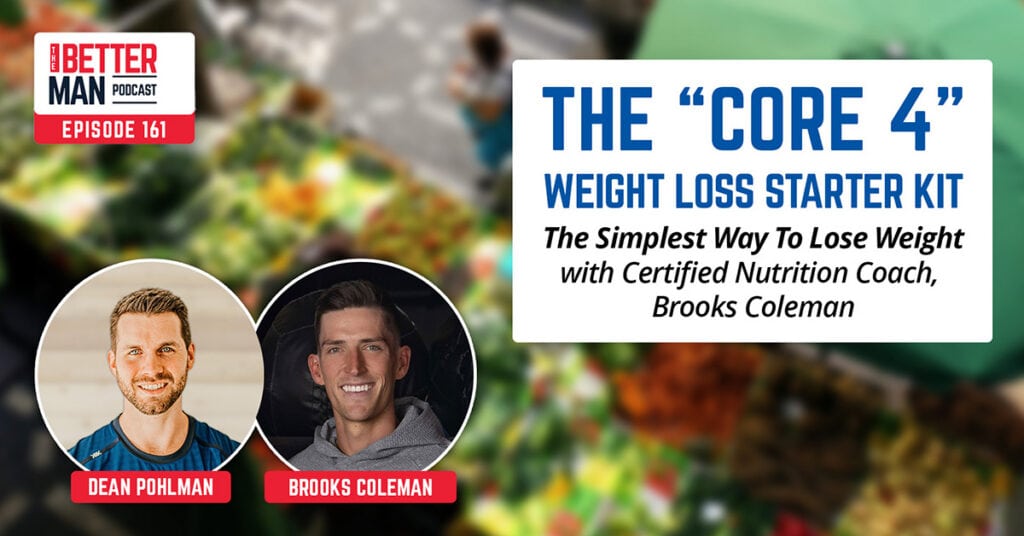
The “Core 4” Weight Loss Starter Kit (The Simplest Way To Lose Weight) | Brooks Coleman, Certified Nutrition Coach | Better Man Podcast Ep. 161
Stop the weight loss overwhelm. Join Certified Nutrition Coach Brooks Coleman to learn the “Core 4” strategy—a simple, reliable antidote to…
How to Make Managing Diabetes Easier | Ben Tzeel, Diabetic Dietitian | Better Man Podcast Ep. 160
Ben Tzeel, founder of Your Diabetes Insider, shares his journey of living with Type 1 diabetes since age seven. As a…
You Can’t Out Exercise A Bad Diet | Dan G. | Better Man Podcast Ep. 159
Despite being consistent with his fitness for most of his adult life, Dan has an Achilles heel you might be able…
How Mineralization Fuels Your Human Vehicle | Caroline Alan, The Mineral Geek | Better Man Podcast Ep. 158
Caroline Alan, “The Mineral Geek,” reveals how mineralization acts as the essential fuel for our cells. After overcoming burnout and autoimmune…