“Human beings are designed for the consumption of fruits and vegetables.”
That single sentence is what inspired today’s guest, Dr. Douglas Graham, to experiment with his diet for decades, which led to his creation of the counterintuitive 80-10-10 Diet. He’s sustained this dieting approach for 40 years even though it defies the most common advice from “health experts.”
And it’s also why Dr. Graham doesn’t cook his food.
This is an eye-opening episode that will challenge your beliefs about health, diet, and longevity. It certainly challenged my beliefs.
It is NOT about biohacking (because Dr. Graham doesn’t believe in it).
It is also NOT about prioritizing protein consumption.
Instead, it’s about controlling the parameters (substances, forces, influences, and conditions) that create health in the human body.
Listen now.
Here’s what Dr. Graham and I discuss:
- Are humans herbivores by design? All the evidence suggests that’s the case…
- The truth about eating a raw food diet (and why a cooked food cannot be considered a “whole food”)
- Why you might be eating too much fat and too much protein
The Better Man Podcast is an exploration of our health and well-being outside of our physical fitness, exploring and redefining what it means to be better as a man; being the best version of ourselves we can be, while adopting a more comprehensive understanding of our total health and wellness. I hope it inspires you to be better!



Use the RSS link to find the Better Man Podcast on other apps: http://feeds.libsyn.com/404744/rss
Episode 167 Highlights
- How modern society approaches health in the complete opposite way (instead of focusing on the causes of disease, it’s often more helpful to focus on the causes of health) (8:09)
- Here are 2 reasons why you don’t feel better after seeing a chiropractor straight from a retired chiropractor himself (12:34)
- Why your body responds to all types of trauma — physical, chemical, or emotional — in the same exact way (and what this insight means for recovering from trauma) (13:45)
- Why most of trauma the average person has today comes from chemical trauma (NOT emotional or physical though those types can happen) (15:43)
- A scientific reality that explains why cooked food can lead to disease (18:09)
- How Dr. Graham’s strict raw fruit and veggie diet made his endurance go through the roof, gave him pristine mental clarity, significantly increased his recall, allowed him to cut his sleep by 25% without any negative effects, and even made him more compassionate (25:02)
- The “80-10-10 Diet” popularized by Dr. Graham after experimenting with all sorts of diets (many of which you’ve probably never even heard of) for a decade (26:57)
- How reducing the fat intake of type 2 diabetics caused 100% of Dr. Graham’s patients to get 100% off insulin in under 72 hours (31:10)
- The “20-80” rule for figuring out which fats your body finds healthy and useful and which ones it finds unhealthy and unuseful (32:42)
- Are high-fat and high-protein diets actually bad for human health? Dr. Graham weighs in with his surprising answer at (40:45)
- Why cooked foods cannot be considered “whole foods” according to Dr. Graham (and backed by science) (52:02)
Dean Pohlman: Hey guys, it’s Dean. Welcome to the Better Man podcast. This episode is an interview with Doctor Douglas Graham. He is a lifetime athlete and he’s been a raw shooter since 1978. He has done talks around the world talking about the importance of a raw food diet. And in this episode, I really want to get to understand the raw food diet.
Dean Pohlman: I want to understand how it’s helped him. I want to understand how it’s helped people that he’s helped. And I also ask him questions about, you know, how do you get enough protein on this? What are some misconceptions? How does this go against a lot of common diets that we know about? And I come come to this from a, from a from a skeptic background, as well as just asking the questions that I’m genuinely interested in.
Dean Pohlman: He gets into some of the science not on two technical level, but but he gets into some of the science behind it. And he really draws on principles and, and, and health science and I mean, nutritional science that has been, has been proven for decades. So that’s where his background, that’s where his, that’s where his views come from.
Dean Pohlman: And I like this conversation. I learned a lot. I got inspired to eat more fruits and veggies myself. Raw fruits and veggies. Not just not just not cooked. That doesn’t count in his mind anyways. Go ahead and live in. Listen, I hope you guys enjoyed this episode. I hope inspires you to be a better man. Hey guys, it’s Dean.
Dean Pohlman: Welcome back to the Better Man podcast Day. I’ve got doctor Jörg Graham here and we’re going to be talking about stuff. So there. Thanks for coming. How’s it going?
Dr. Douglas Graham: Dean I’m super thrilled being here.
Dean Pohlman: Cool. So you were introduced to me by a, a man for yoga member who I think it was he attending one of your events? Yes. He was. You okay?
Dr. Douglas Graham: Yeah. What’s his.
Dean Pohlman: Name? Kendall. Yes. And he said, hey, this guy’s awesome. You should interview him. I said, who is he? And he sent me some info about your book, sent me your website, and I was like, oh, wow. This guy’s been doing some pretty cool things for a very long time. And then I and then I got curious and I looked up your I also looked up your, your powerlifting scores as well.
Dean Pohlman: And, you know, into your 70s you continue to lift heavy, which intrigued me. So, Yeah, here we are. So how did you. So, so one of the one of the one of the things you had mentioned when we first spoke was the the book that you came out with, 88. 1010. Yes. And that and that kind of that changed the trajectory of your career up to that point.
Dean Pohlman: You were you were a chiropractor.
Dr. Douglas Graham: Yeah. Yeah, I when I. Well, even that changed the trajectory of my career. I started out as a trampoline instructor and a trampoline professional. And I coached a team of seven children. And in 1980, all seven of those children won first in the United States at the national championships. So at seven for seven with that team of seven kids, at our first ever national championships, the team was three years old at the time.
Dr. Douglas Graham: And I, I suffered a problem with my neck. Unknown, cause I went to see a chiropractor. He fixed it up quite quickly, actually, and I was very impressed. And having always wanted to have been a doctor since I was six years old, I remember telling my mom, mom, I’m going to be a doctor. And in the same breath, I told her I’m going to be six feet tall.
Dr. Douglas Graham: And she put her hand on my shoulder and said, you could become a doctor or five foot tall of her, telling me that she just ignored the six foot part. I got to I did get to five nine, but that’s as far as it ever came.
Dean Pohlman: I, I tell people I have a, I’m 510 with a six foot presence and I got away with that for a while, and now it’s just too long and it’s a bit outdated. So I had outdated jokes, so I gave up on that. And I’ve accepted my my 510 ness. I don’t.
Dr. Douglas Graham: Quite understandable. So. But throughout my, my teen years, I talk to different kinds of doctors and from orthopedists to dentists to veterinarians and eventually just said, I guess I’m not going to become a doctor. Yeah. But after that chiropractic experience, I started talking to the doctor about becoming a chiropractor, and he explained to me what’s involved. And, and I said, well, actually, my undergraduate was in physical education.
Dr. Douglas Graham: I had all of the prerequisites in science that were necessary to go back to school, so I did I went back to school. In 83, I graduated from chiropractic and went out into private practice.
Dean Pohlman: So were you at that point?
Dr. Douglas Graham: At that point in 83, I turned 30.
Dean Pohlman: Okay, cool.
Dr. Douglas Graham: So, I was in private practice for 20 years. And.
Dr. Douglas Graham: And through that time, I stayed involved in vegetarian and vegan events. There were, there were festivals and seminars and all sorts of events where they would have me come as a doctor, as a vegan doctor, to come and talk to their group, whatever it might be. A lot of national size events. And I just went every year, taught some fitness classes, gave some lectures, had a good time, and it was it.
Dr. Douglas Graham: It just helped me in my own personal growth and development, researching things to give talks on. I enjoyed it, and I joined another organization in 85. That was, about the science of human health. It’s actually called hygiene is the Science of human health. And I joined their professional organization and they started writing me in 85, giving talks to their annual convention.
Dr. Douglas Graham: And I learned more about the science of human health, the causes of health as opposed to treatment of sickness and, and started giving talks sporadically in Toronto, in Miami and all around the country. One gentleman was doing seminars almost every weekend. And he asked if I would join his tour, go city to city to city, and every weekend I would.
Dr. Douglas Graham: I ran my practice during the week and I would give a series of lectures on the weekend.
Dean Pohlman:
Dr. Douglas Graham: By 2012, by the year 2000, I was so busy lecturing, I barely had time for a chiropractic practice. So I sold my practice and went full time as a speaker. And I spoke on this at ten, ten concepts almost exclusively. It was so exciting to me what I was seeing happen and the scientific background, the sports science background, the health science background, all the justifications, and it wasn’t until 2005 that the book came out okay.
Dr. Douglas Graham: So I did it sort of backwards. I talked about the book for five years before it came out. So there is.
Dean Pohlman: Yeah, I mean, that’s that’s incredible.
Dr. Douglas Graham: You sales were rather limited.
Dean Pohlman: But that’s I mean, that’s awesome though. You spent you know, you spent. This was your passion project for many years. Yeah. And then, you know, you eventually said, okay, I’ll finally put it into a book. Whereas I think a lot of people just create a book, just going to work. Sometimes it’s easier to do it now, you know, it’s, you know, things are self-published so you can do that.
Dean Pohlman: A lot of people do the book first to establish credibility and then start now.
Dr. Douglas Graham: There’s took five years of writing and the good.
Dean Pohlman: Old fashioned.
Dr. Douglas Graham: Was, yeah, one key punch at a time.
Dean Pohlman: So I want to I want to go back a little bit. What is a chiropractor?
Dr. Douglas Graham: So a chiropractor is a nerve doctor. They specialize in nerves. There’s three different kinds of nerve doctors. There are surgeons who are called neurosurgeons. There’s people who who test nerves to find out what’s wrong with them. They’re called neurologists. And then the chiropractors approach is one of finding miss function or dysfunction within various joints of the spine and, of the extremities.
Dr. Douglas Graham: And reestablishing proper joint movement relieves pressure on the nerves. Once the nerves work properly, the body works. It’s sort of like tuning a guitar. Get pressure off the guitar string. A fruit fly lands on the guitar string. It changes the tune. So nerves are very sensitive to pressure. And and they’re vulnerable at the joints, especially at the joints where they exit the spine.
Dr. Douglas Graham: So it’s not really an alignment thing. It’s, much more of just reestablishing proper joint function.
Dean Pohlman: Okay. Yeah. So that sounds so I might I can mix my personal experience with that as I’ve currently. I’ve been on and off with massage therapists which I know is different thing. But this last guy that I started working with is he explains things from a very different perspective from previous massage therapists I’ve worked with, and he talks about things from a nerve perspective.
Dean Pohlman: He says that, you know, most massage therapist focus on soft tissue, and he has a very good understanding of soft tissue, the nerves, the joints, how it all functions together. And he’s been able to work some magic on me, to, you know, to fix things that I’ve felt stuck for a very long time. And it’s really cool.
Dean Pohlman: He can just he can just, well, just, like, touch my foot now be like, oh, yeah, this is all messed up. I’m like, you’ve had it for half a second. What do you mean? How do you know that? And he’s you know, he’s probably doing this for four years at this point. So it kind of makes sense. But yeah.
Dean Pohlman: Anyways, so I wanted to also ask about, you know, I think a lot of people, a lot of people talk to me about chiropractors. They’re like, I used to have to go to a chiropractor like once a month, and it never got better. So what are people doing wrong? What are people doing wrong that they don’t get better when they go see it?
Dr. Douglas Graham: Okay, so there’s two sides, two parts to that answer. My my view of most professions is that 80% of the people are average and 10% are really poor.
Dean Pohlman: Okay.
Dr. Douglas Graham: And that’s true.
Dean Pohlman: The entire 80 1010 concept. Look at that. I don’t like.
Dr. Douglas Graham: That. And even of the 10% that are super good, 80% of them are average super good, and 10% are just barely super good and only. Okay.
Dean Pohlman: So it’s just it’s just. And so in principle.
Dr. Douglas Graham: Every every profession, it’s never the profession. It’s never the technique. It’s always the practitioner, whether it’s a dentist or a baseball player or a chiropractor or an attorney. It’s always about the practitioner rather than the techniques he uses. So that’s the first part. The other part is that the body, the human body operates under, under specific laws.
Dr. Douglas Graham: And one of those explains or responds to trauma. And the response to trauma is always the same within a human body. The response to trauma is always the same, whether it’s physical trauma, whether it’s chemical trauma, or whether it’s emotional trauma. There’s always, amongst other things, there’s always muscular spasm and a muscle spasm in a as you know, muscles move bones and the and the bone joints are what allow for that movement.
Dr. Douglas Graham: So when a muscle spasm, there’s going to be a compromise in joint formation. Hence massage therapists can be super helpful to people. Simply by calming down muscle spasm. A chiropractor can be super helpful to people by reestablishing proper joint function. And still, neither one of those addresses the cause of the problem.
Dean Pohlman: Okay, so it’s a bandaid solution.
Dr. Douglas Graham: Which is, this trauma thing. And then we could say, yes, in the turtles on turtles the rest of the way down idea. What’s the cause of the cause of the cause of the cause? And we and and so it can go back quite away. I find that this is a cyclic problem. Therefore, anywhere that I interrupt the cycle, I have a shot correcting the entire cycle.
Dean Pohlman:
Dr. Douglas Graham: But typically trauma comes in chemical form. Yes, there’s emotional trauma, and, yes, there’s accidents and physical trauma. But most of the trauma the humans experience these days is chemical. It’s coming from the air we breathe, the water, the water we drink, the food we eat. And this. It’s just a barrage. And it it’s a relatively new thing, when chemists moved into the field of food and established a, a new a new job assignment for chemists, which is called the food chemist.
Dr. Douglas Graham: I have a dear friend who worked as a food chemist for many years and and he said, why do you think that food is so addictive? I go, I don’t know why. He goes, because chemists put things in there to make it addictive. And those things don’t have to be on the labels. So he told me a lot of inside tricks, which are kind of cool, but it really opened my eyes.
Dr. Douglas Graham: Most of the trauma that I see is coming from trauma, from chemistry, from the food. People eat.
Dean Pohlman: So you’re saying okay, got it.
Dr. Douglas Graham: So I made the last 30 years of my work.
Dr. Douglas Graham: Learning enough about that in order to have the terminology at my fingertips and being able to explain it clearly and succinctly and simply. So I’m making what is relatively complex chemistry user friendly, easy to understand by using words like carcinogen, carcinogen, something that the correct seasoning, the carcinogen is something that leads to a cancer.
Dean Pohlman:
Dr. Douglas Graham: Area. Okay. So I lost a totally.
Dean Pohlman: Carcinogen, something that leads to a.
Dr. Douglas Graham: Second. Now I my phone.
Dr. Douglas Graham: Give me just a second. Let me. Oh you got it. Here we go. Okay I’m with you. A carcinogen is something that leads to a cancer. And, there’s carcinogens in all cooked food.
Dr. Douglas Graham: It’s that simple? Yes. The amount of heat matters. The length of heat matters. The type of heat matters. The type of food matters. But all cooked foods contain carcinogens. And this is scientific fact. And then I use other words like tumor origins and trauma genes, things that lead to tumors and tremors. And we find those in all cooked food.
Dr. Douglas Graham: And then there’s things like, like mutagens, mutagens or things that stop cells from reproducing perfect images of themselves. So they become a mutation. And there’s mutagens in all cooked food. And once I found this in and this was easy to find, it’s just the information is in bits and pieces. When I collect it and start saying, wow, there’s mutagens, term regions, tumor genes, carcinogens in every bite of cooked food, it starts making health a lot more understandable, and it starts making ill health a lot more understandable.
Dr. Douglas Graham: The last one is traditions. And traditions are also found in all cooked foods. Traditions don’t overtly affect one’s health. They affect the health of our offspring. So the worst tradition in history, happened in the 1960s in East Germany, when when a drug was introduced for women with, in early stages of pregnancy, they were having various issues, morning sickness among them.
Dr. Douglas Graham: And, and so this drug was introduced is called thalidomide. And the babies of those mothers to be were born with no arms and no legs. They were born with just the hands and feet or flippers, as they were called the flipper children. And thousands of these happened in East Germany and then a bunch in the States. And the drug was eventually outlawed because it is a to Rattigan.
Dr. Douglas Graham: So it turns out that there’s traditions in all cooked food, and we are adversely affecting our offspring. And their offspring. According to a doctor by the name of Pottinger, who wrote his seminal work back, just about 100 years ago, it takes about four generations of cooked food to see the teratogenic effect, which is what we’re seeing now in, increased, increased in fertility rates, closing of the jaw more and more dental problems.
Dr. Douglas Graham: A lot of other physical and mental emotional disturbances are on a huge rise. And yes, there’s people saying there’s some other causes and other influences. Fine. But we’re seeing definitely a decay of humanity. After this now, 6 or 8 generations of predominantly cooked food were up until then, the predominance of human food was just fruits and vegetables.
Dr. Douglas Graham: I mean, restaurants were minimalistic 100 years ago and fast food was non-existent.
Dean Pohlman: So what about grains?
Dr. Douglas Graham: Grains have traditionally been avoided as food for humans. In fact, I believe it was Marie Antoinette who spoke so harshly about her people and said, let them eat cake because they had no money for fruits, vegetables or meat. And so she cake to them was grains. And she said, let them eat grains, even though it was considered at the time not fit for humanity.
Dr. Douglas Graham: It’s a relatively new introduction in order to have more than, in order to have even more than a tiny amount of grains in one’s diet, required the invention of what’s called the internal combustion engine and tractors and field of grain became possible. Until then, farmers plowed fields behind a horse, hoping to grow enough grain to feed the horse through the winter.
Dr. Douglas Graham: And very, very little if they got if they got one little muffin in a day, that would be all the grains they could afford. But, grains were really unknown until internal combustion engine. So the late 1800s before this was ever introduced. And it’s a it’s a fascinating thing. I think that with, with the decline of the extended family into what we now call the nuclear family, one of the things that was lost was, a history being passed down by our grandfathers and, and great grandparents who said, oh, well, in my day it used to be like this.
Dr. Douglas Graham: That’s gone. Very few young people know that there was life before cell phones.
Dean Pohlman: Yeah. I, I tell this to my, I tell this to my son like you know check on I know we have Amazon now and you get to get a toy in one day. But we had to go to target back. And I had to go to the store to get a toy. We could just order online.
Dr. Douglas Graham: I had to get up to change the channels. I mean, it’s terrible.
Dean Pohlman: Yeah.
Dr. Douglas Graham: So people don’t it’s and it’s understandable. I mean, people ask me, how did I stay in touch with the world before computers? And I go, well, I mean, I wrote magazine articles and newspaper articles and, and and I was in magazines mostly. That’s how it was done.
Dean Pohlman:
Dr. Douglas Graham: Postcards were written. So this, this whole thing with health led me as I, as I pursued it more and more. Eventually I got to a point where I said, okay, the experiment has to be on me first before I start opening my mouth to others. But all of my schooling, all the nutrition I took and I took nutrition.
Dr. Douglas Graham: And in every semester of my chiropractic training, all of it said that fruits and vegetables were the best foods for humanity. And so I did the experiment on myself and I said, okay, let me see what happens when I eat just fruits and vegetables. Let me see what happens. And amazing things happen. I mean.
Dr. Douglas Graham: My mind was blown at what happened. My. My endurance went through the roof. My mental clarity was like it had never been before. My word recall my my line of consciousness, my ability to remember and learn. My my compassion went through the roof. I, I could go out in the sun and and not burn anymore. I needed 25% less sleep and my fitness improved dramatically on less sleep.
Dr. Douglas Graham: It was just mind blowing. For the first time ever, I was completely satiated in between meals. I used to eat only one meal a day. It would start when I woke up and and when I went to bed. And in between. The only time I’d interrupt that continuous snacking was to sit down and eat meals, and all of a sudden I read of eat a meal of fruit and be completely satiated for 4 or 5 hours till the next meal.
Dr. Douglas Graham: It wasn’t something I tried to do. It just happened.
Dean Pohlman: Yeah. Now, before you started doing the All Fruits and Veggies diet, what were you eating before?
Dr. Douglas Graham: I went through what was at the time considered a fairly common route to raw. I started out on a mainstream American diet. I got interested in diet when I was still just a teen and and change to what I would call a discerning standard American diet or an aware self, an automatic diet. I was still the standard American diet, but I buy my peanut butter in the health food store, buy my cookies in the health food store.
Dean Pohlman: Got it. Well.
Dr. Douglas Graham: I eventually went to a couple of different, very short experiments. One was Ortho Molecular, where there was a lot of supplements involved. One was what’s called macro neurotic. Where you pretty well living off of grains and related. You know, it’s a starch based diet.
Dean Pohlman:
Dr. Douglas Graham: That failed me dramatically. My weight just went out of control, and and energy was not where it should be. But my emotions. My God, I became the angriest man on earth. I then went vegetarian and did that for about seven years before I went vegan, and then finally raw vegan, and then took seven more years of refining my raw vegan before I came up with eight, ten, ten.
Dean Pohlman: Okay, what’s eight 1010?
Dr. Douglas Graham: So eight, ten, ten is a is a calorie ratio of carbs to protein to fat. Now, turns out that most people in the world eat about 10% of their calories from protein. Between 9 and 11 is the worldwide average. Okay.
Dean Pohlman: And
Dr. Douglas Graham: So saying ten really was nothing to get excited about. Yeah. At that point, it was simply a matter of affecting the ratio of carbohydrates and fats. Whereas in America, most people eat almost 50% of their calories from fat and 40% from carbs. I’ve said, let’s shift that over to what I learned in school, which is that every cell of the human body is fueled by glucose, which is a carbohydrate.
Dr. Douglas Graham: That’s got to be my first area of importance. The more fat in the diet invariably leads to less oxygen in the bloodstream, that’s kind of important. And as shown in the Journal of the American Medical Association in 1959, more fat in the diet leads to a requirement for more and more and more insulin, while impairing the ability of getting glucose out of the bloodstream.
Dr. Douglas Graham: So for an athlete, oxygen and glucose were my two primary concerns, and both of those were affected by fat in the diet. So I lowered fat, lowered fat down to recommended levels by medicine, by sports science. Pretty much anywhere. I wanted to look by all the disease specialists. Pretty much everybody says it’s going less than 3% of calories from fat is dangerously low, and going more than 10% of calories from fat is above requirements.
Dr. Douglas Graham: Well, as soon as fat was above requirements, carbs go below requirements. So 80 10/10 is more than 80% of my calories from carbohydrate, less than ten from protein, less than ten from fat. And I maintain that on an annual average.
Dean Pohlman: Okay. So let’s go back 1950s 1950s general health advice. Was this around the time that we started getting really suspicious of spats? This is like when we started let’s let’s cut fats for when did that when did that happen?
Dr. Douglas Graham: That happened. I’d say my understanding is that happened a good bit later. That happened in the 70s. I remember seeing pictures in the 70s of steaks on a grill and talking about the carcinogenic effect of high heat on fat. Okay. And, that was 70s, but in the, in the 50s, in the Journal of American Medical Association in 1959 was an article explaining that fat affects oxygen uptake, transport and delivery to the cells, so into the bloodstream, through the bloodstream and from the bloodstream to the cells, and that glucose uptake, transport and delivery is adversely affected as the dietary fat percentage rises.
Dr. Douglas Graham: Hence hence type two diabetes is caused rather than something people get. I’ve worked now with several hundred type two diabetics in 100% of the cases, reducing their fat intake. Got them 100% off insulin in under 72 hours.
Dean Pohlman: Wow.
Dr. Douglas Graham: With no exceptions, a type two diabetic, 100% off insulin, 72 hours or less. All we do is drop the fat in their diet down to recommended levels. Not to none. None would be bad. We need a little fat, no diet. But that hypersensitivity to fat affects some people more than others, and they demonstrated as a type two diabetic.
Dean Pohlman: So how does this how do we distinguish between good. That’s good in quotes. Right. Good and bad fats when you’re thinking about.
Dr. Douglas Graham: Easy the the differentiation is called an SP ratio. And the s p ratio is saturated fats to polyunsaturated fat. The according to Guthrie’s Medical Nutrition, which is a a book Guthrie’s medical nutrition Guthrie’s the author. The ideal speed ratio for humans is 2080. So we need about 20% of our fat as saturated fats and 80% is polyunsaturated fats.
Dr. Douglas Graham: The SPE ratio of fats in plants is 2080. Okay, there are some that are a little different than that, but if I take a bunch of plants, fruits and vegetables and plants, nuts and seeds included, I will find a ratio of about 2080 all the way through the plant kingdom, which my body can then utilize polyunsaturated fats to create integrated structures in my body.
Dr. Douglas Graham: It does this by adding hydrogen or and by adding other things, carbons to the polyunsaturated fat, and by adding the essential structures it creates what are called saturated fats. Once a side is, once a fat is saturated, my body can use none of it because it can’t attach anything to it. It’s already saturated and so in a human being or in a in an animal, we’ll find that the saturated to polyunsaturated ratio will be about 8020.
Dr. Douglas Graham: When I eat steak, I’m eating 80% saturated fat, 20% unsaturated. So I’ve never seen that opposite. Yes, it’s the exact opposite. And the rationale basically is when I go to the grocery store, I can find oil from plants.
Dr. Douglas Graham: Because most of the polyunsaturated fats are in the form of oils, the saturated fats are solid. And I’ve never seen steak oil or bacon oil or there’s no oil tallow. There’s solid fats, but no oils.
Dr. Douglas Graham: So the solid fats are the saturated fats, and those are the ones human bodies. We can’t we can’t do any chemistry with it because it’s already saturated. It’s like a ring of people holding hands. If they’re all holding hands to each other, they’ve got no hands for outreach. But if three people are loose ends, they’ve got one hand free.
Dr. Douglas Graham: Then we can attach things to those and make the ring bigger.
Dean Pohlman: Got it.
Dr. Douglas Graham: That’s how the body uses fats. It does it by adding things to it. Can only do that to all the unsaturated fats.
Dean Pohlman: Got it. It’s interesting because, you know, you have so many people, you know, that’s that’s very different from what we’re hearing a lot of. Yes, you know, I mean, there’s always there’s always differing opinions of diet. But you know, thinking to, you know, I’m active in biohacking circles and, you know, fats are all the rage and in biohacking circles, right?
Dean Pohlman: You know, it’s like grass fed butter and lots of avocados and extra virgin olive oil and.
Dr. Douglas Graham: Yeah, they’re basically ignoring the sports science that says increase fat in the diet, reduce athletic performance. They’re just ignoring that. It’s easy to be a longevity expert at 30 or 40. But the proof is in the pudding. Show me the guy that’s been doing what he’s touting for 20, 30, 40, 50 years and it’s still working. Yeah. There are none of those guys.
Dr. Douglas Graham: They’re all. I won’t say they’re all youngsters, but it’s all the latest thing. And as if they’ve invented something or discovered something, but they’re doing.
Dean Pohlman: If they’re doing diet. Right.
Dr. Douglas Graham: Okay. So the Atkins diet has been popularized by in different names since 1880 when it first came out. Yeah. 1880. Okay, okay. There was a version came out in 1880. A version came out in 1900. A version came out in 1920. A version came out in the 40s. Game out again in the 60s, came out again in the 80s, 90s, and Ortiz and now again, the high fat a dietary approach in this,
Dr. Douglas Graham: There’s a guy, there’s a guy, a doctor, a medical doctor by the name of Michael Michael Klapper, and with a K Michael Clapper and and Michael Clappers. Famous line was the high fat diet has been around for 120 years, and has been demonstrated as a failure every time it’s come into popularity. And it it comes and goes and comes and goes, and then a new version of it comes and goes to the next generation and the next generation every 20 years and every time it’s gone.
Dr. Douglas Graham: Oh yeah. And that didn’t work. Oh, and I had no energy and I needed more sleep. Yeah, I lost weight, but I went into Failure to Thrive. And and. Oh, and this guy is living off just me. Yeah. And then it turns out that he’s not. And then it’s like the. It’s like the breath Aryans, you know, they’re all.
Dr. Douglas Graham: They all live far away. And when they come under scientific scrutiny, they turn out to be unicorns. Health is health is a known entity. There’s nobody on Atkins winning tour de France. They’re all eating a high carb diet. There’s nobody winning marathons on on a keto diet. They’re all on a high carb approach. There’s there’s nobody sustaining in any pro sport on any kind of a keto approach or a high fat approach.
Dr. Douglas Graham: No one has ever done that. Yes, they all go on it here and there and try it for various reasons, and it’ll it’ll work well in a short term if, if my approach for the next 90 days is to drop as much weight as I can. Well, I mean, I weigh my ideal competitive weight. I weigh 65 kilos.
Dr. Douglas Graham: That’s not going to change. I maintain it easily. I’m not looking to get bigger in any way, shape or form. It’s not going to impress my wife if I get more muscle than I have right now. And and for myself, when I’ve been bigger, I was just slower and less agile and and I didn’t like the look even really.
Dr. Douglas Graham: So I think the people who want to get bigger are misguided. If they think that happens in the kitchen. It happens in the gym. It’s not about food.
Dean Pohlman: So now we have to talk about the one thing we haven’t talked about before protein.
Dr. Douglas Graham: Okay.
Dean Pohlman: So you know everything. And this has even been consistent with with how I’ve been able to build muscle, versus what I’ve. Well, to be fair, you know, a lot of when I was trying to bulk, let’s say, was coming from, you know, I was eating, I was eating more grains. I was having remember having instead of just having a taco bowls, I would have tortillas now, or I would have, yeah.
Dean Pohlman: I was just trying to eat more food, period. But, you know, everything that I’ve seen and all the, all the health experts that, not all the health experts because you’re a health expert, but most people that I talk with, I talk about the importance of hitting, you know, 0.8g per your body weight in, in protein. So, you know, if you weigh 200 pounds, that means that you’re trying most people, you know, you’re trying to stay at 200 pounds just.
Dean Pohlman: But for the simple sake of math, 200 pounds, that means that we’re trying to get 160g of protein a day, which, you know, how are you going to do that with just vegetables and fruit? So just speak to that.
Dr. Douglas Graham: Okay. So first of all, first of all, getting enough protein and getting too much protein are two different things. Too much protein leads to kidney problems. The body can’t process it. Well, it starts to smell badly. Body odor, poor digestion. It stresses a lot of things in the body, and is considered a health hazard.
Dr. Douglas Graham: According to medical science, 3 to 10% of calories from protein is the ideal range. More than ten is considered out of range. And as with all medical parameters, my responsible approach is let’s stay within range. I recommend staying within range. Zero protein. Like if I was just eating Domino’s sugar out of a bag and olive oil. So a protein loss diet that would be very dangerous, to for me to even think for a second that my design.
Dr. Douglas Graham: Hence my designer, made an error in making me okay for me. Fruits and vegetables are appealing. They’re safe for me to collect. And it’s what humans have eaten since there’s been humans. All of the animals that are anatomically and physiologically similar to humans, all of which are pound for pound, stronger than us, eat a diet of fruits and vegetables.
Dr. Douglas Graham: None of them show protein deficiency, nor does protein deficiency exist in any humans other than starving humans.
Dr. Douglas Graham: And then all we have to do is give them food and there’s no more protein deficiency. So that low end really doesn’t exist. But the high end definitely does exist. There is a more protein than we require, be more protein than we can process. But see, every time my protein intake goes up, what suffers is my carb intake.
Dr. Douglas Graham: And when my carb intake goes below 80% of calories, I’m in serious trouble because I’m no longer providing fuel for those very muscles that I’m trying to build.
Dr. Douglas Graham: Hence, what I have to do is some internal, rather slick chemistry, which is extremely fuel inefficient, and that chemistry is called gluconeogenesis. The creation of new sugar. And what my body starts doing is it starts taking the protein that I eat and converting it into sugar in order to fuel my muscles so that I can exercise. It would be so much smarter to just eat the glucose straight from the fruit.
Dr. Douglas Graham: So a all animals built like us eat fruits and vegetables, be. Yes, I agree enough protein is necessary and enough for growth is necessary for those. For that my new portion of the population that wants to grow bigger muscles, the the 99 point something and I’m going to say 99% of the people that I’ve ever talked to in my entire life, and that’s hundreds of thousands of people have all raised their hand when I said, who wants to get stronger?
Dr. Douglas Graham: And only .001 out of hundreds of thousands of people have raised their hand. When I’ve said, who wants to get bigger? Almost none of the women want to get. Now, maybe you speak to a specific group of people who want to get bigger. But I start out with women. There’s almost no women want to get bigger. There’s no runner wants to get bigger, there’s no cyclist wants to get bigger.
Dr. Douglas Graham: There’s no triathlete, there’s no canoeist. None of them want bigger. They want faster. They want stronger. Heavier for them means slower, more wind resistance, more weight on the uphills. It’s a terrible concept. Yeah, there’s a few guys I recognize. There are guys there’s, you know, with billions of people, 0.0001% is millions still. But most people want to get stronger.
Dr. Douglas Graham: And for that protein is minimally required. 3 to 10% is enough for getting stronger on a on a 7% protein diet, which is what I’ve maintained for the last 40 years. I’ve doubled my strength in the last 15 years.
Dean Pohlman: How much, how many? How many grams of protein? How many grams of protein is that? So if we look at the.
Dr. Douglas Graham: Tens on how many calories I choose to eat.
Dean Pohlman: Okay, so like let’s say 2600 calories or 2500 calories.
Dr. Douglas Graham: That’s a that’s a low calorie diet. But 2500 calories just take 10% of that. It’s 250 calories. That’s that’s about 62g.
Dean Pohlman: Okay.
Dr. Douglas Graham: But I eat more about 3500 calories, typically 3000 to 3500, depending on how active I am these days. I used to eat closer to 4000 when I was a more active cardio guy.
Dean Pohlman:
Dr. Douglas Graham: But even on 3000 a day, 360g, 70, 75g. Right. 375g through any calories 75g. Yeah. So I’m back. My typical. I’m eating about 75g a day. And and certainly I mean, I won the World Powerlifting Championships this year. I can’t think for a second that I’ve got a protein deficiency.
Dean Pohlman: Yeah. What it what are you where does protein come from when you’re eating? Veggies and veggies and fruits?
Dr. Douglas Graham: It turns out that in eighth grade, I learned the answer to this question. And my biology teacher, Mr. Gifford, drew a circle on the board. He said, this is a cell, and and everything’s made of cells. And in the center he put a little dot and he said, this is the nucleus. And in the middle of the nucleus there’s the entire genetic sequence for that cell.
Dr. Douglas Graham: And the genetic sequence is made up of amino acids. And those are the building blocks of protein. So every fruit, every vegetable has protein in every single cell of that food in the form of amino acids, which are readily absorbable directly into the bloodstream. Amino acids require no digestion. They just get absorbed into the bloodstream. And from the bloodstream goes directly to the liver, where, a kind of a fancy word called recombinant chemistry happens and protein structures are created.
Dr. Douglas Graham: Then they can go wherever they need to go. So there’s two kinds of structures, two kinds of protein structures in the body. There’s kinds that are structurally integrated that are called stable. And then there’s free floating un structurally or not yet structurally integrated, or the debris of old cells also no longer structurally integrated. And those are called lay bile proteins.
Dean Pohlman: Got it. Okay.
Dean Pohlman: Cool.
Dr. Douglas Graham: But there’s protein in everything you eat. Protein. Everything I eat, because I use no refined foods. Like a refined sugar or refined oil would have no protein.
Dean Pohlman: Yeah. So how much? So many people empty calories.
Dr. Douglas Graham: Right? Like a refined sugar or refined oil would be called empty calories, as would refined protein powder be called empty calories. And when I use empty calories of any kind, protein, fat, or carb, I’m creating food that’s known as junk food. Every time I add empty calories to my diet, I’m creating junk food. When I eat junk foods, I make a junk body.
Dean Pohlman: What kind of foods are you putting on that junk food list?
Dr. Douglas Graham: Anything that has refined sugar, refined flour, refined oils or protein powder.
Dean Pohlman: Okay.
Dr. Douglas Graham: So is there is there a sliding scale? If I take a perfectly great salad and add protein powder to it, is it completely junk food? No, it’s just been partially junk.
Dean Pohlman: Got it.
Dr. Douglas Graham: I’ve added some junk to the salad. Whereas if I make a meal out of protein powder, oil and sugar, that would be pure junk food.
Dean Pohlman: Got it.
Dr. Douglas Graham: So there’s partially empty calories and completely empty calories. And then they’re opposite is full calories. Those are called whole foods. Fruits and vegetables. Raw. Always raw. Any cooked food can no longer be whole. I have to stand up for that. This whole idea of Whole Food Plant-Based, it’s not whole food if it’s cooked. Sorry.
Dean Pohlman: Okay, well, that saves time on cooking, so.
Dr. Douglas Graham: Saves a ton of time.
Dean Pohlman: Do you add, do you add anything seasoning wise to it to.
Dr. Douglas Graham: I use which use plants for seasoning primarily. So herbs, various herbs all have unique flavors. And then combinations of plants provide unique flavors. So, lemon on a salad provides a saltiness. And, and and I know how to make recipes. I’ve got I’ve got a dozen recipe books out there. I know how to play in the kitchen and create noodles or pizzas or meatballs.
Dr. Douglas Graham: And it can all be raw and it can all be within the eight, ten, ten concept. But typically I’m a I’m a vegetable rights advocate, and I believe they deserve respect. And so in the same way that I would eat a banana just in my hand, I would eat a cucumber just in my hand and just eat it.
Dr. Douglas Graham: But I like a salad and I like making things. I enjoy doing that for my family as well.
Dr. Douglas Graham: But I, I, I fully believe that I was saying earlier that my creation, from my eyes that see in color, to my teeth that are designed for grinding, to the lack of claws, everything about my design. And I’ve got a list in my book that shows, like, 50 different things, comparing me to a carnivore, comparing me to a plant eating creature.
Dr. Douglas Graham: Everything says I’m designed for eating plants, and I would be disrespecting that a where I’d eat things other than plants or be. Therefore, I’d be disrespecting the idea of all of creation. Were I to think that the plants didn’t have everything that I needed in them?
Dr. Douglas Graham: Which again negates the idea of biohacking. So I’ll go on on right here and disagree. There is no such thing as biohacking. I can’t convert my body into a fat burning machine no matter what I eat. My body prefers glucose as its primary fuel. I can make it survive on a diet of oil and fat, but my basic biology and my basic physiology doesn’t change.
Dr. Douglas Graham: It just adapted and is waiting for more carbs to come back into my diet. When they do, my body knows just what to do with those. It doesn’t say, oh, I’m a fat burning machine. I don’t know how to process car. No, our design is carbs. Stimulants, irritants, any of this type of a thing, whether it’s coffee or whether it’s methamphetamine, cocoa or any other, trick, any there’s no way that the body can be stimulated or irritated into high level health.
Dr. Douglas Graham: High level health comes from providing high level health conditions, substances, forces and influences, and anything else detracts from health. So, quite some time ago, there was a philosopher who said, a human being can’t be his full self without cocaine. And and he thought because of the stimulating effects of cocaine, that he thought more clearly when he used cocaine.
Dr. Douglas Graham: His name was Sigmund Freud. He had a bunch of cool ideas, but this idea that cocaine made humans more human and more humane, was completely off base. And yes, back then, cocaine was legal. He could access it easily, but in the same way, coffee or any stimulant in a short run, it only drains the body.
Dr. Douglas Graham: It’s it’s draining vitality from the body. It’s not a bio hack. And and it doesn’t result in increased longevity. The bio hacks, if you call them that, that work, are those that respect the substances, forces, influences, conditions that a human body needs. In the exact same way that if if you and I said, hey, let’s grow the best sunflower or raise the best prize hog, what we would do is we would give it ideal substances, forces, influences and conditions for its growth and development and we would end up with an ideal specimen.
Dr. Douglas Graham: That’s what flower shows have always been about. That’s what animal contests have always been about. Who could provide the best conditions and no bio hack creating improved conditions.
Dean Pohlman: Okay, cool. Well, we’re at the end of the top of the hour here, so we’ll, we’ll we’ll keep this conversation going. I know, I know, we’ll keep this conversation going. I do want to ask your rapid fire questions. So I’ll hold off on those. So next time.
Dr. Douglas Graham: Okay. And I can be short answers I’m good with short answers.
Dean Pohlman: All right. Let’s do them. Here we go. What’s your, one habit, belief or mindset that’s helped you the most with your overall health and wellness?
Dr. Douglas Graham: Human beings are designed for the consumption of fruits and vegetables.
Dean Pohlman: Okay. What’s the one thing that you do for your health that you think is overlooked or undervalued by others?
Dr. Douglas Graham: I get enough sleep and I’m active on a regular basis.
Dean Pohlman: Okay. What’s the most stressful part of your day to day life?
Dr. Douglas Graham: Gosh.
Dr. Douglas Graham: What’s stress?
Dean Pohlman:
Dean Pohlman: That the answer?
Dr. Douglas Graham: Yes.
Dean Pohlman: Okay. What is the. Oh, if I’m right, I got an answer.
Dr. Douglas Graham: Has I had too.
Dean Pohlman: Much protein.
Dr. Douglas Graham: Issues?
Dean Pohlman: Technical issues, knuckle issues. Okay. Yes. Good one. What’s your best piece of advice for men who want to be healthier?
Dr. Douglas Graham: Strength train and eat fruits and vegetables.
Dean Pohlman: Okay. Simple. All right. Doug. Doctor Graham, thanks for coming on. I appreciate you sharing all this with me. I got a lot of notes here. So thank you for your time and your expertise. Where can people learn more about you? Tell us about where they can get the book.
Dr. Douglas Graham: The best place to find me is on food and sports. That’s my website. Food and sports.com. It’s ten letters. The word food, the letter N, and the word sport. So that comes up. Food and sport. That’s me. You’ll see my picture on the homepage. And they can find out anything about me. The world’s biggest FAQ on raw foods is on the site.
Dr. Douglas Graham: Lots of questions answered. My various retreats. I do one in Bali, I do one in Costa Rica. I do private coaching for people who want to reverse osteoporosis. And which is becoming soon to be the biggest problem men face. It’s already the biggest problem women face. And men are catching up quickly. And and they can find out all they want.
Dr. Douglas Graham: They can reach me from there. They can find my book on my site. They can find it on Amazon. It’s easy.
Dean Pohlman: Cool. All right. Thanks again for your time.
Dr. Douglas Graham: You know, I really appreciate the opportunity. Look forward to more conversations. I know some of what I say is a teeny bit controversial. But once again, the proof’s in the pudding. We’ve got now almost 50 years. Two more years will be 50 years of proof in the pudding rather than, hey, hey, I have an idea. It’s been working for 50 years for me and for countless other people.
Dean Pohlman: Yeah. That’s awesome. Yeah, I’m looking forward to more. So guys listening in. I hope you enjoyed this. Hope it inspires you to be a better man. Check the links for anything we discuss and I’ll see you in the next episode. I like.
Dr. Douglas Graham: That concept.
Dean Pohlman: It’s great. Appreciate it. All right, guys, see you next time. All right guys, hope you enjoyed that one. Again, check out anything from Doctor Douglas Graham in the in the notes below. You know, something I try to do is I try to get people who I don’t necessarily completely agree with. On to the better, podcast.
Dean Pohlman: I’m not just interviewing people that I totally agree with. I like to get people who have different ideas than I do. I think it’s important to expose yourself to different ideas and to, you know, to question things in order for you to grow. You know, sometimes I get people who say, Dean, you said this five years ago, but now you’re saying this, what happened?
Dean Pohlman: I’m like, well, I grew that’s what happens when you when you are open to new ideas. So anyways, I hope you’re enjoying the betterment podcast. I hope you enjoyed this conversation. More episodes coming. If you like the podcast, leave a review. You can do that on Apple Podcast, on Spotify, wherever you listen. If you are thinking about joining the Mantle Yoga community, which is the betterment podcast, just from my umbrella brand, Man Flow Yoga.
Dean Pohlman: Learn more at Malfoy yoga.com/join. And you can always start with a free seven day challenge. Our pain relief challenge at man for yoga.com/7 DC all right guys that’s all I’ve got for you today. Thanks for listening. Hope inspires you to be a better man. I’ll see you on the next one.
[END]


Guest Bio
Dr. Douglas Graham is a lifelong athlete, raw-food pioneer, and the creator of The 80/10/10 Diet—the nutritional gold standard for those seeking peak biological performance. A true “living blueprint” for his own teachings, Dr. Graham is the current two-time British Powerlifting Champion and World Champion in Squat, proving that elite strength and fruit-based nutrition go hand in hand.
For over 40 years, he has served as a high-level advisor to world-class performers, including tennis legend Martina Navratilova, NBA pros, and Olympic sprinters. He is the author of numerous definitive works on health, including Nutrition and Athletic Performance and his latest, Perpetual Health 365.
Dr. Graham believes that health is the birthright of every individual. He teaches men how to achieve total vitality and “energy to spare” without supplements, meal replacements, or restrictive “starvation” diets. By aligning with our true frugivore biology, Dr. Graham helps individuals protect their bodies from chronic disease, maintain their natural weight, and develop the functional strength required to live life to the fullest.
A retired chiropractor and organizer of world-renowned water fasting and fruit-feasting retreats, he integrates heavy lifting and resistance training as vital pillars of a long, capable life. Whether leading FUNctional Fitness workshops at his retreats in Costa Rica, Spain, and Bali, or delivering keynote lectures worldwide, Dr. Graham provides the definitive roadmap for those aspiring to excellence in fitness, physique, and longevity.
Please let me know if you need anything further.
Resources mentioned in this episode:
- Find Dr. Graham Online
- Website: https://foodnsport.com/
- Instagram: https://www.instagram.com/drdouglasgraham/
- Facebook: https://www.facebook.com/drdouglasgraham
- YouTube: https://www.youtube.com/@FoodnSport
- Retreats:
- Hygiene Heaven Fasting Retreat Costa Rica: https://www.hygiene-heaven.com/crfast-info
- RAW Nature Retreat Spain: https://rawnaturetreat.com/
- Vitality in Paradise in Bali: https://www.hygiene-heaven.com/vitality-in-paradise
Man Flow Yoga Events: We just announced new locations for 2026 in-person events. Find the full list of cities we’re coming to here: https://manflowyoga.com/man-flow-yoga-events/
Want to unlock more flexibility and strength, reduce your risk of injury, and feel your absolute best over the next 7 days? Then join the FREE 7-Day Beginner’s Yoga for Men Challenge here: https://ManFlowYoga.com/7dc.
Tired of doing a form of yoga that causes more injuries than it helps prevent? The cold, hard truth is men need yoga specifically designed for them. Well, here’s some good news: You can start your 7-day free trial to Man Flow Yoga by visiting https://ManFlowYoga.com/join.
Like what you’re hearing? Sign up for the mailing list:
Rate & Review
If you enjoyed today’s episode of The Better Man Podcast, hit the subscribe button on Apple, Spotify, or wherever you listen, so future episodes are automatically downloaded directly to your device.
You can also help by providing an honest rating & review over on Apple Podcasts. Reviews go a long way in helping us build awareness so that we can impact even more people. THANK YOU!
More Podcast Content
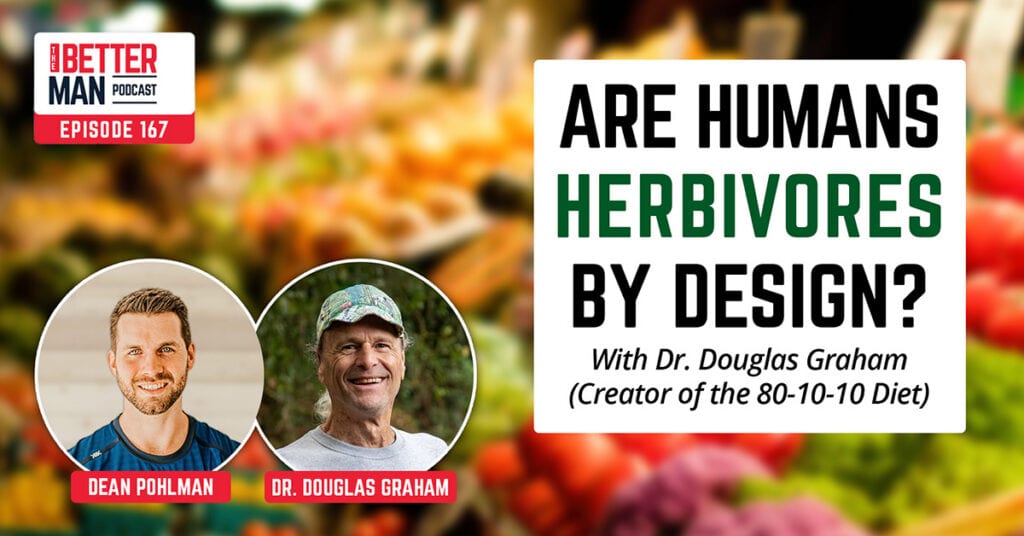
Are Humans Herbivores By Design? | Dr. Douglas Graham (Creator of the 80-10-10 Diet) | Better Man Podcast Ep. 167
Dr. Douglas Graham explains why he believes humans are “herbivores by design” through his 80-10-10 Diet. By prioritizing raw fruits and…
Surviving in the Face of Trauma | Vince Benevento (Boys Will Be Men author & therapist) | Better Man Podcast Ep. 166
Therapist Vince Benevento discusses his son’s 135-day battle for survival and how that trauma redefined his approach to mental health. He…
Remembering Who You Are | Mark Divine (Retired Navy SEAL Commander) | Better Man Podcast Ep. 165
Retired Navy SEAL Mark Divine joins the show to discuss how meditation and mindfulness bridge the gap between societal conditioning and…
How an Athletic Mindset Extends Your Physical Longevity Even If You’re Not an Athlete | Greg Herceg (The Volleyball Strength Coach) | Better Man Podcast Ep. 164
Unlock physical longevity by adopting an athletic mindset, regardless of your sports background. Greg Herceg joins the show to share how…
Building A Life That Matters | Brian Dubow (Hit of Happiness) | Better Man Podcast Ep. 163
Brian Dubow joins the show to share his journey from empty success to authentic joy. After a quarter-life crisis revealed his…
How To Navigate Coming Out Late In Life | David Cotton | Better Man Podcast Ep. 162
David Cotton’s story proves it is never too late to come out. After a career as an Air Force Brigadier General…