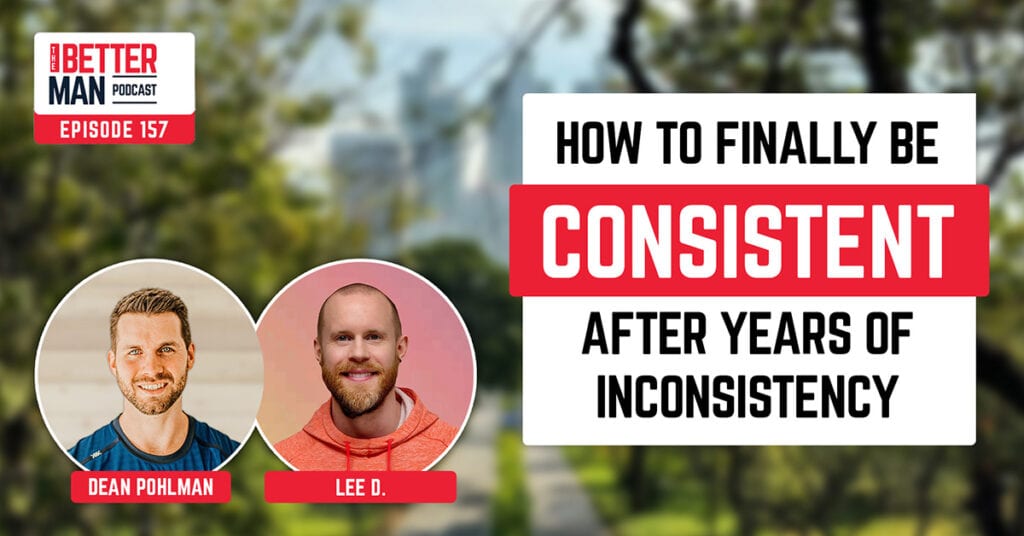
Dean Pohlman: Hey guys is seen. Welcome to the Better Man podcast. Today’s episode is an interview with member Lee. Lee also attended a weekend event. We did in DC and September of 2025. So we talk about his experience there, which actually started with a panic attack because he doesn’t spend a lot of time, in groups of other people. He has social anxiety.
Dean Pohlman: He also doesn’t like gyms. And we did the event in a gym, so it just combined to create the perfect storm. But something from that weekend that all of us appreciated was his courage, and his bravery in sharing what he was going through. And by the end of that weekend, he had really connected with, a lot of people at the event.
Dean Pohlman: He stayed in contact with a lot of those people. It’s inspired him to stay consistent with mental yoga for first time ever, even though he’s been a member for a few years. And, I think this is just a great conversation. So I hope this inspires you to be a better man. And here we go. Hey guys, it’s Dean.
Dean Pohlman: Welcome back to the Batman Podcast. Today’s episode is a member interview. I’ve got Lee here and we’re going to be talking about his health journey, or else can be talking about anxiety. I have a pretty, pretty great story to intro that. At the, at one of our recent events in DC. So Lee, Lee, thanks for being here, by the way, and having a conversation.
Lee D.: Yeah.
Dean Pohlman: So let’s see here. So we had a weekend wellness, event in DC.
Lee D.: In.
Dean Pohlman: September. And right before we’re getting started, I see this guy walking around the edge of the room and I’m like, oh, cool. He’s like getting sad. He’s getting excited. And so I walk over to him. Lee, and I’m like, hey, you excited? Are you getting ready? He’s like, no, I’m about to have a panic attack. I’m like, oh, okay.
Dean Pohlman: And which I don’t think that’s happened before. Which so it was just a new, you know, a new form of excitement, for in-person events and then, but within, you know, within a few minutes, like you were actually had the, the courage to share that as we went around the room, I do this thing where at every event, I like to, like, go around the room and have people say why they’re there or what they’re hoping to get out of it.
Dean Pohlman: And, you were very courageous and forthcoming about what you were going through. And then over the weekend, we saw you kind of just get a lot more comfortable and, and get inspired to do other things. So anyways, that’s my that’s my intro story for Lee and, Yeah. Lee, how was your experience with that, by the way?
Dean Pohlman: How did that how’d that go for you?
Lee D.: Well, yeah, you’ve pretty much named it, right? Was the, panic attack. I had met maybe a dozen other guys. The night before. We met at the hotel that a bunch of people were staying at. So I had, like, a few people that I knew. But still, I mean, there was, like, 35 guys there, so that was a lot for me.
Lee D.: I have social anxiety, in certain situations. Definitely not as bad as it used to be, but, that I am very anxious about going to a gym and then speaking in front of people. So that was like the trifecta of anxiety for me. And, yeah. So I went and had a panic attack outside and came back in and, went from there.
Lee D.: But I mean, obviously I got through it. Was definitely still, you know, anxious the first part of the day. But, I mean, it was a crazy experience for me. It’s definitely, you’re glad that I went and I’m glad that I met, you know, everybody that I did, and it was good. But, yeah, it was it was a wild start to things.
Lee D.: Yeah.
Dean Pohlman: Yeah. As someone who’s relatively new to, panic attacks, I never had any sort of anxiety. And then last year it was about. Yeah, it was about a year ago. I don’t know. Many times I’ve told the story or not, I had an accidental microdose turned macro dose. I thought I was just having, like, a little piece of, like, mushroom chocolate, and it was not.
Dean Pohlman: And I had, like, panic attacks after that for like, probably four months until I finally got it, like, okay, now this is somewhat under control. And then we were supposed to have our interview two weeks ago. And like that week after I thought it was gone, it was like I’d been six months. It was like, oh, we’re back.
Dean Pohlman: I’m like, okay, well, everything’s going to be shut down for a while. So yeah, it’s it’s crazy how, because you hear people talk about anxiety and you’re like, oh, so they’re just like, you’re just like, anxious. But like, the physical symptoms are just like, I can handle mental stress, but like, coupled with the physical symptoms of it, you’re just like, okay, wow.
Dean Pohlman: This is a problem.
Lee D.: Yeah. Yeah, it’s a combination of, I mean, depending on the person, but feel like you’re going to throw up in a room, start spinning. Your heart’s beating out of your chest. You can’t think straight. Yeah, there’s all kinds of stuff, and none of it’s fun. Yeah. No.
Dean Pohlman: No. Yeah. My my issue with mine is that my, it just it says we don’t want food and we don’t want anything in our stomach. And so it annoys me because I can’t eat. I’m like, I can handle having like tension in my head from being stressed, but not being able to eat and having to go to the bathroom like repeatedly is.
Lee D.: Yeah.
Dean Pohlman: Yeah, it’s my body’s like, oh, okay, well you’ll have to deal with this then, right?
Lee D.:
Dean Pohlman: Thanks. Anyway, so, so, yeah, that event, where do we go from here? How is the, And I’ll probably cut out some of this because I’m like, forgot where we, I’ll just kind of steer back toward you with the anxiety question, if that’s okay.
Lee D.: Sure. Cool.
Dean Pohlman: So what about for you, though, for for the anxiety that you have and I say the anxiety that you have instead of personifying it, I don’t say like I don’t say my anxiety. I’m kind of deliberate about saying my anxiety or your anxiety. I say like the anxiety that you have experienced in the past. When did that begin?
Dean Pohlman: Or like, what’s kind of your story with that?
Lee D.: I’ve been anxious my entire life and, you know, started as a kid and, honestly, it was like debilitating. When I was younger. I remember in, like, middle school, we had to take, like, a public speaking class, and I, I got to my turn, and I literally like, stood up, passed out and, like, hit my head on the floor and remember nothing, so needless to say, I did not do very well in that class.
Lee D.: A for effort. Yeah. After that, they were like, okay, maybe, maybe you’re not going to do this. Then, like I’ve heard.
Dean Pohlman: It’s an elective now.
Lee D.: Yeah. Pretty much. Yeah. But yeah, it it was really bad. I mean, I used to fear going out in public, period. You know, I could handle being around, like, a couple of people that I knew. But like any new place, any new environment. Not good. You know, the beginning of the school year, it was, you know, starting all over again because, of course, you know, you got new people in the class and everything.
Lee D.: And, I mean, I did therapy some when I was younger, and tried all kinds of different medications and stuff for it. Kind of got it somewhat manageable. You know, I, when I was younger, like, I didn’t I didn’t come out until I was 24, so I had depression on top of the anxiety. Honestly, like once I came out, like the depression all went away, a lot of the anxiety went away, too.
Lee D.: But it was it’s weird because it’s always been like certain situations and like, the social anxiety stuff has had really gone, away a lot. But I think just because, like, I’m new to fitness, I’m new to, going to a gym and then of course, still always having that fear of like having to speak in front of people.
Lee D.: I don’t know, it just kind of came back together, you know, it happens. I mean, obviously there are things that just pop back up, you know, past issues and stuff. So, just happened to all be that Saturday morning. So.
Dean Pohlman: Yeah, I remember you had been mentioning even before the events started that you were like feeling the anxiety grow leading up to the event. Because I didn’t say I, I’m pretty sure I didn’t, like, send out an email saying, hey, everybody, we’re going to, everyone’s going to go around and talk about themselves during the first session.
Dean Pohlman: So it was.
Lee D.: No, but yeah, yeah, yeah. You know, it’s one of those things like regardless of you saying it or not, it’s one of those things that, you know, with anxiety, your brain is just like, oh, we’re going to overthink this. We’re going to, you know, make it a bigger problem than it really was. But trying to talk yourself down out of it is, not always easy.
Lee D.: Yeah.
Dean Pohlman: So, so, so you mentioned coming out around 24 and that that had a pretty significant dramatic impact on reducing anxiety, getting rid of depression. What did you what else did you notice has helped over the years? With managing the symptoms or getting at the root causes if that has happened? Because I know that is a huge thing within our community that there’s a lot of guys with anxiety.
Dean Pohlman: So just what’s worked for you?
Lee D.: Your medication definitely helped. And, you know, when I was younger, like, I was on a high dose of, had a van, which I highly do not recommend for anybody because coming off the withdrawal is, like, horrible. And then hope for a long time. But then I’m like, you know, I don’t want to be on the medication all the time, or especially something like that.
Lee D.: You know, I’ve, I’ve always been on some sort of, like, anti-anxiety medication, you know, that’s not like Xanax or out of hand or whatever. There’s especially, like the Xanax. I still have a prescription for it. I still take it on occasion, but it’s only like I definitely took some that morning. I few that, but I didn’t need any the second day.
Lee D.: It’s just kind of there for when you either really need extra help. You know, I had gone to therapy back when I was a teenager. I think I started around like 16, maybe I was like 19 or 20. It helped. But that was also when I was coming to terms with, like, being gay. And unfortunately, the therapist that I went to and I’m sure it wasn’t just her, but, this was very common back then.
Lee D.: Like she basically tried conversion therapy on me, which just messed me up even more and made me not trust therapists. So I haven’t been to one since, I did decide, the event or after the event that I wanted to see a therapist again. And, I mean, that’s been. It’ll be two months, I think, on the 12th.
Lee D.: Or 13 since the event. I am still waiting to have my first appointment. Like, we all know how healthcare sucks in this country.
Dean Pohlman: Oh, wow.
Lee D.: I have had my appointment canceled on me three times, so. Okay.
Dean Pohlman: Do you need, I think you need to go back to Psychology today.com and look up, look up a few more, look up a few more providers.
Lee D.: Yeah. It’s horrible because everyone that you call, I mean, I’m in the DC area, you know, we have probably thousands up, but literally everyone that you call, they’re either not taking new patients or oh, there’s a 4 to 6 weekly. So it’s it’s wild.
Dean Pohlman: Yeah. It’s tough to talk to Patrick. We got our we have our own in-house mental yoga therapist.
Lee D.: I know I’ve.
Dean Pohlman: Thought about that.
Lee D.: Yeah. Yeah, just with all of that.
Dean Pohlman: Yeah. So you mentioned that you made some other changes. Aside from looking for a therapist, how did, what are some of the things that, you know, the, the weekend inspired you to start doing differently?
Lee D.: It definitely motivated me to work out more. I’ve been doing yoga almost every day. Even if it’s just, like one of those little morning routines that you have, and then, you know, in the evenings, I’ve. I started actually doing, the most of the beginners, weightlifting course that you did that was originally with the engage program.
Lee D.: Yeah. Nice. Yeah. Realize just how little upper body strength I have, but I know, obviously, you got to start somewhere, so, Yeah, it’s been good. I have, a I call them my crew, but, you know, there were some of the guys from the event that we’ve all stayed in touch since then, and, so it was actually going to be getting together soon, in person again, so we could.
Lee D.: But, it’s been helpful, kind of supported each other, you know, mentally and, encouraged each other, you know, with our workouts and stuff. So it’s it’s been really good. I’ve never like, I was never one to exercise prior to about six years ago, like, right before I had surgery on my back, I had to do physical therapy and realize it started.
Lee D.: It was helping some. But, definitely.
Dean Pohlman: Yeah. It used to work in construction, right?
Lee D.: Yeah, yeah. You know, a little 145 pound, five foot 11 guy, you know, lifting stuff heavier than he is. Ended up rupturing a disc when I was 27. Had 12 years of fighting with that before I finally gave up and decided off surgery, which I now realize should have happened a long time ago. I was 39, you know, finally, when I had the surgery.
Lee D.: I’m 44 now, but, it took me, like, six months to heal from the surgery. And then after, that’s when I really got into, the man flow yoga stuff. It was on YouTube at first, I think. I didn’t join till maybe 20, 22, if I remember correctly. And then when you had your first offer for the lifetime membership, I did that because I liked it.
Lee D.: And you thought that if I spent that, you know, that kind of money, that it would encourage me to stick with it. And I did until I didn’t get it back and forth. Right. Literally since the beginning of this year, I’ve, like, really pushed myself to do it more, and even then it was only a few times a week.
Lee D.: But since the amount that I was saying, it’s literally been just about every day. Yeah.
Dean Pohlman: And by the way, I’m not I’m not asking, this question to say like a ten event and your life will change are more so trying to figure out like the, the, the, the activities that you started doing in response to that, and how they felt. So, so being consistent with, with the workouts, having a, having a small group of people to help motivate you, was that is that something different than what you had when you were doing manual yoga the first time?
Lee D.: I had nothing before, I mean, I okay. Yeah. Yes. And my family exercises. I don’t have friends that really are into like physical fitness and stuff. So this was all very, very, new to me. And, yeah, it’s definitely been a huge motivator having, you know, other people that are doing the same type of things.
Dean Pohlman: Yeah. So I think that’s a pretty common theme within our community, too. I mean, we definitely have guys who have experience with fitness and working out, but a lot of the guys, like, I had a conversation with a guy last week who’s, 73 year old kind of, gynecologist, and he’s a rural doctor, so he’s all over the, you know, he drives a lot.
Dean Pohlman: And I ask him like, well, what’s your fitness experience? He’s like, well, I usually sit in the corner and read a book like, okay, cool. So not a lot of fitness experience. So it’s, so I say that just to call out to the guys who have not, you know, had a lot of fitness experience, in their life.
Dean Pohlman: And, and so for you as someone like that, what did you notice, how did life start changing for you or what was different when you started being consistent with your workouts versus when you weren’t working out before?
Lee D.: I mean, like, physically, I definitely noticed pretty quickly, like, I was feeling better. You know, like after doing construction for like ten years and of course, being lazy and not exercising, you know, all kinds of weird, you know, aches and pains that just don’t ever seem to go away. You know, a lot of that has gone away.
Lee D.: I know, like, when we were at the event, I told you about how, like, constant back pain. A lot of that has gone away. You know, sort of like my shoulder break. Shoulder’s messed up. And, it’s probably some of the rotator cuff, but even that has improved some. I just have to be careful.
Lee D.: Some of the poses, I notice like it doesn’t feel so good, so I kind of back off, but, But, yeah, it’s twinkled. And mentally, like, I definitely feel better, have more energy. I feel, you know, more motivated to to work out which, is still kind of a foreign concept to me. I’m just not now used to it.
Lee D.: I mean, I like it. It’s actually telling, some of the guys that, like, I actually, like, get annoyed if I can’t work out. Like, if I have something else that I have to do an opening. I honestly and like, I was trying to skip it so I can work out. I never thought I would feel like that.
Lee D.: Yeah.
Dean Pohlman: Is that been it within the last couple of months where that shift has happened or was that. Yeah. Did that happen before? Okay. So when you signed up for man for you over the first time, were you consistent?
Lee D.: Not really. I mean, maybe for like six months I took a week 3 or 4 times a week and it was only shorter. Lessons like, I never really felt like I was going to be able to get through anything more than, like, a half hour. Okay. Like, right now, I’ll feel better. 45 challenge I did the three day one.
Lee D.: And, I’ve been consistent. I’ve. I’ve done it every week. Like, there have been a few weeks where, you know, it’s the Monday, Wednesday, Friday for me. But if I end up with something to do, I just pushed it back a day and done it. Yesterday I didn’t do number five, so I’m not actually going to do evening and then knock out number six either tomorrow or Sunday.
Lee D.: And well, I’ve done every single workout, for the six weeks.
Dean Pohlman: So what do you think is different, this time, what’s helping you be consistent now versus in the past?
Lee D.:
Lee D.: I mean, aside from, like, actually feeling like I want to do it, really, just like the motivation from the community. I mean, you’re after the event, and I posted my first Flex Friday pic shirtless of all things, something I never thought I would do. And, everybody was very supportive. And since, I’ve posted every week and posted a lot of my workouts and, and stuff and, that’s been a huge motivator because I, I was always so self-conscious about the way I looked.
Lee D.: You know, being a skinny guy, it just, I don’t know, I just didn’t feel comfortable doing it. And now that I have kind of like, ripped that Band-Aid off and just, you know, get all the support and encouragement from people has really helped me. You know, obviously, like, you know, I’ve and motivated myself, but having that extra push from people has, has really helped keep me consistent.
Lee D.: Yeah.
Dean Pohlman: What’s your what’s your motivation for being consistent. So we talked about so the community is helpful right. It’s motivating. But what’s ultimately your I like to use the word like what’s your why. You know for working out. Like what’s the the big driving thing for you.
Lee D.: I guess a lot of it has to are stems from like, just not wanting to be unhealthy anymore. You know, obviously not getting any younger. You have family history of all kinds of, you know, diabetes, high blood pressure. I’ve had, hereditary, high cholesterol. So, you know, that’s something that exercise has actually helped with a little bit.
Lee D.: But I don’t want to be,
Lee D.: You know, dependent on medications for type two diabetes. I don’t want to be on high blood pressure medication. You know, my whole my whole father’s side of the family, they all have a Facebook. One of my uncles has a pacemaker because of it. My dad’s is not controlled. He’s tried everything and, you know, really not working for him.
Lee D.: So trying to not be them in 30 years. Yeah.
Dean Pohlman: A strong motivation looking at people in your family and saying, I don’t want to be like that.
Lee D.: Yeah, definitely. Yeah.
Dean Pohlman: So, you know, two months in. So you’re relatively relatively new still to like the health this health kick that you’re on. But what are some of the you mentioned energy. You mentioned you know, being able to do longer workouts. So what are some other improvements or some other results that you’ve seen from or life changes that you’ve noticed from just being consistent with your fitness for the last couple of months?
Lee D.: I mean, I’ve definitely I’ve lost probably another 6 or 8 pounds since in the last few months. For the first time in like 15 years, I was on under 160 pounds. You know, I weighed about 185 or 190 a year ago. So I did start eating better. And, you know, that helped. I have a weakness for ice cream, so have packed off of that.
Dean Pohlman: But just, just interviewed another guy with a weakness for ice cream. So you’re. And you’re in good company.
Lee D.: Right? Yeah. It’s. I’m now like, I actually just got bloodwork done, and my cholesterol is lower than it has been since I was, like, 12 years old. Oh, wow. Yeah, yeah, I’m on, an injectable cholesterol medication. And another one, because there’s no way possible with having hereditary high cholesterol for it to be lowered enough. But like my LDL, I think was like 63, it was 225 like five years ago.
Lee D.: Wow. So yeah, just, you know, and even like from the six months ago prior, as we really starting to, you work out more, I think, than it was around, like 90. So it does make a difference. And even like my HDL cholesterol is like 55 and it was always around like 40 before. So okay, I, I change anything except the exercise.
Lee D.: Yeah.
Dean Pohlman: You mentioned you did start you did start improving your diet and what you eat. What were some of the changes that you made?
Lee D.: I one of the biggest things was cutting down on the amount of carbs that I ate. You know, I used to do the, you know, if we were having, like, chicken and rice and the vegetable would be, like, half a plate full of rice, and then, you know, a quarter chicken, quarter vegetables. Well, now I’m doing a half plate of vegetables and then the chicken and a little bit of rice.
Lee D.: You know, stuff like that was the biggest thing. Yeah. I’ve never really eaten a whole lot of processed foods, but, I do try to stay away from, you know, snacks, chips and stuff. Yeah. Now, more so than I used to.
Dean Pohlman: Yeah. So you didn’t, did you ever. Did you ever count macros or you just you just looked at the plate and you’re like, more chicken, less this.
Lee D.: Yeah. Yeah, I, I wouldn’t even know where to start with counting macros. So. Yeah. Yeah. It’s.
Dean Pohlman: Yeah counting macros isn’t. It’s not hard. It’s not fun. Let’s just, Okay. I had about a quarter pound of chicken, and I had this many grams of protein, and that’s all. It’s a good exercise to do. But, what you just mentioned, what’s which I look at is just the level one I’m tracking. Food is just starting to eyeball it and say like, okay, less of this, more of this.
Dean Pohlman: And for many people, that’s just what needs to happen. If it doesn’t work, then like, yeah, go on to phase two and start actually counting things. But phase one is just like being deliberate about more of this and less of that.
Lee D.: So, yeah.
Dean Pohlman: So we talked already about kind of external support systems and how the community has been helpful. Do you want to talk more about that or there are there any other, support systems that have been helpful for you that you’d want to mention?
Lee D.: I, my husband’s been supportive of it, and he, he’s been working on himself, too. Like, he actually finally, after like, three years of me bugging him, started doing the info. Sugar. Oh, cool. Yeah, a couple of. Oh, actually, I was right after the about, you know, I came home and, you know, of course he was, you know, just telling him about how great the experience was.
Lee D.: And I was like, I want you to be able to come to the next one with me. And, CRC has been going, gone through it. Cool.
Dean Pohlman: Yeah. I was wondering about that. I was wondering if you’re because you had mentioned, Mike. Oh I think I, I think I posted something about like hey you should use lacrosse ball on your feet. It helps with this. And you said, I’m going to tell us to my husband. And in my head I was like, based on what you told me, I don’t think your husband is going to do this, but I’m glad to hear that that’s changed now and that he’s,
Dean Pohlman: And that’s cool. So was it. Did he just like, did he see your energy? Did he see your excitement? And he’s like, I’ll do it with you. Or how do you how you think you got him involved?
Lee D.: He do. I definitely saw like the energy and the excitement coming out of that event and just, you know, me telling or talking to him about how it was, it was such a diverse group of guys there, you know, age wise, weight wise, physical fitness wise. And, he, I guess finally just decided to start doing it.
Lee D.: Yeah. I mean, literally three years of me, you know, bugging him. I mean, not constantly, but, you know, mentioning to them, hinting at it. So. And then when he said he was going to do it, I’m like, okay, well no excuses now. Went out, you know, I ordered immediately ordered the box, the mat and the so me pack for him.
Lee D.: And so he’s he’s been using it. He’s been doing it. He got through, you know, the absolute beginners and he’s working on with the next one else. But he’s working on that now and he likes it, so. Okay. That’s good.
Dean Pohlman: So you guys do it separately.
Lee D.: Yeah I mean, if I went back to do like the beginner ones I would be bored out of my mind. So, yeah, he once he gets, you know, a little further along, I will, you know, I’m sure we’ll do some together. Yeah. But for now, I’m just kind of letting him do his own thing at his own pace.
Dean Pohlman: Right. Cool. So. All right, so you’re doing 45 minute workouts now. You’re being more consistent. You’ve got your group. Your is doing the same workouts. Well, same workout program you’re doing. What’s kind of the next thing that you’re looking at. What’s the next what’s the next thing in your fitness you want to work on?
Lee D.: I’m definitely, you know, getting stronger. I would like to gain some muscle, you know, obviously never be anywhere close to looking like you, but, you know, I have.
Dean Pohlman: I have more hair, so.
Lee D.: Yeah. Yeah. You know. Yeah, I my, my hair game is week. That maybe my hair you can do nothing with. So I’ve shaved my head since I was a teenager. Nice. Yeah. Like, I started doing, kettlebell workouts recently. That’s actually been fun. Okay.
Dean Pohlman: Josh is really into kettlebells. I don’t know if he’s talked about kettlebells at all in any of the live community stuff that he’s done, but Josh might be a good reference for for kettlebell stuff.
Lee D.: Okay. Yeah. And then I, finally I got a set of dumbbells, recently are the adjustable dumbbells recently not.
Dean Pohlman: Not not joining Global Gym yet.
Lee D.: No. No, I, I don’t know that you get me to go to a gym. I don’t know, I’m, I’m one of those people that I. If I had to go to a gym to workout, I probably wouldn’t. I just find it easier to just be able to, you know, we made our one of our bedrooms. We made into an exercise room and just, you know, when I want to work out, I can just go in there and do what I need to do, and I’m good.
Lee D.: Yeah.
Dean Pohlman: That’s great. I mean, that makes it so much easier to if you just have everything at home and you don’t have to wait. You don’t have to drive. Saves a lot of time. So yeah, some people need that environment to be able to be motivated. And others like, you know, like I don’t want to go there at all.
Lee D.: So yeah, cool.
Dean Pohlman: All right. Well, those are those are my that’s my, that’s my that’s my, that’s my current, choreography. What am I looking for? That’s my, that’s this part of the interview. Next part is my rapid fire. My rapid fire questions. Are you, you ready for that? Yeah.
Lee D.: I guess as ready as I’m ever going to be. Yeah.
Dean Pohlman: All right. What’s the one habit, belief, or mindset that has helped you the most with your overall health and wellness? Habit, belief, or mindset helped you the most with overall health and wellness?
Lee D.: I mean, I guess habit wise, it’s just been.
Lee D.: Really just making myself work out, you know, like I for the last. So for the longest time just couldn’t get myself to consistently do it. And now that I have, I want to keep doing it. Yeah. It’s.
Lee D.: All right.
Dean Pohlman: Perfect. What’s one thing that you do for your health that is overlooked or undervalued by others?
Lee D.:
Lee D.: Honestly, like, a lot of people overlook their mental health, and even I have, I, you know, I’m working on that now, but, you know, a lot of people just push it under the rug and keep on doing things the same way. And, you know, it doesn’t get better. And until you do something about it, so you get help, so, you know, you reach out for somebody, or reach out for help from somebody.
Lee D.: Very true.
Dean Pohlman: What’s the most stressful part of your day to day life?
Lee D.: I mean, thankfully, I don’t have a very stressful job, but that’s probably the biggest, a stressful thing. You know how life’s good and everything, so. And say, work. Okay.
Dean Pohlman: And then what’s your best piece of advice for men who want to be healthier?
Lee D.: Just start something. Something small. You know, even if it’s just, you know, in my case, like, when I started, I was doing the YouTube videos, but, you know, main flow yoga once, and, you know, there were 10 or 15 minutes, a lot of them. But it’s somewhere to start. You know, better than nothing. And just build from there and don’t just try to go out, you know, and force yourself to do it every day, you know, start small and work your way up.
Lee D.: Yeah.
Dean Pohlman: It’s a good strategy. Yeah. I’m a big fan of influencers. One before phase ten.
Lee D.: Right? Yeah.
Dean Pohlman: Well, I want to say thank you for being part of our community and, the courage that you showed at the event in DC. And, for your courage and being part of our Flex Friday series and.
Lee D.:
Dean Pohlman: You know, looking forward to to your shares there. So, yeah, thank you for just being part of our community and all that you contribute there.
Lee D.: Thank you. I really enjoy being part of the community and, had a great experience, especially over these last couple of months. So I definitely want to continue on and look forward to the next event. And I promise I won’t have a panic attack this time. Yeah.
Dean Pohlman: Well, even if you did do great, so.
Dean Pohlman: Yeah. All right. Cool. Well, thanks for doing this interview. Guys, listening in. I hope you enjoyed this. This interview, I hope, inspires you to be a better man. And I will see you on the next episode. Maybe at the next event. Have a good one. All right, guys, hope you enjoyed that conversation. I want to say thank you for listening.
Dean Pohlman: If you’re enjoying this podcast, please leave a review wherever you listen. If you are part of the Mantle Yoga community, I want to say thank you for being part of our community. Hopefully you’re enjoying these interviews. If you are not already a member and thinking about joining, you can do a free seven day trial any time at Mandalay yoga.com/join.
Dean Pohlman: And if you want to try out the workouts and see if you actually like them, go to mantle you Lecomte seven DC. Try our free Beginner’s Yoga for men challenge and give it a shot. So all right guys I hope you’re enjoying these interviews I hope you got something out of this one. I hope it inspires you to be a better man.
Dean Pohlman: And I will see you on the next one.
[END]