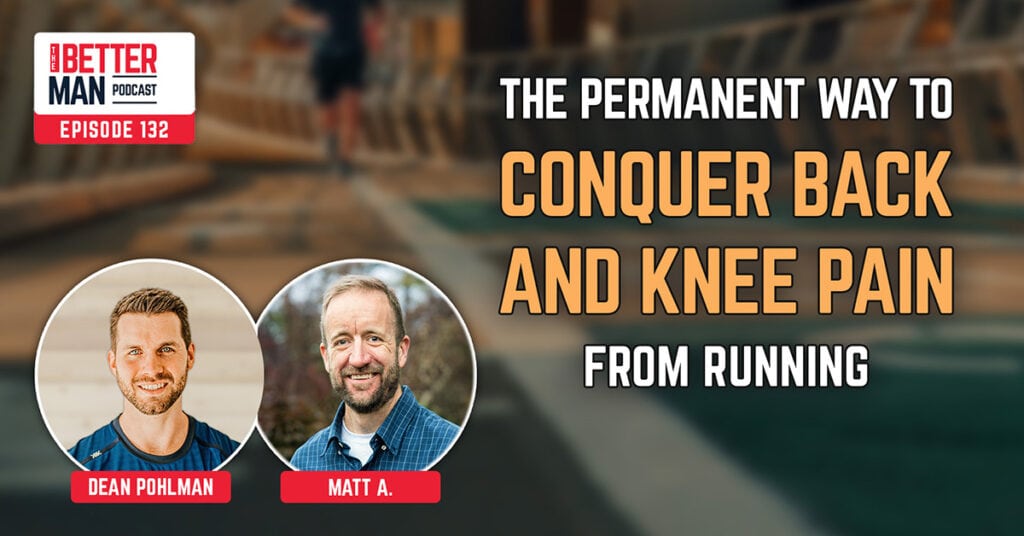
A lot of people think they’re too old, too overweight, or too stressed to take their first step on their fitness journey.
But as today’s guest, Matt, so eloquently stated in the episode, if you don’t start today, you’re going to be that much older when you do start. Since we only get one shot of this game of life, why not start today?
And you know what?
That’s exactly what Matt did a decade ago. When he realized he couldn’t fit the airplane seatbelt over his body, he decided to make the simplest of changes:
He walked three quarters of a mile to Subway for a sub instead of driving. While this decision seems tiny, it was massive in hindsight.
Ever since that Subway walk, Matt dropped 50 pounds, started jogging, then cycling, then running 5ks, then half-marathons and marathons. And today, he’s completed a half-marathon or century bike race in 32 states (and plans to finish one in all 50 states by the time he turns 50).
No matter your age or what stage of your fitness journey you’re on, Matt’s episode will give you a dose of inspiration to conquer your next workout.
Here’s what Matt and I discuss on today’s episode:
- Why tiny decisions can lead to significant changes (without overwhelm, burnout, or injuries)
- Simple mindset tweaks that will help you finally take your fitness seriously
- The trick for permanently conquering any kind of bodily pain
Listen now!
The Better Man Podcast is an exploration of our health and well-being outside of our physical fitness, exploring and redefining what it means to be better as a man; being the best version of ourselves we can be, while adopting a more comprehensive understanding of our total health and wellness. I hope it inspires you to be better!



Use the RSS link to find the Better Man Podcast on other apps: http://feeds.libsyn.com/404744/rss
Episode 132 Highlights
- How Adam dropped 50 pounds by doing these 3 simple things that anyone can start doing (3:25)
- Have you ever ended up in urgent care from lower back pain? Here’s how Adam conquered his back pain for good (he’s had zero instances of back or knee pain in the past 18 months!) (5:31)
- Why Apple Fitness yoga pales in comparison to Man Flow Yoga (13:08)
- How outsourcing accountability to a community makes your weight loss journey less daunting, less overwhelming, and easier to stick with (even if you haven’t noticed results yet) (21:21)
- The “Reframe Your Age” secret for setting new PRs as you grow older (23:58)
- The weird way a Man Flow Yoga habit will help you get over “gymtimidation” (28:30)
- How to stop your mind from procrastinating on your fitness once and for all with the “put your shoes on” mindset shift (34:12)
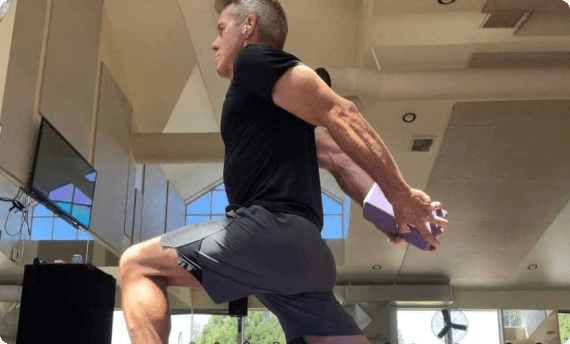

Resources mentioned on this episode:
Strength Foundation Challenge: If you want to follow in Matt’s footsteps (literally), he started his Man Flow Yoga journey with the Strength Foundation Challenge – and you can too here: https://manflowyoga.com/strength_challenge-2/
Dean Pohlman: Hey guys, and seen welcome to the Better Man podcast. Today’s episode is a member interview. We’re going to be talking with Matt, who is a still a giant and a former big guy who lost a ton of weight with a combination of walking, running, and nutrition improvement. He’s been doing that since 2014. He found man for yoga a couple years ago to fix his back and his knee pain, and even though he’s 44 years old, he’s continuing to push his fitness and take it to new heights.
Dean Pohlman: Some of the themes that we cover in this episode, we talk about weight loss. We talk about how you don’t have to identify as an athlete or as a runner to do those things. We talk about gym intimidation, and Matt in particular talks about how he relied on himself rather than relying on other people, and how personal accountability really helped him to reach his goals.
Dean Pohlman: I hope you enjoyed this episode. There’s a ton of great pieces of information, of inspiration in here to take away and apply to yourself, and I hope inspires you to be a better man. Hey guys, it’s Dean and welcome back to the Better Man podcast. Today I’ve got Matt A here to talk about his health and wellness journey.
Dean Pohlman: So Matt thanks for coming.
Matt A.: Thanks. It’s a pleasure to be on.
Dean Pohlman: Yeah. So this is we started doing these episodes last season, and the focus here is to kind of talk about what inspired you to start making significant changes to your health and wellness and then kind of take people through, you know, what allowed you to be consistent? What results did you notice? What was your motivation? What did you realize was important to you, and how did that inspire you to do your workouts when you didn’t want to?
Dean Pohlman: And then what does that lead into in your overall health and wellness, kind of practices now? So first off, it’s that that oh shit moment. Right. So what was the big oh shit moment for you? When did you realize it was time to make a change?
Matt A.: Well, I used to travel for work a lot, and, I used to eat a lot on the road and a lot of really good food. And, I’m a big guy already, and, I’m about six.
Dean Pohlman: You’re right. You’re a fellow giant. Jesse was kind of, I think Jesse was kind of, kind of jealous when he heard that you were going to be on the podcast. Our community manager. He’s like another giant. But I’m the giant.
Matt A.: Yeah, I’ve talked to Jesse several times. He’s a good guy. And I think there’s 1 or 2 toddler in the group, but there’s definitely a few tall people. But, yeah. So I’m about six foot eight. I think at my heaviest I got to be about 275 or so. And at one point I, I had a hard time fitting in airplane seats, without a extension belt.
Matt A.: And I kind of said, well, that’s not going to work. I need to, you know, something has to change. And so I started walking a little bit. I started cutting back on what I was eating. Interestingly enough, I, I the subway diet was a thing at the time where, you know, you walk the subway, get a reasonably healthy sandwich, my dear.
Matt A.: A subway is about three quarters of a mile away. The first time I decided to walk there to get a sandwich, I made sure my wife was around to come pick me up if I needed it, and that I had my cell phone because I was like, I’m not sure if I’m going to actually make it there and back, without having any problems.
Matt A.: And that was also kind of an eye opening experience. So I definitely.
Dean Pohlman: Started at that point.
Matt A.: Has probably about 32, 33 somewhere in that range. And so I definitely, started realizing something needed change, started walking a lot more, kind of started jogging, started getting into running. Started doing some five K’s here and there. I think the first 5KI ever did was back in 2012, and it was kind of a run walk thing, but I was definitely, you know, really excited to finish it.
Matt A.: And then I kind of got swept up in the running thing and, and started running more and also cycling, the, the, the obvious benefit was that I lost weight. I lost a fair amount of weight. I think I lost that first year, dropped somewhere around 50 pounds.
Dean Pohlman: Wow.
Matt A.: And, you know, kind of got back to healthy. And then as I was running more started getting into longer distances, I signed up with a work team to do the Walt Disney World marathon, which was seemed a little crazy at the time. And that was my first marathon, which was in 2014. So I definitely been doing a lot of running.
Matt A.: One of my goals has been to do, a half marathon marathon or a century bike ride in all 50 states, and I’m up to 30. Wow. 32 now I have one next weekend that’s going to be, 30. Sorry, that’s going to be 32. So I’m getting close to two thirds of the way done. My goal is to hit it by the time I’m 50.
Matt A.: I’m 44 now. So I’ve got several years left to, to hit the remaining states and hopefully I can get them all crossed off. And then, work on repeating a few states after that, I guess. So.
Dean Pohlman: Wow. Okay. That’s awesome. So, like, tell me about kind of that, that first year, you know, you mentioned the subway diet you were doing. You started with walking. What were those first kind of few months of change like for you?
Matt A.: Well, my work actually had a Biggest Loser contest going on, which, helped because I was able to get a little bit of, extra motivation from a team. At the time, yoga was definitely not anywhere in the vicinity. I hadn’t really started to have any back pain issues or anything. Those kind of came along as part of the process.
Matt A.: I, as I was running more, I started developing knee pain. I ended up going to a physical therapist for that, started having lower back pain that, that would strike, you know, unexpectedly, usually about 2 to 3 times a year. Usually I’d end up in urgent care,
Dean Pohlman: Oh, wow.
Matt A.: Muscle relaxers. I ended up in the ER once because it was just so bad I couldn’t couldn’t tolerate it. And usually it would sideline me for, you know, a week or two where I’d be kind of stuck in the recliner. Usually it wasn’t doing anything cool, like it wasn’t like, you know, saving a baby from a burning building or anything like that.
Matt A.: It was like moving an empty box from one shelf to another shelf or, you know, taking out the trash or something like that. And I would tweak it just. Right. Yeah. So much physical therapy for my back.
Dean Pohlman: And I watched that one part of my back, and then I, my, you know, then I was out for a week.
Matt A.: Yeah. One time I sneezed. Funny, you know, that’s all it took.
Dean Pohlman: Yeah.
Matt A.: And, so I started going to physical therapy for my back, started doing that a few times, but it was always it would come and go, most of the physical therapist, recommendation was to work on the core because they said, you know, the back is really probably not your problem. It’s the symptom. But it’s your your tight hamstrings.
Matt A.: It’s your, it’s your tight everything that you have going on. And the back just happens to be the really weak spot. And, so I started working on my core a little bit. I think, like, like a lot of people, I probably started looking for stretches that I could be doing outside of physical therapy. I don’t recall if I actually searched yoga for men, but I probably did at some point, and started seeing some ads for the strength challenge.
Matt A.: And I was like, you know, that sounds great. Okay. I would definitely be interested in doing that. And then I think, I did the intro, you know, strength challenge, went through a few episodes of it, and I think by the first or second episode, I was like, yeah, this is totally the right fit for me now.
Matt A.: I had done a few yoga classes in person, but I was always very uncomfortable. Very, I don’t want to say intimidated, but definitely, you know, I was a beginner and most of my classes were geared towards women, but they were also geared to people who actually knew what they were doing. And so, you know, they would say, okay, let’s get into this pose or that pose, and I would kind of have to look around to see what other people are doing.
Matt A.: I didn’t know what muscles to be engaging. Your explanations of things are awesome. You know, it’s like, okay, you should be feeling this at this point. If you’re not, you know, to do this, to make it a little more significant or if your back’s hurting, ease up on this. All the different adjustments that you recommend as part of the videos.
Matt A.: They’re they’re amazing. And, I’m, I’m happy to report that ever since I started yoga, I have not had an instance of back pain, or knee pain. Wow. Come back. And that’s been about a year and a half, two years now. So. Okay. I could definitely say that it’s it’s made a big difference in the overall journey for me.
Dean Pohlman: Yeah. That’s awesome. Well, I’m glad that strength foundations got you started. And then, you know, you stayed. I like how you mentioned the physical therapy. I think a lot of people, especially when they’re getting started with exercise. And I think in general, like if you if you exercise at one point or another, you know, you’re going to run into your limits, you’re going to have like something like like you, like you experienced, right?
Dean Pohlman: The knee is going to start hurting or the back start is going to start hurting. Your shoulder is going to start hurting. And you’re like, well, I’ve never had knee pain before. What happened like, well, you’re exercising now. So you know, you’re you’re finding your weaknesses. And my wife’s a physical therapist, so I’m a huge fan of physical therapy.
Dean Pohlman: I was actually thinking about this today. I get a lot of people, you know, in our community asking for specific advice on something like, maybe it’s, maybe it’s on, I don’t know, they’re like, I’ve got, you know, knee pain and or maybe it’s like, I’ve got a ton of hip tightness or maybe it’s like back pain and for me, the solution isn’t always to to do yoga.
Dean Pohlman: I’m like, you should probably go see a physical therapist. You know, a lot of these times, if it sounds like it’s something that’s that’s, I guess my barometer for it is if it’s something that’s been persistent and it hasn’t gone away for a long time, and you’ve been doing yoga for a while, or you’ve been doing the kinds of exercises that I would recommend.
Dean Pohlman: You know, at some point I’m going to recommend like, okay, like, you know, you’ve tried just kind of the basic strengthening and mobility exercises, but I think it would be helpful for you to go to a physical therapist because they’re going to give you the most efficient route to getting out of pain. Their goal is to sit down with the patient and figure out, how do I get this person discharged as quickly as possible?
Dean Pohlman: Yeah. And so they’re going to figure out the most efficient ways to, you know, target whatever the injury is. So the downside of that is, you know, it’s great when you see a physical therapist because you go and see them and they give you homework. And whether or not you do the homework is one thing, but at least because you’re going there multiple times per week, you’re they’re making you do the exercises right, but then you stop and you’re like, oh, I’m good, right?
Dean Pohlman: And you go a few months and you like, oh, I’m good. I don’t need the physical therapy anymore. And then the back pain comes back, you know, like, oh crap. Now it’s now it’s back again. So the struggle is trying to, the struggle here is trying to do those corrective exercises that are going to help you stay out of pain.
Dean Pohlman: But, you know, figuring out a way that allows you to be consistent and do them regularly and I think that’s one reason why why manual yoga is, is is so great. It’s because it does all of those exercises that you should be doing but might otherwise, not be doing on your own.
Matt A.: Yeah. And a lot of the stuff I do in Man Flow yoga was, is actually very close to what I was doing in physical therapy to some degree. You know, there’s some different stretches and things, but a lot of it was exactly the same stretches, same routines that I was doing. Except obviously, you know, when you’re going to a physical therapist, you’re paying X amount of dollars per session.
Matt A.: Sometimes assurance helps and sometimes it doesn’t, but it was still expensive. But you also have to take time off work to go when it when it works for them. Whereas with mandala yoga, I mean most of the time when I’m doing it, it’s, you know, 5:00 in the morning or it’s 8:00 at night, it’s before work.
Matt A.: It’s right after I wake up. I don’t have to dress up for the occasion. You know, I do it in the basement. I don’t have to worry about what other people are thinking about me or anything like that. I can just follow along. It’s all geared, you know, exactly for what I need. So. So for that. Yeah.
Matt A.: You know, two big thumbs up.
Dean Pohlman: Was that, was that a relatively new concept for you? Like the idea that, oh, I could do the workouts, like on a TV instead of going to the gym or going somewhere for it?
Matt A.: Well, before I got started with the yoga I was doing, you can see behind me, I’ve got kind of, I call it the Mat Cave. It’s, where you do a lot of my, I have a bike down here. I have a treadmill. I actually interact with, a program called Zwift you may have heard of.
Matt A.: It’s kind of like a virtual reality world where you can be biking and running, but it’s really just biking and running. It’s not like yoga or anything like that. And of course, now that I’ve, I’ve been doing man flow yoga, you know, there’s also other.
Dean Pohlman:
Matt A.: Options for, for yoga that I’ve been exposed to, but I always keep coming back to mental yoga.
Dean Pohlman: So, what do you think? What do you what do you think? You, you come back for? What is it that brings you back to this?
Matt A.: Definitely. The explanations throughout the process are very good. I’ve done some on Apple Fitness where, you know, it’s maybe a 30 minute yoga, but they don’t really tell you what you’re looking at ahead of time. It’s like, hey, it’s a yoga session with Jake, or it’s a yoga session with, you know, who, whoever it happens to be.
Matt A.: But it doesn’t say, like, okay, this is going to be for your legs or this is for your shoulders, or, you know, this is going to be a light intensity day. This is going to be a real heavy day. With mantle yoga, you know, there’s so many videos out there. You can really pick and choose. You can pick a program if that’s what you need to help stay motivated.
Matt A.: But a lot of times what I do is, hey, today I think I need to work on my, you know, I need to work on my shoulders. And I have 20 minutes, and I don’t want to do anything super intense. And you can narrow down the results to like, something that’s shoulder centric. Around 20 minutes. And it’s so it’s really great.
Matt A.: You can just get exactly what you need that day, or you can follow a program. You know, I followed a program. I don’t know that aside from the strength foundations, I don’t think I’ve ever actually followed one start to finish because I start and then I get caught up in something else, and then I start watching different videos for some other, different purpose.
Matt A.: So I’ve never stopped doing the yoga. I just haven’t stayed consistent with any program. Yeah, but that’s part of the you know, nobody is scolding me for it. And, it works for what I need at that time.
Dean Pohlman: Yeah, it’s it’s, Yeah, that’d be an extra. That’d be an extra part of the membership if you want to. But if you wanted me to yell at you via, send you a video, track your workouts, see that you’re not following a program and then send you a, Yeah. Send you a video of me yelling at you for.
Dean Pohlman: Yeah, but, like, actually, I like that you bring this up because I find that there are two people, two types of people who are consistent. In mental yoga in particular, there’s the people who follow up programs because it makes it really easy. Like, okay, I don’t have to think about which workout I’m going to do, right? I just follow the program.
Dean Pohlman: Maybe I sign up for the accountability emails, maybe I schedule out my workouts in advance and then like, you know, you’re you’re good. You don’t have to think about which workout is next. And then for some people like you, they’re comfortable getting into the workout library, doing searches, and then just picking what they need on, you know, based on that day.
Dean Pohlman: And that works really well. I think some people just some people just struggle with, you know, the decision paralysis, this aspect of it and some people are, some people are good at it. So. So what do you think? Is there something in particular that you think allowed you to, to use that technique that you use or to just kind of find what you need day by day?
Matt A.: I think just the motivation of knowing that I’m probably going to get out of it what I need for it that day, and I’m probably going to feel better once I’m done. Sometimes I pick out the workout like the day ahead of time. So like, okay, tomorrow I should really do this one. And sometimes I just sit in front of the TV for a couple of minutes while I’m getting ready and oh yeah, this one looks good.
Matt A.: Sometimes I realized that it was a good fit, sometimes it wasn’t, but I don’t think I’ve ever had a a bad session or one that I finished and went, oh man, I really shouldn’t. I wasted my time on that. That was pointless. There’s always something to gain the Better Day series. Some of the other ones that are, you know, not super intense, but really good for just starting your day off and getting a good stretch, you know?
Matt A.: Definitely. Improve my day. And I’m to the point now where, you know, I’m doing the yoga usually about 3 to 4 times a week. I swim once or twice a week. I ride my bike at least once or twice a week. I usually try to run 2 or 3 times a week, just depending on my schedule and what everything allows.
Matt A.: But I definitely have noticed that if I’m not doing yoga for a couple days at a time, I start to feel it. I start to stiffen up, and a lot of times my wife will even just say, hey, you need to. You haven’t done yoga in a couple days, have you? And I’m like, no. And get back down to your cave and do it, you know, because as she.
Dean Pohlman: Does, she noticed like a nonphysical like, do you, do you notice your mood change when you don’t do.
Matt A.: I don’t know if it’s a mood thing. I think it’s more like groaning when I stand up or, you know, having trouble setting my shoes. You know.
Dean Pohlman: She’s just she’s just annoyed by your complaining that just, like, stop complaining. Go do your.
Matt A.: Yeah, but there’s probably some emotional aspect to it as well. You know, it, you know, I don’t like to use some of the, the terms that that yogis might use, but feeling calmer, the breathing quote unquote self centered, you know, yeah. Just it it definitely makes a difference for sure.
Dean Pohlman: Yeah, yeah. So, you know, I’m, I’m thinking like, you know, so so go back to your, your pre subway diet walking habit and look at where you are now. And I’m always intrigued by this idea of like, you know, are you is that who you were the whole time. And it was just buried beneath other stuff? Or do you think that you changed?
Dean Pohlman: Do you think that you changed over time and that you know you’re a different person than you were?
Matt A.: I definitely think there’s two mats involved. And I think there was the the lazy mat and there’s the new mat, and I’m, you know, I’m definitely not like a fitness, here. I even hesitate to say that I’m a runner, even though I’ve run, you know, a lot of marathons and, you know, seven marathons or whatever. Because I always think of the runners as the ones that are, you know, going really fast and wearing the short little shorts and the, you know, the and I’m just out there having a good time, you know, I, I’ve never aim to like, beat anyone, but it’s definitely there’s, it’s a different me for sure.
Dean Pohlman: Yeah. Yeah. You know I, there’s a really common theme in our community is like these people who, you know, they’re like I’m not a, I’m not an athlete or like I’m not a runner. And you look at what they do like on a weekly basis, I’m like, you run five times a week and you lift three times a week.
Dean Pohlman: What are you if it’s not a runner, you know?
Matt A.: Right.
Dean Pohlman: Because those are I mean, these are I don’t know. Did you did you play sports growing up?
Matt A.: I never did so in fact, so I’m six foot eight now. When I was growing up, I was actually through middle school. I was one of the shorter kids, in class. And then about 14 or 15, I hit my growth spurt, and I had a condition with my joints where I was not really able to run much or even walk, and going up stairs and things like that was actually painful.
Matt A.: So, it was definitely, you know, like if you took a short person and put them in a tall person’s body, they would not do well. They would be tripping over themselves. They would be, you know, falling all over. And that’s what I was doing. So for most of high school. And so, you know, one point I was six foot eight and about 150 pounds, which, you know, if you can, like, I could touch my spine through my stomach like it was.
Matt A.: And it wasn’t for lack of trying. I mean, I was at the buffets, I was at the, you know, all you can eat places all the time. But it was just all of it was into making me go up. And so there was a lot of, growing pains and so forth out of that. So it was definitely an adjustment.
Matt A.:
Dean Pohlman: Wow.
Matt A.: To to my body, I guess. And so, yeah, I, I never played sports and I never really cared for team sports, and that’s why I, I still don’t really do any, I hate other people being dependent on me, and I hate being dependent on other people. So if I go out and do a half marathon one day and I totally suck it up, you know, it’s awful.
Matt A.: I, you know, I step in a pothole and I can’t get it right or whatever that’s on me. But if I if I mess up someone else’s day, then I’m going to feel really bad about it. So, that’s why I’ve stuck mostly with running and and cycling because it’s, you know, it’s all about me. If I do great, great.
Matt A.: If I don’t, it’s on me.
Dean Pohlman: So, yeah, I hear that. Well, I’m not going to peel back the layer on that right now, but that’s definitely worth exploring. But, I really want to go back to kind of like, you know, I appreciate you mentioning how, man, yoga has been helpful. And hopefully it’s helpful to other people who are trying to figure out how to how to make it work for them.
Dean Pohlman: And I also want to go back to when you were first making these changes, because I think that’s the hardest part is when you first start making those changes, it’s before you notice, you know, it’s before you notice the changes. It’s before you notice the results. Right. And so you’re kind of like, oh, well, you know I could walk, but it’s really hard.
Dean Pohlman: I should just I think I’m just going to stay home. And I’m curious for you, like, what was it that, that motivated you in those, those first few months to, to start making those changes and stick with them?
Matt A.: Yeah, I think definitely the motivation of, of just, you know, like kind of the oh shit moment of I can’t fit in in the plane on a seat. And the motivation of the Biggest Loser contest we had at work, being accountable to other people, other people seeing the results. And, you know, I was bringing ideas to the group and saying, hey, if you do this, it might help.
Matt A.: And sharing recipes and and things like that. And, and, I think that’s a lot of where it came from. But, you know, the motivation to keep going. I mean, no one is telling me you have to keep running. I’m I’m to the point now where if I stop running or if I stop cycling or if I stop working out at all or I stop doing the yoga, it definitely affects me in a negative way to the point where, like, okay, I really need to get back on track because now I’m, I don’t want to say sad or depressed or anything like that.
Matt A.: I’m just not who I am. Yeah, I don’t have that other part of me that makes up, you know, who I am as a as an entire person.
Dean Pohlman: Yeah, that makes sense. I mean, yeah, I think, you know, something that strikes me is people who look at people who are people who are not, who don’t workout regularly, and they look at people who work out regularly and there and I think, I think their mentality of working out is a chore. Right? And they think, you know, they think of it as a chore.
Dean Pohlman: They think of it as work. And the people who have worked out consistently enough to realize the not just the long term benefits, but the the short term kind of immediate benefits, like the improved mood, the feeling of satisfaction with yourself, you know, feeling better physically a lot of the times, right? Depending on the workout and you start to crave those immediate benefits.
Dean Pohlman: I mean, that’s I think that’s something that, I think that’s something that people who don’t really enjoy exercise haven’t been able to experience is those those immediate benefits, they haven’t done them enough where they’re like, oh, yeah, like if I work out I feel that. So so they actually look forward to the workout.
Matt A.: Yeah. Well and you know I’m I’m 44 now so I’m not old but I’m not young either. And I’m kind of in the middle and there’s a quote from the book Born to Run where, where he says, you know, you don’t grow old and stop running. You stop running and you grow old. And in fact, as I, I’ve been running for ten years now, and I’m only getting faster, I’m I have not slowed down.
Matt A.: In fact, I think, I just did a half marathon a couple weeks ago faster than I’ve ever done. Won by, you know, several minutes. And, at one point, I, I was posting on Facebook about how I was kind of disappointed in one of my half marathon results, and because I hadn’t met the goal that I was looking towards.
Matt A.: And a friend commented, well, you’re getting old. And I said, well, that’s that’s not an excuse for anything. I’m, I’m still setting personal records all the time. I mean, I’m last year I biked more than I ever had in the year. I ran more, and I’m continually getting faster. And so it’s a little different than like a lot of my friends, you know, I have a friend who’s a professional Ironman athlete and, you know, he was he did his peaking, I guess, you know, earlier.
Matt A.: And now he’s starting to get slower and it’s starting to affect him. But for me, I’m only getting better. And I’m still slow by a lot of comparisons, but I’m faster than I was yesterday, so, you know, can’t beat that.
Dean Pohlman: Yeah. So what do you what do you attribute that to? What do you like? What combination of exercise or. I mean, do you do recovery stuff too? I like what, what all goes into that.
Matt A.: Well, I think a lot of it is, is before I may have just been going through the motions, I think in the last few years with yoga and with, you know, a lot of the emphasis on, on doing not necessarily bodybuilding, but I get into the gym certainly a lot more than I did last year. I think I went to the gym, you know, 50 or 60 times or something like that, where the year before was like two, you know, and the gym has always been kind of an intimidating place for me.
Matt A.: Like, I think it is for a lot of guys where you see everyone else and you compare yourself to them and you’re like, man, those guys are bench and 200 pounds, and I’m over here with my 70 pounds like, what’s going on? This isn’t I’m not right for this place. And and in some cases you’re actually not physically intimidated.
Matt A.: But you definitely look around and you’re like, I do not belong here. But in the last year or two, I think I found, I said, I need to do this. This will help me improve. I belong there as much as anyone. So get out of my way. I’m going to do this. So.
Dean Pohlman: Yeah, well, not many people are going to argue with a, you know, giant saying, I need that dumbbell move.
Matt A.: Well, when they see my muscles, they’re like, he’s no threat. He’s fine.
Dean Pohlman: Yeah. So that’s funny. I mean, so like the yeah, the, the gym temptation thing I think is very common. And, I guess I’m just trying to think back to, like, to my own experience. I started lifting when I was a freshman in high school, and I was, I think I was just so small that, like, I had, like, I was like, I don’t know, I, I guess I was just so small that it was just like, what do I have to what do I have to lose?
Dean Pohlman: Like, I was, I was the shortest and I was the smallest. I was always very like, wiry, very muscly, and like relatively strong for my size. But like, if you, you know, put me up against the average ninth grader, I don’t think I would have, you know, I might they might have thought of like Dean, he’s that crazy, short, strong kid.
Dean Pohlman: But, like, I don’t know if they would have thought like, oh yeah, I’ll. I think he’s really going to, you know, take me down. So like, I guess for me, it was always like, well, yeah, I’m tiny. Like, what do I have to prove here? Like, you know, and then I think I remember showing up in the gym like as a sophomore and somebody said, you’re swole.
Dean Pohlman: I was like, what? He’s like, you’re swole. You look strong. I was like, oh, okay, cool. And then I remember, like, being in math class. This is ridiculous. I remember being in math class in 10th grade, and I just remember, like looking at my arms. I’m like, look at these muscles. And just sitting there just like, looking biceps, like, oh, look, it does this.
Dean Pohlman: And I could do that thing with my pec right where you can like pressure pack for the first time.
Matt A.: Yeah, I definitely did not have any of those issues that
Dean Pohlman: But what, what, like walk me through your getting over the gym intimidation thing? Because I think that’s a big struggle for people. Like, what did you what was the process? What did you what were the thoughts?
Matt A.: Well, I, I go to a gym that, you know, everyone’s heard of it. I mean, it’s Planet Fitness, which is supposed to be a judgment free zone, and there’s definitely still some judgment or whatever that that goes on. I think a lot of it was just getting my butt in there. You know, there’s never been anyone that’s, you know, physically intimidated.
Matt A.: It’s more of the fear that I’m not doing things right, or that someone’s looking at me and laughing or something like that. And I think at some point you just have to, you know, I, I watched a lot of videos online. I wanted to make sure I was doing things right. The yoga certainly helped. And I finally felt like, okay, now I’m at least confident in what I’m doing in there.
Matt A.: And if other people are, you know, I’m I’m past the point of really caring what what most people think about me. I mean, I, I, I, someone videoed me. In fact, my physical therapist videoed me running on a treadmill as part of my physical therapy. And I was like, man, that’s how come no one told me I really look goofy when I run.
Matt A.: Until you actually watch yourself do it. But at the same time, it’s like, well, that that’s how I run it. So, you know, if I don’t run like everyone else, so be it. You know, there’s a the Phoebe run from from friends where she is, you know, flailing her arms. I mean, you know, I’m not that bad.
Matt A.: I but if you look at any six foot eight person running in, it’s probably going to look a little different than a normal person. So not only that, but I stand out a lot more than everyone else. So, you know, and I’m standing in the, waiting area or whatever you call it, the holding zones. And, you know, I’m always the tallest, if not one of the tallest.
Matt A.: And so, you know, everyone’s. Hey, can you take a picture while you’re up there, you know, and and, hey, if I had legs as long as yours, I’d be able to finish this thing in, like, ten steps. And, you know, so I, I get noticed whether I like it or not. I can’t I can’t shrink, I can’t hide.
Matt A.: So at some point, you just have to say, well, this, this is who I am. And and if other people are don’t like it, then it is what it is.
Dean Pohlman: Yeah. Yeah. That’s that works. That’s your process. So like, and the other thing I want to talk about was the Your Biggest Loser contest, because that sounds like it was incredibly helpful. And I think that those, you know, those other community environments can be super helpful. So can you talk about how those were helpful for you?
Matt A.: Yeah, absolutely. I mean, at the time I was working in an office and we had, you know, 15, 20 people and it was optional. You could do it or not. You know, nobody was requiring it, but it was there was little prizes along the way. And every week we’d have a weigh in it. And they would didn’t care what you weighed.
Matt A.: They cared what a difference of your weight from the previous week was. So only one person in the contest actually knew our weights. But they knew what you were dropping percentage wise. And so every week it was there would be a hey, mat dropped 1.5% this, you know, this last week. That’s that’s insane. And other people would be dropping or not dropping or, you know, some people would gain from time to time and and so it was definitely a motivation like, well, should I eat this this week?
Matt A.: Well, I don’t want to have a bad way, and I don’t want people to know that I didn’t do well this week. So it definitely helped keep me on track. I think there’s some similar apps and things like that where you can kind of compare, you know, I try not to see things as a competition, but, it definitely helps to have a little bit of accountability and know that other people are looking at you if if not to judge, if for motivation.
Dean Pohlman: What were some of the little tweaks you made for for diet, like when you were hungry and you said, oh, I’m not going to I’m not going to eat that because I, you know, I don’t want to get a bad way. And did you eat something else or did you drink some water or what were, or some things you did?
Matt A.: I think I just definitely started cutting down on what I was eating. So, you know, at the time I was traveling a lot and so it wouldn’t be uncommon for me to go out, have a really big steak with the potatoes with the sides, and also get an appetizer or and get a piece of cheesecake because work was paying for the bills.
Matt A.: So it didn’t really matter. And, you know, I liked it. So I think a lot of it was, you know, for a while and on my work trips, I became kind of a dud because it was like, hey, do you want to go out with us to to Mexicans? And I was like, no, I, I think I’m just going to, you know, go have a little sandwich or something like that instead.
Matt A.: And it definitely wasn’t as exciting, but it was definitely, a lot better for me. And, and, you know, definitely the food was the major problem. Being lazy was, was a contributor, but, you know, the food was the issue.
Dean Pohlman: Yeah. Yeah. That’s usually. Yeah, I, I, you know, there are a lot of people who do manual yoga and they’re like, oh, I’ve done it for six months now and I haven’t lost weight. I’m like, did you change your diet? Yeah. Like, no. Do I need to change it? Yeah.
Matt A.: Yeah, yeah. There’s a show on TLC. I’m sure you’ve seen that. The my 650 pound life or whatever, where they have the doctor that does a lot of the, surgeries. And he’s very real with his patients. And, you know, a lot of times someone will come in and say, oh, well, I need to exercise a little more.
Matt A.: I need to walk around the block. And he says, you’re, you know, you’re 600 pounds walking around the block is good, but the problem is you’re shoving too much food in your face, like, yeah.
Dean Pohlman: I think when you look at like, the amount of calories that you need in order to sustain, like the current weight that you have, if you’re, you know, morbidly obese, it’s kind of like, oh, crap. Like there’s a ton of count. How do I how do I even getting all that in? Yeah. Yeah. That’s a that’s a good exercise to do.
Dean Pohlman: Well, I want to move into our, kind of rapid fire questions here. So, you’ve been awesome so far, so thank you. By the way, what’s, what’s one habit, belief, or mindset that has helped you the most with your overall health and wellness?
Matt A.: I think just the idea that I’m the only one that can change it, nobody else is going to do it for me. And the sooner I do it, the sooner I will be better. There’s no sense in putting it off. There’s certainly times where I would like to, you know, be a little more lazy and, and chill out a little bit more and, but then you realize no one, no one else is going to lose the weight for you.
Matt A.: No one else is going to help you get more fit. No one’s no one’s going to help you run faster or cycle harder or anything like that. Like it’s it’s up to you and you alone. If you’re looking for motivation from external sources, there certainly are some, but that is limited. It. Yeah. I had a friend once who was looking for, books to help them start, be motivated to get out and walk more and was like, well, that that might help you right now, but what’s going to help you when that book is no longer helping?
Matt A.: What’s going to get you out in in a week or two? And sometimes, you know, I kind of had the mantra that, you know, about 80% of it really is just getting your shoes on, getting your shoes on and doing something. I think you mentioned one of your podcasts, like go to the gym and walk around for five minutes.
Matt A.: Yeah, that’s sometimes that’s all it takes. Yeah. Really putting the shoes on. You’re most of the way there. The real motivation is getting up, dragging your butt to the treadmill or outside to the track or whatever, putting your shoes on and doing the run.
Dean Pohlman: Yeah. What’s one thing that you do for your health that is overlooked by others?
Matt A.: I definitely think hydration is is surprisingly important. I think in the past couple of years, I’ve definitely tried to do a lot better with with, water. I think taking, having motion throughout the day. So part of it was sitting at my desk all day, not moving. I built a treadmill desk in my office so that I can get up and walk and typically last year, my average steps per day was about 15,000 steps.
Matt A.: For now, a lot, because a lot of times I’ll just get on the treadmill while I’m working and I’m going two miles an hour or whatever. I’m just kind of moseying along, but I’m not sitting there, and I actually have a, you know, an app on my watch that says, hey, it’s time to stand up. Like, oh, yeah, well, I’m in a meeting.
Matt A.: I’ll get to that in ten minutes or yeah, I’m not doing anything. I’ll get up and move around.
Dean Pohlman: Just stand up in the meeting. What are you doing? I’m just being healthy. I just carry.
Matt A.: That. Yeah, exactly. I but I think I think movement and hydration. I think those two are definitely big. You know, they say movement is medicine and sitting is the new smoking. So, yeah, between all that. Get out move.
Dean Pohlman: Yeah. What’s the most stressful part of your day to day life?
Matt A.: I think like most people, it’s probably work. I don’t have kids. I don’t, you know, I have a dog. I have a greyhound. But she’s she’s no stress at all. If anything, she relieves my stress because it’s a good excuse to get out and take her for a walk every now and then. So really, I think it’s probably just work, which is fairly typical and nothing very exciting about it.
Dean Pohlman: So yeah. And what’s your best piece of advice for men who want to be healthier?
Matt A.: I think kind of what I was alluding to earlier, like, nobody’s going to do it for you. And I think there’s, there’s a quote and I wish I had written it down, but it’s something like, if you don’t do it today, you’re going to be that much older when you do it. Okay. So, you know, a lot of people think they’re too old or they’re too overweight or they are.
Matt A.: We only get one life, and we’re only here for a set period of time. And the more you enjoy it, the more the better you feel. I think the the better your you’re going to be. I look forward to being one of those people at marathons when I’m 70 or 80 and everyone says, oh man, I can’t believe you’re still running.
Matt A.: I’m like, yeah, why not? Man, that’s great. And maybe I’m maybe I’m walking part of it and maybe I’m not even finishing. Who cares? Like I’m out there doing it. That’s that’s my goal is to stay stay active and, not let what others think of me, ruin my my good vibes. I guess my good feelings.
Dean Pohlman: Yeah. And that’s something that came up a lot in this. Is this, for you, the idea of groups being helpful as accountability, more so than competition.
Matt A.: Yeah, I’m definitely not, I’m not a competitor. If I if I was out to finish first place in a run, I would have stopped after my first run. So I never will. When I was first two and a half marathon, you know, you get the results and says, oh, you finished in 15 hundredths place. Like, well, dang, that’s really different.
Matt A.: Well, it’s not because, you know, for for me, that’s okay. And over time, I mentioned I’ve been getting faster. And it used to be not uncommon for me to finish in the final, you know, 20% of people in my age group, you know, so I would finish, you know, 850th out of a thousand. Hey, I finished ahead of someone.
Matt A.: But more and more now I’m kind of getting to the point. Like the half marathon I did a couple of weeks ago, I was I was around the top third, 33, 35%. And I, I’ve on a I’ve said that I will never stand on a podium, unless for some reason they have a, a group for the very tall, because by age, it’ll probably just never happen.
Matt A.: There’s, there’s always people that are faster than me. There’s always people that have more time to devote to fitness, and there’s people that are just in better shape than me. And that’s okay. I think one of the quotes that that I have had as a mantra as a while is, is competition is the thief of joy, or comparison is the comparison.
Dean Pohlman: Is that that that thought runs through my mind at least three times a week?
Matt A.: Yeah. Not competition. Yeah. And you mentioned a lot during your yoga videos as well. Like, don’t try to match what I’m doing. Do what you can do. So, you know, I’m, I’ve been doing this for years. You just started. You probably can’t do this position the same way I do. But don’t let that discourage you. Don’t be like, well, I can’t do it as well as Dean, so I may as well not even do it so well.
Matt A.: I’m doing it better than I did. And there was a post I put up on the group maybe a couple months ago where I was doing squats. And I can’t think the exact name for it, where you’re dropping down and lifting back up, not squats. I can’t think of my mind as a blank, but where you’re kind of dropping down to one knee, and then you lift that knee back up and you drop that knee back down, and then you lift it back up.
Matt A.: It’s just kind of. Yes. Yeah, that’s that’s for. Yeah. And so, you know, at first I would fall over or I would just not be able to do it or I’d have to use my hands to help me get up. And, and then at one point, I did it, and I was like, I did ten of them without any assistance.
Matt A.: I kept my balance the whole time. It was amazing. And of course, I shared it to a group like, hey, that’s someone else. Probably starting yoga could do that from the start, but maybe someone else will never be able to do it. And maybe if you stick with it, maybe you’ll be able to. And for me, it was very exciting to do it.
Matt A.: I think I even did a little like, yeah, I did it like, this is a great and there’s little mini achievements like that that definitely keep you going throughout the process. That other people may not notice or care about, but, you know, and that’s what makes a difference, I think.
Dean Pohlman: Yeah. Well said. Well, Matt, I want to say thanks again for coming on and sharing your story. This is great. A lot of really good stuff in here for for runners, for people who are losing weight, for people who are trying to figure out how to, think about all of the stuff, like you talked about this, you know, personal accountability and relying on yourself, which, you know, I think is awesome.
Dean Pohlman: So, so, yeah, just thanks for a great conversation, and I appreciate you being part of the man for yoga community.
Matt A.: I’m sure speaking for many other members, the other members out there, can’t thank you enough for for all that you’ve done. And I know it’s a business, but it’s also, most of us feel some sort of connection to you, even if we’ve never talked to you, even if it’s just watching you. And I think there’s definitely, people’s lives are better as a result of of mental.
Matt A.: You’re going to, as a result of the work you do. So, if they don’t say it enough, I will say it, but, Thank you. That’s appreciate it a million times over.
Dean Pohlman: Yeah. It’s my pleasure for, for you trusting in me and also for this, you know, community that we’ve built and the community that’s been helpful to everybody else in the community. So, yeah, thanks again for being part of it. All right, guys, hope you enjoyed this episode. Matt, thank you again. And I’ll see you on the next episode.
Dean Pohlman: I hope this inspires you to be a better man. Thank you. All right, guys, I hope you enjoyed that episode. That was Matt. And I hope you enjoyed some of his story. If you’re looking to get started with your own story and you haven’t already joined the man for yoga community, you can sign up at man for yoga.com/join with a free seven day trial.
Dean Pohlman: If you are already part of our community, I want to say thank you for being here. Thank you for contributing, for doing the workouts, for inspiring one another. It’s amazing having you guys here. I encourage you to be active both in the community section of our new and improved app and members area, as well as in our private members only Facebook, the Mantle Yoga Community Facebook group.
Dean Pohlman: If you haven’t already left a review for this podcast, you can do that wherever you listen to podcast. You can also watch a video version of this podcast on the Betterment Podcast YouTube channel, as well as in the man for yoga app and members area. If you want to get started with a free seven day challenge, I encourage you to go to Mandala Yoga Dot coms seven DC to sign up and learn more.
Dean Pohlman: All right guys, thank you for being here. I hope you enjoyed this episode and I hope it inspires you to be a better man. I’ll see you on the next episode.
[END]Want to improve your sexual wellness, get stronger erections, and last longer in bed? Then join the FREE 7-Day Sexual Wellness Challenge here: https://shrtlnk.co/uA27H
Want to unlock more flexibility and strength, reduce your risk of injury, and feel your absolute best over the next 7 days? Then join the FREE 7-Day Beginner’s Yoga for Men Challenge here: https://ManFlowYoga.com/7dc.
Tired of doing a form of yoga that causes more injuries than it helps prevent? The cold, hard truth is men need yoga specifically designed for them. Well, here’s some good news: You can start your 7-day free trial to Man Flow Yoga by visiting https://ManFlowYoga.com/join.
Like what you’re hearing? Sign up for the mailing list:
Rate & Review
If you enjoyed today’s episode of The Better Man Podcast, hit the subscribe button on Apple, Spotify, or wherever you listen, so future episodes are automatically downloaded directly to your device.
You can also help by providing an honest rating & review over on Apple Podcasts. Reviews go a long way in helping us build awareness so that we can impact even more people. THANK YOU!
More Podcast Content
Remembering Who You Are | Mark Divine (Retired Navy SEAL Commander) | Better Man Podcast Ep. 165
Retired Navy SEAL Mark Divine joins the show to discuss how meditation and mindfulness bridge the gap between societal conditioning and…
How an Athletic Mindset Extends Your Physical Longevity Even If You’re Not an Athlete | Greg Herceg (The Volleyball Strength Coach) | Better Man Podcast Ep. 164
Unlock physical longevity by adopting an athletic mindset, regardless of your sports background. Greg Herceg joins the show to share how…
Building A Life That Matters | Brian Dubow (Hit of Happiness) | Better Man Podcast Ep. 163
Brian Dubow joins the show to share his journey from empty success to authentic joy. After a quarter-life crisis revealed his…
How To Navigate Coming Out Late In Life | David Cotton | Better Man Podcast Ep. 162
David Cotton’s story proves it is never too late to come out. After a career as an Air Force Brigadier General…
The “Core 4” Weight Loss Starter Kit (The Simplest Way To Lose Weight) | Brooks Coleman, Certified Nutrition Coach | Better Man Podcast Ep. 161
Stop the weight loss overwhelm. Join Certified Nutrition Coach Brooks Coleman to learn the “Core 4” strategy—a simple, reliable antidote to…
How to Make Managing Diabetes Easier | Ben Tzeel, Diabetic Dietitian | Better Man Podcast Ep. 160
Ben Tzeel, founder of Your Diabetes Insider, shares his journey of living with Type 1 diabetes since age seven. As a…