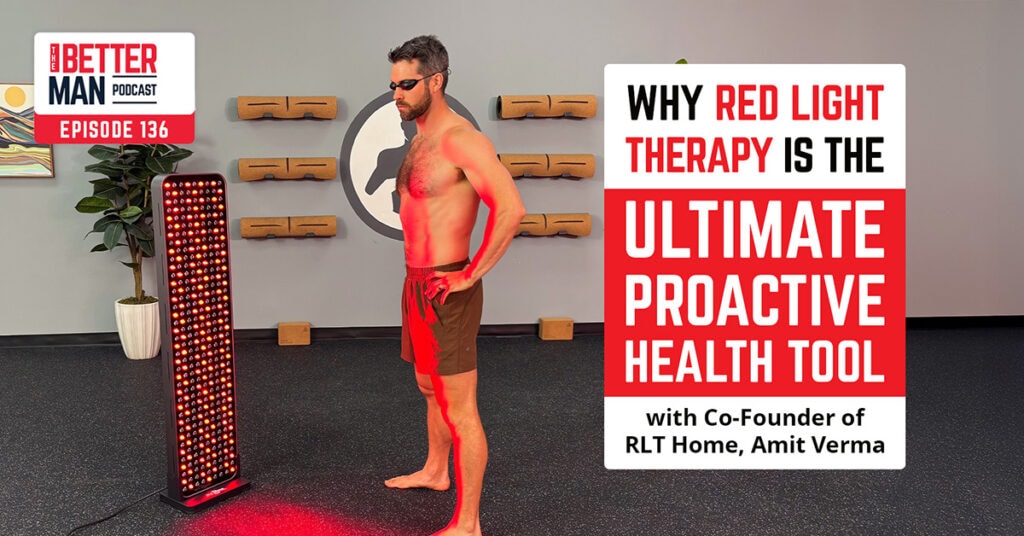
Red light therapy has been scientifically verified to help against at least 500 health conditions… and this number keeps steadily growing each time a new research study gets published.
I bought my first red light therapy device in 2016, and if I’m being honest, I was left highly disappointed. Marketing claims around red light therapy position it as a panacea that can remedy all disease.
But the technology wasn’t advanced or sophisticated enough to back up those panacea claims in 2016.
While red light therapy still isn’t a true panacea that can remedy all disease, the technology has gone through incredible advancements in the last 9 years. For example, it’s been scientifically proven to help with 500 various health conditions.
But it’s more effective as a proactive way to prevent serious health conditions (including age-related brain decline like Alzheimer’s and Parkinson’s, age-related testosterone decline, and even stress-induced prostate inflammation) than it is as a reactionary tool against the 500 conditions it helps with.
In other words, red light therapy, when treatments begin early enough, unlocks the healing powers the body had in youth that deteriorate with age.
Recently, when I went searching for the best red light therapy devices on the market, I came across RLT Home. They had the best reviews, the best customer service, and the best devices. So I bought one at full price, and started using it at my office daily. (If you want a red light therapy device without paying full price like I did… click on this link and use code “ManFlowYoga” at checkout.)
That’s why I reached out to Amit and Arjun, the founders of RLT Home to share the various proven benefits of red light therapy with you.
This episode is chock-full of the impressive and almost unbelievable benefits of a regular red light therapy practice.
Here’s what Arjun shares in this episode:
- Why not all wavelengths are created equal (and which specific wavelengths you need to conquer specific health problems)
- How to tell the difference between proven red light benefits and the marketing myths surrounding them
- 3 reasons why all men over 40 should consider red light therapy
Listen now!
The Better Man Podcast is an exploration of our health and well-being outside of our physical fitness, exploring and redefining what it means to be better as a man; being the best version of ourselves we can be, while adopting a more comprehensive understanding of our total health and wellness. I hope it inspires you to be better!



Use the RSS link to find the Better Man Podcast on other apps: http://feeds.libsyn.com/404744/rss
Episode 136 Highlights
- 5 major reasons why people over 40 use red light therapy to look younger, curb their pain and inflammation, eliminate brain fog, improve their sleep, and even aid their weight loss journey (4:22)
- The specific red light wavelength that’s brilliant for “transcranial healing” and protecting against future age-related brain conditions like Alzheimer’s and Parkinson’s (6:44)
- Why NASA uses red light therapy to grow plants and to fix astronaut’s wounds quicker in outer space (9:42)
- Here is your cheat sheet for understanding the unique benefits offered at various red light wavelengths (10:55)
- The weird “Mitochondrial Activation” mechanism behind near infrared rays that scientifically help your body produce energy (11:08)
- Red light therapy has been studied for over 500 conditions: Here are the conditions it’s been proven to help with (13:03)
- Why does almost everyone report wildly different benefits of using red light therapy? (15:59)
- How red light therapy may be able to save your hairline if you start it early (and why it can’t completely regrow your hair once the follicles have died) (19:40)
- Why red light therapy is the ultimate proactive health tool (and why it’s not nearly as effective as a reactionary technology) (22:09)
- Why your body absorbs red light rays easier than it absorbs sun rays (27:25)
- How red light therapy increases testosterone production, makes your Johson firmer and stronger, increases your libido, and skyrockets your sperm count (36:46)
- Why RLT Home builds a free, highly personalized, one-to-one plan for all of their customers based on your unique goals (and it’s always free – no matter how many protocols you want built for you or your family) (42:30)
- 2 things you must know about a specific red light therapy device before you buy it (and why RLT Home is the most transparent red light therapy company in regards to these 2 crucial things) (45:06)
- How red light therapy paves the way for your body to heal as quickly as it did in childhood (this also explains why using red light therapy to heal is very condition-specific) (49:33)

Resources mentioned on this episode:
- Get a red light therapy device & a personalized protocol from RLT Home (and save up to 10% on your order with code “ManFlowYoga”) here: https://redlighttherapyhome.com/mfy
- 2. Get access to RLT Home’s free “Which Wavelength” spreadsheet, which contains 2650+ human studies and shows you the best wavelength for the specific health condition you’re trying to treat here: https://docs.google.com/spreadsheets/d/1sit8qzZXOnU_AMAtYBINDdP2jvmme_LskqlTx-erS9U/edit?gid=622452041#gid=622452041
Dean Pohlman: Hey guys it’s Dean. Welcome to the Betterment Podcast. Today’s episode is all about red light therapy and to have this conversation, I have invited RLT home founder Arjun to talk about Red light therapy. What are the uses? What is it have been proven to do? How can you use it? How can you get started and how do I use it and why?
Dean Pohlman: So red light therapy, also known as low level light therapy or photo bio modulation, is a treatment that uses low level wavelengths of red or near infrared light to stimulate cellular activity and promote healing. It’s a non base therapy that can be used to address various skin and health conditions, and is even helpful for improved cognitive function, as well as a variety of men’s wellness topics like prostate health, testosterone pain relief, arthritis relief, frozen shoulder, tons of stuff.
Dean Pohlman: And so I have this conversation today because I really wanted to understand what is the effectiveness, how has it been proven to help? What are some stories or some testimonials that you’ve heard about? What are common myths? How do you get people started? How do you know which red light therapy wavelength you should be using? How far away should you be from it?
Dean Pohlman: So these are all questions that should be considered when you’re thinking about how to use red light therapy, and even more broadly, if you want to use it, what are some conditions that has been proven to be helpful for? What are some things that it does not help? So we get into all of this and more and hopefully this is a really enlightening episode for you if you’re interested at all in Red Light Therapy, I think this will be a great one.
Dean Pohlman: And if you don’t know what it is yet and you just kind of want to learn about something new, Red light therapy is getting really popular now. It’s been proven to help with, ton of different things. It basically helps with helping your body regenerate and heal more quickly. In many ways, it is an anti-aging device. So listen to the episode.
Dean Pohlman: Listen to all the great things that Arjuna has to say. And, hopefully you get something out of it. So without any further ado, let’s get into it. Hey guys, it’s Dean. Welcome to the Betterment Podcast. Today’s episode features Arjun, aka AJ from Red Light Therapy Home. And today we’re going to be talking about red light.
Dean Pohlman: So Arjun, thanks for being here.
Amit Verma: You know, you’re very welcome and it’s my pleasure to be here.
Dean Pohlman: Yeah. So here’s the back story. So red light therapy home actually didn’t reach out to me. I reached out to them. So I’ve been really intrigued about Red light therapy for many months, probably years at this point. I actually had a red light therapy unit back in 2016, back when it was pretty early and not a lot of people were using it.
Dean Pohlman: So about a month ago I went looking for a red light therapy unit for myself. And so I looked across, you know, reviews across all websites. I looked on Amazon, I looked at all the big brands. I looked at my friends in the fitness industry and which brands they were using. And ultimately I found this brand called Red Light Therapy Home, which I had not heard of before, but they had consistently the best reviews across all the other red light therapy websites.
Dean Pohlman: So there were a lot of there were probably more reviews on other websites, but they were also there were also a lot of negative reviews about those companies and Right Home had the most consistently high ranked reviews. So I ended up going on to the website. I bought a unit myself at full price, and then I reached out to, reached out to, who I now know origin, later on and, we’ve been talking since then, but that’s the backstory.
Dean Pohlman: That’s how I got introduced to RLT Home in June, and it’s been really cool getting to learn about red light therapy. And also, getting, getting, personalized recommendations on how to use the unit, which is actually something that they do for all of their customers, which is really cool. So, so yeah, what are so let’s let’s start this conversation off.
Dean Pohlman: What are people using red light therapy for? What are some of the goals that they’re using it for? What are some conditions that they’re using to treat what what are people interested in this for sure.
Amit Verma: So red light therapy does solve hundreds of things out there. Right. But the primary reasons why people buy these machines, one for anti-aging and skin. So people above the age of 40 start to get these fine lines and wrinkles. And red light therapy is amazing at producing collagen, in the facial area. So these fine lines and wrinkles sort of tend to go away.
Amit Verma: The skin looks plumper. And, you know, you start to see that little youthful glow back again. So that’s one of the reasons. The second, again, a major reason is pain. Red light therapy, particularly some near infrared wavelengths are very good at, healing pain. So people with autoimmune conditions or people with chronic pain, they find instant pain relief with red light therapy.
Amit Verma: So that, pain sort of couples with inflammation. So you could have, like, a joint that’s not working very well because it’s inflamed. Red light therapy does very well with those as well. The third. So that’s the biggest category, pain and inflammation. The third big category is weight loss. And athletic management athletic performance. Now red light therapy has this miraculous thing where it can, go into that the lipids of a cell which are blocked as fats, and it can create a little pore in the cell to get the lipid out through your urine.
Amit Verma: It’s able to break fat very amazingly well, which is sort of a miracle in my opinion. And also it enables better metabolic activity in the body, which means your body consumes the fat better or, you know, burns the fat quicker. So weight management is that side. And then athletic recovery is part of the same thing. So when your body has better metabolic activity, you tend to recover from athletic activity quicker and you have less of inflammation.
Amit Verma: So you have more flexibility in the joints, etc.. So that’s the third big category that weight loss and athletic. The fourth category would be brain. So cognitive health you’re talking about you know how a lot of people got this brain fog after getting 2 or 3 doses of the Covid vaccine? People have been reporting not being able to think as clearly, not being able to be quick enough to get the, you know, the thought that they needed.
Amit Verma: So red light therapy, particularly one wavelength in red light therapy, is brilliant for transcranial healing, which means going inside the skull, creating better neural activity between the cells of the brain. So that is a great thing. With red light therapy, not only does it bring mental clarity, it’s also a great sort of protection against a future, age related brain condition, like a dementia, Alzheimer’s or a Parkinson’s.
Amit Verma: It’s a good thing to to stop early. And the fifth would be sleep. So a lot of people have problems with sleep. And because red light therapy can balance the circadian rhythm better, it allows people to sleep better, longer, wake up less number of times in the night, providing more, more energy for the remaining, you know, the next day and things like that.
Amit Verma: So these are broader categories and why people use red light therapy. But I’m happy to go into any one deeper, if you like.
Dean Pohlman: Yeah. So I mean those all sound those are sound great. So it sounds like so to me it sounds like something that can be both an overall boost to health, but also it can help with specific conditions as well. And so that kind of leads me into my next question that, you know, so I remember when I first started doing red light therapy and I remember, you know, using the first unit back in, you know, 2016.
Dean Pohlman: And at that time, the only thing that was available was like this foot 12 by 12 square, right. And I knew nothing about it. There was also not a lot of it wasn’t advanced as it is today. Now, you know, you know, from base from my basic conversation with you, I understand that there are different wavelengths of red light and that different wavelengths help with different things, and that in order for it to be effective, there are also different amounts of times you’re supposed to use it.
Dean Pohlman: So for something you might use it for just eight minutes. But another thing would be 15 minutes or 20 minutes. And back when I first started red light therapy, there was just one wavelength. You just turned it on and you put it next to whatever you wanted to fix. Like if you want. If you have foot pain, put it on your foot.
Dean Pohlman: If you want your head to be better, put it on your foot. If you want to strengthen your eyes, just look straight at it. And now, you know, that’s kind of questionable. But the you know, the big question for me back then and now is how do we know that this thing actually works? So what are some of the key scientific studies that actually back the effectiveness of red light therapy?
Amit Verma: So there was a Hungarian scientist called Andrei. Mr.. Or Mr.. I don’t know how to pronounce it Hungarian, but what this guy was doing some studies on healing skin cancer on mice, and he was using a red laser therapy, red laser to do that. And to his surprise, he found that instead of causing damage, the red laser actually healed the wound faster.
Amit Verma: So that was like in 1960s. Then in 1990s, NASA came out with their first ever red light therapy iteration, where in space it helped them grow plants and fix, astronauts wounds quicker. That that’s when really it all started. And then when that happened, obviously there were tens of thousands of clinical trials around the world figuring out exactly what it is and the red light that’s helping and what isn’t.
Amit Verma: Because if you look at the sunlight and low sunlight today, by the way, if you look at the sunlight, you know, one would think that just standing in the sun on a mild, sunny day should, should fix that. But that’s not the case. And that’s what the studies found. So now over 17,000 clinical trials on humans, animals and in vitro, which is in test tubes, have found that not every wavelength is created the same.
Amit Verma: There are certain wavelengths in the light that we see that do some things and others do different things. For example, the red light wavelengths. I see this beautiful red light behind you.
Dean Pohlman: These red light went on.
Amit Verma: I’m grateful. Oh. He’s doing it right now. Oh, yeah?
Dean Pohlman: Yeah.
Amit Verma: Nice. So these red light wavelengths are great for collagen. You know, like the top of the dermal, that condition. So it’s collagen, you know, reducing fine lines and just making the skin look better. The near-infrared rays, which are the 810 to 850 nanometers, they’re known to penetrate deeper. And when they penetrate deeper, they do something called mitochondrial activation, which creates something called a dino triphosphate, which is the energy currency of our body.
Amit Verma: And what that sorry, a bit technical, but it’s just the one thing, what it does is there’s a protein in our body in every cell. It’s called the cytochrome c oxidase, which is the real enzyme that we need to function properly. And that gets bound by something called a nitric oxide molecule. So that needs to be detached.
Amit Verma: The moment it’s detached it starts to function optimally. And when we grow older or when we have a stress joint or something, the the CC or enzyme start starts to not function. That’s what red light therapy does. So when the red light therapy penetrates that depth and that is why the wavelength is important because different wavelengths penetrate different depths.
Amit Verma: So you have to understand which wavelengths can penetrate that depth and then create the decoupling of the Co with the nitric oxide. This took what now you’re talking about 25 years or 35 years it took for people to study this. Different clinicians around the world to say that not every wavelength is built the same. Here are the most effective wavelengths that should be used on a human body.
Amit Verma: So that’s how if I make any sense, that’s how of the study involved. And that’s how we found which wavelengths are the best.
Dean Pohlman: Okay. So okay. So I can I can understand that. So from there what are these studies that say that, hey this thing works. Or hey, this thing actually leads to results with these certain conditions. What what has it been studied for?
Amit Verma: It’s been studied for over 500 conditions in like starting from autoimmune conditions, chronic joint pain, every kind of pain in the human body, heart functioning brain, prostate, I mean, particularly in men. You’re talking about testosterone, libido, sperm count, erectile dysfunction, prostate, you know, every practically every thing that you can think of and incredible, like thousands of orthodontic studies to do with gums and the mouth, a lot of them to do with hair growth, alopecia.
Amit Verma: So practically just everything has been studied. And it’s continuing as they identify more wavelengths. For example, here is a good example. About ten years ago, there was not much information about the 1064 nanometer. And then some scientists identified that. And they found that that’s the only wavelengths that can penetrate the skull and do transcranial healing. So now a lot of that that is being done, and I think as we go forward ten, 20, 30 years, there will be a lot more clarity in what red light therapy can do.
Amit Verma: But for now, we know a lot. We know a lot, lot, lot more than what we did. When you first got your device in 2016.
Dean Pohlman: So yeah.
Amit Verma: And what’s what’s wonderful if you if you allow me to just elaborate on that a little bit, what’s really wonderful is imagine the electromagnetic spectrum is this much right. Let’s say out of that you have your, microwaves and you have your radio waves, and then you have infrared, and then there’s this little tiny speck in the electromagnetic magnetic spectrum, what we can see from violet to red, the tiny bit.
Amit Verma: And then beyond that, there is so much more. There is ultraviolet. And then you have, x rays and gamma rays and all of that. And right now we’ve humans are still sort of understanding what the use cases might be. Right? 200 years ago there was no radio. So radio waves were discovered. And then now gamma rays are being used to treat cancer.
Amit Verma: And it’s just an evolving field. And for now, we know that even within the, you know, the spectrum that we care about, which is from ultraviolet to infrared, there are some wavelengths that do not decouple the core with the nitric oxide, for example, the seven, 50 and 950 nanometers. They don’t decouple it. So there’s no point in having those wavelengths in a device.
Amit Verma: So it’s all a study about finding the right wavelengths. And there is a sheet that I can share with you if somebody wants to delve much deeper in it, which contains the 2650 odd studies that are done on humans, and depending on what condition you’re looking to treat, you can search on that sheet and find what what the research says.
Amit Verma: I can share that with you.
Dean Pohlman: Yeah, that’d be great. I can put that in the in the show notes if people want to look at that. So what are some of the stories that you’ve heard about that red light therapy has helped with specifically?
Amit Verma: So let’s start with myself. There were three conditions that I’ve had from a long time. One is my prostate is not the best. So after three pints of beer, I’ll be I’ll be more in the washroom than, you know, at the bar counter. That has been a problem with me since I was early 30s, and I don’t think it’s age related.
Amit Verma: I don’t know what it is. The second was migraines. I’ve always had this chronic migraine since the age of about 13 to 15, and the third is my back. So during a bodybuilding session, I sort of hurt my back a little bit. And since I’ve been doing red light therapy with this new seven wavelength device that we we have I, I’ve forgotten about my back pain.
Amit Verma: I don’t wake up at nights anymore. Like I can last much longer with with those pints of beer. And my migraine hasn’t happened in the last nine months. Now. And you could say that this is all by chance, but maybe it is, and maybe it is the red light therapy that is really helping me. And plus, so we started selling these devices and we’ve sold thousands of them, and we wrote an email one day saying, well, if red light therapy has made a significant positive impact in your life, would you be okay to do a video testimonial for us?
Amit Verma: It’ll help a lot of people. And the next day we got about 11 video testimonials from customers and just very kind people. And they reported different things. For example, older people reported improvements in their arthritis. Somebody reported a 20 year old frozen shoulder, which they had obtained because of a surfing injury. Now they can move their arm right up.
Amit Verma: And that’s on the homepage of the website. Somebody reported, better sperm count. Somebody reported, like a variety of things. It’s mostly women, but I’m just focusing on the men’s side here. So it was to do with, oh, by the way, one gentleman who has, a chronic autoimmune condition that affects the entire body, they bought one of our older devices, generation one, which they have upgraded with the generation two.
Amit Verma: And they say that the seven wavelength spectrum is way better. In short, he wrote, it’s awesome. And some people don’t want to come on the video. But we have a lot of written reviews on, on, on our website and on Trustpilot to do with multiple things.
Dean Pohlman: So that’s always really encouraging. And I remember from some of our conversations before, there’s actually I think the I think the, the potential, the wrong way of thinking about it is that it fixes everything and that you just need to shine a light on it in order to fix everything. So what are what are some things that this has been proven to, to not be effective for?
Dean Pohlman: Maybe there’s some myths about red light therapy that kind of overexaggerate what what it does I know, I know, one thing that I’ve heard is that it also has to be done, consistently, a lot like I’ve, I’ve got friends who or, I’ve heard about people within our community who, you know, they have, skin conditions and they’re like, yeah, it’s helping.
Dean Pohlman: But I had to do it for, you know, two months, three times a week in order to notice results. It’s not like you just like, oh, I have a broken foot. So 15 minutes with the red light therapy and my bone was fixed, you know? So,
Amit Verma: Yeah. Yeah.
Dean Pohlman: What are some of those things? Yeah.
Amit Verma: No. Absolutely. Right. So red light therapy. Our bodies are self-healing machines. Right? I mean, whenever something goes wrong in the body, the body’s quite capable of healing itself. And many of the cases now. But but there are some times when the stress is too much for the body to handle. That’s, And that’s number one. And number two is, as we age, a lot of the body’s functioning deteriorates with age.
Amit Verma: These are the two primary places where red light therapy works. So if you expect red light therapy to be a miraculous sort of thing, that’s, that’s going to, you know, heal something that I’ve never really had, or my body has never really been able to heal on its own, that there’s a chance that red light therapy may be ineffective.
Amit Verma: And a couple of examples of that are, if you have hair loss and if you have hair follicles that have completely died, then red light therapy will not bring them back. But if you start early on enough, when when the hair follicles are starting to experience that stress and the mitochondrial activation is dying down and you start your red light therapy, then then there’s a chance that the hair follicles that were supposed to die will not die and will continue to function.
Amit Verma: That’s one number to think of your youthfulness when you were younger, the kind of energy and the kind of body healing that you experienced at that time is what you can expect from red light therapy. But that is not everything. For example, in some things it’s actually a very varied answer. But for some things, red light therapy does overdo what your youthful body could do.
Amit Verma: For example, in fat burning, red light therapy excels. And the reason for that is that in a normal day to day, and I think we have to go to the background of our existence for to answer this one. And the answer is we are, you know, humans have evolved after millions of years, you know, of being in the open in the sun like we were initially cavemen and as, as primitive humans.
Amit Verma: The light absorption and the kind of light that we got in our bodies was way more than we what we get today in the modern lifestyle, we’re all locked up in these rooms, working on a computer 24 by seven, right.
Dean Pohlman: And yes.
Amit Verma: Yeah. So so we have to understand that the human body was built for a lot more sunlight than we what we get today. And because of that, a lot of things go wrong in the human body, which red light therapy can fix. But there are also a lot of things that red light therapy will not be able to fix without an external, surgeon looking at it.
Amit Verma: For example, two examples. One, I told you about the hair follicles that have died. Red light therapy doesn’t bring them back. And number two is knee problems. So if you have a knee problem where the arm the knee doesn’t need replacement yet but you’re starting to experience it, then red light therapy is a great thing to do at that time, because it’s going to fix it and it’s going to keep it fixed.
Amit Verma: But if you’ve got a knee problem that’s beyond repair, then the only real thing you can do is get a knee replacement. Right? Or, or get some assistance with red light therapy and start to walk again. But it will not bring your knees back entirely, if that makes sense. Okay, so.
Dean Pohlman: So it has to bring things back to life, but it can help with things that are still regenerating enough so it can boost the regeneration process, but it can’t bring something that has gone past that point back.
Amit Verma: Yeah, exactly. That’s the correct way to say it. For example, even with dementia and Alzheimer’s, once you’ve once you’ve reached a certain age and let’s say you’ve had dementia at that point in time, red light therapy will help you keep it there. But it won’t bring it like it won’t reversed dementia. And that is why red light therapy is sort of technology that needs to be used after the age of 40 or 50, to sort of build up endurance in your body for things not to happen in the future more than repairing them when they happen.
Dean Pohlman: Got it should be started. So it’s much more of a proactive, best results when proactive as opposed to yeah, okay. It’s now it’s really bad. Maybe red light therapy will save my whatever. Okay. So proactive. So that makes so that makes sense. So I kind of want to do this next question toward my own personal experience and why I thought red light therapy would work well for me.
Dean Pohlman: So, you know, you can. If you’re watching the video version of this interview, then you can kind of see my office behind me. This is my studio, this is where I film. This is where I also spend a lot of my day to day. And it is basically a this particular one is a windowless room, which I did not I did not realize when I rented started the lease how much I would not like having a windowless room.
Dean Pohlman: But it is very quiet, helps me get a lot of work done, which is great. So I’m very productive here. And just because of the way that this is set up and because I don’t work with that many other people, in my day to day, it’s a very easy thing for me to do, to have red light, have a red light therapy unit here.
Dean Pohlman: Right. So my thought was, oh cool, all these people are doing red light therapy. And while it might not make sense for somebody, you know, maybe maybe for somebody, it sounds like it’s going to be difficult for them to get in a 15 minute red light therapy session at home. You know, all the videos that I see with red light therapy, they’re like, they’re standing at home and they’re, you know, they’re beach house in Malibu, like looking out over the ocean while looking out the window, having red light shine on them.
Dean Pohlman: And not everyone’s going to have that setup or that freedom. But for me, for my particular way that I have, my life is very easy for me to say, okay, cool. Well, I’m at my desk. No one cares what I wear. So let me just put a light where it needs to be and turn it on. Right?
Dean Pohlman: Or if honestly, like what I’ve started doing, you and I have talked about this, but one of the other things that I’m doing is, hey, oh, red light therapy works for testosterone to cool. So I literally just stand here in the nude with the red light therapy unit just shined on me, and I’m just. I’m still on the computer.
Dean Pohlman: I’m still just doing work, but I’m just standing here doing that and that’s, you know, so it works for me in a way that is very it just works in my life. So that’s one reason why I really wanted to do it. But I was also I didn’t really know how I was supposed to get started. Right? Or how do I use it?
Dean Pohlman: I so I just turn it on and like, you know, I just try to do it as much as possible. And so that’s where I, you know, got to talk with you and you got to teach me about all this stuff. But what I think is really cool, when you buy a unit from RLT home, you do you, by the way, do you say artsy home or do you say red light therapy home?
Dean Pohlman: What’s your.
Amit Verma: Oh, we say RLT home.
Dean Pohlman: Okay, cool. So RLT home. So so one thing that’s really cool is that you guys send out an email to everyone who purchases a unit and you ask them, hey, what are you working on? Like what is your what are your goals? And they tell you and then you send back a personalized program like, I think that’s really cool.
Dean Pohlman: And so I’ve been using the personalized program. But for people who are you know, kind of getting started, what would a red light therapy practice look like? Like how many minutes per day? And like, you know, where does it need to be shined and like all that, like, how do you other practices like, hey, I’ve got these, you know, I’ve got these goggles that I’m supposed to wear when I, when I, if I’m looking at it directly or like one of my when do I need to use goggles and when do I need to use the sunglasses.
Dean Pohlman: Like you know so yeah basic questions on how to use it.
Amit Verma: So yeah, I’m absolutely, in the sun and the sun’s light, I’m just going to add this one context. It’s going to make things clearer in the sunlight when you even on a sunny day, the problem is that the body’s absorption capabilities are limited. Right. So when you when you’re lying, or, on the seaside on a sunny day.
Amit Verma: Yes, your body’s absorbing light and there is a lot of light to absorb. So there are ultraviolet rays that create vitamin D, and there are multiple wavelengths. But when you take a red light therapy device, for example, and it’s shining just those therapeutic wavelengths at a higher density, higher intensity, the body’s absorption is better. When the absorption is better, it if you compare it 1 to 1 with sunlight, it’s much better.
Amit Verma: But it’s so much better that you can’t really do it for very elongated periods of time, because the body’s going to say, well, thank you very much. I don’t need any more of it. So the body has this sort of a roof on how much energy it can absorb. And if you do too much of it, then there’s something called, resistance that the body builds against the light.
Amit Verma: That is why we say, well, you have to do it no more than 30 minutes a day, because these lights are very strong. These are five watt LED bulbs. Every bulb is producing just the one wavelength in a 30 degree beam. Mangold quite a narrow cone coming straight to your body. And when you are using, let’s say, the light for your brain for cognitive purposes, then the intensity is way too much for your eyes to handle.
Amit Verma: That is when you need to put the block up. Goggles on. If you’re using skin care mode about three foot away, then you could have your eyelids closed because eyelids are a brilliant natural protection in our bodies to protect protect us from light anyway, so then those are fine. Some people want to read when they’re doing red light therapy.
Amit Verma: For those, we provide the reading goggles. So you’re talking about the sunglasses okay, so but if you have the light too close to you, particularly in the facial area, then we recommend having the blackout goggles.
Dean Pohlman: So yes, about the like a foot. Sorry, we’re closer or 18in closer or what’s the exact.
Amit Verma: Yeah. Yes. Even if it’s like a foot and a half 18in close to you. But if it’s coming directly at your face because you, let’s say, treating the temples, which you need to do for your brain while you’re treating the forehead, then the blackout goggles are recommended.
Dean Pohlman: Okay. Any time, any time it’s direct to the eyes.
Amit Verma: Glasses, goggles. Okay. Yes.
Dean Pohlman: Cool. Okay, continue.
Amit Verma: But if you are three foot away or more, then just close your eyelids is fine because the energy sort of goes down as you go further away from device.
Dean Pohlman: Okay. Got it. Okay. And then like so I had another question. You know, I was doing the the full body and I had there’s different sizes. And so for me I wanted a big one because I wanted to be able to get as much as possible, without having to rotate around. Honestly, I was even thinking of getting two so I could get both sides at once.
Dean Pohlman: But, you know, I don’t know anyways. But I don’t think most people are going to get. Maybe they will. I don’t know if you can if efficiency is your thing, then. But, I was so the unit comes out to about here on me. So I think it’s. What is it, 30. It’s 40in tall. How tall is that one that I have.
Dean Pohlman: Yeah.
Amit Verma: I think about 46 and 46.
Dean Pohlman: Okay. So it’s pretty. It comes all the way up to my. Okay. So yeah, it comes all the way up to my chest. So it’s kind of so the, the, the red light isn’t staring straight at my eyes, but I can see them. So in that case, should I have the glasses on or should I, if it’s not staring straight at me, doesn’t matter.
Amit Verma: Then what you’re getting is a reflective light. So the light that’s sort of reflecting from your chest, it’s then reflecting from the wall at the back, then it’s coming to your eyes. Right. Or maybe a direct reflection from here. Just closing your eyelids is brilliant. For those cases that the red light therapy has been studied extensively for the eyes as well.
Amit Verma: So macular degeneration, vision improvement, dry eyes, calcium buildup in eyes like there’s a million floaters. You know how people see these dark objects when they look at the sky? Yeah, those are called the floaters. Red light therapy has been studied and proven to help in all of these conditions. So a little bit of light going into your eyes is a good thing.
Dean Pohlman: Okay. Got it. And then I think I also read somewhere I was, you know, going throughout the internet reading about this. And I think it sounds like a good indication of if it’s too much as, do you want to close your eyes. Right. If you’re staring, if it’s if it’s hitting your eyes in a way that your eyes say, oh, that’s uncomfortable, I want to close my eyes, then it sounds like that’s a good I don’t know.
Dean Pohlman: Can you speak to that?
Amit Verma: No, I completely agree with that. Okay. So there are 2 or 3 things that we need to prevent. Number one is obviously the intensity. Intensity is when your eyes can tell you straight away that this is too bright. Close your eyes. Right. That’s the sort of natural protective response from the body. But there’s another thing with red light therapy that the eyes can’t see, which is the.
Amit Verma: So when you switch on your panel on full, full power mode data, you see only 40% of the LEDs that are shining. The remaining 60% are also working, but they’re near infrared, so our human eyes can’t see that light. Okay, but what that light can do if overexposed to the eye, that light can build up heat inside the retina, causing cataracts.
Amit Verma: If overdone. Right. Okay. For for smaller 30 an hour session, it’s not a it’s not a bother. But there are some working environments where people are working in near infrared environments for either production or industrial uses. And these they’ve seen to have more cataracts and normal people. That is another reason why blackout goggles are just a good idea.
Amit Verma: If you think that even if your eyes can take that kind of intensity. But if the device is too close to you then it’s better to put them on.
Dean Pohlman: Got it. Yeah. And you know I’m, I’m really big on, I’m really big on efficiency. I just you know I’ve, I’m busy, I’ve got a lot of stuff to do. And I have two kids. I don’t have a lot of time. So the thing that I’ve started to use the red light therapy sessions where I have to cover my eyes or close my eyes, or like one of the things in my program is a just a full body kind of recovery session, I think.
Dean Pohlman: And for that one, I’m supposed to be three feet away. And, so that one’s three feet away. So what I do for that is I kind of lay down on the ground with the, you know, the RLT home unit three feet away, and I’m on a yoga mat, and then I just kind of roll back and forth.
Dean Pohlman: Right. So I’m just kind of like taking a little nap, which I find really good for me just because I know that I need the rest. I know that I need the recovery. And then the other way that I’ll use it, if I, you know, if I have to close my eyes or I’m doing it in a way that I can’t like do other work is I’ll to I’ll treat it as a meditation session, you know.
Dean Pohlman: So I just close my eyes. I’ve got the I’ve got the red light therapy on me and then I’m just okay means this is a meditation session. So I’m finding ways to work. So even though, you know, I’m even though I’m not as productive as I normally would be, I’m being productive in other ways, if that makes sense.
Dean Pohlman: And so framing it like that, this becomes something that is, is much easier for me to do compared to, you know, if I just you just asked me to like, hey, I just need you to go, you know, go do nothing for 15 minutes, right? And you can’t do anything while you’re doing it. So 15 minutes where I’m somewhat doing nothing, but really, I’m doing other things that are very important for my health, and it tends to work out well for me.
Amit Verma: So it’s a great idea to meditate with the red light therapy on, particularly if you have the the longer wavelengths in it and it brings more focus, mind, clarity. And there’s a lot of studies with that too. So I’m sure that, doing that is you’re right. Like that is a 15 minute in a day that you have to give yourself.
Amit Verma: So why not complemented with red light therapy, which is such an essential thing for our human body?
Dean Pohlman: Yeah. Now I’m going to you guys need to make a you guys need to make a backpack holder so that I can just, like, put it in a backpack and carry it, carry it around with me. And because right now I keep it at the office because it’s, you know, it’s not, you know, I’ll I’ll bring it out and show you.
Dean Pohlman: But, you know, it’s not it’s not tidy. Right? I mean, this is like a, you know, I don’t know how much it weighs. Feels like it feels like it’s 40, 40 pounds, 35 pounds maybe. So. You know, it’s not something that I can easily transfer back and forth, but it is something that I can use everywhere.
Amit Verma: Yeah. For you, it’s definitely easy. Most people use it standing straight and it has, like a wheeled stand built in.
Dean Pohlman: Oh, yeah. No, it’s got the wheels stand.
Amit Verma: Yeah.
Dean Pohlman: Yeah, yeah, I’ve got the wheel stand. So I use that for if it’s straight up in front of me. So that works. Well. So something else that you know and there’s, so we talked about this but there’s, there’s so many different things that the unit can be used for that, that RLT home can be used for. And can we.
Amit Verma: Quickly touch on, the men’s side of things?
Dean Pohlman: Yeah. Let’s do it.
Amit Verma: Yeah. I just wanted to, like, cover this because, you know, a lot of your, people that you work with are men who are learning yoga and, of course.
Dean Pohlman: Absolutely.
Amit Verma: And for men, it this is like, literally. Well, it’s a blessing if you have one of these problems. So with intent, the way the male body works is we produce testosterone, right? The testosterone gives us the strength and the libido, which is very important. Part of, you know, being a man and the way that is produced, there’s, there’s a cell called the latest cell that’s produced in our testes.
Amit Verma: Right. And that lady excel as we age. And if we have, very stressful lifestyles, including physical stress, by the way, then the lady Excel start to perform some optimally. And just like I explained the ATP side of things earlier, that works miraculously on the lady Excel. So the lady Excel activity goes really high and the testosterone production becomes higher, and the side effects of that are, the erections are amazing, the libido is higher, and, the sperm counts become better.
Amit Verma: And this has all been studied again extensively. If you Google testosterone and red light therapy, you’ll find just an endless stream of data. And I think that is a very important thing. Another thing that affects mostly men, not it does affect women as well, but mostly men is the prostate that we talked about.
Dean Pohlman: Yeah. And I think we’ve got a lot of got a ton of guys with prostate either have had prostate cancer or who are at risk for it. And in our community we talk about that a lot.
Amit Verma: Yeah. And also enlarged prostate, right. Where your ability of the bladder to store the urine becomes less or and lesser over time. And you need to use the washroom more frequently. And that happens primarily because of inflammation in the prostate. So all of this men particularly can benefit from and then hair loss. I already said if if there is.
Amit Verma: So there is a male pattern baldness called alopecia. Different types of it. Once it has already happened that it will not bring your hair back. But if you are at that stage where you where you’re thinking maybe I’m losing a hair a little bit, then red light therapy is a great thing to add on to your schedule.
Dean Pohlman: Okay. Yeah, I was talking with, my neighbor, last week, who is. He’s been bald for, I think, 20 years now. So I think it’s he’s probably beyond the point that he can be helped. But, but if you’re, you’re still in the process of it looks like, looks like that would be, a good thing to do.
Dean Pohlman: So I was going to, you know, so we’ve, we’ve we’ve covered tons of different things that, write home and red light therapy in general has been studied to be proven effective for. But, you know, we can’t cover all of those things in this episode. So I did want to touch on, you know, how do you guys come up with plans for people?
Dean Pohlman: Because I think that’s something that is so helpful. I think, you know, you can buy the equipment, but without without instructions on implementation, you don’t know what you’re supposed to do. So how have you guys, gone about creating your protocol for helping with that?
Amit Verma: Yeah, no, that’s a great question. So every person has a different need, right, that they’re looking to solve in the immediate time. And red light therapy, although is a very large encompassing field. But the protocols are very different for different people. And the seven wavelengths that are built into the device, some of them are not needed for a few things.
Amit Verma: For example, if you’re trying to heal, a deep rooted joint pain in the back or, you know, it could be the back. It could be, you know, the shoulder, the shoulder is also very difficult to access, part because of the light, because this protruding shoulder bone is very difficult to penetrate. So it has to be done from the underarm.
Amit Verma: But when you’re doing different things with red light therapy, you need to focus on certain wavelengths more than the others. So these prebuilt modes that we have, the way we develop these is we put 17,004 to by modulation studies in a database. And we trained a large language model. And the one we trained was the open eye or three model, which is the most advanced right now.
Amit Verma: So we put all these studies in there. Then we said, well our device has these seven wavelengths and these percentages of intensity based on this data. And this device can calculate what would be the most ideal spectrum to shine for this particular condition. And the I required multiple weeks of training, but it became really good at that. So something that a human would have taken weeks and weeks and weeks to process, because there’s a lot of data that I was able to do that, and we put all of that data into our pre-built modes.
Amit Verma: For example, the pain and inflammation mode that you use just a while ago. It starts off with using the blue light as well. Because blue light is brilliant for wound healing. It is antibacterial, so it kills the bacteria and then it starts to go deeper. So these modes are built based on a lot of data, a lot of science.
Amit Verma: And then using AI to understand what, what would be the ideal sort of mix. That’s how we came up with them. And also, I think in red light therapy in particular, this is the the most critical decider. Whether a company after selling you the device will support you. Right. And, I’ve been a big fan of Jeff Bezos.
Amit Verma: You know, the whole customer focus, we revolve around the customer kind of sentiment. And that’s what we’re building here. Every customer gets a personalized plan and they can ask for any modifications, any number of them, any number of, in the future when they’re using it, they could ask for plans for their family members, and they can do it unlimited number of times for completely free.
Amit Verma: If there are another little aspect to the customer thing, other companies are charging restocking fees and all that nonsense, we don’t do that for us. It’s like if it doesn’t work for you, we’re happy to take it back. The most important thing is that it should work for you. That’s that’s the main motive of the business, isn’t it?
Dean Pohlman: Yeah, absolutely. I mean, yeah. And, you know, it makes sense to provide support because these are not you know, this is not like a this is not a 25, $5,000 investment. This is a it’s a significant amount of money. You know, I think even your you know, and I’m not saying that to say that it’s you know I’m just saying that I’m just saying that because this isn’t.
Dean Pohlman: Yeah. This is not like a $25 thing. This is something that but ideally this is something that you’re able to use repeatedly. I mean, if you’re comparing it to other things that you do for your health, where you have to, you know, maybe it’s, a physical thing that you have to buy. You know, that you have to replenish every month or every two months or every three months.
Dean Pohlman: This is something that you get once and and then you have it and you can use it forever. And so I did want to cover, one more question. At least one more question. Who knows how many more questions I’ll come up with because my brain just keeps going. But, you know, again, I, I did some research and I figured out that RLT home was, the brand that I wanted to purchase with my money.
Dean Pohlman: But what can you say about what can you say about your unit compared to other units that make RLT home more effective?
Amit Verma: Well, yeah, just two major things to consider here. Most of the companies, if they are reputable companies, they will provide you with a three year warranty. They should provide you with a little span of time, like two months, where you can test the device and return it when you return again, make sure that there are no restocking fees, etc. but the two most critical things that you need to figure out are.
Amit Verma: Number one, what wavelengths are present in the device. Right. So a lot of companies out there are now saying we have the seven wavelengths, right? And we were the pioneers in this, but now everybody’s come up with some of the seven wavelength idea. But the the problem with that is that they have 90% concentration on two wavelengths. And I think that would be probably similar to the device that you bought.
Amit Verma: The 660. And the 850 nanometers are about 90% of the overall intensity. And the remaining five wavelengths are distributed within the 10%, which means that these wavelengths can’t do their job properly. That is one important thing. Second thing is, these devices are very smartly designed to maximize the irradiance. Now imagine that this is an LED and there’s a little narrow beam of light coming out of it versus a 90 degree or 60 degree light coming out of it.
Amit Verma: Right? If you have a 30 degree beam, you can imagine that if you are like 2 or 3ft away from the device, you will get most of the light onto your body. So what is going to cover most of the light that’s coming out? Whereas if it’s a 90 degree angle like that, then if you are more than a foot away, then a lot of light will waste in the periphery, right?
Amit Verma: A lit a lot less light is going to shut onto your body, and a lot of this is going to waste in the periphery. Now, these are things that we have worked very hard on to, to build. So we have a 30 degree beam angle. A lot of competitors have a 90 degree beam in some cases, which is fine.
Amit Verma: If you’re very close to the device, it’s fine, but it doesn’t provide you with the flexibility to move around. You know, to do a stretch when you’re doing a red light therapy, the intensity matters a lot. So we’ve done third party tests where where we are in May, we did one, where we, the world leaders in intensity at one, two and three feet distances.
Amit Verma: That’s important. Also, I think, if you have the time, watch the Mitchell Hooper video. He’s the world’s strongest man. 2023 first runner up 2024, second runner up 2025. He just like you. He bought a device of us. He did not ask for an affiliate code or any like he just genuinely bought it and then he did a video review voluntarily where he compared this one for cognitive purposes with others.
Amit Verma: So these are some things that you need to research before buying a device. We are a relatively new company, so you’ll see a lot more about us thanks to amazing people like you. Dean. But yeah, these are the critical things, a number of wavelengths that you have that should be in the right percentages. They should have high irradiance so that they can penetrate deep inside to heal the body.
Amit Verma: And the beam angle is what sort of makes that happen.
Dean Pohlman: Okay. And I just want to understand this correctly. So depending on the mode that you select that means that you are sending out different wavelengths. Whereas some units you turn it on and there’s just the one setting. But with this one you’re actually choosing based on the mode that you select, what wavelength is being sent out to make sure that you’re using the appropriate wavelength for the condition or the goal that you’re treating.
Dean Pohlman: And then you guys also provide the plan. So we know which one exactly we’re supposed to use. Like for example, for me, you know, I think you I think for the I can’t remember which one off the top of my head, but for the testosterone mode. So when I’m aiming it at my testes, I’m not actual use.
Dean Pohlman: There’s not a like a testosterone mode. I think it’s called, it’s like, is it which one is it? It’s weight loss. Yeah. So like there’s different names, but you guys will actually tell us which one we’re supposed to use, even if the name isn’t intuitive to the goal.
Amit Verma: Yes, yes. And yeah, you’re absolutely right. For example, the skin care mode doesn’t have any 1064 nanometers. It’s 0%. And the reason for that, I just explained, right, that too much far infrared in the eye can build up cataracts. So these are very smartly designed. Again, if you use the correct mode for the correct thing, the body’s response is going to be much better than using this full power mode for everything.
Dean Pohlman: Yeah. And so, you know, I know we said we can’t, you know, speak to every condition. But typically how long does it take to notice some of these results. So like maybe let’s let’s talk about do you have specific information on how long it helps to take with with prostate.
Amit Verma: Yeah. About 4 to 6 weeks before you start to seeing substantial results. These are the way red light therapy works is condition dependent. For example, if you are in arthritic pain or, some kind of an autoimmune pain, then for the first session that you do, you will feel pain free the first session. But if you are talking about something that has been, so the body malfunctioning for a long time, then the mitochondrial activation and then producing the ATP, etc. this process is a slow process.
Amit Verma: It takes multiple days for the body to start doing that. And then when the body does that, what the only thing that’s happening in the background is that that inflamed or injured body part is getting better oxygenated blood flow. That’s the only thing that’s happening. And then the body has its own time to heal. For example, when you get a wound right, the body takes a long time for the wound to heal.
Amit Verma: If you have a fracture, the body takes about 3 to 4 months for the fracture to fix. And that’s you’re talking about in a youthful like in an early use. It takes that long. So the body has its own time. What red light therapy is doing is it’s paving the way for the body to be able to self-heal by detaching the nitric oxide from the coenzyme.
Dean Pohlman: Okay. So that’s just reminding me of another machine I can’t I’m, I’m blanking on the name right now is a hyper hyperbaric. Is that is that. I don’t know why I can’t remember the name right now is a hyper sound vibration. No it’s not a sound vibration. It’s like a I don’t know I’m I’m on the Google right now.
Dean Pohlman: I think it’s a hyper, like a hyper, hyperbaric chamber that is similar to what a yeah, that’s what’s so a hyperbaric chamber that’s similar to what a hyperbaric chamber does is it helps you to get better oxygenated blood. So it’s it’s kind of similar to. So it’s similar to this. It sounds like at the root that’s kind of what it’s what it’s doing I don’t know.
Amit Verma: Just it’s possible.
Dean Pohlman: I mean.
Amit Verma: Light light therapy is one of the main ways to activate the mitochondria. But some people say that even sound waves do that. So there are these vibration plates that are getting popular. Now I don’t know if you’ve heard. Yes.
Dean Pohlman: Yeah.
Amit Verma: Yeah yeah. Very cool. So that plate vibrates at a certain frequency and you can change the frequency depending on what you’re looking to heal. And that marries very well with the pulsing that our devices have. So the light that’s coming to you in a normal prebuilt mode is coming to you straight. So there are no interferences. It’s like one straight beam of light that’s coming to you.
Amit Verma: But if you are a believer in energy or frequencies or in sound vibrations that I would, then our devices allow you to pulse them at different frequencies and pulsing is done in hertz. A two hertz pulse means that the light will break twice in a second, so it’ll be like two beams of light in a second. If it’s a 100 degree pulse, it means that the light would break 100 times.
Amit Verma: And it’s going to come at these pulses right. And these pulses can be aligned with the energy frequencies or the sound vibration plates. And they all work together. So this is a thing that we give in our devices for advanced users. Most people don’t need them. But it’s there. Some of these interested.
Dean Pohlman: All right. We are we are going into the biohacking world. This is
Amit Verma: Yeah. Yeah, sorry I forgot.
Dean Pohlman: This is. No. That’s good. No. It’s cool. So. Yeah. Well, you know, I want to thank you for coming on and talking about it and for you guys who are, you know, intrigued about this. I, you know, this is this is the brand that I recommend, do your research, you know, figure out if this is the one that you want.
Dean Pohlman: But if you want to try this out, again, I’ve mentioned this, but we’ve had a lot of community. We’ve had a lot of conversations about this in the mental yoga community and our and our private members only Facebook group. You know, I’ve talked to a lot of those people individually and just kind of follow it up and said like, hey, like, what are you using this for?
Dean Pohlman: Like what? It’s, you know, has it worked for you? How long does it take? And, so yeah, if you’re intrigued about this stuff, I encourage you to go check out RLT home and, get a unit and get your personalized plan. But, if not, hopefully this is maybe something that stays on your radar or, you know, just learn about something.
Dean Pohlman: Something cool that can help in the the overall health equation. And that’s that’s how I really think this is like, you know, I think this is just, you know, when you’re looking at healthy lifestyle and getting the results of a healthy lifestyle, you know, you obviously need to have the basics. You need to have good sleep, you need to have good nutrition.
Dean Pohlman: You need to be exercising. You should be taking care of yourself mentally. But practices like these, they just they help with all of that stuff. So it’s just a complement. It’s a supplement to kind of add into your, you know, your tool pack of, of things. And just for me, the way that I’ve been able to use it and kind of integrate it into my life in a way where I can use it as a simultaneous stress relief, meditation opportunity or just putting it in front of my computer while I work.
Dean Pohlman: It’s something that, I’m looking forward to continuing. So anyways, thanks again, Arjun, for coming on. Any anything else you want to share?
Amit Verma: No, thank you for having me. And I do understand that’s before people want to buy. Everybody’s different. If we make a thousand sales, these are 1000 different requirements. So if that is the case, then our website has a live chat, and we have some very qualified agents over there. Feel free to come over, ask your question, get clarity and then order.
Amit Verma: And if you want one of our agents to compare a certain aspect of our brand with another, feel free to share that too.
Dean Pohlman: Okay. Awesome. All right, guys, well, I hope you enjoyed this episode. Whether you’re interested in red light or not, or if it’s just, you know, an educational. Oh, that sounds kind of cool. Hopefully you got something out of this. Once again, thanks to Arjun and RLT home for joining me and sharing all of his expertise on this.
Dean Pohlman: Yeah. I hope this guy’s, I hope this inspires you to be better man. And I’ll see you guys on the next episode. So thanks again, Arjun.
Amit Verma: Thank you. Dean. Thank you for having me. Take care. All right.
Dean Pohlman: Bye, guys. All right, guys, I hope you enjoyed this episode. I really enjoyed learning about red light therapy. It is something that I have been doing on a nearly daily basis now. Whenever I am in the office, I have my unit here and I use it. So it was cool to be able to understand the science behind this, understand how it works, and just kind of inspire me to keep at it.
Dean Pohlman: So if you want to keep doing this, if you want to learn more about it again, RLT home is where I’d recommend. They’ve got a lot of resources there to help you learn more. They have a live chat, as Arjun mentioned. And they also provide plans for you if you purchase a unit, which is pretty cool.
Dean Pohlman: So I put the link for that in the description below. If you are enjoying this podcast, I would also encourage you to leave a review for it. You did an Apple podcast on Spotify, or wherever you listen to podcast. If you want to get started with man for yoga and you haven’t already, go to mental yoga.com to learn more.
Dean Pohlman: If you’re already part of our community here, I want to say thank you for being part of the Mantle yoga community. It’s great having you guys here. And yeah, thanks for being, vulnerable and, sharing with. I’m just going to do a different outro. All right, guys, I hope you enjoyed this episode again. For me, I was really excited to do it because I have been just getting into red light therapy over the last couple of months.
Dean Pohlman: It’s something that I’m using on a near daily basis. And, I think it’s something that can help a lot of people, particularly with our community, because a lot of you guys are in your 40s, 56 seconds, and you guys are all focused on longevity. And this is something that can just help with the overall equation. So, check out our at home.
Dean Pohlman: You’ve got all the links in the show notes here. If you guys are enjoying this podcast I encourage you to leave a review. You can do that wherever you listen to podcast on Apple Podcast on Spotify, or wherever. If you’re already part of our community, I want to say thank you for being part of man for yoga. If you want to learn more about joining, go to Mental yoga.com to learn more.
Dean Pohlman: And, that’s pretty much what I got for you today, so make sure to come back for more episodes. We talk about not just red light therapy. This is the first, episode we’ve ever done on this. Mostly we talk about men’s health and, how we can be better men. But anyways, I hope you enjoyed this episode.
Dean Pohlman: Hope it somehow you got something out of it. Even if you’re not interested in red light therapy. But yeah, hope you guys are having a great day. Thank you for being here. I hope this inspires you to be a better man.
[END]Want to improve your sexual wellness, get stronger erections, and last longer in bed? Then join the FREE 7-Day Sexual Wellness Challenge here: https://shrtlnk.co/uA27H
Want to unlock more flexibility and strength, reduce your risk of injury, and feel your absolute best over the next 7 days? Then join the FREE 7-Day Beginner’s Yoga for Men Challenge here: https://ManFlowYoga.com/7dc.
Tired of doing a form of yoga that causes more injuries than it helps prevent? The cold, hard truth is men need yoga specifically designed for them. Well, here’s some good news: You can start your 7-day free trial to Man Flow Yoga by visiting https://ManFlowYoga.com/join.
Like what you’re hearing? Sign up for the mailing list:
Rate & Review
If you enjoyed today’s episode of The Better Man Podcast, hit the subscribe button on Apple, Spotify, or wherever you listen, so future episodes are automatically downloaded directly to your device.
You can also help by providing an honest rating & review over on Apple Podcasts. Reviews go a long way in helping us build awareness so that we can impact even more people. THANK YOU!
More Podcast Content

Are Humans Herbivores By Design? | Dr. Douglas Graham (Creator of the 80-10-10 Diet) | Better Man Podcast Ep. 167
Dr. Douglas Graham explains why he believes humans are “herbivores by design” through his 80-10-10 Diet. By prioritizing raw fruits and…
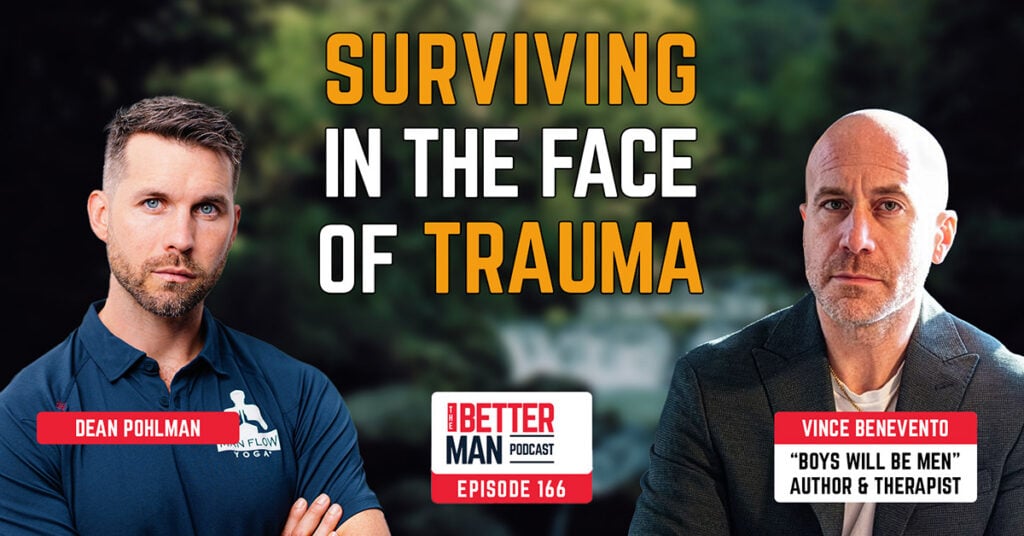
Surviving in the Face of Trauma | Vince Benevento (Boys Will Be Men author & therapist) | Better Man Podcast Ep. 166
Therapist Vince Benevento discusses his son’s 135-day battle for survival and how that trauma redefined his approach to mental health. He…
Remembering Who You Are | Mark Divine (Retired Navy SEAL Commander) | Better Man Podcast Ep. 165
Retired Navy SEAL Mark Divine joins the show to discuss how meditation and mindfulness bridge the gap between societal conditioning and…
How an Athletic Mindset Extends Your Physical Longevity Even If You’re Not an Athlete | Greg Herceg (The Volleyball Strength Coach) | Better Man Podcast Ep. 164
Unlock physical longevity by adopting an athletic mindset, regardless of your sports background. Greg Herceg joins the show to share how…
Building A Life That Matters | Brian Dubow (Hit of Happiness) | Better Man Podcast Ep. 163
Brian Dubow joins the show to share his journey from empty success to authentic joy. After a quarter-life crisis revealed his…
How To Navigate Coming Out Late In Life | David Cotton | Better Man Podcast Ep. 162
David Cotton’s story proves it is never too late to come out. After a career as an Air Force Brigadier General…