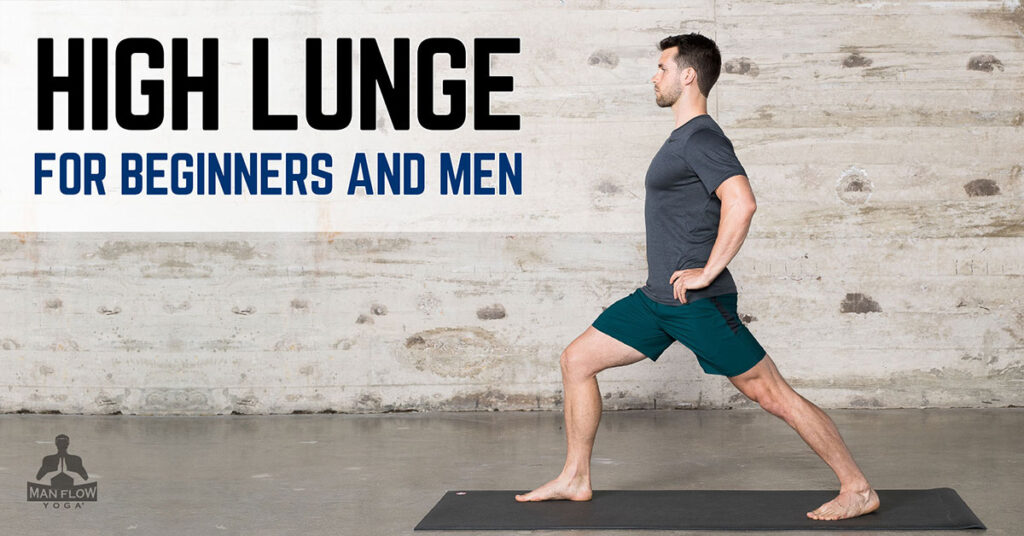
No matter your fitness level, try to perform this lunge every single day. This full-body exercise combines hip mobility, core strength, balance, and body control to reduce your risk of injury in the knees, ankles, hips, and spine. This also builds lower-body strength and endurance for improved athletic performance.
High Lunge Target Areas
- Hips
- Core
- Spine
- Lower Body
High Lunge Benefits
- Improves hip strength
- Relieves stiffness caused by sitting and inactivity
- Improves hip mobility
- Improves basic balance
– click images to enlarge –


How to Do High Lunge
- Stand at the top of your mat with your feet about 6in (15cm) apart.
- Take a big step back with your left foot and rise up onto the ball of the left foot. Bend your right knee until the shin is perpendicular to the floor. Press the right heel into the floor to engage your right glutes and hip, and level your hips.
- Squeeze your legs toward each other to engage inner thighs and core. Reach your arms straight overhead,
- keeping the ribs drawn in to prevent chest from splaying open. If front knee passes ankle, shift front foot forward, keeping shin perpendicular to floor. Hold the posture, inhaling as you lengthen the spine and maintain the stance, and exhaling as you sink deeper into the lunge. Repeat on the other side.
Cues for High Lunge
- Elongate spine
- Place hands on hips to level them
- Keep knee behind or above ankle
- Squeeze thigh to straighten leg
- Keep weight in both hips and legs
- Stack shoulders over hips
- Lift ribs away from hips
- Pull navel to lower back
- Press firmly into heel, ball of foot, and toes
WHAT YOU SHOULD FEEL
- Engagement of quadriceps, hamstrings, inner thighs, and hip flexors
- Engagement of glute of front leg
- Stretch in shoulders and left hip flexors
WHAT YOU SHOULDN’T FEEL
- Lower-back pain; if so, bring feet closer, and increase hip and core engagement
High Lunge Pro Tip
Use your breathing to work deeper into the pose. After the first 2 or 3 breaths, it is easier to sink deeper while maintaining good technique, so push yourself deeper the longer you hold it.
High Lunge Alternate View
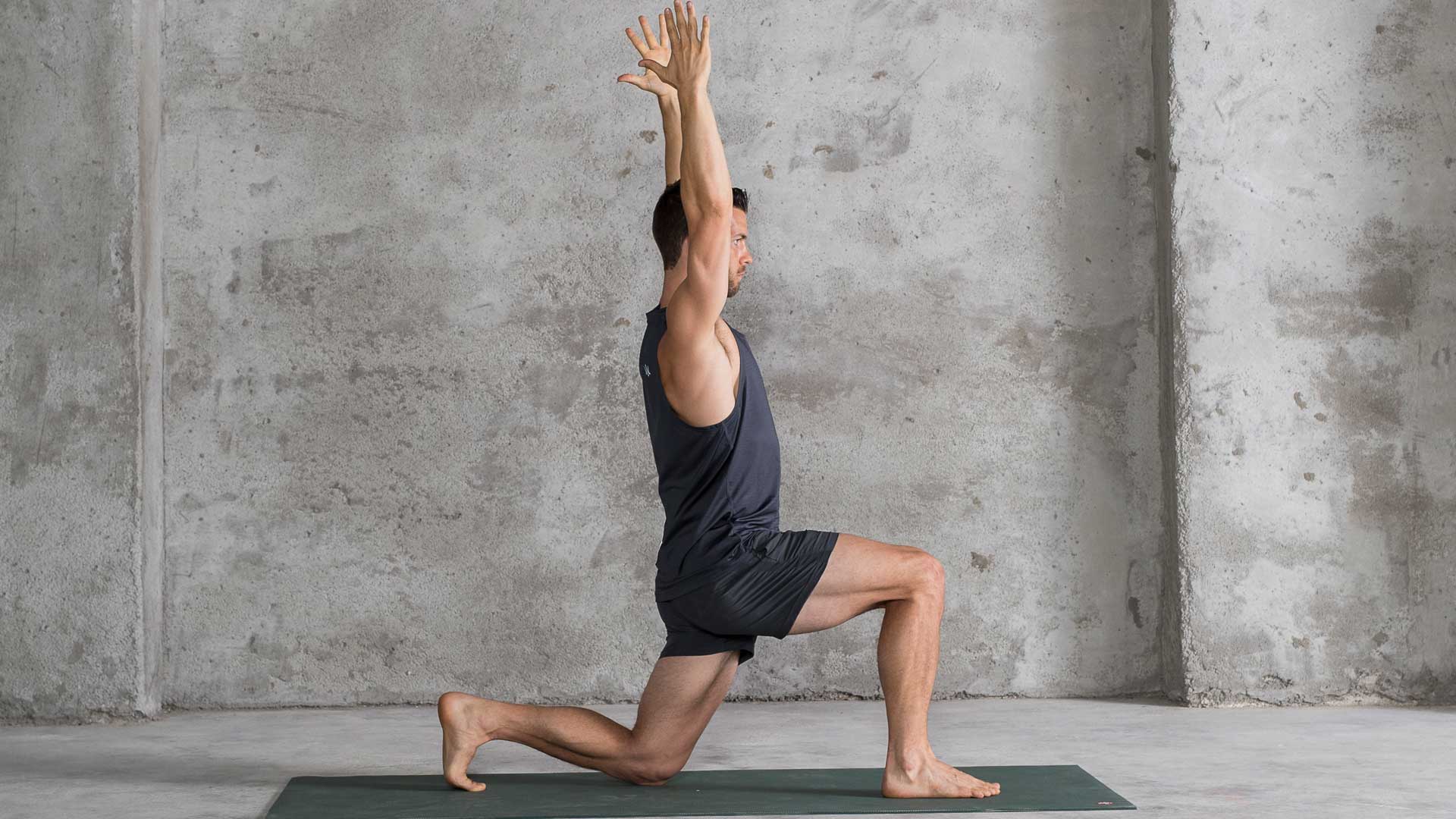
If it’s difficult to maintain stability, start with Low lunge (see p58) instead. Bring feet closer toward each other, and rest your back knee on the floor. Once you gain more stability in your legs, you can progress to High lunge.
About Dean Pohlman, Founder & CEO of Man Flow Yoga, Author of Yoga Fitness for Men, Expert on Yoga Fitness for Men.
Dean Pohlman is making yoga more accessible to fitness-minded men. A former collegiate lacrosse player, Dean discovered yoga while recovering from injuries and quickly realized its potential to boost strength, mobility, and overall performance.
Since launching Man Flow Yoga in 2013, Dean Pohlman has built a global community that speaks for itself:
- 195,000+ customers
- 42+ million YouTube views
- 200,000+ followers across Instagram, Facebook, and TikTok
Dean’s book Yoga Fitness for Men has sold over 50,000 copies, while his Body by Yoga DVD series has surpassed 120,000 units sold, earning him consistent #1 rankings on Amazon and thousands of five-star reviews. He’s also been featured in Men’s Health, Muscle & Fitness, GQ Magazine, Fox Tampa Bay, The Chicago Sun, and on influential podcasts like The Ready State and Ben Greenfield Fitness.
With a focus on real results, community, and technique-focused instruction, Dean Pohlman continues to change the conversation around yoga. He’s not just teaching poses—he’s helping people build stronger, more capable bodies for life.