Some people don’t need any kind of external motivation to exercise. They’re in a routine, and their day feels chaotic when they don’t do physical activity.
But the vast majority of men, especially men over the age of 40, need a little pick-me-up from an outside source every now and then. And that’s where having a fitness community can be the difference between achieving your goals and giving up.
And you know what?
The external motivation provided by a fitness community is only one benefit… and it might not even be the most important benefit either.
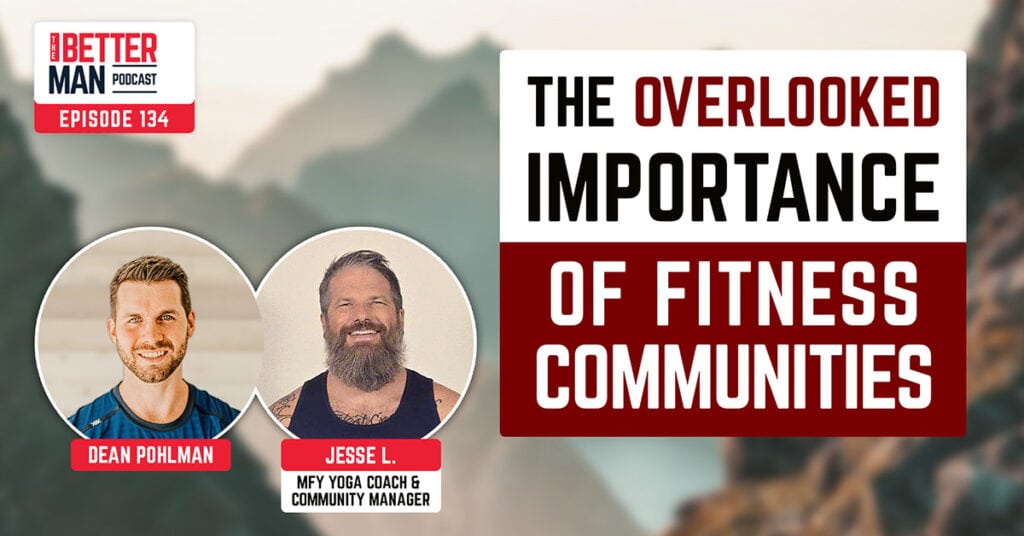
In this week’s show, MFY Coach & Community Manager, Jesse Lee, joins me to share some of the other overlooked benefits a fitness community can have. Jesse’s been “in the trenches” of the Man Flow Yoga Community Facebook Group since 2019 – so he’s seen it all.
Here’s what Jesse and I share in this episode:
- The weird way a fitness community improves your “limbic system motivation”
- Common mistakes men make when communicating with other men that can derail your fitness momentum
- The most overlooked benefits of community particularly for men
Listen now!
The Better Man Podcast is an exploration of our health and well-being outside of our physical fitness, exploring and redefining what it means to be better as a man; being the best version of ourselves we can be, while adopting a more comprehensive understanding of our total health and wellness. I hope it inspires you to be better!



Use the RSS link to find the Better Man Podcast on other apps: http://feeds.libsyn.com/404744/rss
Episode 134 Highlights
- The incredibly helpful, but severely neglected “Normalization” technique that helps men alleviate stress and overcome tough problems (5:46)
- How to outsource some of the burden of working out to other people (and the weird way this makes you more consistent) (10:17)
- Coach Patrick’s Jedi mindset trick that instantly helps you reframe negativity into an empowering sense of positivity (16:17)
- The “limbic system motivation” secret of fitness communities (21:13)
- Why creating distance from your emotions instead of talking through them can actually help you recover faster from ruminating thoughts (26:21)
- The most refreshing sentence you can tell yourself when you’re dealing with tough emotions (29:23)
- Simple ways to incorporate more exercise into your morning (and why this is a cheat code for consistency) (38:11)
Dean Pohlman: Hey guys, it’s Dean. Welcome to the Batman podcast. Today’s episode, I’ve got Jesse Lee, who is our community service manager and also a coach and yoga instructor for man for yoga. And here we are going to discuss how community can be helpful to your success with fitness. So specifically here we talk about examples from within the mental yoga community.
Dean Pohlman: But these are concepts that can be applied to any fitness community. Some of the things we go through are how sharing your own experience and normalizing that experience by hearing about others who have had the same experience can be helpful. It’s called normalization. We also talk about how you’ll be able to do more than you would be able to do on your own, especially if you need a little bit of that extra push.
Dean Pohlman: And then we talk about how a good community can not only give you information to help you make decisions and choose what to implement into your fitness routine, but can also help guide you to your own solutions and how having a group mind to work with, rather just a one on one coach can be helpful with that.
Dean Pohlman: So hopefully this is helpful to you. If you have a community of your own, a great you’ll be able to take this into that. And if you’re already part of the mantle yoga community, then hopefully these are things that you can utilize as well. As always, I hope you enjoyed this episode. I hope it inspires you to be a better man.
Dean Pohlman: Hey guys. What’s up? It’s Dean. Welcome to the Better Man podcast. Today I’ve got Jesse Lee. Here he is our customer service manager and also our big and tall yoga instructor. And, we’re here today to talk about how you can utilize community to be more successful with your fitness. Jesse, thanks for.
Jesse Lee: Having me once again, Dean. I appreciate it.
Dean Pohlman: Always an exciting conversation. And, just want to publicly say thank you for all that you do for me and for yoga and all the all the comments that you respond to, all the, behind the scenes help desk that you do to keep people happy, it is something that I cannot do. Well. So, I’m glad that we have people who are better people.
Dean Pohlman: People than I am.
Jesse Lee: Well, I, as part.
Dean Pohlman: Of the team.
Jesse Lee: Thank you for continuing to give me a job.
Dean Pohlman: Don’t leave me. All right, let’s see here. So. Yeah. So Jesse has been, So you’ve been a customer service manager since 2019, and then recently, you’ve kind of stepped into probably, I don’t know, within the last year, last year and a half, you’ve kind of like, stepped into the coaching role as well. And and right now we’re doing a, a group coaching program, that is highlighting a lot of how community can be helpful, for doing your workouts more consistently, for also being, you know, involved in a, an atmosphere that encourage you to do more fitness.
Dean Pohlman: But even outside of that, group coaching, outside of, you know, this particular community, there are some concepts that, you know, we’ve experienced in that where, you know, continuing develop that you can take into, whatever your fitness program is, and utilize with your own community. So that’s what I want to discuss today. So, Jesse, I’ll just I’ll just let you kick it off and talk about your some of your experience with that so far.
Jesse Lee: Well, like you.
Dean Pohlman: How about a vague how about a vague, open ended question to to give you some direction?
Jesse Lee: Well, so when it comes to community, I have a lot of experience with that. I’m a, I’m a, I’m a fairly social person. And so I believe in the importance of community. And, community has always been a big part of me for yoga, generally speaking. You know, like we have this huge community, which is really helpful, especially like when you first join, you know, that’s been a big part of my job as part of the customer service customer experience was helping the community.
Jesse Lee: You know, it’s community management is also something I kind of, you know, it’s other part of my job. And so I’ve really seen the community flourish over the last five years. And it’s been really great because, you know, like I said, people come in here, they don’t know what to do. They don’t know where to begin.
Jesse Lee: And they have a lot of questions. And, and it was really helpful, especially like when we look back at 2020 and 2021 with the pandemic, the whole lack of community physically was hard. And so that’s where I think it started to like flourish for us. And so it’s been this natural segue way into the coaching, into the small groups.
Jesse Lee: And so that’s, you know, that’s what I’ve been working on now. And so I’ve really seen the community grow as a whole, and I’ve definitely seen this need for, for, you know, kind of finding the commonalities where people can be coached together and it helps them, you know, be successful, be consistent, be, you know, be everything, like work towards their goals that they’ve kind of set as a group.
Dean Pohlman: Yeah. Just to speak to the the pandemic situation. So, you know, if you’re if you’re here and you’re listening now and you’re like, oh yeah. Dean was like my best friend during the pandemic and you know, of after after six months of just working out by myself and not leaving my house, I just, you know, eventually started having conversations and started swearing at him even though he didn’t reply.
Dean Pohlman: And, you know, so I, I love hearing about those stories and how, you know, and unfortunately part of part of man for yoga, even then we had this community. So in addition to, you know, this, this one way, this one, this one, right relationship, there was also the community where we had people come together and talk about their experiences with the workouts, you know, talk about their, their struggles during that time and, and even afterwards.
Dean Pohlman: People now continue to stare, you know, they’re at their wins, their, their struggles. And that normalization is something normalization of your own personal experience by hearing about similar experiences from others is what’s what I’ve what I’ve found to be, you know, this, this incredibly helpful, tool, that community can provide. And yeah. So I don’t know if you want to speak to that if within the group coaching, but that’s that’s something that’s always really cool to see when you’re talking with a group.
Dean Pohlman: And like five other guys were like, oh yeah, me too.
Jesse Lee: Yeah. Yeah, I, I can’t tell you how often I hear from people, you know, I’ll, I’ll go back to the pandemic part just really fast. How often people will reach out to us and say, you know, Dean, you got me through some tough times. And then and then the community did as well. We still I still hear from people all the time that that feedback was like that community and just the coaching, something to rely on regularly.
Jesse Lee: It was super helpful. Yeah. Like it’s been, it’s been it’s been a really eye opening experience for me, even as someone who already has experience with the community now doing it in a coaching role. Because there’s this you find the commonalities and there’s this, there’s this really rewarding part of the vulnerability of sharing. Someone’s like, you know, I screwed up this week.
Jesse Lee: I wasn’t able to do X, Y, and Z. And just yesterday I had one of my coaching calls. Whenever someone has a struggle, at least one other person will raise their hand like, hey, been there, done that. You know, you know, quite a few guys and half the guys are, a little older until one of them is retiring.
Jesse Lee: And so he has been getting some really good advice from the other guys that have already been retired. I’ve struggled with weight loss. Yeah, you’re my dad.
Dean Pohlman: You’re down. My dad’s at my dad’s house.
Jesse Lee: I wouldn’t call him what it is. He’s just a group member. Is one of my favorites. I really enjoy talking to him. And so it’s been. It’s been really a good experience because there’s these common ground, you know, where where I’m able to bring my experiences to the group as well. And so them sharing has helped me.
Jesse Lee: And it’s funny because, you know, I’m I’m supposed to be the coach. And so I’m coaching and kind of guiding the conversation. I’m making sure we’re all talking about our goals. But at the same time, I’m really benefiting from it because there is this open communication and it’s really helping me along my journey as well. So yeah, definitely, once they’ve all kind of learned because we’ve been doing this cohort for months now, once they’ve learned more about each other, like the meeting starts and it’s just a great conversation because they find this, you know, support, based and everything that they have in common.
Dean Pohlman: Yeah. And, I there’s something that we’ve heard from, you know, we’ve been doing this for, you know, we started this with this experimental kind of engage community about a year ago. And, we were initially concerned like, well, are people really going to open up in a, you know, an online setting? And I think I remember Patrick, who was, one of our other coaches.
Dean Pohlman: He’s kind of like our we call him our motivation and consistency coach. But we brought but he’s so much more than that. And, he, he kind of like after a few sessions, it kind of came out that. Okay, it’s like after four weeks, after like four weeks of consistency, then people really start to like come out of their shells and then they the group really starts to form this, this, this cohesion.
Jesse Lee: Yeah. No, I’ve definitely noticed that, especially this week, because this was the fifth week in just four weeks together. We all have our telegram. We communicate daily. And it’s funny because there’s even the guys in the group, I’m like to call it your dad, but your dad’s one of them, where they don’t do a lot of the social communication throughout the week.
Jesse Lee: But then he relies really heavily on the group, and he’s he’s there every Wednesday. And I actually had the feedback that, you know, he sees everything that we talk about. And it’s motivating for him. So so it’s it’s great to see that, there’s there’s there’s levels of comfort. There’s people that want to share every day. There’s people that don’t share as often, but everyone still reaps the benefits.
Jesse Lee: A lot of people that need to share, get like that checkmark that, like little satisfaction. You know, I did my workout, I shared it with the group. I did it. And then there’s the people that need the motivation of seeing the other people. Like, you know what? I’m not big on sharing everything, but seeing this group kick ass and continue doing it.
Jesse Lee: It’s going to motivate me. So like no matter what your level of involvement is, it’s it’s still super motivating. And then, you know, we get together every week and we see everybody.
Dean Pohlman: Yeah. So I’m hearing that having that group accountability of seeing other people do their workouts inspires you to do workouts that, you know, maybe in the moment you don’t want to do. But you you think of your group, you’re like, oh, these guys are all doing their workouts and, and, and I’m going to do my workout too. And I think the other thing that that stood out from what you said, and, you know, I’ve talked to my dad about this as well, and we’ve seen it in the community.
Dean Pohlman: But every now and then you see a post, you see a comment from somebody who’s like, hey, I’ve been, you know, a part of man for yoga for years. And up until now I’ve just been, what is my dad? He calls himself like a lawyer, right? Or like, what’s the what’s the term? He has. He has he told the this term basically it’s a it’s like this, he’s like, I watch, but I don’t actually do anything, but I’m like.
Jesse Lee: You know, he watches, but he doesn’t really get too involved. But he shows up and he’s, he participates in the group setting, which is really great. Like, we’re all video talking. Yeah, he has a lot to say.
Dean Pohlman: Yeah, but eventually these people who don’t say anything, they see enough other people doing it and like it inspires them. It kind of brings them out of their comfort zone. And then they say, hey, like, I just wanted to say I don’t normally post, but I’m really inspired by all the things that you guys are saying here.
Dean Pohlman: And, you know, I’m making my this isn’t I don’t know if I’ll do this, you know, regularly, but I just wanted to come in and say hi. And I appreciate everybody. And so I think it’s really cool for, you know, those accountability reasons, just that excitement, but also because it being around, being in this environment where you’re seeing other people, you know, sharing things that eventually encourages people who wouldn’t otherwise share things to kind of come out of the woodwork and say like, hey, like I’m here to.
Dean Pohlman: And thank you guys.
Jesse Lee: See that that that also happens often in, you know, our greater community because we have, we have that Facebook group and we have the members area, we have all these places where members can communicate every once in a while, you know, with those people that doesn’t post very often, will pop in there. And it’s really refreshing because everyone loves it because like, hey, we haven’t seen you in a while.
Jesse Lee: We’re glad that you posted. And then, you know, it’s just it’s and then they always appreciate the feedback. So, so yeah, you know, it’s it’s when it comes to community, everyone has a certain comfort level. And so you can’t expect the same from everyone like I don’t I’ve threatened the guys. I’m like, I’m gonna if I don’t hear from you, you’re going to hear from me, I’m gonna call you, I’m going to email you.
Jesse Lee: And I’ve also I’ve given them the opportunity of like, hey, if you need that little love, like tough love of like, hey, where are you? Let me know. I haven’t done it yet, but, Yeah. Like what? They’re all definitely pulling from the experience, what they need personally. And so I’m feeling like they’re all kind of striving and working towards the goals that we set up in the very first.
Dean Pohlman: Yeah. And yeah, I think it’s a good point that there are, you know, some people who are going to talk more, some people who are going to talk less. And we’ve been fortunate at that. We’ve been able to create groups that, you know, have a good amount of both. So we’ve been lucky not to get into the situation where it’s like ten of my dad’s in the same group, and they’re all just like looking at one another like, well, this is dumb.
Dean Pohlman: No one’s saying anything.
Jesse Lee: You.
Dean Pohlman: Know, but,
Jesse Lee: Yeah. When you actually talk to the whole time, if they need me to, I prefer not to, and, Yeah, I know, I always, I always start it off by talking, then gently give suggestions. And then there’s always the people that, you know, I. I want everyone to talk. Whenever we have our group discussions, it’s always like, you’re going to have to talk at some point.
Jesse Lee: And then if you’re the last one, I’m going to call you out and I want you all to volunteer. So. So at least they all go into the meeting knowing that they’re going to be required to talk.
Dean Pohlman: You’re also talking about this earlier. But I think one thing that’s good to know about, like a good group coach facilitator is that they aren’t there to answer all of your questions. They’re there more. So to guide you to your own answer. And that’s something that I really appreciate. That’s that’s one reason why like I brought Patrick on on board because we talked with probably like 5 or 6 other people.
Dean Pohlman: We had a lot of people apply, but we had like 5 or 6 people apply. 5 or 6 people that we actually interviewed. And Patrick really stood out as this person who kind of empowered you to do, you know, to come to your own, to come to your own conclusions rather than, you know, somebody just giving you the answer, but helping to ask questions in a way that guides you to come to your own conclusion.
Dean Pohlman: Because. Because when you can do that, when you can do that, when you have agency, when you have control over, you know, your response and the and the the outcome or the action that you want to take, you’re much more likely, to follow through that. And so and I bring that up, just in this context, because, you know, community can be great for providing you with ideas, providing you with like, direct advice.
Dean Pohlman: You know, if you have a specific situation, being able to talk to a group and saying, like, hey, has anybody gone through this before? Like, what information can you provide? Like just in the last week we’ve had, I’ve asked people about like, hey, like, could anybody share success with intermittent fasting? And I think we had a ton of responses to that.
Dean Pohlman: And then yesterday I brought up like, hey, does anybody have experience with prostate cancer? And a ton of people respond to that. And so part of it is getting those direct responses and like getting direct advice. But the other part of of of community is, is having a group that encourages you to come to the conclusions yourself. So I’d love it if you could speak to some of that that you’ve noticed in the community, in your group coaching.
Jesse Lee: Yeah. I will say working with Patrick and his ability to help you find your own answers was refreshingly off putting. The first time I was dealing with it, because I, I think I said something negative about myself, and I was I might have been even just joking, but the way that he jumped on that and turned it around, basically he he were I wish I knew exactly what I remember what it was.
Jesse Lee: But he reworded the phrase I had used in a way that like turned a negative into a positive. And so it’s true.
Dean Pohlman: Did he do the yet on you?
Jesse Lee: I think that might have been one of it.
Dean Pohlman: Yeah, yeah, it’s like I can’t do that yet.
Jesse Lee: And yet he instills in you this positivity that the solution is there. You just have the wrong attitude or you have a look toward enough, or you just need to take a moment and it’s and it’s a great reframe. Yeah. When it comes to community, and this is, this is something I personally learned to work with coming from a, you know, a community manager as well as a coach.
Jesse Lee: Like if someone has a question about something. In the past, I’ve always been really determined, like I have to find the answer. Usually I don’t know what the answer is. I have to find the answer. And it’s it’s either a I don’t always get the right answer or b I end up stressing because I don’t know the answer.
Jesse Lee: A lot of times the solution is just the community. And instead of, you know, instead of saying, oh, I’m gonna find the answer for you, I like I noticed what you did this week when we had someone that was questioning about people’s experience of prostate cancer. You didn’t have the answer. You didn’t look for the answer. You looked to the community.
Jesse Lee: That was the answer. Because, you know, because the community has the tendency, you know, because it’s grown to the size where like, anytime someone has an issue or a question guarantee, there’s going to be someone that has experience with it, whether it’s directly or indirectly. And so that’s something I’ve learned as a community manager as well as a coach.
Jesse Lee: Is that I don’t always have to have the answers. I’m not always going to have the answers. And once you enable people to rely on themselves when it comes to it, they also learn that, you know, I’m going to be able to find my own solutions, and when I can’t, that’s when I can look for a community. And so it’s been refreshing because, you know, working with like I have this group of guys, like I said earlier, have quite a few of them are retired.
Jesse Lee: The other ones, some other guys are retiring soon. And so it’s I don’t know anything about it. And so they’ve been able to rely on each other when it comes to advice about talking about certain things. And so it was it’s nice. And then I also I’m learning from that. So the community it’s it’s it’s a big part of it when they can learn to rely on themselves to know the answer and then realize that there’s a point where you can reach out to your community that that you have it.
Jesse Lee: And the answer is going to be that, yeah.
Dean Pohlman: So, so getting getting information from the community instead of, you know, coming to the coming to the person in charge and saying like, what is the answer? All knowing guru, it’s coming to the, you know, and I don’t I don’t pretend to do that. I’m like, I don’t know, let me talk with my wife. She’s a really smart physical therapist or like, I don’t know, I’m going to ask the community for you.
Dean Pohlman: Like I’ve done that a lot. And, in the last, I mean, both those examples I just gave, those are actually responses to like one on one coaching. Those are those were questions that came up in my one on one coaching. I’m like, well, I mean, if you’ve got a question on that, I’m sure a bunch of other people have questions.
Dean Pohlman: Part of that, you know, just part of that normalization thing of just recognizing like, no, you’re not special. A bunch of people have probably the same exact problem that you are, or they’ve gone through it or they’re eventually they’re eventually going to go through it.
Jesse Lee: Yeah. And the difference between like a community, like you could easily Google those things, right? You know, when you start stepping out onto the internet and all of that stuff, I was just I was just talking to my teenage daughter yesterday who was writing a research paper because she she was looking on Reddit and Wikipedia, and I said, stop.
Jesse Lee: So much information that is incorrect and inaccurate. When you have a community.
Dean Pohlman: Here, this is a book.
Jesse Lee: Here’s a pages.
Dean Pohlman: Get it from a library, have a.
Jesse Lee: Community and you can find someone that has a similar experience. You can communicate and you can ask questions instead of googling something someone wrote about it. When you have someone like, oh, you’ve had the same experience, okay, can you like you can. There’s a lot to be said about being able to talk back and forth and ask questions and get answers so that that’s a big part of community.
Dean Pohlman: But even even an a big part of that also is like, you know, you could go to like a random community and ask a question, but because you don’t know that community, you’re not going to trust them and you’re not going to you’re not going to do the thing. So when you’re able to consult with a community that you trust, yeah, you’re going to get information, but you’re also going to get that information in a way that you feel motivated to take action.
Dean Pohlman: Yeah. Rather than like me doing research on my own and finding like, you know, this, you know, this, this piece of information from a source that I just don’t trust or, when we hear stories, when we hear a humanized version of information, we we we, we take that into account more so than if we just heard, like, you know, and unemotional information.
Dean Pohlman: So when we hear personalized story, we’re able to take not just the kind of the mental motivation, but we’re also able to take the emotional motivation, kind of that limbic system motivation, which is we are, you know, we’re emotional beings. We’d like to think we’re logical, but really, where we use logic to justify emotional decisions and not the other way around.
Dean Pohlman: So when we’re able to get advice from a community that we trust, we are able to take that action. We take that information and we’re able to put it into action with emotional motivation rather than just like you know, this, this half ass other motivation. That was a long way of saying that.
Jesse Lee: No, no, I appreciate you. Thank you. I’m gonna have to go back and review that later. I fully understand it. You know, like, and that has a lot that says a lot about our community as well. It’s been something that I know that you have worked hard at and I have worked hard at, because we want it to be, you know, we we’ve really made it a big part of math for yoga.
Jesse Lee: And it’s and it’s something that, like, everyone can experience where it’s like, if you want a group that has value, you’re going to put work into it. And so we really want it to be this place that if anyone has a question or needs help or needs advice or someone if someone just wants to share and get support, you know, that’s what that’s what it’s there for.
Jesse Lee: So it’s I wouldn’t say curated because it’s not exactly curated, but it’s definitely been I’m trying to think of a better word. The curated,
Dean Pohlman: Organically grown.
Jesse Lee: Organically grown, kind of nurtured. Nurtured, nurtured looking. Yeah. It’s been it’s been nurtured. And so, you know, when, when, when, when in community, you know, community is great. The fitness world, it’s great to have that support and that accountability. And but you know, when it comes to groups like you can have groups for everything. You can have groups for, you know, quilting clubs to cooking clubs.
Jesse Lee: When you nurture any kind of group, it can grow to this thing that is just really, really life and friendship affirming, I guess.
Dean Pohlman:
Jesse Lee: Yeah.
Dean Pohlman: Yeah, yeah. And I, you know, that made me think of, something else because, you know, not not all the time are people looking for a solution when they’re coming to a community? A lot of the time they’re just looking to say like, hey, this really sucks right now, you know? And and in those situations, it’s it’s really difficult, especially.
Dean Pohlman: Right. Difficult as men to look at someone coming to you and saying like, hey, this is, you know, I’ve got this problem. And like, you know, the men, they’re so here that they’re like, great, I’ve got the solution. And in reality, what that guy, what he really wants is like, oh, I actually don’t. I don’t want the solution.
Dean Pohlman: I just want I just want someone to like to pat me on the back and like, say that it’s okay. And so I think we do that. I think we do that really well in our community. Is is knowing when to offer or advice and knowing when to just offer support.
Jesse Lee: Yeah. No, it’s there’s something you said about shouting into the void sometimes, sometimes you just need to and, and social media for me it’s always I’m, I’m, I have a, I have a love hate relationship with it because I, I’ve been able to connect a lot of great people. It’s a big part of my job. And at the same time, I get really annoyed when people just want to shout into the void and vague book.
Jesse Lee: When it comes to a group, the big difference is a lot of them are sharing their struggles not because they want advice sometimes. Sometimes it is beneficial. Just like I’m having a horrible day, I just need to vent. And it’s great to know that you actually have people listening, not just this huge void of internet where everyone’s going to complain, but sometimes it’s nice to just share it and get off your chest.
Jesse Lee: Because like you said, we as men struggle with that. Sometimes that vulnerability of sharing can be hard. And so that’s that’s the value of a community, whether it’s, you know, 7000 or 10, just being able to let go of things sometimes.
Dean Pohlman: Yeah. And you know, and also in that, in that letting go process or in that expression process, you get so many people who are likely to respond and empathize with that and say, oh yeah, you know, me too. I’m also going through that situation. And it’s that. So I’m really book right now called chatter. It’s a really interesting book.
Dean Pohlman: I’ve actually had it on my bookshelf for a really long time, and I, I came in here and a couple weeks ago to, to look for a book that I thought might just like, oh, I’m, I’m getting a lot of, like, I’m having a lot of ruminating thoughts right now. And I came in here and I was like, if there’s a new book, I can start reading, and I found this book, I’m like, oh, Chatter okay.
Dean Pohlman: And I, oh, I picked it up and it said like when, like I forgot what the, the subtitle of it was, but basically something along the lines of, you know, like, well, like why the voice in your head matters? And I was like, oh, perfect. This is exactly what I wanted to, like, delve into. And, so one of the, one of the concepts that it talks about is, is when you are, when you’re experiencing emotion in your, and when you’re expressing it like there’s, there’s only that that’s helpful only to it’s actually not helpful.
Dean Pohlman: It’s the people who they did a study and they looked at people who did, they looked at people from Virginia Tech. I think the year was forgot the year, but there was a mass shooting in Virginia Tech. And then like, shortly after that, there was a mass shooting. And I don’t know, this is the United States.
Dean Pohlman: It’s really hard to keep up with all the mass shootings, that we have. But they compared people who talked about the incident versus people who didn’t talk about the incident. And there actually was no difference in terms of like, number recovery from the trauma between the people who really talked about the emotions and the people who just didn’t talk about their emotions.
Dean Pohlman: So that can be helpful. But what really helped was creating, creating distance from, the emotions. So being able to normalize the experience. So, you know, coming in and being able to say something that’s really frustrating you is like, yeah, I think there’s there’s, definitely there’s definitely it’s definitely important to not, like, you want to be honest with yourself and the emotions that you’re feeling and not bottle them up.
Dean Pohlman: But in so doing, as you express it, if you can receive normalization in response. So if you can realize like, oh, I am not the only person who feels this way. So it’s a good way to evoke normalization, I guess, is what I’m saying. And usually people see that after like, you usually see people after words and in response to the responses that they’re getting, they’re like, oh, you know what?
Dean Pohlman: I think I’m overreacting. Or like, oh yeah, this is really helpful to know that, you know, I’m not the only person and it’s able to, like, bring them back to, you know, a place where they can move forward from the extreme feelings of the emotions and kind of move more into the, okay, now, what do I do about this?
Jesse Lee: Yeah. No, I get that. So it’s like it’s like the next step past journaling. I’m also an eternal writer. I like to call myself a catastrophizing. I’m a ruminating catastrophizing and talking to this like, like I have a negative thought and then like, it’ll sitting there and then it’ll snowball because I won’t let it out. And so I will have a tendency.
Jesse Lee: That’s when I journal. I’m not a big journal or like, I don’t journal as much as you do, but like when I need to get out of my head up and on a piece of paper. And if that’s not the solution, because sometimes when you can verbalize what you’re thinking and you can sit on it and read it and you can look at it like, oh, I’m overreacting, this isn’t that big of a deal.
Jesse Lee: If I still need help, it’s after that. It’s like after I have it down on paper, I’m like, okay, I need some outside input because, you know, I’m struggling with this idea or this thought or whatever. That’s when you can go to a group and you know, whether it’s, you know, a small group, big group. And then that’s when you have that, that connection.
Jesse Lee: Because, you know, when you know that you’re not special, everyone goes through that is kind of nice. It it sounds kind of negative to say, hey, you’re not special, but it’s also really rich. It’s super effective. I’m not special. I’m not the only one that has this chat. Everyone else is dealing with it and we can connect and go out of the way.
Dean Pohlman: Yeah. There’s this great. I mean, there’s this, I haven’t mentioned this book in a while, but it’s one of my favorite books and it’s called The Subtle Art of Not Giving a Fuck. By Mark. It’s a mark Manson. It’s not the it’s not the other Manson. Not the serial killer Manson the. Anyways, Manson is the last name.
Dean Pohlman: But there’s a there’s a, there’s a part in that book that talks about this, how this feeling of like making yourself into how this situation of when you think of yourself as special is actually a form of entitlement that absolves you from a solution. So it’s like you saying, oh, you know what? Like, my knees are so bad that whatever works for other people just doesn’t work for me.
Dean Pohlman: And when you’re able to look at that and see the bullshit in that and say, like, well, are my knees really that different from every like in this era of everyone sitting at a desk not exercising enough? Are my knees really that different from anybody else? You know? And so if you’re able to see that as if you’re able to grasp that concept of looking at yourself as special as really a form of entitlement that absolves you, of responsibility, of fixing the problem, then you can actually do this.
Dean Pohlman: You can do the thing that you need to do rather than, you know, getting stuck in this, oh, my life is so much worse than yours, and I can’t fix it.
Jesse Lee: Yeah. And that can be that goes for everything. That’s not just fitness. Like anything that you find yourself stuck in and feeling sorry for yourself and you get into that really bad those cycles, it’s like no it’s it’s not you’re not the first one unless, you know, you’re that lucky person that’s experiencing something for the first time.
Jesse Lee: But then that’s, you know, that’s why that’s why. That’s why I support groups exist. That’s why there are communities out there for all kinds of things. So, because people, people the internet is supposed to bring us closer together, but I feel like has a tendency to do the opposite. And so, like, I think I think people need community more than they’re willing to admit.
Jesse Lee: Like, they need to find someone to connect to, and, you know, and there’s this, you know, this, this. I know so many people that like to think of themselves as like lone wolves or, you know, not in need of others. And it’s not, it’s not it’s not true.
Dean Pohlman: Everyone need do they do they post about it on Facebook? I’m I’m a lone wolf. Please. Like the status.
Jesse Lee: An alpha male lone wolf. And I don’t need you. Okay, whatever you need.
Dean Pohlman: You need a hug. And when you figure that out, maybe we’ll be here for you. Maybe not. I don’t know.
Jesse Lee: You know, hug. You need that on a t shirt. We need a man for yoga. You need. Do you need a hug?
Dean Pohlman: You need a hug, bro?
Jesse Lee: Yeah, because we have a Richard.
Dean Pohlman: We have a Richard who probably won’t give you a hug. But he’s very good at hugging.
Jesse Lee: He gives great hugs. But, you are. When he goes away for free.
Dean Pohlman: Yes. Whenever I see him, I just like, I’m just like, can you, can you crack my back? And he’s like, sure. You know, just now I’m in the air. Okay.
Jesse Lee: It’s, it’s a little different. Hugging him because, you know, it’s like hugging myself and I’m not you. Yes. Right.
Dean Pohlman: So, so one of the other things that, I think we do really well on are these group communities that we’re in. This group coaching that we’re doing right now is, you know, we see multiple touch points throughout the week to kind of keep you coming back in. And I’m just, you know, curious from your perspective, from your experience with that.
Dean Pohlman: How has like those, you know, how helpful are those multiple touchpoints to helping people do more than, you know, they normally would on their own?
Jesse Lee: It’s it’s I’m gonna I’m gonna I’m gonna mess up this saying, there’s this quote, it’s going to be a grand quote. And I can look at the minutia of it like, so it’s like, if you can touch, if you can, like, positively impact one person’s life, then you’ve done a good thing. And so, like, I have a set schedule that I check up with the community often, whether it’s the community or my cohort.
Jesse Lee: And a lot of times you’ll see, like people will post throughout the day like I did my workout or I did this, I did that. At the end of the day, there’s always some stragglers that said, you know what I got? I didn’t, I did my workout or I did my meal prep or I did this, or I did that and they they did it at the end of the day.
Jesse Lee: But because that group was there and you touched on this earlier, they didn’t let the group down. And it’s funny because like, the group’s not holding this accountable. Like, I’m not I’m not sitting here, you in the coaching, even in the small groups being like, hey, get it done. But because they know that we’re here, they’re holding themselves accountable because they know that they don’t wanna let the group down.
Jesse Lee: And so, and see, I’ve definitely seen the sharing work where there’s a my to people when there’s a stragglers like, you know what? I wasn’t going to do it. But y’all really kept me going. And here I am. So it’s it’s yeah, it’s it’s definitely something to be said about those people that just it’s. Yeah. The, the the sharing part.
Dean Pohlman: Yeah. It makes me think about like repeated exposure to certain ideas, because, you know, reading a book is one thing, right? Because it exposes you to the ideas. But I think there’s a there’s a difference between exposure to the ideas and then implementation of the ideas. But the more that you can expose yourself to those ideas, the more that will bring you to the tipping point to actually do the thing.
Dean Pohlman: All right. So I, I used to kind of Pooh Pooh people who, just, you know, listen to podcasts over and over and read books, but, like, I’m like, you’re not making any changes though, right? But like, if you can put yourself in that environment and like, that’s what you’re hearing and that’s what’s, you know, that’s what you’re being exposed to, then hopefully eventually it gets you to that tipping point where you do take action.
Dean Pohlman: So, so being in that environment, I think can be really helpful for people who just need that, that extra push.
Jesse Lee: Yeah. One of the members of my group, who’s who’s retiring, he’s going through a move. He has all the stuff going. He specifically joined the group because he knew that he would be struggling. He knew that he would he would. He wanted to stay on top of his health while being stressed out because he knew, like, what’s a really good way to manage stress a little bit exercise, a little bit of me time.
Jesse Lee: And so it’s been it’s been a slow process because, you know, there’s there was a lesson or a story that you told once about, like if you it’s sometimes it has to happen baby steps. You don’t have to run five miles your first day running and go for a walk. You don’t have to do an hour of yoga, but if you get your mat out, it’s a step in the right direction.
Jesse Lee: So this guy in my group, he wanted to get a gym membership, and so he finally got the gym membership. And so it was baby steps. He went to the gym, but they walked on the treadmill. And so I kept encouraging him like, no, don’t don’t set these huge goals, set these small ones, these really attainable ones because it’s a marathon, not a sprint.
Jesse Lee: And so over time, you know, I finally got him. He I finally we were able to hold him accountable. He got the gym membership. He started going. And it’s just been this kind of slow growing because that’s really what we that’s what we want to encourage. You know, something that is something that you can easily build upon.
Dean Pohlman: Yeah. So what are some other, are there any other like maybe some common situations or like some common experiences that that come up in this environment of being more successful with your fitness that people would benefit from hearing just to kind of normalize their own experience.
Jesse Lee: So, yesterday the group we talked about, you know, something that we see a lot in the community and, and what people ask, well, what’s the best time of day to workout? And generally speaking, it’s going to be what best works for you, like I have. You know, I have some members that like they work out in the afternoon because mornings don’t work or they work out in the evenings, but a very common goal, a common, common theme across my group is morning workouts.
Jesse Lee: So all of the guys, we all kind of came up with this consensus and one of the guys said it best. He said, I don’t workout first thing in the morning. I will talk myself out of doing it in the evening. I’ll come up with excuses. I will have all these these reasons why I shouldn’t do it. And so that’s something I’ve noticed.
Jesse Lee: And, you know, I get it. Mornings are hard. I have kids at preschool, all these things. But if I can start my day with fitness, whether it’s a walk around the block really quick before I get the kids up, or whether it’s a half hour of yoga, guaranteed, I’m not going to regret it and I’m going to still have a lot better going into my day because I set the tone.
Jesse Lee: I started with a little bit of me time. I’m going to feel good. So if you can start your day with with fitness and it doesn’t even have to be like go lift weights a walk. Sometimes I don’t feel like doing yoga in the morning. I can’t do it. I can walk walking pretty easy, go walk around the block, get some fresh air.
Jesse Lee: I’m gonna feel a thousand times better when I get home, and I’m going to be in the right mind frame to help my family. So that’s that’s definitely been something I’ve learned is if you can start your day with fitness, don’t make an excuse because that’s usually what’s going to be holding you back is your excuses. Start your day with some physical activity and you’re not going to regret it.
Dean Pohlman: Yeah, yeah I think that’s like that’s that’s the easiest way to do it. You know, on the other hand, like you said, the the best time to work out is the time that works for you. So, you know, I’ve, I’ve worked with some people now where they’re like, they’re night hours, right? And they’re just awake at night.
Dean Pohlman: And so they’re super lethargic in the morning, like for me, for example, I’ve always worked out in my big workout for the day happens around 4:00 because I’ve been, you know, that was when I started working out when I was in high school and I lifted weights and I still have weights now. That was that was when I lifted weights.
Dean Pohlman: It was at 4:00. So, you know, the idea of me waking up early and, like, lifting weights, like, now I just I’m not ready for that. But being able to wake up and and do some mobility works and stretching some stuff to find my body for the day, that has been, that has been awesome. But, but also acknowledging that, hey, like, you know, a lot of us would like to be that person who wakes up early and works out in the morning, but not all of us are.
Dean Pohlman: That’s just not the reality, you know, and being able to, you know, be in a community where you ask that question and you realize like, oh, this person does their workouts at 10:00 at night, like, cool. You know, if that works for you. Yeah. Then then great. So, what else.
Jesse Lee: What else? What?
Dean Pohlman: Yeah. What other situations have come up? Let’s get let’s let’s get like one more good one.
Jesse Lee: Oh. One more good one. Well, we had a specific this week. So we’re doing the community challenge. My group decided to do the core necessities. We started. We did, we followed along to, a program together for the first month, and, we’ve just started this new community challenge, and, it’s been nice because every day we get feedback.
Jesse Lee: And yesterday, everyone had the same complaint. And it was kind of refreshing. On one hand, it sucked because it was the else it’s like against the wall. I think it was day two and we all struggled with it. And so it was nice because some people had advice like as a as a yoga coach, I was able to give some advice that I personally used modifications for myself, but so did like some other people did as well.
Jesse Lee: And so it was nice in the fact that we all, we all headed it together, so we all struggled with it. Even your dad did. And so we all, but it was nice because we got to talk about it and we got to share it. And then we came up with solution. And so the goal is for next week, we’re going to try to implement all of these things and have a better attitude.
Jesse Lee: And so that was really nice because like everyone came in oh that sucks I mean yeah it did. But did you do it. Yeah you did. So it’s like being able to do and sit and hold your, you know, your foot up for five seconds at a time is better than nothing at all. So we’re going to have this changed attitude next week when we get back together, because we’re going to have done it a second time.
Jesse Lee: And hopefully you’ve seen some progress. And if that progress is in physical progress, there’s going to be mental progress because we’re going to approach it from a better my friend.
Dean Pohlman: Yeah, I love that. And you like you you hived. You group hived. Is that the lived hive minded. Yes. You hive minded. The solution.
Jesse Lee: So so it was it was it was nice. It was a really good moment that we shared because we we were struggling.
Dean Pohlman: Yeah. No that one’s, that one’s tough. And if you go into the comment section like you’ll see all those people struggling with that same movement there. So cool. All right. Well, that’s all that I got, you know, anything, anything to add?
Jesse Lee: No, no. Not really.
Dean Pohlman: Cool. All right, well, for those of you guys who listened in and you’re listening because you’re hearing this part right now. Thank you for being here. I hope this, gives you some ideas about how can you utilize community, for your own fitness success. If you have access to a community. Awesome. If you’re part of the man for your community, you know, we’re here.
Dean Pohlman: We’re in the community section of the new and improved app and members area. We’re also in the Facebook group. And then if you can join the group coaching next time we have, another, another round start. That’s a great way, great way to do it. But anyways, lots of options available there. So Jesse, thank you again for being part of man, for yoga, for all that you do.
Dean Pohlman: And thanks for coming on to discuss, community success today.
Jesse Lee: Awesome. Thank you very much for having me. Thank you for letting me ramble a little bit. I appreciate that.
Dean Pohlman: Of course. Yeah. Long form, long form content. We get to ramble. So. So there. All right guys thanks for joining. I hope this inspires you to be a better man. I will see you on the next episode. All right guys hope you enjoyed that episode with Jesse. If you don’t already know where you can find Jesse, he is in the man for yoga community.
Dean Pohlman: He’s in the Facebook group. He’s in the community section of the members Area app. You can also, reach out to him there. So hopefully you enjoyed this episode. If you did, I encourage you to leave a review for the podcast if you haven’t already. You can also watch video versions of the podcast in the members area and app, as well as on the Betterment Podcast YouTube channel.
Dean Pohlman: Thank you for being part of the man for yoga community. If you are already and if you haven’t joined yet, I encourage you to get started with a free seven day Beginner’s Yoga for men challenge. You can sign up for that at man for yoga.com/7 DC no credit card required. All right guys, thanks for being here. See you on the next episode.
Dean Pohlman: I hope this inspires you to be a better man.
[END]Want to improve your sexual wellness, get stronger erections, and last longer in bed? Then join the FREE 7-Day Sexual Wellness Challenge here: https://shrtlnk.co/uA27H
Want to unlock more flexibility and strength, reduce your risk of injury, and feel your absolute best over the next 7 days? Then join the FREE 7-Day Beginner’s Yoga for Men Challenge here: https://ManFlowYoga.com/7dc.
Tired of doing a form of yoga that causes more injuries than it helps prevent? The cold, hard truth is men need yoga specifically designed for them. Well, here’s some good news: You can start your 7-day free trial to Man Flow Yoga by visiting https://ManFlowYoga.com/join.
Like what you’re hearing? Sign up for the mailing list:

Rate & Review
If you enjoyed today’s episode of The Better Man Podcast, hit the subscribe button on Apple, Spotify, or wherever you listen, so future episodes are automatically downloaded directly to your device.
You can also help by providing an honest rating & review over on Apple Podcasts. Reviews go a long way in helping us build awareness so that we can impact even more people. THANK YOU!
More Podcast Content
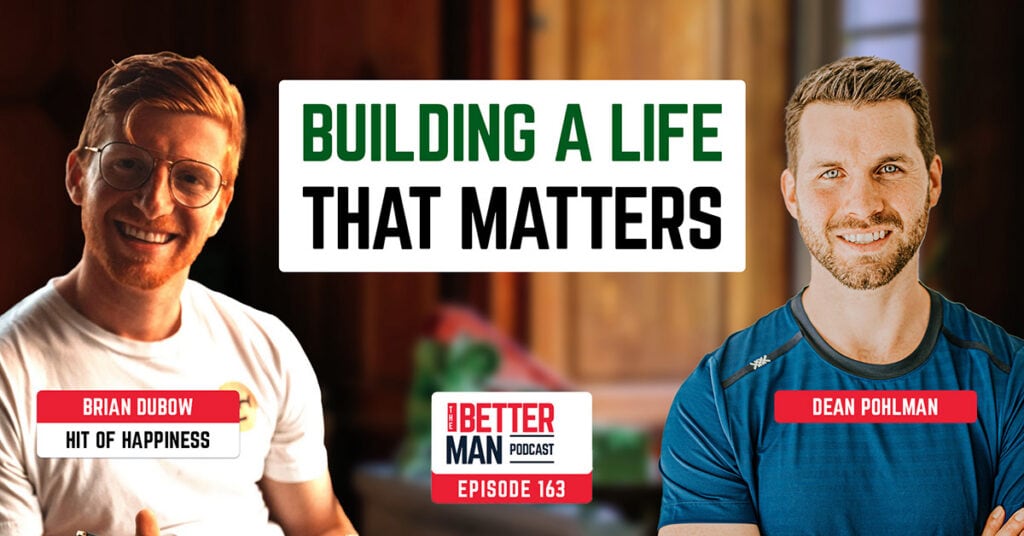
Building A Life That Matters | Brian Dubow (Hit of Happiness) | Better Man Podcast Ep. 163
Brian Dubow joins the show to share his journey from empty success to authentic joy. After a quarter-life crisis revealed his…
How To Navigate Coming Out Late In Life | David Cotton | Better Man Podcast Ep. 162
David Cotton’s story proves it is never too late to come out. After a career as an Air Force Brigadier General…
The “Core 4” Weight Loss Starter Kit (The Simplest Way To Lose Weight) | Brooks Coleman, Certified Nutrition Coach | Better Man Podcast Ep. 161
Stop the weight loss overwhelm. Join Certified Nutrition Coach Brooks Coleman to learn the “Core 4” strategy—a simple, reliable antidote to…
How to Make Managing Diabetes Easier | Ben Tzeel, Diabetic Dietitian | Better Man Podcast Ep. 160
Ben Tzeel, founder of Your Diabetes Insider, shares his journey of living with Type 1 diabetes since age seven. As a…
You Can’t Out Exercise A Bad Diet | Dan G. | Better Man Podcast Ep. 159
Despite being consistent with his fitness for most of his adult life, Dan has an Achilles heel you might be able…
How Mineralization Fuels Your Human Vehicle | Caroline Alan, The Mineral Geek | Better Man Podcast Ep. 158
Caroline Alan, “The Mineral Geek,” reveals how mineralization acts as the essential fuel for our cells. After overcoming burnout and autoimmune…