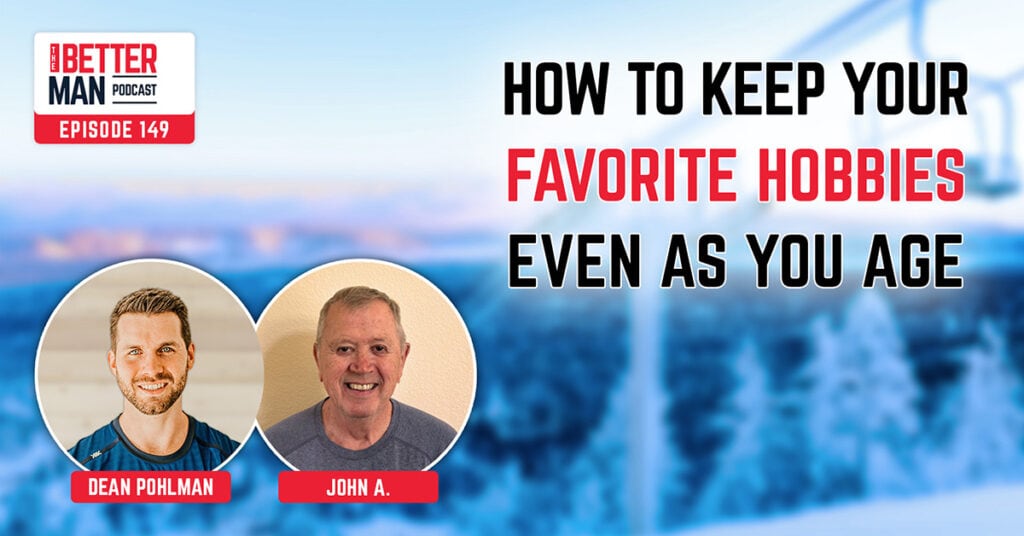
Most men have to gradually give up their favorite physical activities as they age. Especially when your hobbies are physically demanding – like skiing, hiking, and backpacking.
Today’s guest, John, faced this soul-sucking reality a few years ago after getting both of his knees replaced. He had been active his whole life before suffering from orthopedic problems that required surgery.
But you know what?
After his surgeries, which happened when he was 72 years old, John realized that he didn’t have to be a victim to his body’s stiffness and pain. That’s what inspired him to come to the Wellness Weekend in January 2025 (about 18 months after his second knee replacement surgery).
During the Wellness Weekend, he improved his technique in yoga poses. Then, after the Wellness Weekend, he became more consistent with yoga than he had been in the previous 6 years.
The result?
He hiked a mountain that ascended and descended 800 feet. He realized that not only could he ski again, but his balance improved so much that he actually became a better skier. And he recently drove 500 miles (or about 10 hours) in a single trip without getting stiff afterwards.
And he’s 74 years old!
John’s chockfull of wisdom for being consistent, building your body back up after major surgeries, and keeping your favorite physical activities well into your 70s.
Here’s what John and I discuss in today’s show:
- Why starting small acclimates your body to working out and makes it easier to stay consistent and grow
- A few simple things John does to stay consistent with his fitness in retirement
- How you can eliminate your aches, pains, and stiffness in your 70s (and beyond)
Listen now!
The Better Man Podcast is an exploration of our health and well-being outside of our physical fitness, exploring and redefining what it means to be better as a man; being the best version of ourselves we can be, while adopting a more comprehensive understanding of our total health and wellness. I hope it inspires you to be better!



Use the RSS link to find the Better Man Podcast on other apps: http://feeds.libsyn.com/404744/rss
Episode 149 Highlights
- How John bounced back from his health problems that derailed his favorite physical activities for 7 years… and what you can do to enjoy your favorite physical activities in your 70s (2:22)
- Why attending an in-person Man Flow Yoga event helped John conquer his orthopedic problems (3:21)
- What John did after having both knees replaced in 2023 to eliminate his post-surgery stiffness (13:03)
- The simple “Exercise Log” secret that can help you stay consistent for decades (13:49)
- Why a dedicated yoga room in your house removes your excuses for avoiding your next yoga session (15:18)
- Does your body get stiff as a board after 10+ hour driving trips? Here’s the most effective way to bulletproof your body from stiffness (20:38)
- The biggest threat to your fitness goals that most men completely ignore (30:13)
Dean Pohlman: Hey guys, it’s Dean. Welcome back to the Better Man podcast. Today’s episode is a member interview. We are talking with John A from Reno, Nevada. John is 74 years old. He enjoys hiking. He is a downhill skier. He walks a lot and he’s also now getting into weightlifting and fixing his nutrition. So we talk about his health and wellness journey, how it’s evolved over the years.
Dean Pohlman: We talk about how now with man for yoga, he’s hiking longer with less stiffness and how he’s still downhill skiing and doing the things that he wants to do. And if you are a guy who is older and considering whether or not you can do manual yoga or you’re just looking for inspiration, do you want to be able to do new things?
Dean Pohlman: This is a great interview, and it’s, it’s a good reminder to all of us that we can still do things even as we age. So I hope you guys enjoy this interview. I hope it inspires you and I’ll see you guys on the other side. Hey guys, it’s Dean. Welcome back to the Batman Podcast. Today’s episode is a member interview.
Dean Pohlman: I’ve got Johnny here and we’re going to be talking about his health and wellness journey. So John, thank you for being here.
John A.: Oh, you’re welcome. Glad to be here.
Dean Pohlman: Yeah. So John, you attended a wellness weekend that we did in Austin, I think in January of 2025. And that’s where I first met you in person. But you’ve also been doing mental yoga now. For how many years has it been?
John A.: I, I well, I bought your book an 18 or 19 somewhere in there. So I started doing it from the book and then I joined, Mental Yoga, the online program probably in 19, is probably before the pandemic started. Yeah. So I’ve been around for a few years.
Dean Pohlman: Yeah. Cool. So was you starting yoga? Was that part of a big shift in your health and wellness? I always like to go back to, like, what’s kind of your. Oh, shit moment. Right. When’s the when when did you realize that your fitness wasn’t going the way that you wanted it to, and you needed to make a change?
John A.: Okay, I, I, I started yoga, actually, in-person classes, probably back at the beginning of the 2000. So I did I did a yoga program in an in-person classes for many years. I, I think more recently, if you call my my oh shit moment is actually I had a it was actually more like the fall of 24 when I first talk with you that I set up that appointment and I talked with you.
John A.: I had a, I was active all my life. I jogged, I rode a road bike, I did activities like that. And then from, like starting in 2017 to about 2024, I had a number of health problems that set me back. And and so I cut back on activities. Although I did some like I did what I could and then in say, the summer or fall of 24, I started to realize I could get back into a lot more of what I had been doing.
John A.: And that’s when I made the appointment with you to try to strengthen, my yoga program. And, because I had orthopedic problems that the yoga program could help with, that was the main reason I started with that. I’ve been walking all those years, a lot of backpacking and hiking, but, but I needed to get more direction.
John A.: And so that’s when I started with that appointment with you. And then I signed up for the the weekend at the beginning of, 25, to come to Austin to work on my poses and, kind of meet everybody. Yeah. Okay.
Dean Pohlman: How was that event for you? How did you. What did you come what was, what were some of the big takeaways for you?
John A.: Well, I think, meeting the the meeting the coaches and having, a lot of I don’t want to call it correction, but improvement in the poses was an important thing. I although I had done yoga for a number of years, and I really like when when you start in your video, when you say, we’re going to do this pose, I know what the poses, but I need improvement in it.
John A.: And, so to be in a live session, in an in-person session like that was very helpful to hear, okay, you’re missing this or you’re missing that, on site rather than just hear it over the video. So I think that was very helpful in meeting a number of guys there was really great. You know, Patrick and Josh and Jesse, the and yourself, they’re all great.
John A.: And so I really enjoyed all of that. Yeah.
Dean Pohlman: So I’m curious for you. So you’ve been jogging, you know, you’ve been doing yoga for a really long time. Have you always been active?
John A.: I, I, I was active, like in high school or college at the end. My senior year of college, I started jogging. And jogging was really big in the 1970s. And I look back, that’s the only reason I can think of why I started doing. It was just very popular and I started very, very slow. I mean, I would jog a block and walk a block home, and I did that for a week.
John A.: And so I never I didn’t hurt myself. I started really slow. And then since, then I entered law school after that and, and the jogging and I swam for health reasons at the university. And those things were to help relieve the stress of law school. So I kind of got into it then.
Dean Pohlman: Got it. Okay. Yeah. What have you noticed about fitness then versus what are the fitness trends now in terms of like what are the what are the things that people say you should be doing that you know in the in the 70s or the 80s were like more popular. Have there been changes?
John A.: I well, I can’t remember anybody promoting yoga as much as it is now. Yeah, very much more promoted. I do remember it was my my third year of law school. I think it was. I did attend a yoga class like once a week. It was like in an in-person class. It was like an hour long, but it was no one really pushed it.
John A.: And there was a lot of the, the meditation side of it was encouraged, which I, I’m nothing against. I don’t get that much from it. So it’s, it’s almost like dead time to me. But that’s okay. I don’t mind it. I’m not offended by it, but it’s just not part of part of what I’m what I hope to get out.
John A.: Viagra. Yeah.
Dean Pohlman: So, you know, as you do, you have kids?
John A.: Yes, I have, I have two, a son and a daughter. Daughter’s 26 and my son’s 28. Okay.
Dean Pohlman: So when they were younger, how did your fitness shift like as as, you know, between the time they were born and, you know, they were probably 12 or 13 and started doing some of their own stuff more. How did your fitness evolve during that time?
John A.: I, I still job does very lucky. I had a neighbor who jogged about the same pace that I did, so I was, I, he and I jogged many mornings together. So having that. Someone’s going to meet you, you’ve got to get out of bed and go do it. That’s helpful. I, I backpacked every summer, probably 5 to 10 day trips.
John A.: So I, I done a lot of backpacking over the years, and I’ve done, quite a bit of day hiking as well. But, that one of the things that helped me was having a partner and, to meet me to go jogging because that guy was going to be out there whether I got up or not.
John A.: So I had to get up and meet him.
Dean Pohlman: Yeah. Those accountability partners, those are, especially in person. If you can, you can make that happen. It definitely helps. All right. So you were jogging. Were you still swimming during the summer? Swimming? More of.
John A.: I, I didn’t do that much swimming. I could I could swim and I did swim. I belong to a health club that had a really nice pool, but I didn’t do it regularly. Yeah.
Dean Pohlman: Did you have, did you have weight issues at all? Were you, like, an ideal body weight for most of this time?
John A.: No, I did, I didn’t have any. I didn’t use resistance training. Weight training at all.
Dean Pohlman: No, I mean, like, you.
John A.: Know, I should say the. Oh, go ahead. I’m sorry.
Dean Pohlman: Your overall body weight, were you or your was your body weight healthy during this time?
John A.: Oh, yes. Although I gained weight as I got older, just gradually, it was not it was not healthy. It’s it’s still not it’s great, but I’m improving that, then I, I lost a lot of weight when I had my knees replaced. I don’t encourage this is a weight loss program. Yeah, but, no, but I, the the pain pills upset my stomach so much.
John A.: I didn’t eat very much. I ate, I cut back a lot on what I ate, and I lost about 10 pounds when I had these replaced.
Dean Pohlman: And when was that?
John A.: That was 2023. Not at the same time. February and July.
Dean Pohlman: Got it. So. Okay, so when you started. So I’m just I’m trying to get the whole timeline. And so you started doing yoga in like 20 or you started doing in-person yoga classes. You started doing manual yoga in 2019. And at that point you’ve been jogging still. So when you started adding mental yoga in, what were some of the weather changes that you noticed after starting doing that versus doing jogging?
John A.: Only, or.
Dean Pohlman: The in person like classes?
John A.: My, my jogging ended and I’m, I’m really sorry for this kind of haphazard timeline. My jogging ended in about 2017. I had a, lemon ectomy and a, back fusion in the fall of 17. So I stopped jogging completely. I walked, okay, but I didn’t jog after that. Got it. So, that that. And so I and I kept up walking and yoga.
John A.: And probably in the warmer months, I go over and swim a little bit, but not a lot.
Dean Pohlman: Yeah. Okay. So jogging stopped and you started doing yoga instead?
Dean Pohlman: Yeah. So what were, I guess, what were some of the changes that you noticed from a predominantly jogging as your workout? And then shifting to predominantly yoga?
John A.: How? Well. One of the things, one of the things I noticed after my oh shit moment. Yeah. I after about six weeks of improving my, my yoga, spending more time doing my yoga, doing, more, I guess more intensive programs, although not real intense. I almost had that feeling that you get after you jog a lot.
John A.: That overall good feeling in your body. I remember in February, kind of around the same time I came down to the workshop in Austin, I was just feeling good overall, and it’s, it’s similar to that feeling of you get when you start jogging a lot and your body feels really good. So I will, I, I, I, I have to I really recognize that when I was doing that.
Dean Pohlman: Yeah. Okay. So it’s just kind of this is it energy? Is it like posture? What is feeling good.
John A.: Oh, it’s just it’s just feeling better overall. And I and I know that’s vague. But I think there’s some, there’s energy that it’s feeling better. You can move better. I, and understand that this was all after, a couple orthopedic surgeries that were very significant, so, that but that made me feel even better when this was getting rid of that, getting rid of that stiffness that I had.
Dean Pohlman: Yeah. And so this is within the last year we’re talking about.
John A.: Yes. Since I would say since the fall of 24. Okay.
Dean Pohlman: How did you in terms of you being consistent with the workouts, what did you notice helped you with showing up for the workouts, even when you really didn’t feel like doing them?
John A.: I keep a lot of I keep a lot of records and probably more than I need to, but, for example, I’ve been I’ve, I’ve kept, exercise log for years so that, having to enter that and looking back at and being able to count. Okay, I did this many miles of walking in the month of whatever, I did, this many days of yoga.
John A.: The another thing I do is I got your calendar, which I don’t pay that much attention to the pictures because I can’t. I mean, I’m not there yet, but anyway, I have a system of, like, when I do a yoga program, I mark a red slash one way when I walk that day, I do a green slash the other day when I use my peloton.
John A.: I about blue slash the other day so I can just glance at this calendar. Well, and it has a I realized now it has two functions. First of all, I can glance at this calendar and say, I haven’t done yoga in a while. I don’t have to go to my journal and count days or anything. I just look at the and and the the red marks aren’t there, so I know I gotta start picking up.
John A.: The other thing is that I. I bought James Clear’s book and I and had been listening to your podcast. What about his point about removing barriers to, your exercise program or to any to habits? He would use the word habit, to removing barriers. So I set up a room in my house where I have my yoga mats always out.
John A.: My yoga blocks are in that room. My yoga strap is in that room. My peloton is in that room. It’s all in one room. I have a, an old laptop set up in that room that connects to a, TV monitor. So it’s nice and big, and the sound is good. So, those are all things that I think.
John A.: You know, help with consistency. The other thing is, and and this kind of ties into other a podcast recently with, doctor, a fancy father and yeah, he talks about, you know, these evenings when people book and I’m retired. So I don’t know this problem. I don’t know about you. Me. But it said if you spread that problem out all day, that’s me.
John A.: I could I could drag this exercise program out all day and not do it till 10:00 at night. But instead, if I just get up in the morning and do it, I get it over with and that really helps. I have my my clothes set out and and everything’s up.
Dean Pohlman: Yeah. So you do a lot just to make it simple. Just to make it make yourself consistent. It’s like this is the option. This is what I do. Having everything set up.
John A.: Yeah, yeah.
John A.: And I think not having to travel somewhere to do it reduces that friction to. Yeah.
Dean Pohlman: That makes sense. What’s your, what’s your motivation for working out right now when it comes time to work out, what do you what do you think about that encourages you to do it?
John A.: I think I has I had trouble with your why exercise. Yeah, because I tried. Well, I tried it and I would get stuck about the second time, and and I’d be able to follow through with that. But more recently, I did a trip, I travel a lot. When I retired, I did a road trip to sell in Utah.
John A.: The National Parks. I was able to do a number of hikes that I probably a year ago, was not able to do. I can hike five, six miles, you know, I’m, I’m a slower walker, which is just fine. That’s no big deal, but I can, I, I can I, and I enjoy the beauty of our national parks.
John A.: I live near the Sierras, so I got lots of hiking opportunities where I live, and I really enjoy all of that. So I kind of started thinking, well, this is what I really enjoy is being outdoors, walking. I backpacked for a number of years, although, I’m not comfortable doing that again. But I am able to do a lot of day hikes.
John A.: When I was in Bryce Canyon Park, I was able to do a, a hike where I was able to go, I ascended 800ft during the hike. I mean, it went down 800ft and went up 800ft. So I, I really enjoy the outdoors, and I enjoy being able to do hikes that are just level, but have a lot up and down in, in the mountains.
John A.: Yeah, they’re cool.
Dean Pohlman: Yeah. So being able to notice that the hike was easier for you and being able to tie that back to, oh, it’s because of these yoga workouts that I’m doing that that gives you that motivation.
John A.: Yes, yes. Oh, absolutely. Cool. All right.
Dean Pohlman: What are some what are some other things that you noticed in your life as a result of what other improvements did you notice as a result of just being consistent with your workouts?
John A.: Well, yeah, my balance is improved. And, I also I’m a I still downhill ski. Oh. Yeah, I, I, I am able to I’m able to downhill ski. I’m, I’m only done at the last two seasons, but, I’m, I’m downhill skiing. My skiing is improve my confidence. Skiing has improved my balance on skis definitely has improved.
John A.: So, I’m, I enjoy that. And and that has gotten a lot better. Yeah.
John A.: I I’ve lost a little weight. I’m down a pants size. You know, there’s all sorts of things like that that are going on. I take, I take long driving trips. I don’t have stiffness. When I get out of the car. I’m not stiff after driving. I my last trip when I was this last trip. But I came back.
John A.: I drove 500 miles in one day. It didn’t bother me at all. I just got out of the car. That was fine. Wow. So I have a lot.
Dean Pohlman: To do.
John A.: That. It’s, I mean, I was it’s it’s good.
Dean Pohlman: Yeah. Now, where do you live?
John A.: Say that again. Where do you live? Reno, Nevada. Oh, okay.
Dean Pohlman: Cool. Yeah. So hiking. Hiking galore, I guess. So, you mentioned down a pant size. Did you make have you made other changes to your, you know, your health practices, your nutrition, your sleep stress management that as a, as just part of this, you know, health improvement journey?
John A.: Well, I a couple years ago, I joined fit father, and my son was living with me at the time. And we we ate pretty good following food, father, for several months. And then I kind of got away from it, so I, I didn’t I’ve, I had gotten away from it. I’m starting to get back to it. And I think that that will be, an improvement once I.
John A.: Yeah like it follow it longer. It’s only been like a week. It hasn’t been a long time that I’ve gotten back into it. So, I’ve done that. I my sleeping is pretty good. I have sleep apnea, and so my sleeping is pretty much after I use a CPAp. I’m fine. I just sleep seven hours, seven plus hours a night.
John A.: No problem. Yeah.
Dean Pohlman: I think that’s, I think that’s something that’s really, not talked about that much, but I feel like just based on the conversations that I’ve had with guys and also like at the, retreat that we did, I think about a third of the guys there had a CPAp machine. And so, you know, seeing like these group of guys and some of them, you know, we had some younger guys in their 30s and 40s, and I think the majority are 50s and 60s though.
Dean Pohlman: And so seeing like these guys like, oh, cool. You have a CPAp machine to you know, and then and hearing about people who store like have sleep apnea and, and recognizing like you need a CPAp machine. Yeah. I think that’s something that if you’re not looking into and especially if you know that you snore like that’s something that.
John A.: You know.
Dean Pohlman: You should probably look into. So I’m glad you anyways. Point being, I’m glad you brought up the CPAp machine.
John A.: Okay. So and whether this is a I had one health care professional say if your neck size is 17.5 or bigger, you should be checked out and it’s no big deal. To be checked out. It’s, you know, 1 or 2 overnights at a clinic. You you sleep like you normally do. They even give you a sleep aid if you want one, if you’re nervous about being there.
John A.: So I. Okay. It was it’s an easy test how long I’ve been using it for a challenge.
Dean Pohlman: But then how long have you been using it for?
John A.: Six years.
Dean Pohlman: Six years? Do you notice an immediate improvement when you started using it?
John A.: Oh, yeah. Yeah, it it took me about 4 to 6 weeks to get used to. I have a full mask, which not everybody does. You know, sometimes it’s just a nasal mask. But I have a full mask. And the first 4 to 6 weeks were challenging for lack of a, you know, it’s it was it was just getting used to this thing, and now it’s no problem at all.
John A.: I just slap it on and go to sleep. That’s the. Oh, yeah. Oh, cool.
Dean Pohlman: So in the in the beginning of this conversation, you talked about how you had that running partner, their jogging partner, who and you, and you had the neighbor who was also a jogging partner. What are some other external support systems that you’ve had kind of throughout your fitness journey? And how of how have they been helpful?
John A.:
John A.: I read the the the mental yoga Facebook page pretty regularly. I mean, you know, every few days I’m honored I read it. You are, you have, you have some great examples. Great guys on there are good examples for all of us. Anthony from Canada. And I’m from Florida. Cody is are just a great example.
John A.: Kevin in Iowa and Travis from Texas, they were in my, coaching group. They’re they’re really great examples. The neighbor I used to the, the, my jogging partner was my neighbor. It’s the same guy and I used to jog with. We, we still walk together probably once a week and maybe more often.
John A.: So I mean, those are is that answer your question.
Dean Pohlman: Yeah. How is it. So you talked about some of the guys in the Facebook group, how have they been helpful? So what about it? Like, you know, if you had to attach like a benefit to it, if you had to describe how it’s helped you be more consistent or more motivated, what do you what does it gives you?
John A.: Well, when they when they describe their accomplishments, it’s really a it’s a good example to see about okay some every day I don’t maybe that’s the wrong word, but that’s the closest I can come to. Some everyday guy can make these very significant improvements in their lives. And so if they could do it, I could do some that some things anyway to improve.
John A.: Yeah, maybe not do everything they do, but certainly they’re, they’re demonstrating the, the improvements through pictures, through words, you know, regular participation in a that that’s really a good thing to see. Yeah.
Dean Pohlman: Okay. Cool. Yeah. That was that was the question. So what’s the, what’s the next thing you want to work in, work on in your fitness there. Something that you’re striving towards.
John A.: I am going to I’m working on nutrition. I, I’ve come back. I came back from this trip. Well, I while I was on the trip, I kind of watched more when I than what I was eating than I have been. And then I am going to work more on my nutrition. Got back to some fit father recipes for dinner and for lunch.
John A.: I really have been following what he has recommended for breakfast for a couple of years, but I got to do more than that. So I’m going to improve on nutrition and also I was in Coach Josh’s, resistance coach coaching group, and in that coaching group, I started a, I’ll call it a mile in a weight training program, and I’ve, I’ve kept that up twice a week, and I hope to strengthen that.
John A.: I gotta watch your video on, weight training. So, I belong to a health club where all the weights are available, so I’ve just got a good working working at. But that’s the two things that I plan on doing. I have my ski pass for this season, and I hoped to do more skiing. Okay as well.
John A.: Cool. All right.
Dean Pohlman: So lots of things to work on.
John A.: That’s great. Yeah.
Dean Pohlman: All right. Are you ready for a rapid fire section?
John A.: Sure. Okay. Cool. Yes.
Dean Pohlman: All right, so what is the one habit, belief or mindset that has helped you the most with your overall health and wellness?
John A.: I, I think being willing to modify whatever is suggested or recommended or whatever you read about you, you don’t have to do exactly what they say to improve your in your, in your, workout videos. You’re always reminding people, you know, use supports. I, I use, the blocks a lot. I use the wall, I don’t, I don’t stand on one leg by myself.
John A.: So I use those supports and I think, you know, don’t worry about it. Just try some things. And then if you have to modify it, it’s okay. You’re you’re doing more than you did before. Yeah okay. Yeah.
Dean Pohlman: All right. So what’s one thing that you do for your health that is often overlooked or undervalued by others.
John A.: I would I think having it some sort of general medical practitioner that you consult on a yearly basis, all your good workouts can be absolutely wrapped if you want to call it. That’s the right word. Yeah. If you get sick and, I one of the things if you, if you read headlines or if you read articles, men and especially younger men don’t have a general practitioner.
John A.: And I think to have one and have some sort of annual physical every year with that person is a really good idea. Just because your go to one doesn’t mean you have to do what they say either. So if you, if you, if you go to a doctor, it you can decide what you want to do or not do, but go to the doctor and find out what he or she might recommend.
John A.: I’ve had one for years.
John A.: And I, I, specific example, I had polyps. I’ve had kaleidoscopes every five years for 30 years, and I may have gotten colon cancer if I hadn’t done that.
Dean Pohlman: Okay. Good advice. What is the most stressful part of your day to day life?
John A.: I don’t work and I don’t commute anywhere. The stressful part of my life is staying out of my adult children’s business.
Dean Pohlman: That’s a new one.
John A.: Yeah. Okay. I, and that’s not always easy, but I really try to do that.
Dean Pohlman: Yeah. All right. What’s your best piece of advice for men who want to be healthier?
John A.: If you’re just starting out, start small. And I my I think back when I started jogging that I jogged one block and I walked a block home. And I did that for a week. And after, after I was running for miles in no time, you know, I mean, it took a few months, but I was up to four months and it didn’t make any difference.
John A.: Just just do it that way. I and many people would ask, what, because I jog, they would say, you know, I want to start jogging. What should I do? And I go, they say, I want to I want to go out and jog a mile and I go, you’re not going to last. You’re going to hurt yourself.
John A.: So and your your videos show that, I mean, you’re you’re beginning your beginner path is a lot of 15 to 20 minute videos. And that’s a good thing to keep it short and and just get used to it. Get your body used to it. Yeah for sure. Cool.
Dean Pohlman: All right. Well, John, anything else you want to add?
John A.: I can’t take anything. No, thank you. Okay. This this is great.
Dean Pohlman: Oh I didn’t I didn’t ask how old are you, by the way?
John A.: I’m 74.
Dean Pohlman: 74. Okay. All right. So you’re starting weightlifting, dialing nutrition at 74. Sweet.
John A.: That’s what. Yeah, I guess that’s a kind of, Well, what would. That’s almost like a what difference does it make? You’re going to. Right. Needed. Yeah, I know all all the way.
Dean Pohlman: Yeah. No, I’m bringing it up just to show that other people can do it too.
John A.: So. Yeah. And I’m glad. I don’t mean to do that. Yeah, yeah, yeah. I would encourage everyone to, to start up this these activities. Yeah. Cool.
Dean Pohlman: All right. Well thanks again for being here guys. Listening. Yeah I hope you enjoyed this interview. I hope it inspires you to be a better man. You can find John in our community, say hi to him. You post every now and then, right? I’ve seen some posts. Yeah.
John A.: Yeah, yeah. Cool.
Dean Pohlman: All right guys, hope you enjoyed this episode. I’ll see you on the next one. All right, guys, thanks for joining me for this episode. I hope this was inspiring. Check out the show notes for anything that we mentioned. If you want to leave a review for this podcast, if it’s helping you, you can do that. Be a huge help.
Dean Pohlman: If you’re part of the mental yoga community and you’re here as a complement to what you’re doing in the members area, the app and the community, I want to say thank you to you guys for being here. Many of you guys have already been featured on this podcast, so if you want to join me here, let me know.
Dean Pohlman: Send me a message. And let’s tell your story as well. If you’re not already part of the man for your community, you can get started with a free seven day trial at Mandalay yoga.com/join. And, this is a great community. If you are a man looking to improve yourself, both physically and otherwise, and to be able to be surrounded by other men in the same situation, to have that encouragement, to have that motivation deal, to ask questions, to share your own experiences, and also be able to kind of toot your own horn and share your wins, be something that that is invaluable for your health and wellness and help you keep going.
Dean Pohlman: Keep pushing yourself. Keep pushing boundaries. Keep learning new things. So I encourage you guys to give it a shot. All right guys, thanks for being here. I hope this is helpful. I hope this inspires you to be a better man. And I’ll see you on the next episode.
[END]
Want to improve your sexual wellness, get stronger erections, and last longer in bed? Then join the FREE 7-Day Sexual Wellness Challenge here: https://shrtlnk.co/uA27H
Want to unlock more flexibility and strength, reduce your risk of injury, and feel your absolute best over the next 7 days? Then join the FREE 7-Day Beginner’s Yoga for Men Challenge here: https://ManFlowYoga.com/7dc.
Tired of doing a form of yoga that causes more injuries than it helps prevent? The cold, hard truth is men need yoga specifically designed for them. Well, here’s some good news: You can start your 7-day free trial to Man Flow Yoga by visiting https://ManFlowYoga.com/join.
Like what you’re hearing? Sign up for the mailing list:
Rate & Review
If you enjoyed today’s episode of The Better Man Podcast, hit the subscribe button on Apple, Spotify, or wherever you listen, so future episodes are automatically downloaded directly to your device.
You can also help by providing an honest rating & review over on Apple Podcasts. Reviews go a long way in helping us build awareness so that we can impact even more people. THANK YOU!
More Podcast Content
Dark Motivation Works … But It Causes a Mid-Life Crisis (Try this instead) | Connor Beaton from ManTalks | Better Man Podcast Ep. 191
Do you ever feel like you’re just wandering through life without a purpose, or stuck in the middle of a frustrating…
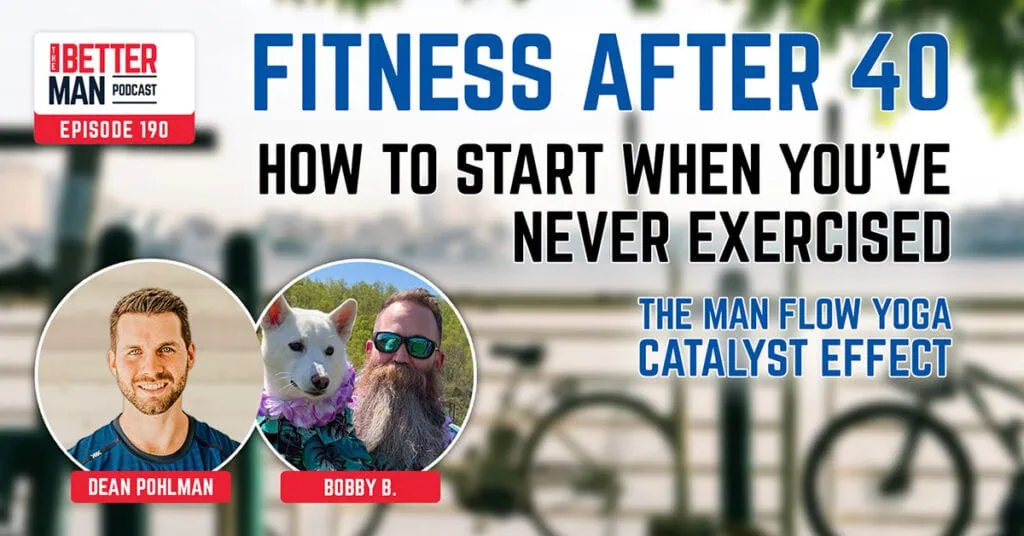
Fitness After 40: How To Start When You’ve Never Exercised (The Man Flow Yoga Catalyst Effect) | Bobby B. | Better Man Podcast Ep. 190
Turning 40 was Bobby’s wake-up call. After a lifetime of skipping workouts, a doctor’s visit revealed warning signs in his blood…

Gut Health Goes Way Deeper Than Weight Loss | Ben Brown (Founder of Body Systems Coaching and Head Nutrition & Fitness Coach) | Better Man Podcast Ep. 189
Gut health impacts far more than weight loss—it directly governs your energy, immunity, and mental well-being. If you grew up in…
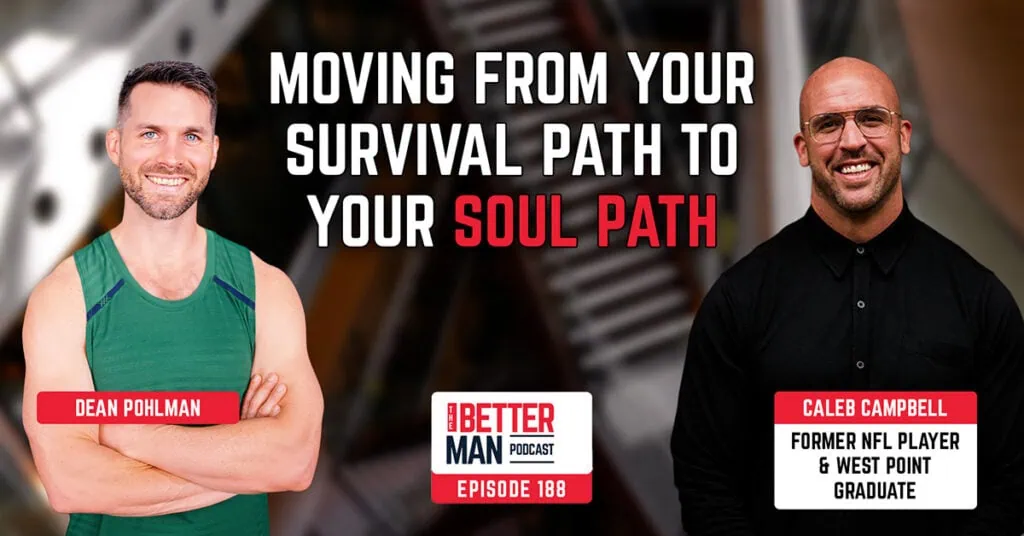
Moving From Your Survival Path to Your Soul Path | Caleb Campbell (Former NFL player & West Point graduate) | Better Man Podcast Ep. 188
If you’re an endlessly striving achiever, you know the path forward lacks clarity. Former NFL linebacker Caleb Campbell used his feelings…

The Ethics & Use Cases of AI | Ted Phaëton | Better Man Podcast Ep. 187
The topic of AI is unavoidable. Ted Phaeton, productivity coach and host of the Modern Man Podcast, joins the show to…
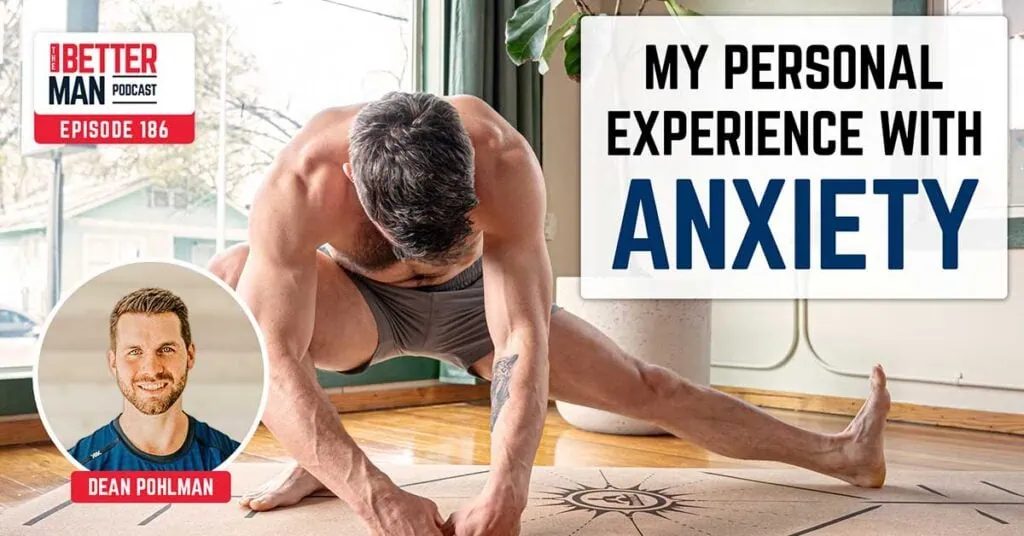
My Personal Experience with Anxiety | Dean Pohlman | Better Man Podcast Ep. 186
After an accidental mushroom trip triggered a panic attack, I realized I’d actually been living with low-grade anxiety my whole life….