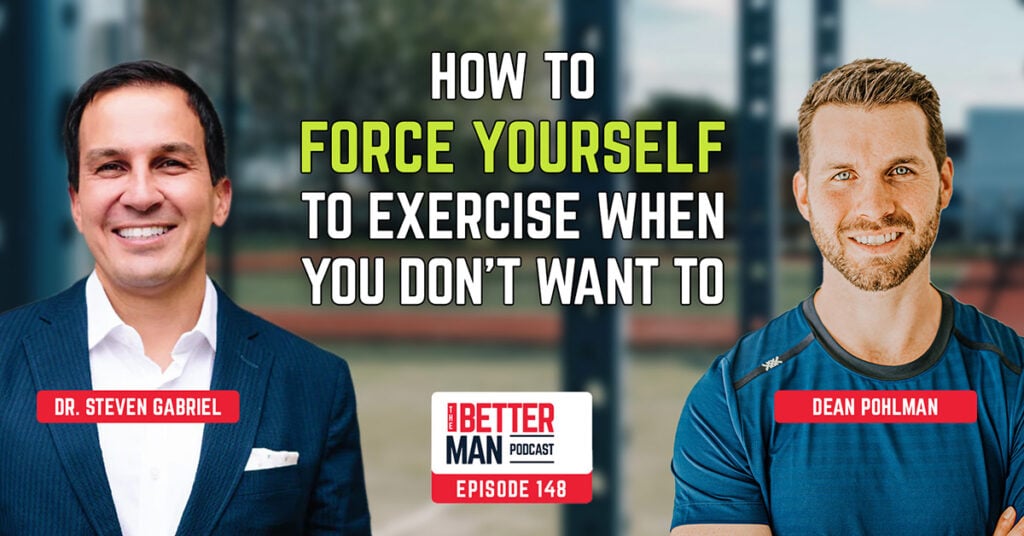
If you want to be the youngest and healthiest version of yourself possible, then you need a reliable strategy for working out consistently. Even when you don’t want to.
Today’s guest, ER doctor and anti-aging expert, Dr. Steven Gabriel almost never wants to work out. But being as young and healthy as possible is important for him. And so, he’s developed a few ways to trick himself into working out that he shares with you in this show.
There’s a specific reason Dr. Gabriel wants to be as young and healthy as possible:
He’s spent years working in the ER and has seen first hand how important your lifestyle is for your longevity. He’s seen 80-year-olds who had the energy and vigor of a 50 or 60 year old. But he’s also seen the reverse: A 60-year-old who feels and acts like he’s 80 or 90.
Here’s what else Dr. Gabriel and I discuss in today’s episode:
- How men can have more fulfilling and connecting conversations by being courageously vulnerable
- Why it doesn’t take as long as you think to learn something new
- And he shares a few of his Jedi mindset tricks for forcing himself to work out when he doesn’t want to (which is almost every time)
Listen now!
The Better Man Podcast is an exploration of our health and well-being outside of our physical fitness, exploring and redefining what it means to be better as a man; being the best version of ourselves we can be, while adopting a more comprehensive understanding of our total health and wellness. I hope it inspires you to be better!



Use the RSS link to find the Better Man Podcast on other apps: http://feeds.libsyn.com/404744/rss
Episode 148 Highlights
- Parents: Listen to this ER doctor’s wisdom about safety (8:07)
- How health consequences compound like bad interest as you age and how to at least not accelerate aging (10:59)
- Why making healthy lifestyle changes, as cliche as it can sound, is the secret to living a vibrant life well into your 80s and 90s (14:34)
- The “Lucky” mindset shift that seems silly, but is surprisingly effective for creating good luck (16:07)
- How moving into a more positive “emotional home” keeps you light and happy even when dark and tragic external events happen (20:43)
- The “2,000 degree stone” secret for forcing yourself to workout that works exceptionally well when you don’t want to exercise (25:50)
- The weird way giving yourself 10 minutes to decide if you want to quit gets rid of all the mental gunk that stops you from achieving your goals (48:44)


Resources mentioned on this episode:
- If you’d like to learn more about Dr. Gabriel’s “Make Aging Optional” approach, visit his website: https://drsg.co/
- Or, you can follow him on Instagram @drstevengabriel
Dean Pohlman: Hey guys, it’s Dean. Welcome to the Better Man podcast. Today’s episode is an interview with Doctor Stephen Gabriel. He is an ear doctor and has a fellowship in anti-aging and regenerative medicine. What I really like about this conversation is it’s a good example of courageous vulnerability and how we as men can have better, more fulfilling, more connecting conversations. We also covered how Doctor Gabriel forces himself to exercise even though he doesn’t want to.
Dean Pohlman: Why it never takes you as long as you think to learn something new. We also talk about how his experiences as an ear doctor taught him that life is unpredictable and that nothing can be taken for granted. So I really enjoyed this conversation. I think there’s some great things in here. There’s a lot of stuff in here for if you’re struggling to exercise more, as well as what can you learn from a doctor about life, which is some cool stuff.
Dean Pohlman: So I hope you guys enjoyed this interview, and I hope it inspires you to be a better man. Hey guys, it’s Dean. Welcome to the Betterment Podcast. Today we have a repeat guest. This is Doctor Stephen Gabriel. And in the first episode we talked about some of his beliefs, some of the concept that he’s come up with overall health and wellness.
Dean Pohlman: And today, I kind of wanted to get to know him a bit better on a personal level. So, Stephen, thanks for coming back.
Dr. Steven Gabriel: Yeah. Thank you. It’s great to be here.
Dean Pohlman: Yeah. And so, let’s start off just for people who haven’t met you yet or for people who, you know, it’s been a while since the last episode. If you want to remind, remind us a bit about you.
Dr. Steven Gabriel: Yeah. So I am, you know, I’ve got two kids, I’m divorced. I, I’m an emergency department doctor, but I went on after and did a fellowship in anti-aging and regenerative medicine. I, now I’m really into the health and wellness space and anything I can do, kind of. My approach is really what I can do to be the youngest, healthiest version of myself today.
Dr. Steven Gabriel: My background before this, I studied microbiology and molecular genetics at UCLA. I live in Laguna Beach, California, and, I think that’s kind of where I am.
Dean Pohlman: Yeah, that’s pretty cool. So what got you, interested in and studying what you did at UCLA? That seems like a a very complex topic. But, you know, that’s also coming from a guy who I don’t think I had to take a I think I skipped all the science classes in college. I don’t think I had to take any.
Dean Pohlman: I think, oh, I took no, that’s not true. I took a summer course. I took a summer course on weather and climate that was like my that was my okay, let’s get the science quote.
Dr. Steven Gabriel: What’s really funny about that comment is like, my paradigm of my brain doesn’t even quite fit that, because I will tell you just the opposite. When I had to take any humanities courses, I was so afraid that, like for history, I took the history of science. I really remember doing doing this because I was like, hey, I just can’t leave the science.
Dr. Steven Gabriel: It’s yeah, well.
Dean Pohlman: You know what? Since, learning a bit more about learning and realizing that you actually have to have passion for what you’re learning about in order for it to stick. Now, it kind of makes a bit more sense. Like, I just I like history, even though it can put me asleep sometimes I like I like learning history. I like learning languages so I can stay engaged in that.
Dean Pohlman: But like, yeah, like learning about math just like, can’t do it.
Dr. Steven Gabriel: Yeah. That’s so funny. Okay, so what got me into it? You know, I think I really like learning about the details and the minutia of things, and, you know, I didn’t start off as a genetics major, but it’s some point I like really understanding the root cause of things. And I think it was probably like in my first year, second year that I sat around and I thought like, hey, the core of everything, the core of all cells of life is really all at the DNA level.
Dr. Steven Gabriel: So I really just wanted to focus on that. And so I did that, and originally I wanted to do research. I really liked research. I was working in a lab at UCLA and my genetics professor took me out to lunch one day and said to me, hey, you should go to medical school. This was actually my fourth year or my last year of college.
Dr. Steven Gabriel: He’s like, I think it’s just like a better life. And so I walked into the premed office and said, hey, I want to go to medical school. And they said, what are you talking about? Like, people have been setting up for this for the last four years. Like, you can’t just walk in here on your fourth year and say, you want to do this.
Dr. Steven Gabriel: And I was like, no, no, that’s what I’m going to do. Now, the funny thing about it is I went to medical school and then, you know, went into emergency medicine, partly because I like this feeling of you’re kind of like the MacGyver of medicine. I had this joke that when the plane goes down, like, you want the emergency guy, like, do you want a radiologist on the plane?
Dr. Steven Gabriel: Right? So that became really cool and then kind of went full circle, got back into genetics. And that’s kind of where I am now.
Dean Pohlman: Okay. Got it. So you okay? So you went to med school. You did you know that you wanted to do E.R. or were you more interested in the genetics side when you started or like, what’s that? What was that circle?
Dr. Steven Gabriel: Yeah. So again, kind of what we’re just talking about, like you said, how you were avoiding the sciences. Yeah, I was, I was drawn, actually. I was kind of drawn to nephrology, which is kidney stuff because I thought it was cool. And detail oriented. And then I don’t know what it was. I think like in my I always knew I was kind of we going to do different things like, I am right now, meaning not just practice medicine.
Dr. Steven Gabriel: And so when I got exposed to emergency medicine, I thought, this is all really practical stuff. I like this, and because it’s shift based work and you could kind of do it anywhere, I thought, this is really cool with all of my other passions because I can go, I know this really useful stuff. I like that and I could also like at times if I didn’t want to work or work last or start other projects, I could do that too.
Dr. Steven Gabriel: So I thought it was really functional and practical. That’s kind of how I did it, and I like knowing it like I thought it was cool stuff to know. It’s like like I said, it’s kind of like the MacGyver of medicine in a way.
Dean Pohlman: Yeah. What were some of the, Did you have any significant experiences as, a doctor, as an er, doctor that, you know, influenced you significantly maybe in how you live your life or, or maybe in how you address, you know, your approach to parenting. But does do you have any experiences that really stick out? Okay.
Dr. Steven Gabriel: Yeah. That’s a good question because I have a lot. So I’m thinking about like what’s most impactful. So one of the big things I’ll just start with an overall theme, like from an I’m like, this isn’t about the anti-aging side, which I have some stories with that as well. But like one thing from a parenting standpoint for like anyone who’s listening, who’s a parent, one thing I learned is that everything happens like any weird thing that like what you think doesn’t happen does happen.
Dr. Steven Gabriel: I remember I had God only a few years ago. There was a kid came in from preschool who had like four years old who had swallowed a tack off the board, you know, like the little, cork boards. And the kid swallowed the tack like lacerated an artery in the back, their throat. And the kid came in. No one could get control of the kid’s airway.
Dr. Steven Gabriel: There was so much blood. And the kid died. And, you know, basically, these parents dropped their kid off at preschool. And two hours later, he got a call and not to be, like, morose or something like that because it’s heartbreaking and it’s like one of the hardest things. What what happens is I had one kid who bit into a wire and like, whole mouth became burned.
Dr. Steven Gabriel: You know, the other kind of, you know, freak accidents that happen from sports, I mean, you name it. And so one thing that I learned is, you know, don’t take anything for granted. You should be worried about safety and dumb things that happen and, things that you think can happen, do, happen. So I will share that those things are always really impactful to me.
Dr. Steven Gabriel:
Dean Pohlman: That, that hits. I’ve got my my wife’s a physical therapist, and she’s like, she’s she knows about all the things that could happen. So she, like, she sees that in the world. And, my dad is a doctor, so he’s also like, I could show him something like, hey, I got this cold plunge. Check it out. He’s like, yes, but does it have a latch?
Dean Pohlman: Is it, like, childproof somehow? Is it safe? Like, he’s always like, yeah. Is it safe somehow? And I’m always like, I don’t care. It’s fine. And my wife is the same way. She’s like, yeah, but like, how is that going to be safe? And I’m so it’s good for me to have that like counterbalance of weight. Let’s be safe about this.
Dr. Steven Gabriel: Yeah, yeah. No no no. Like crazy, crazy stuff happens. But let’s like, tie in just a little bit more rather than the obscure. I just wanted to point that out, not to freak people out. Just like if you’re a dad or something out there, like, just like, think like dumb things happen. Like being careful with stuff is important.
Dr. Steven Gabriel: And then, you know, the other impactful things is that which really started getting to me was, you know, I take a look at people’s overall health. And what I mean by that is like, I pick up someone’s chart, you know, see their age. And it was pretty striking to me at some point that, you know, I could walk into one person’s room who was six years old, who I thought was 90, right.
Dr. Steven Gabriel: And I could walk into somebody else who, you know, was 90 and told me just rolled his ankle because he’s running a marathon. Right. And at some point I really started talking to people about like, hey, what are you doing? You know, what’s your mindset like? What’s happening? And these are really big differences. I mean, one thing I think especially when you’re younger, you look at, hey, these people are all older and you put them in one group.
Dr. Steven Gabriel: It’s kind of like as you get older, you look at everybody who’s younger and you put them in one group. But if you go ask a ten year old, the year I’ve seen a ten and a 15 year old is dramatic, right? And so that same thing happens on the older end of the spectrum. You know, the difference between 60, 70, 80, 90, 100.
Dr. Steven Gabriel: You know, if you go has the 70 year old guy, he thinks like an 80 year old guy is pretty old, like he’s way older than him. But when you’re like 30, you’re like, 70, 80, they’re all the same. That’s not how people feel in that age range. And that’s kind of the same thing when you look at kids, right?
Dr. Steven Gabriel: Like, somebody is like 15, 20. They’re all the same. Go talk to a 15 year old. He thinks the 20 year old’s ancient. So yeah, you know what I’m saying by that. So I started like in terms of seeing patients, I would talk to people and really start thinking about like how people are taking care of themselves.
Dr. Steven Gabriel: And there’s no doubt the person who’s, you know, still smoking, drinking soda, you know, all day, eating a bunch of fried food and not taking care of themselves. The effect of that really compounds over time. And they have really accelerated aging. And then at the same time, somebody who is really taking care of themselves really is living a pretty vibrant life.
Dr. Steven Gabriel: You know, even, you know, 80s, 90s. And so I think some impact for me was really just, you know, seeing the person. I mean, there’s people coming to the emergency department, no doubt, who can’t breathe because they have COPD or asthma. And then in the middle of their treatment, say, is there any way I can go step outside to have a cigaret, right.
Dr. Steven Gabriel: Like as soon as the guy feels five minutes better and you’re just like, whoa, man. Like, what are you doing? Right? Like, are you doing anything here? And you know, there’s other people who are like, I’ve got to, you know, get it back together. I know I just had, you know, this pain or this injury, and I gotta know when I can get back into the gym.
Dr. Steven Gabriel: And, hey, they’re asking me, should I be eating this or that? So I would say that being in the emergency department, you really kind of see people’s like deepest humility and just how lifestyle changes. You know, every once in a while you walk into a room and their age, the guy’s age says, you know, it doesn’t even matter.
Dr. Steven Gabriel: The guy’s age says 58, guy says 80. And you walk in the room and you’re like, wow, you look phenomenal, right? Like you’re healthy and you know, the person’s like, yeah, I try to be, you know, their whole everything energy, demeanor is yeah, it’s amazing how much people’s lifestyle and the perfecting, you know, who they are and how healthy they are.
Dr. Steven Gabriel: So then I got really interested in that.
Dean Pohlman: How much does overall like I don’t know if mood is the right word or just general demeanor or just general like, I don’t want to say like optimistic versus pessimistic, but more so do you, you know, are you just like if you’re if you’re just not pleasant to be around versus people who are like, generally try to be more upbeat and try to, you know, be more positive.
Dean Pohlman: Is there like is there is that a difference that you noticed in people who were, you know, who seemed young for their age or who seemed old for their age?
Dr. Steven Gabriel: Yeah, I mean, I would say yes because it stems to other like choices you make, right? Like like the people who see, like the positive side of everything, like another time with kids. Like if you feel positive and lucky, like, I’m going to tie that word in as well, like everything you do or the way you make decisions is really like you see the upside of it, right?
Dr. Steven Gabriel: Versus, well, it, it it doesn’t matter if I go out and get, you know, hammered drunk tonight because everything sucks, right? Like there is no future. I hate my life. Everything’s bad. So you make these choices around it. Whereas the person who has this positive angle, they’re making decisions that are all to lead them to the upside. Right?
Dr. Steven Gabriel: Because even when negative things happen, they look at it and say, well, this is just a stepping stone along the way so I could meet you and learn about that. I could do this to recover faster. Like, They’re always making the choices like I don’t know what came first, the chicken or the egg in that story. But there’s no doubt if you constantly see the positive in everything you’re looking at it like, well of course I have 30 more years.
Dr. Steven Gabriel: So I got to be doing the best things possible right now. Right. Because you’re seeing the upside. Whereas somebody who’s constantly seeing the downside is like, well, it doesn’t matter anyway. I had this friend who, you know, started bike riding and then got hit by a car, right? Like, so why would I even do it right? It’s just like a different way that you approach things.
Dr. Steven Gabriel: So I do think that there’s something to that, because I will say that the people who are healthier seem to be pretty positive. Yeah, right. You don’t really see the really negative guy coming in and like, they’re super healthy.
Dean Pohlman: Yeah. So there’s another, kind of concept or phenomenon that I’m that really interests me. And it’s how do people respond to kind of traumatic events. And, kind of the pattern is if you can, if you can look at a traumatic event in a certain way, if you can look at it in a certain light. What I mean by that is if you can look at it in a way as it has some meaning, if you can assign some meaning to it, if you can grow from it, if you can take a lesson from it versus the people who get kind of stuck in the reliving the trauma of it, it allows
Dean Pohlman: you to grow from the experience and actually be better for it. And this could be things like and for this, this could be things like, you know, having a terrible injury. It could be like losing, you know, it could be losing a limb. But like maybe you come out on the other side after you get, you know, after you eventually move through that, maybe you come out on the other side and you’re actually a lot happier than you were before because you had some realizations.
Dean Pohlman: I’m wondering, have you had any, you know, have you had any patients where you’ve got to see that in action, where it’s someone who came in, had this life changing experience, and then you saw them like a year later and they say something like, oh yeah, it was the best thing that ever happened to me. Or do you have any experience with seeing that happen?
Dr. Steven Gabriel: Yeah. So that’s interesting. And there’s actually a pretty there’s a study about that. But yes, I will say one thing for people who have become like paraplegic or quadriplegic, there’s one question I always asked, which is how did it how did it happen? Right. Like because a lot of people kind of skirt that question even in medicine. Because, you know, this happened 20 years ago, it’s not really relevant to today’s story.
Dr. Steven Gabriel: And one thing, that I find in that population of people is that one, they’re happy that you asked because if you can imagine, it is the biggest event in their life by a long shot. The other thing about it is they remember every detail to the second. So you know the guys who fell off the roof or whatever, they’re like I misstep.
Dr. Steven Gabriel: I saw myself sliding down. I couldn’t grab the rain gutter because it was theirs. As I was going down I could see the planter on the bottom. I knew I was going to hit like, you know, I’d almost say for anyone like somebody who’s had if you’re with somebody who’s had a big event in their life, in a way they, in my experience, they like to be asked about it.
Dr. Steven Gabriel: In terms of attitude, what I found is, is that the people, yes. So people let me tight in this way. The people who are positive people before become positive people after. It might take a year of time to adjust to the situation.
Dean Pohlman:
Dr. Steven Gabriel: But and the people who are negative before stay negative after. So there’s kind of an emotional home that people tend to have. And there’s actually been a study on this. And what they found is, is that most people think that the best random event that could happen to them is win the lottery. Okay. Like if you just go around and survey people and what they find when they talk to those people is that after they win the lottery, the negative people are really happy, right?
Dr. Steven Gabriel: Like right after the month after they’re really happy. But if you go to them a couple of years after, they’re negative again, they go back to where they were, right? Yeah. And the wild thing is, most people think that the worst thing that could happen to you is actually get an accident, become like a quadriplegic. That’s kind of like the worst event most people associate with those people.
Dr. Steven Gabriel: They find the same thing after the event. They’re pretty depressed and down. But if you go to those people a year or two after they go back to if they were positive people before, they’re positive people again, they get back to kind of where their emotional home is. So I would encourage everyone to work on a positive, emotional home, because what you find is no matter what external event happens to you, you will be happy again.
Dean Pohlman: So people generally turn to whatever level of homeostasis they have for their outlook or their.
Dr. Steven Gabriel: Yeah, that’s my experience. And there is a study that shows that.
Dean Pohlman: Yeah, I’m reading, I’m reading the Arthur Brooks Oprah book again because I really like it. I can’t remember what it’s called, but, it it talks about this and it talks about the author himself. Arthur Brooks, I’m googling it. I just want build the life you want, is what it’s called. But, the Arthur the author talks about how he’s he’s generally a more moody guy.
Dean Pohlman: His dad was a more moody guy. And so one day his wife says, like, you know, you’re a you’re a happiness scientist. Why don’t you apply some of these things to your life and you start doing some of these things that you’re reading about? And so for me, when I think about, you know, what is people’s general outlook on things, are they positive or they negative?
Dean Pohlman: You know, there’s definitely a part of that that is genetics. Like, you know, you’re just like this.
Dr. Steven Gabriel: Oh no doubt.
Dean Pohlman: This is my mood. Right. Or this is and then it’s kind of up to you to figure out, well, this is my genetics. This is the hand I’ve been dealt. What can I still do with this? But, you know, then again, like some people’s genetics, put them at, put them into a position where they don’t have the same, like outlook that I do.
Dean Pohlman: They don’t look at something and say like, oh, there’s a possibility. They’re like, oh, there’s an opportunity there. There’s something, you know, they’re, they’re much less likely to see the situation that I would see it or that’s someone who has like a more optimistic, you know, thing would say it. So I guess it’s to say like, yeah, it could be harder for you, but also like, you still have the opportunity.
Dr. Steven Gabriel: Yeah. I yeah, you still do have the opportunity. And you’re right, it does take a conscious effort. You almost have to, like, disengage with yourself a little bit. You know, and not overthink it. If you know, you’re that type of person. And, like, sometimes I’ve learned just in my own life experiences, whether that is, you know, honestly in the hospital or something bad happens to somebody and other people are frustrated that they’re waiting.
Dr. Steven Gabriel: And, you know, I tend to feel a lot of empathy. And so it’s hard for me when I’ve disappointed in someone. And so I will almost like, trick my brain into just doing the action over thinking about it. One thing that I find is that a lot of us try to think our way to do something, and really, you find that if you just start doing it, you will continue doing it rather than analyze your way into doing it.
Dr. Steven Gabriel: Like, yeah, I don’t know if you can like, like follow this and I don’t know if you’re a fan or not, but I went to Tony Robbins a couple times. This was actually at the time of my divorce, and, I hadn’t even heard of the guy, but as a tie in for that, if anyone’s done it in one night, at least of the seminar I did is probably, you know, more than ten years ago now.
Dr. Steven Gabriel: But in one night, they have you walk on like the hot coals and one thing and one thing that they have you do is you’re doing this chant with everyone saying, cool mos, cool mos. He tells you to use this word, right? And so what you’re really trying to do, I learned after, is distract your brain from thinking about it.
Dr. Steven Gabriel: So you’re all outside chanting cool mask, cool mask, cool mass. And what it does is it takes your brain away from actually, holy crap, I’m to walk on 2000 degree coals, right? And so I almost use this technique now, like I think I was telling you, I really don’t love exercising, even though I go and I kind of do a similar thing.
Dr. Steven Gabriel: I try not to think like, oh, I’m going to the gym to work out, or I’m going to go get on my peloton. I almost do like a cool mask thing. I try to think of something totally different. As I know my body walks to the bike, puts my shoes on and gets on, but I’m not thinking about it.
Dr. Steven Gabriel: It’s kind of like I trick my brain a little bit because I know once I start doing it, I’m going to do it. So this is kind of what we’re talking about, going like a full circle of what you were saying, which is, you know, there’s other guys who love working out, right? They love it. And so for them, they don’t have to do this track.
Dr. Steven Gabriel: But if there is something that you want to achieve that you just know isn’t you or is hard for you, whether that is like you with the sciences, the beginning, me with the humanities, working out, eating healthy, approaching a girl, whatever it is like like distract yourself, but do the action. And I think that that trick, at least for me, is worked out.
Dr. Steven Gabriel: If I may, I’m going to tie in one story with a patient that I won’t forget, and that is that I saw this guy who was from jail, and, he comes in to the E.R., and it doesn’t really matter what he was there for. He’s having some belly pain, but the guy was just ripped, right? And they were tied, handcuffed to the bed, and the guy’s really ripped.
Dr. Steven Gabriel: Guy and there’s officer in the room there. Tom. He’s kind of a dangerous guy. And, they tell me he’s in solitary, solitary confinement. And so I tell the guy, I’m like, you know, I just like to start talking to people. I love hearing everyone’s story. And so I’m talking to the guy, and I say, you know, how do you stay so fit and solitary, right?
Dr. Steven Gabriel: Like there’s a big dude. And he says, you know, I’ve worked out my whole life, it’s a must for me. And he says, I take my shirt off and tie it to the bars and do like a T-Rex, right? And I’ll do my push ups. I do my sit ups. He’s like, I got to tell you, since I was like 13, 14 years old, I’ve never not worked out.
Dr. Steven Gabriel: I don’t care where anyone puts me, I’m working out and the story really hit me because it’s a must for him, right? Like, and that’s a lot of things in life. Like you do the things that are must for you. Right.
Dean Pohlman: Yeah. Cool. It’s cool story. Yeah. More questions but I’d rather take it I’d rather ask you about how this has kind of impacted I mean especially like the everything happens mentality kind of going back to that and just realizing that whole, you know, stuff happens stuff that you would never believe. And I’m wondering, how is that affected how you are as a parent?
Dean Pohlman: Like, what is that? What what has that inspired you to try to teach or instill in your kids?
Dr. Steven Gabriel: Yeah, it will. And you’re same with regards to everything happens.
Dean Pohlman: Yeah, yeah. Or if you want to talk about another experience that you’ve had that you’ve, you know, that’s something else that you’ve learned that from your experience as an er doctor that has led you to behave a certain way as a parent.
Dr. Steven Gabriel: Yeah. Because it it hits me with two different things. So. I’m going to say in terms of I’m going to start with one and then I’m going to go to another with everything happens. So one thing that I’ve learned just going through from, hey, I’m gonna apply to medical school my fourth year of college, when they said, what are you doing?
Dr. Steven Gabriel: You can’t do that to, kind of like what I learned. I was able to learn in short amounts of time. And that is, my kids are, I have a daughter who is now 18, who just graduated from high school and is going to UCLA next year. And, my son is 15 and a freshman and one time in that I learned through my just studies or academic life experience was that everything can be done.
Dr. Steven Gabriel: And much quicker than you ever thought, and so you might as well learn that as quickly as possible. And one way I did that with my kids is, I had them each take the SAT when they were 12. I know everyone’s probably thinking like, what kind of parent are you more to just focus on the math and the way I did it, if you can imagine, is I got my kids like the math.
Dr. Steven Gabriel: I said, let’s just focus on one section. And I said, you can learn all of this math. It’s really not much material in like 2 or 3 months. Like, I know you’re not even in algebra yet, but honestly, this isn’t a lot of material because what I learned at each stage of my education was that, like in high school, I learned, and I think everyone can relate to that one.
Dr. Steven Gabriel: What I learned in grade school is nothing right? And then in college, I learned, wow, what I did in high school wasn’t much. And then when I went to medical school, I remember thinking, wow, in two days, we just covered what I covered in college and a whole quarter and something triggered in my mind that why didn’t I just learn?
Dr. Steven Gabriel: I could learn all this, this quickly, at the beginning. Now, maybe you have to go through the process, but I’m one to like, hey, just how do I accelerate these things? So with my kids, the one thing that I’ve taught them is this is not much. Don’t be overwhelmed by it. This can all be done in a couple days.
Dr. Steven Gabriel: Honestly, it’s nothing. And so I did this process with my kids with the SAT, not to learn about math, but to learn that a couple hundred page book can all be mastered in just 2 to 3 months. And even though you think that that’s three years of high school material, it’s really not that much time. So, we did that and, but the kids did really, really good on the math part, and they had this experience of showing up there as little kids when all these high school kids are there looking at you like, what are you doing here?
Dr. Steven Gabriel: Right. Like they had.
Dean Pohlman: That is so intimidating.
Dr. Steven Gabriel: Yeah. So they had this whole experience. So that’s one big thing I learned from my personal experience to kind of learn like you can accelerate learning and anything. My son’s a soccer player. I try to do that with that as well. Like, dude, how do we like move up multiple levels in a short amount of time? Like, and I talked to other people sometimes like, how did you do it?
Dr. Steven Gabriel: Because a lot of times people have already done things like, I might talk to you about, how did you get, how did you get that fit? Right? And you might like, tell me, hey, man, this is what you got to do. You got to lift heavy and you got to do a four days a week. I’m just telling you, let me just get you there in and share what I learned in three years and get you there in one month, right?
Dr. Steven Gabriel: Like so. I’m kind of big on that. The second part of your question is on the anything happens. So in terms of my kids now with my daughter, because she’s not really like a risky person, but my son is, you know, if anyone has a teenage boy, you know, that their assessment of risk on average is poor.
Dr. Steven Gabriel: So, you know, this guy, there’s like, this wall in my neighborhood that’s I don’t know, like 12ft high that’s near the beach that he gets up on and jumps off of. Yeah. And he plays soccer. And I’ll say to him, why do you do that? You’re going to like break your ankle. Right? And he’ll say to me, yeah, but I just did it and I didn’t break my ankle or yeah, he used this same logic.
Dr. Steven Gabriel: I actually finally just got rid of the e-bike. By the way, one big thing I saw on the air, I mean, there were days where I was getting 2 or 3 e-bike accidents in a day. Bad. Wow. And I’m just like, this is just dumb. Like, my kids are, like, having this anymore.
Dean Pohlman: Is it the ones that, like, you rent with an app or is it like their is it their e-bike?
Dr. Steven Gabriel: Both.
Dean Pohlman: Both. Both.
Dr. Steven Gabriel: Yeah. Like sometimes like deaths like crazy stuff. And and like in that shielded from everyone else. Right. But at one point I’m like, you know, in the same thing, like my son’s like, no, I’ll be careful. And then I see him like riding full speed on the opposite side of the road. And, you know, they’re trying to do wheelies.
Dr. Steven Gabriel: And I’m just like, you know what?
Dr. Steven Gabriel: We don’t need to do this, so I’ll tie this in. Right now he’s thinking about we’ve been talking about him going to this soccer camp. And they stay in this house where there’s a pool. And I know my kid is just backflips into pools. And especially if there’s other guys there. Yeah. And it’s really. So how does it influence me?
Dr. Steven Gabriel: I’m like nervous all the time with him. Like, anytime he’s out with his buddies, I’m warning him. Or, you know, or like, he doesn’t put his seatbelt on and tells me that I don’t wear my seatbelt all the time. Nothing happens. Like like the mentality is just unbelievable. Do you know what I mean? Yeah. And I’m like, dude, everything happens.
Dr. Steven Gabriel: Like, what are you talking about?
Dean Pohlman: Oh yeah. Well, that story of the jumping off the 12ft thing. I broke three metatarsals when I was 10 or 11 doing that. And I think the first time I did it, I was fine. The second time I did it, I landed. I was like, oh, that hurt. And then like, within, like, you know, I got to the bus, got home and then within like 20 minutes of that, oh, I was calling my mom, crying.
Dean Pohlman: I’m like, something’s wrong. Yeah. She had to come home and take me to the emergency room, but I have done plenty of those things. And yeah, you know, as you gotten older, the body is less able to repel things now. Like, there’s stupid things that I get injured from. Like, I put my shoe on too quickly, and I, you know, my get it back tweak and takes me a week to fix that.
Dr. Steven Gabriel: Yeah.
Dean Pohlman: Like you shower wrong and then you’re like, oh, I was reaching to grab my back and I tweaked my back that way. Now it’s like stupid injuries from nothing.
Dr. Steven Gabriel: Yeah. You know that this is like, partly genetic, especially in young men, that when they really, like, analyze their brains, they really have no way to assess risk. I mean, like like like it’s like me telling you, like, why don’t you go fly right now? It’s like, not possible. Like you really can’t. I actually think that there is was a species purpose to this.
Dr. Steven Gabriel: This is how you got, you know, like in your tribe, right? Young men would go out looking for resources, whether that’s pillaging villages to, you know, get more land, finding food, attacking the border, defending the colony. Like if you thought the way you do now, you would never go out and do that stuff. So all these, like, really able bodied young guys were like, yeah, let’s go do it, you know what I mean?
Dr. Steven Gabriel: Like, they really can’t see how dangerous it was.
Dean Pohlman: Yeah. I mean.
Dr. Steven Gabriel: Like, I think there’s a purpose.
Dean Pohlman: Yeah, that makes sense. And that makes me feel a lot better about my, my age, ten through 20, 23, 24, maybe 25. Yeah. It did. It took a while, took a while to stop. Yeah. Anyways.
Dr. Steven Gabriel: Yeah. Like it’s crazy when you think about yourself, like, I’m sure all the guys listening, like, when you think about yourself in that age range, you’re like, how did I even make it? Yeah, right. Like, how did I make it?
Dean Pohlman: So. So there was, so there’s one other part of, you know, something from your, your story that I wanted to bring up and ask about. So when you had that conversation with your professor and he said, hey, you should go to med school, and you went to your advisor and they’re like, what do you mean? You want to go to med school?
Dean Pohlman: It’s too late. Have you has that always been a mentality that you approach things with, and if so, where did that come from?
Dr. Steven Gabriel: Oh good point. You mean the like somebody saying you can’t do this and you saying, yes, I can.
Dean Pohlman: Right.
Dr. Steven Gabriel: Yeah. I kind of don’t think anything that well, I wouldn’t say that about physical things. I got to be like honest about it. Like, but I would say with like, school related things, academic type of things, I’d even say like, right now, like starting my business, doing the anti-aging. I kind of see it like the way that I talk about with my kids, like when I said, you guys can go to the SAT even though you were younger.
Dr. Steven Gabriel: Like nothing’s really a big deal. Like there’s nothing kind of out of reach in terms of projects, challenges. Like I always think everybody has the same amount of hours in the day. So like even let’s say just you know, it’s easy to talk about it because people talk about money but like there’s physical performance right.
Dr. Steven Gabriel: There’s relationship performance or spiritual performance. There’s financial performance financial ones. Easy one to talk about because there’s numbers. And so it’s easy to talk about numbers. You know. So like we could talk about like Jeff Bezos or something. Right. Like somebody who’s like richer than like who like most people. Yeah. And said like I look at it and say, look, he’s got the same amount of hours in his day as you or I do.
Dr. Steven Gabriel: Right? So it’s not like, oh my God, I don’t want to work like him. He’s working all the time. Like like what decisions if that is your goal. And I’m not saying it is because I don’t think that that’s everyone’s goal. But if that was your goal, what decisions are people doing in the same amount of time that you have that are accelerating?
Dr. Steven Gabriel: This just kind of like what I was talking to you about working out, right? So like there are people who are really efficient and moving the needle really effectively. In a quick way. And you should find out what those people are doing. I will say that usually the thing in my experience of things that I’ve done, it’s not like how to get there is usually pretty readily available if you Google it or walk into Barnes and Noble, it’s do you have that feeling of, let’s call it, let’s go full circle of walking on the hot coals, overcoming some of the things that seem to block you and turning it into a must
Dr. Steven Gabriel: for you, turning it into a must, like my guy who worked out in solitary confinement so that you actually want to go and do that. Usually the way to get there is like.
Dr. Steven Gabriel: Pretty readily available. I mean, what do you say that like, if I wanted to talk to you about, like, your fitness, right? Your health, like you would tell me, hey, Steve, here’s what I do. Yeah. And it’ll mean for you.
Dean Pohlman: I mean, especially now with information overload. Yeah, it’s it’s mainly just figuring out, well which information do I pay attention to and which do I ignore rather than getting, you know, getting bogged down in all the information and doing nothing?
Dr. Steven Gabriel: Yeah. Like doing it and executing and deciding that’s going to be your new path is is harder than getting the information that needs to be done.
Dean Pohlman:
Dr. Steven Gabriel: Yeah. Right. Like the decision of the change.
Dean Pohlman: Yeah. And in that case we want to coolness cool mass ourselves. And just starting starting to do it. Yeah. Yeah.
Dr. Steven Gabriel: We all do the same pattern every day for the most part.
Dean Pohlman: Yeah.
Dr. Steven Gabriel: Right. So changing that pattern is super hard right.
Dean Pohlman: Totally. And then we have things that are our musts. And then yeah I think being able to think about well like this is something I just did a video a couple of days ago about how to change nice to haves and non-negotiables because it’s something that comes up a lot within our community. Like they they do other workouts or they have other healthy habits.
Dean Pohlman: But then they can’t be consistent with their yoga because they’re just thinking about it as a nice to have. So my advice there is to figure out, well, what are some of the commonalities or like what are some of the themes you notice in those things that you, do on a non-negotiable basis, on a regular basis, something that you do every day or something that you know is your, you know, your non-negotiable.
Dean Pohlman: And how can you take that mentality and then apply it to these things that are nice to haves. And for some of us, it’s, you know, these must are the things that we’re very strongly motivated to do. They’re not even it’s not even the question of whether or not we do it. So, you know, it’d be like me trying to figure out, well, how do I make science?
Dean Pohlman: How do I make learning science like a, like a like, yeah. Just instead of a nice to have.
Dr. Steven Gabriel: Yeah. So one thing that I try to link my brain to on this, which is, you know, especially with working out, which I will say that I am doing like 3 or 4 days a week, but I really have had to play a lot of mental games with myself, truthfully. And one of them that I say to myself is I seem to always find time every day to go to the bathroom, right?
Dr. Steven Gabriel: Everyone finds like I’m kind of being sarcastic with that, right? Because you have to do it right. I have to go to the bathroom. I have to go poop. Whatever. I have to go sit on the toilet. Right. And so you find this ten minutes or whatever to do this. And so I’m like, that’s really a non-negotiable for me, right?
Dr. Steven Gabriel: Like when I have to go, I’ve got to go, right? Yeah. I seem to fit it in no matter when I need to do it right, like I fit it in. And so then I’m like, so how can I tell myself that I can’t whether that yoga, meditate, cardio, strength, right? How can I find ten minutes to do one of those?
Dr. Steven Gabriel: Like even at the end of the night, I found myself saying, there is no way I can find myself ten minutes. Sometimes, even before I go to bed, I’ll be like, well, you know, it’s not going to really get my heart rate up or if I go to bed, so why don’t I go do a meditation right now?
Dr. Steven Gabriel: Because, like, there’s another day that I might scroll on my phone ten minutes before I go to bed, which is terrible for you. So I certainly can fit this in right now. And then we might have talked about it on the last time, but one of the things I find, and this is going back to getting started, is that once you do something for ten minutes, you’ll often find that it turns into 20 or 30, right?
Dr. Steven Gabriel: Even if it’s yoga. I’ve even found myself with yoga saying I don’t feel like walking in there and I literally give myself permission. You know, if I still hate this and I don’t want to do it after ten minutes in the class, I’m going to walk out of the class. That’s how I’m gonna go into this. I’m just going to go in for a ten minute yoga session.
Dr. Steven Gabriel: And you know what? There’s never been one time that I’ve walked out of the class. Yeah, but I can trick myself into thinking ten minutes, I can go do yoga for ten minutes. So I try to do all these little mental mind games with myself to get started. Is getting started with anything, whether that my kids starting to study for the s.a.t, whether that’s me working out, whether that’s you taking a science class, whatever it is.
Dr. Steven Gabriel: The real obstacle I find is getting started. And then I find that if you can trick yourself into that and doing it a few days, once you do it for like a week or two, then you kind of get into a habit.
Dean Pohlman: Yeah, perfect. All right. Well, I think that’s, I think that’s great. Closing advice. So thank you for coming on again. I enjoyed our conversation again. I like that you got to share some of your experience with the, you know, terrified me of what could happen to my children while they’re at daycare, and school, which is good to know.
Dean Pohlman: And, I think, yeah, I think hearing from I think also for, for people listening who are, who struggle with the motivation to exercise and some of those strategies, I think that’ll help them too. So thanks for sharing that. Big sip of.
Dr. Steven Gabriel: Coffee. So yeah, there’s no coffee. Amazingly, I have water.
Dean Pohlman: Oh that’s right.
Dr. Steven Gabriel: Coffee.
Dean Pohlman: Yes.
Dr. Steven Gabriel: I don’t drink coffee.
Dean Pohlman: The only doctor in the world who doesn’t drink coffee. Amazing.
Dr. Steven Gabriel: At your coffee. Yeah. Is another probably.
Dean Pohlman: Probably better for it. So. All right. Well, guys listening, and I hope you appreciated this conversation. I hope it inspires you to be a better man. And I will see you on the next episode. All right, guys, I hope you enjoyed this interview. Be sure to check out Doctor Stephen Gabriel. He is on Instagram if you want to follow him there.
Dean Pohlman: There’s also other links here in the show notes. If you want to check more about him and what he does. If you enjoyed this podcast, I want to encourage you to leave a review. You can do that on Apple Podcast. On Spotify, you can watch video versions of the podcast on YouTube or in the Emmanuel Yoga app and members area.
Dean Pohlman: If you’re part of our community, I want to say thank you for being part of man for yoga. If you’re considering joining, go to mental yoga.com/join to learn more and get a free seven day trial. And if you’re quite not quite ready for that, but you do want to start integrating some yoga into your life, I’ve got a free seven day challenge, no credit card required, which you can sign up for at Mandel yoga.com/7 DC.
Dean Pohlman: Thank you guys for being here. I hope these episodes are helpful to you. I hope these interviews are beneficial and I hope they’re inspiring you to be a better man. I’ll see you on the next episode.
[END]
Want to improve your sexual wellness, get stronger erections, and last longer in bed? Then join the FREE 7-Day Sexual Wellness Challenge here: https://shrtlnk.co/uA27H
Want to unlock more flexibility and strength, reduce your risk of injury, and feel your absolute best over the next 7 days? Then join the FREE 7-Day Beginner’s Yoga for Men Challenge here: https://ManFlowYoga.com/7dc.
Tired of doing a form of yoga that causes more injuries than it helps prevent? The cold, hard truth is men need yoga specifically designed for them. Well, here’s some good news: You can start your 7-day free trial to Man Flow Yoga by visiting https://ManFlowYoga.com/join.
Like what you’re hearing? Sign up for the mailing list:
Rate & Review
If you enjoyed today’s episode of The Better Man Podcast, hit the subscribe button on Apple, Spotify, or wherever you listen, so future episodes are automatically downloaded directly to your device.
You can also help by providing an honest rating & review over on Apple Podcasts. Reviews go a long way in helping us build awareness so that we can impact even more people. THANK YOU!
More Podcast Content
Fitness After 40: How To Start When You’ve Never Exercised (The Man Flow Yoga Catalyst Effect) | Bobby B. | Better Man Podcast Ep. 190
Turning 40 was Bobby’s wake-up call. After a lifetime of skipping workouts, a doctor’s visit revealed warning signs in his blood…

Gut Health Goes Way Deeper Than Weight Loss | Ben Brown (Founder of Body Systems Coaching and Head Nutrition & Fitness Coach) | Better Man Podcast Ep. 189
Gut health impacts far more than weight loss—it directly governs your energy, immunity, and mental well-being. If you grew up in…
Moving From Your Survival Path to Your Soul Path | Caleb Campbell (Former NFL player & West Point graduate) | Better Man Podcast Ep. 188
If you’re an endlessly striving achiever, you know the path forward lacks clarity. Former NFL linebacker Caleb Campbell used his feelings…

The Ethics & Use Cases of AI | Ted Phaëton | Better Man Podcast Ep. 187
The topic of AI is unavoidable. Ted Phaeton, productivity coach and host of the Modern Man Podcast, joins the show to…
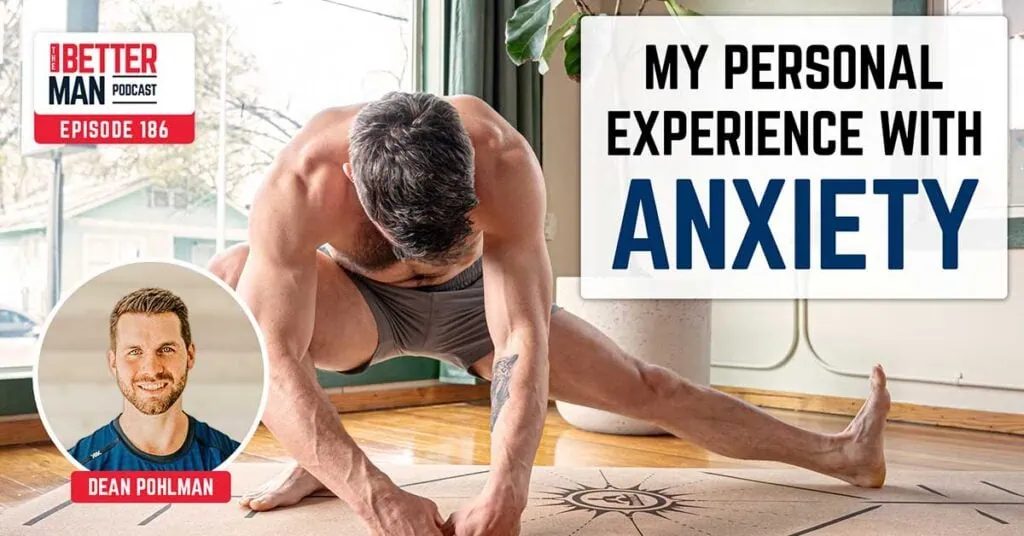
My Personal Experience with Anxiety | Dean Pohlman | Better Man Podcast Ep. 186
After an accidental mushroom trip triggered a panic attack, I realized I’d actually been living with low-grade anxiety my whole life….
Mindset, Limiting Beliefs, and Motivation for Men 40+ | Coach Allan Misner, host of 40+ Fitness Podcast | Better Man Podcast Ep. 185
Prioritizing your career over your health leaves you stuck on a fitness rollercoaster. After a major wake-up call, Coach Allan Misner…