If you think that I grew up in a strictly regimented household where we only ate organic foods and worked out together… well, you’d be wrong.
I assume that my parents didn’t give too much thought to nutrition. We never bought the expensive organic stuff at the grocery. We didn’t read nutritional labels. If we got something the higher-end stuff, it was because it tasted better, not because it was healthier.
My dad was a doctor, an oncologist, to be specific (he worked for the Cleveland Clinic for 35 years, where he eventually retired as the Chair of Operations of the Taussig Cancer Center), and he’ll be the first to tell you that there are no studies that prove that eating healthy will help you beat cancer.
It also wasn’t really an issue. We didn’t really talk about health – definitely not emotional or mental health, LOL – I think the unspoken belief was that as long as we were at a healthy weight and looked the way we wanted to, we were good.
So we ate well enough. There was definitely a lot of processed food, but we weren’t ever allowed to have soda (we call it ‘pop’ in the midwest), and we generally ate real food for our meals. Although there was a stretch of time where I had a pepperoni sandwich (yes, just pepperoni between two slices of bread) as my lunch every day… so some of those choices were questionable.
But the point is that nobody in our family ever had a real problem with weight – so I assume that because of that, we didn’t really think about eating healthier. If it ain’t broke, don’t fix it. And because my brother and I were constantly involved in sports, and I was already kind of obsessed with building muscles and getting stronger, nutrition was never really a big focus.
It was only when they my parents got into their 50s and 60s, once I had grown up and went to college, that they had to start making changes to what they ate.
For my dad, it was the simple shift of eating more protein and fewer carbs. Once he did this, he lost 15 lbs in just a few months. For my mom, it was a longer, more gradual process. She started with exercise, but she really started to notice results when she made changes to her nutrition. (This is where you’ll likely notice the most changes, as well – so don’t rely on exercise for weight loss. You’re going to be disappointed.)
Anyways… what’s my point?
- Well, it’s never too late to learn about nutrition and make changes.
- Eat more protein and less carbs. If you do that, you’ll probably lose weight.
- Intermittent fasting is something that all men over 50 should be doing, in my opinion.
And most importantly…
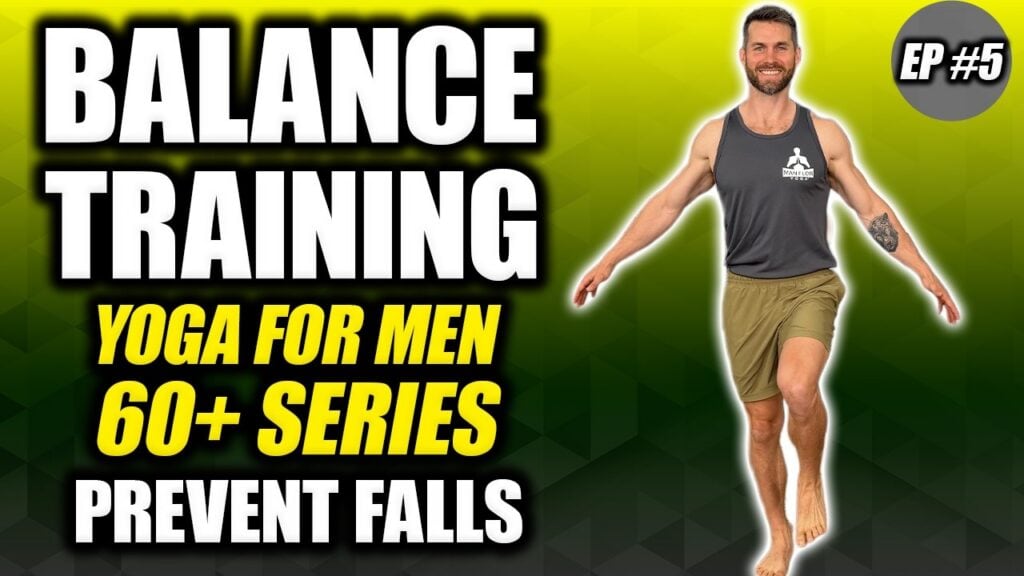
Watch the latest Yoga for Men In Their 60s Workout – 30-Minute version in the Man Flow Yoga Members’ Area, and a 15-Minute version on the Man Flow Yoga YouTube channel.

As we age, maintaining physical independence becomes less about lifting heavy weights and more about stability, strength, and longevity. For men in their 60s, one of the most effective ways to ensure a high quality of life is to focus on balance and injury prevention.
Improving your balance helps you stay active, protects your joints, and drastically lowers the risk of dangerous falls.
The best part? You don’t need extreme flexibility or complicated yoga poses to see real results. This beginner-friendly, 15-minute balance routine is designed specifically for older adults. Demonstrated by my real-life 67-year-old Dad, this routine cuts out the tricky gymnastics and focuses strictly on functional movements that translate into real-life stability.
What You Need Before You Start
- A Yoga Mat (Optional): If you don’t have one, any flat, non-slip floor space works perfectly.
- Balance Support: A pair of yoga blocks is ideal. If you don’t own blocks, perform this routine near a sturdy couch, kitchen countertop, table, or wall for support.
The 6-Step Balance and Strength Routine
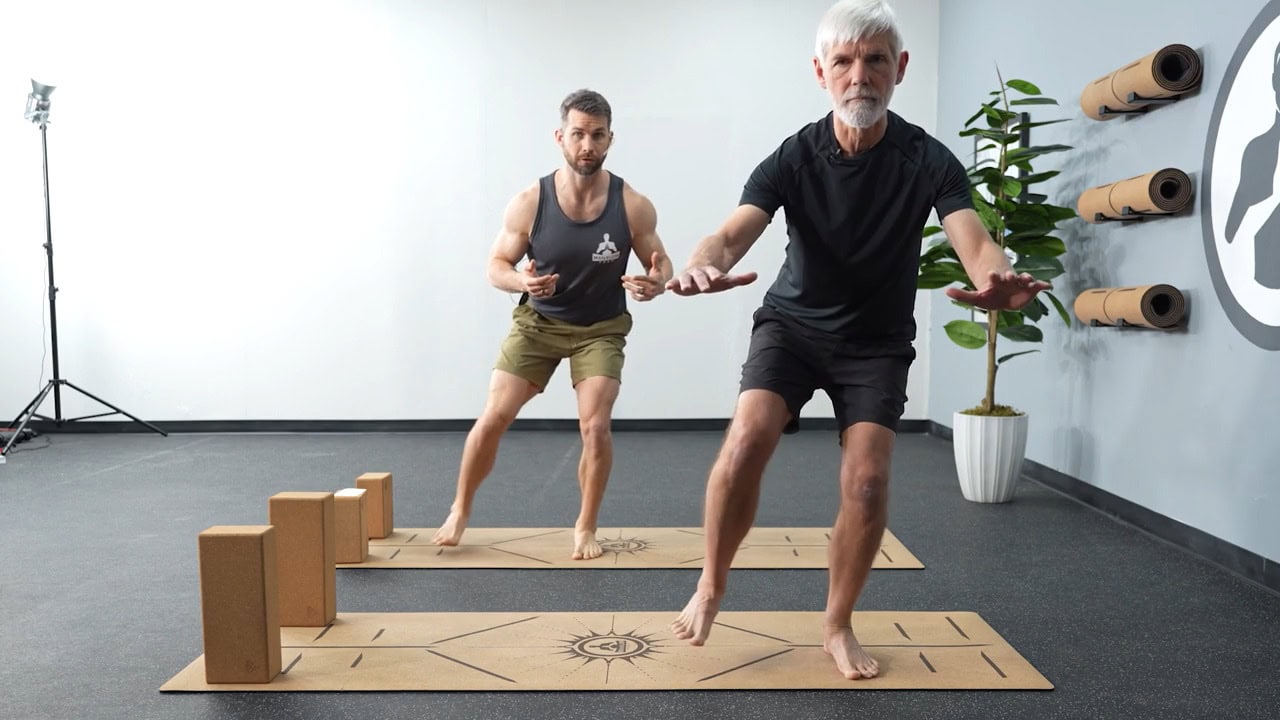
1. The Quarter-Squat Sideways Walk (Warm-Up)
Before jumping straight into single-leg balance work, it is essential to wake up the stabilizing muscles in your lower body.
- How to Do It: Stand with your feet about one foot apart. Lower your hips down and back into a gentle quarter-squat, as if you are sitting back into a chair. Keep your chest upright and don’t let your tailbone tuck under. Extend your arms out in front of you. Slowly step to the side, lifting one foot at a time.
- The Goal: Walk the length of your mat and back for two total rounds. Focus on keeping your hips perfectly level as you step rather than hiking them up.
- Modification: Sit lower to make it harder, or stand higher to make it easier.
2. The High Lunge
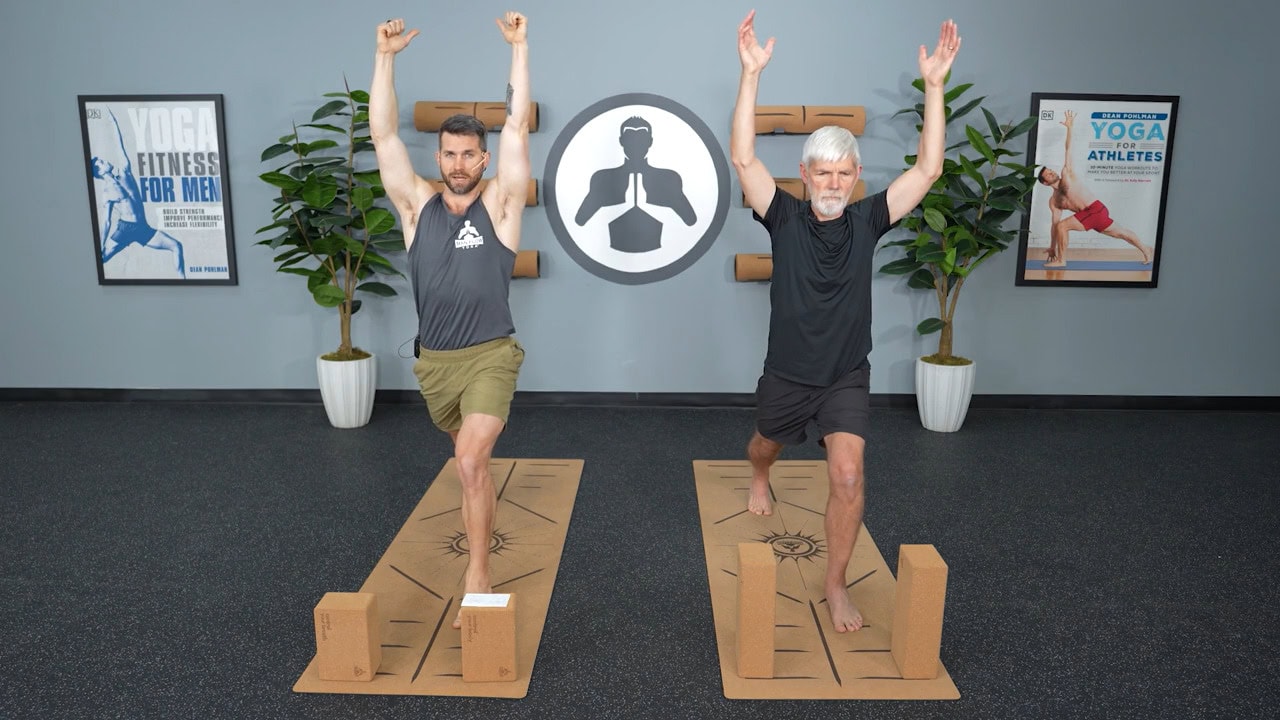
The high lunge builds endurance in the hips and core while challenging your center of gravity.
- How to Do It: Stand with your right leg forward and step your left foot back (about 2 to 4 feet apart, depending on your height). Keep your torso upright and your spine neutral—avoid arching your lower back. Press firmly through the heel and toes of your front foot.
- Balance Tip: Place your right hand on a wall or piece of furniture for support. Extend your left arm up toward the ceiling. If you feel stable, try lifting both arms to increase the challenge.
- Hold: Breathe deeply through your nose for 10 to 15 seconds, then switch sides so your left leg is forward.
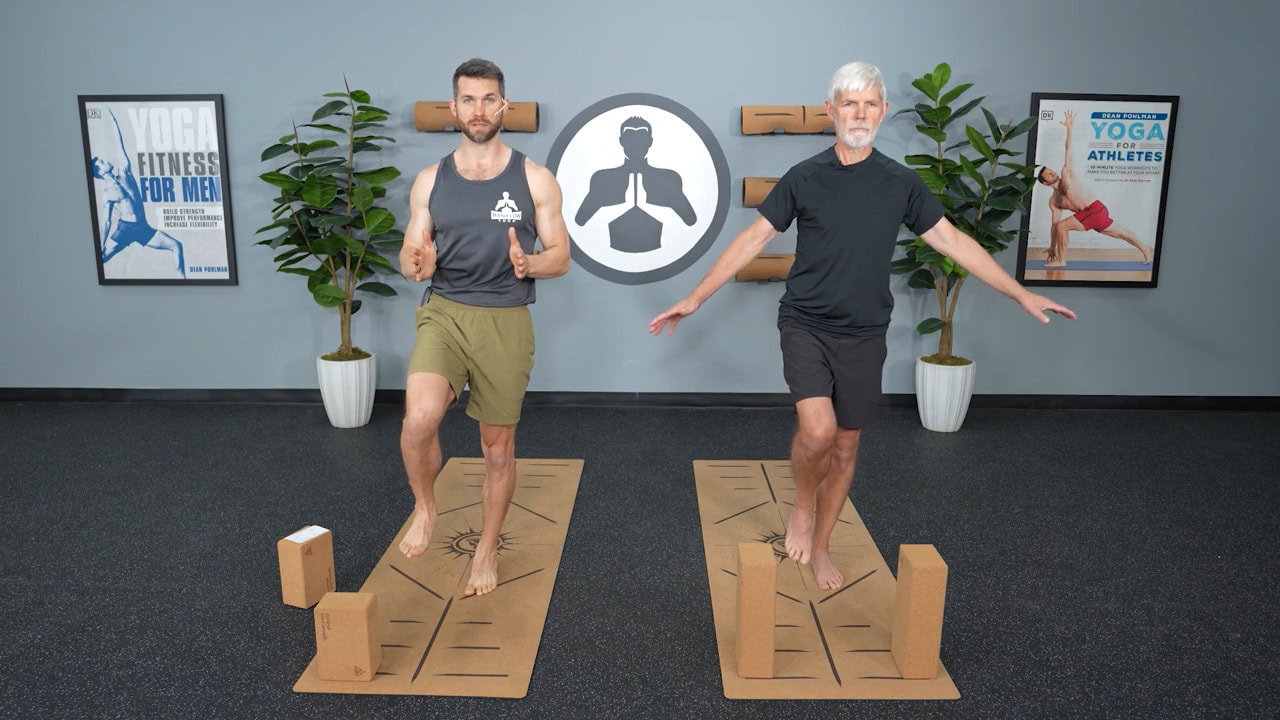
3. Standing March Hold
Simplicity is highly effective when it comes to neuro-muscular training. Standing on one foot forces the tiny stabilizer muscles in your ankles and feet to fire rapidly.
- How to Do It: Stand tall, firmly gripping the ground with your right foot. Keep your hips and toes facing straight forward. Gently float your left foot a few inches off the ground.
- The Goal: Hold for 15 to 20 seconds. If you wobble, simply tap your foot down and bring it right back up.
- Pro Tip: To master this, stare at a non-moving point on the floor or wall at eye level. Avoid looking at moving objects. Switch feet and repeat on the left side.
4. Tree Pose
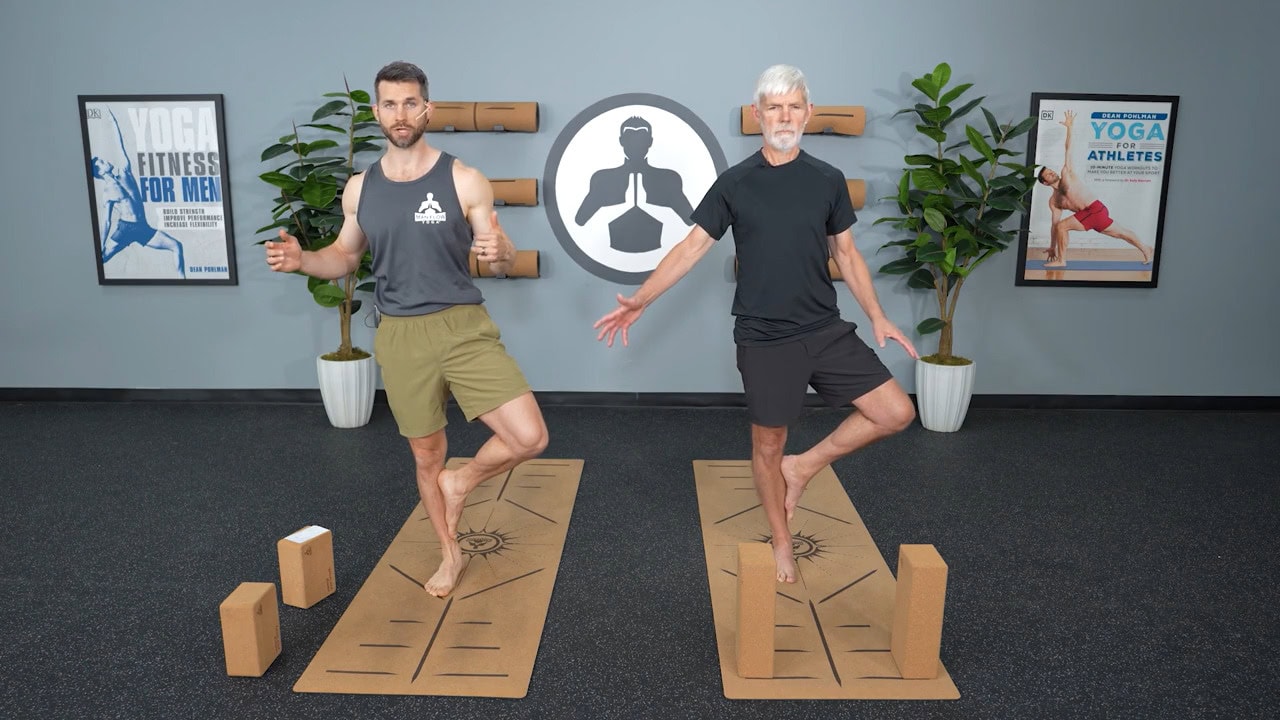
Tree pose is a classic yoga posture that is excellent for hip mobility and lateral stability.
- How to Do It: Plant your right foot firmly into the ground. Externally rotate your left hip so your left knee points out to the side.
- Choose Your Level:
- Level 1: Rest your left heel against your right ankle with your toes touching the floor.
- Level 2: Place the sole of your left foot against your inner shin.
- Level 3: Press your foot directly into the side of your knee or thigh. (Contrary to popular myth, pressing your foot into the knee is completely safe and won’t cause damage!).
- Hold: Stand tall, squeeze your glutes, and hold onto a wall or chair as needed to maintain proper form. Hold for 15 seconds, then switch sides.
5. Supported Airplane Pose
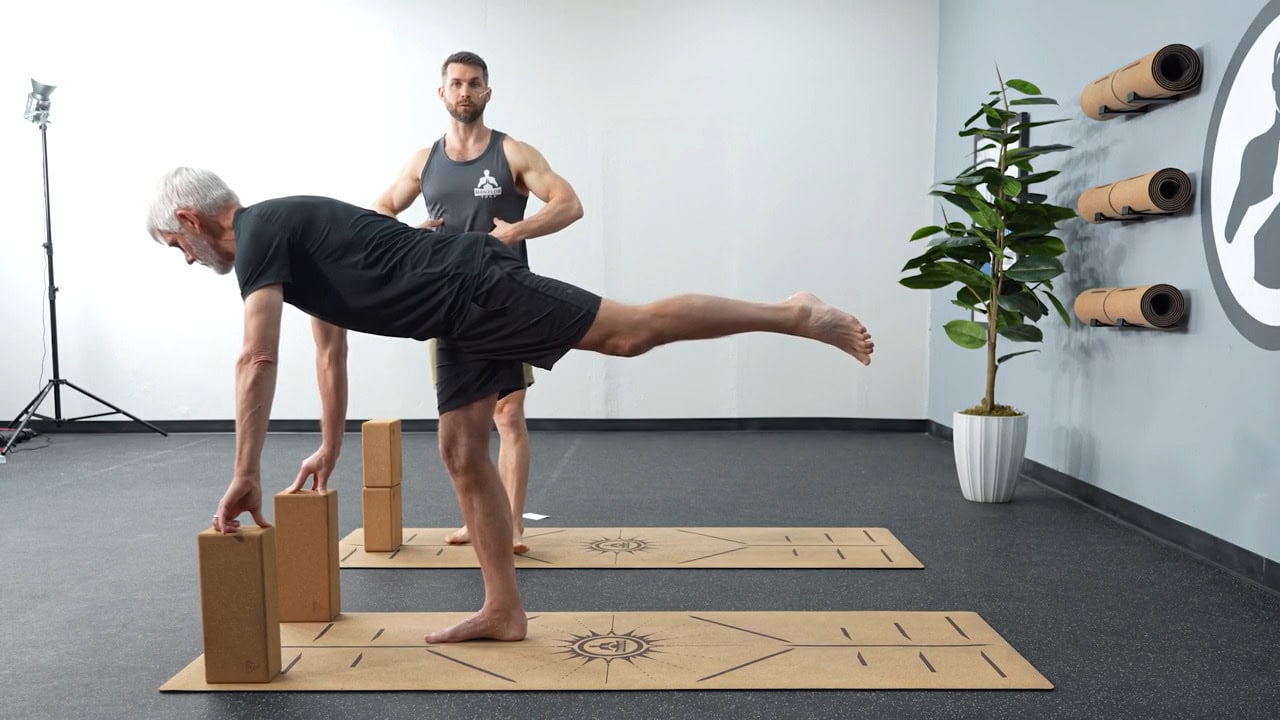
This full-body exercise engages your core, back, glutes, and ankles simultaneously.
- How to Do It: Place your yoga blocks (or a sturdy chair/table) in front of you. Start in a high lunge with your right foot forward. Lean your torso forward and place your hands on the blocks for support. Slowly lift your back (left) leg off the ground, pointing your toes straight behind you.
- Form Check: Keep your chest pulling forward and up, keeping your spine flat. Do not let your chest collapse downward. Try to keep your right and left hips level with each other.
- Exit safely: Slowly step your back foot down into a lunge to exit the pose. Repeat with the left leg forward.
6. Squat Hold Leg Lifts
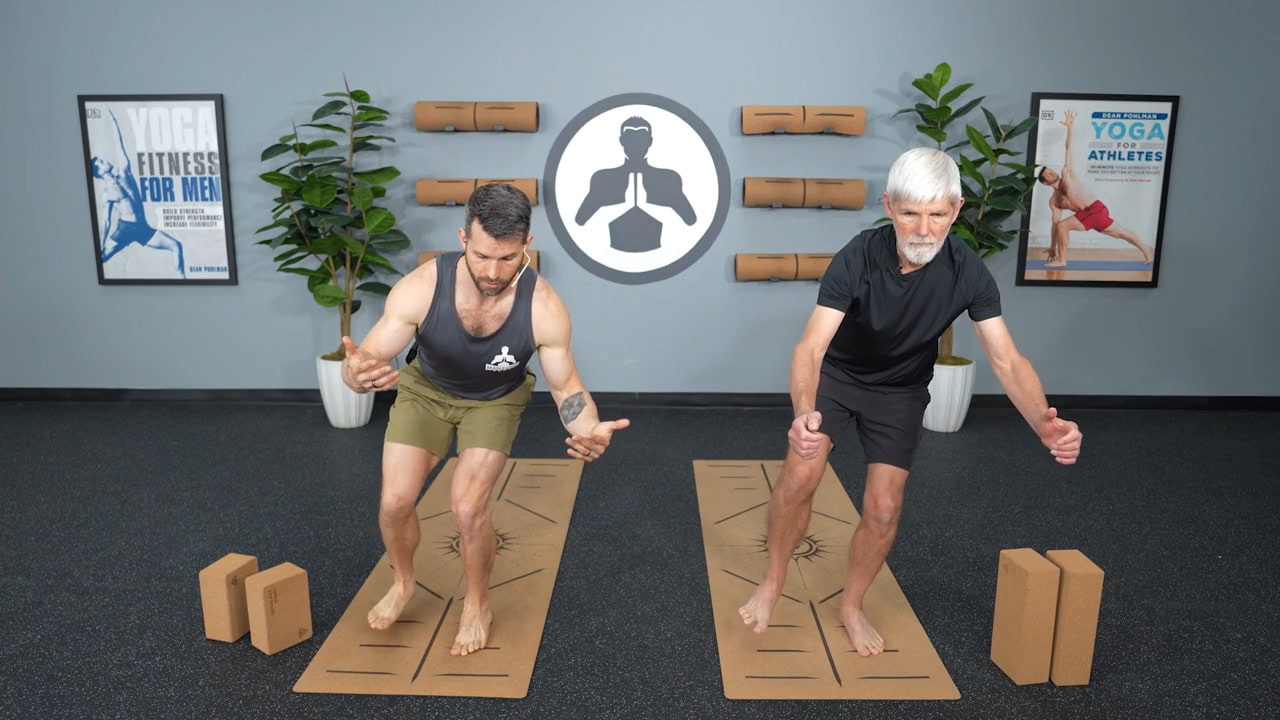
To finish the routine, we combine strength and balance into a dynamic movement that mimics everyday activities like walking or stepping over obstacles.
- How to Do It: Stand with your feet parallel, one foot apart. Lower down into a comfortable quarter-squat. Keeping your chest up, shift your weight onto your right foot and hover your left foot for 2 seconds. Plant it back down, shift your weight to the left, and hover your right foot.
- The Goal: Alternating sides for about 30 seconds. Focus on keeping your hips squared forward rather than twisting outward.
Practice Consistency for Long-Term Results
If you haven’t done stability training in a while, it is completely normal to feel a little wobbly or notice that one leg is much stronger than the other. You might even feel some mild muscle soreness in your glutes and calves tomorrow—that is a great sign that your stabilizing muscles are waking up!
Building balance doesn’t require heroic, grueling workouts once a week. Instead, it relies on consistency. Shifting your physics into alignment takes repetitive practice. Try saving this quick, 15-minute routine and running through it 3 to 4 times a week. Over time, you will notice fewer slips, greater lower-body strength, and much more confidence in your daily movements.
And if you’re Loving Man Flow Yoga…
Related Blogs
- Men in your 60s! Have you been waiting for a yoga series created specifically for you?
- Joint-Friendly Core Exercises for Men in Their 60s
- 3 Health Tips From a 73 Year Old Who Doesn’t Feel A Day Older Than 50
- Fitness & Getting Older: The 8 Most Common Concerns Men Have About Fitness Longevity in Their 50s, 60s, and Beyond
- The Ultimate 15-Minute Stretching Routine for Men in Their 60s
Want full access to every program? Sign up for a Free 7-day trial of the Man Flow Yoga Members’ Area at https://manflowyoga.com/seven-day-trial/
Popular Blogs
How Long To Hold Yoga Poses: A Guide
One of the most common questions I get asked is “how long should I hold…
Yoga Vs Weight training: Which Is Better?
Yoga vs weight training – which is better? The answer is not as straightforward as…
How to Get Better Stronger Erections with Yoga: 5 Poses
Want to learn how to get stronger better erections with yoga? Use these 5 yoga…
Back Decompression at Home: A Comprehensive Guide
Are you looking for stretches for back or spinal decompression to help alleviate back pain?…
My 3 Month Bulking Results: Habits, Diet, Exercise, Sleep, & Overall Takeaways
A Comprehensive Account of My 3-Month Bulking Experience & The Results It’s been just over…
4 Strategies On How to Strengthen Your Weaker Leg
Have you ever injured your ankle or knee? Do you (or did you) play a…