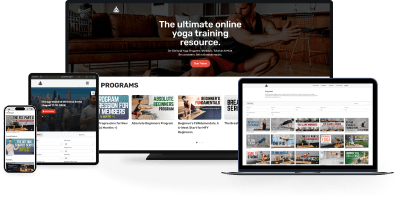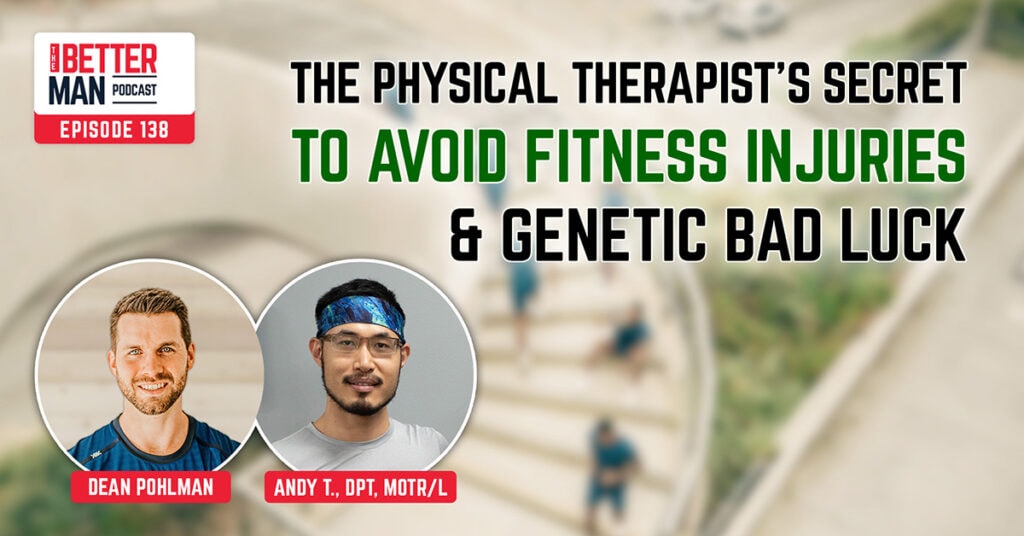
Today’s guest, Man Flow Yoga Member Andy, is also a physical therapist who was cursed with genetic bad luck:
His family has a history of high cholesterol. Despite eating right and exercising consistently, Andy’s cholesterol levels have been over 200 for the past decade. And since Andy’s only in his 30s, getting on a statin which is often a lifelong medication, wasn’t an option for him.
But you know what?
Andy proved that even though genetics load the gun, lifestyle pulls the trigger. For example, about 3 months after joining Man Flow Yoga (and adding yoga to his fitness regimen of Pilates, physical therapy exercises, and something called Animal Flow), his cholesterol dropped by over 100 points!
Andy’s also chock-full of tips and tricks to help you avoid injuries (and what you can do after injuring yourself to speed up recovery).
Here’s what Andy shares in this episode:
- How some of his PT clients injured themselves with traditional yoga
- He explains the difference between Pilates and yoga (and why they complement each other more than you’d think)
- Why diversifying your movement is the best way to free yourself of pain as you age
Listen now!
The Better Man Podcast is an exploration of our health and well-being outside of our physical fitness, exploring and redefining what it means to be better as a man; being the best version of ourselves we can be, while adopting a more comprehensive understanding of our total health and wellness. I hope it inspires you to be better!



Use the RSS link to find the Better Man Podcast on other apps: http://feeds.libsyn.com/404744/rss
Episode 138 Highlights
- How to pick up exercise later in life (especially if you never considered yourself an athlete growing up) (4:19)
- Why you don’t have to compete in sports to think of yourself as a “fitness guy” (and how this identity shift inspires consistency) (5:00)
- The physical therapist’s secret for forever eliminating your lower back pain (7:34)
- Why holistic fitness modalities like Pilates and Man Flow Yoga are often more effective than physical therapy alone (8:06)
- Injured during yoga: Physical therapist shares how traditional yoga has led to injuries for his clients (12:28)
- The 5 biomotor skills you must protect as you age (or else they’ll deteriorate) (14:31)
- Physical therapist explains the stark, yet sometimes unrecognizable difference between Pilates and yoga (16:36)
- How Andy lowered his cholesterol, which had been above 200 for over a decade due to genetic bad luck, by 100 points in only 3 months (without using statins) (33:01)
- The single most effective way to exercise without causing an injury – straight from a physical therapist’s mouth (41:27)
Resources mentioned on this episode:
Need a physical therapist in Austin, TX? Andy would love to see you! You can learn more about Andy’s unique approach to physical therapy and Pilates on his website here: https://therapyandpilates.com/
Dean Pohlman: Hey guys, it’s Dean. Welcome to the Better Man Podcast. Today’s episode is a member interview. I’m going to be talking with Andy T. Andy is a physical therapist based in Austin. He also integrates Pilates into his physical therapy practice. He does something called Animal Flow and then he started doing manual yoga after that. And I think this is a really cool story.
Dean Pohlman: It’s unique because Andy is a guy who comes from a physical fitness background. That’s his profession. But like many of you guys in The Man for yoga community, he wouldn’t consider himself an athlete. And he mentions this in the interview, but he was always the last kid picked in gym class. So I think this is a really good interview, because Andy talks about how he’s been able to use little bits of progress, little practices, little sustained effort over time to create dramatic results.
Dean Pohlman: We talk about how just a few months of manual yoga somehow magically lowered his cholesterol by 100 points when he had been struggling with it. And, there’s just a lot of great concepts and mindsets in here that I think are going to be really helpful, and you’re going to be able to see these in practice with how Andy, practices his wellness and shares it here.
Dean Pohlman: So, guys, I hope you enjoyed this interview. Thank you for being part of the man for yoga community. I hope this inspires you to be a better man. Hey guys, it’s Dean. Welcome to the Better Man podcast. Today I’ve got Andy tea with me and we’re going to talk about a little bit about his health and wellness journey.
Dean Pohlman: So Andy, thank you for coming and doing us okay.
Andy T: Hello everyone and thanks for this opportunity to share for me to share my journey, doing yoga, working on improving my fitness and health. So I’m happy to be here.
Dean Pohlman: Cool. So, Andy, you are a you’re a physical therapist. You also have a pretty unique, unique practice in that you integrate physical therapy with Pilates. And so you’re a guy who’s coming to this who has a lot of fitness knowledge and experience, which I appreciate because then you actually give me feedback afterwards and you’re like, you could actually do this if you wanted to target this muscle a bit more effectively, which is awesome.
Dean Pohlman: So it’s a bit of a different, perspective than a lot of the guys who are coming into man for yoga have. So what? I guess what initially got you interested in health and wellness?
Andy T: So my parents are both radiologists. So very early on in life, I knew I would want to work in health care as well because I saw how they were able to help people just, sharing their experience and knowledge, just clarifying some of the questions people are having, how helpful that would already be. And I wanted to be like that.
Andy T: And, physical therapy seems to be a good area that I only need my hands and I only need my brain. Then I can help a lot of people. I don’t really need a lot of equipment and stuff. But then also, I noticed that being a physical therapist, I can help people to not only get rid of sickness, but also to return to activities they enjoy and improving their wellbeing and quality of life.
Andy T: I feel like that’s a very meaningful thing that I could do as a physical therapist. So that’s my why? How I got into this.
Dean Pohlman: So yeah. So I’m curious. So growing up, did you did you enjoy working out or what did you would you like to do physical fitness wise?
Andy T: Yeah. So I wasn’t very physically active. In fact, I would be the person during the P.E. class. The teacher would like to split up the class to do competitions, for people to pick which kids are gonna be on which team, I will usually be the last pick, and I didn’t really do much exercise, and my parents did send to the YMCA to learn swimming, but then that’s more for survival kind of things.
Andy T: It wasn’t like, like to learn a skill, but then not like wanting me to be competitive swimming. So I didn’t growing up playing sports or anything like that. Like I played a little bit tennis for fun. But then it was mostly after starting school. I learn about, how important exercise is. Then I started to be more active.
Dean Pohlman: Yeah. And I think that’s a pretty common. That’s a pretty common story that we hear about in mental yoga. A lot of people who are doing mental yoga were the last kids picked in PE classes or you know, they, they, they didn’t really enjoy playing sports. You know I hear this all the time that, you know, I wasn’t a sports guy.
Dean Pohlman: I was a theater guy. Or you know, that I was into other stuff. And so, and it’s cool hearing people, you know, who, who don’t have that experience of physical fitness come into physical fitness, and then start to be successful there. It’s always interesting to me, though, because those people still don’t really identify as fitness people.
Dean Pohlman: They’re like, yeah, I’m not really a fitness guy. And I look at them, I’m like, well, you’re working out five times a week and you know, you know, you’re in really good shape. So I think you are a fitness guy now, but there’s still this identity thing that hasn’t happened. So they don’t think of themselves as fitness people.
Dean Pohlman: So anyways, just calling out those guys who are listening and thinking, oh, that kind of sounds like me.
Andy T: I think I probably still wouldn’t refer to myself that way, because even though I do do more exercise and commit more hours a week, my intensity, it’s still not really pushing to that high of a limit or intensity. So I do a lot this now. I do yoga with you, your program and do animal flow. But in a lot of those, for, for me working on my range of motion and my mobility and just me competing with myself to see how I can move better.
Andy T: But then it wasn’t like breaking a record, how much more heavier weight I could live or how much faster I could run.
Dean Pohlman: So, yeah.
Andy T: So that’s like, I think my perception of my own fitness, it’s a little bit different. It’s not like reaching the limit that. Yeah.
Dean Pohlman: And I think that’s I think that’s, that’s very that’s very common. That’s very consistent. Again with a lot of people in our community. You know, it’s it’s not like, competing with yourself. And I think that’s a, that’s a good mindset to have, that, that makes it a lot more sustainable. And from what I understand, you actually do a fair amount of training on your own.
Dean Pohlman: So when did you. So I want to talk about animal flow because I know that was that’s kind of like the main thing that you do. But I wanted to go back to Pilates. How did you get into Bolognaise and what did you enjoy about that?
Andy T: So in college, I had an elective class that, the professor brought in a specialized in Pilates. So she, led us through a lot of exercises that we could do. And that was how I learn about Pilates. I feel like, oh, this could be really beneficial. To improve posture, improve core stability. And everybody needs core stability because, like, lower back pain, there are studies saying, like, pretty much everyone at some point throughout their life, they are going to experience lower back pain at some point.
Andy T: So it’s crucial. So it’s good to know that. But then just as school were piling up, so I didn’t really look further into it until I started practicing early on, meeting my current boss. And he basically talked me into doing a lot is training myself because how much I can actually help the patient, and he made a very big pulling that in.
Andy T: Most of the exercises we give to patients seems to be very isolated, only working on one muscle at a time or working on one joint at a time. But then Pilates is different. It’s a whole body thing, and that helps people to focus on how they position their body, like the awareness is in the mindfulness part. The exercise is very different.
Andy T: So he said, if I get that under my belt, I can provide way more value. So that’s how he persuaded me into doing the training. And that’s been helping me a lot with how I treat my patients. And that’s also how I got this job and eventually moved to Austin.
Dean Pohlman: So got it. So can you explain what Pilates is? And, I think you talked a little bit about why it’s beneficial, but maybe just give people like a quick, you know, 30 to 60 second explanation of what Paul Ortiz is.
Andy T: Yeah. So a lot is it’s an exercise method developed by Joseph Paladin’s in early 20th century. And he utilized a lot of different approaches he learned growing up, battling his own ailments. And so there are a lot of martial arts aspects of it, a lot of different body works, gymnastic components involved in it. But then his philosophy is about the control of the body.
Andy T: So before this exercise system is named after him, it’s called control ology because, this is done. It’s focusing on the control of the body, always being aware. How you position your entire body, how you control your movement. And then be aware of the body. Aware, be aware of the position, the alignment, posture. And so, yeah, like I said about this, the big focus about a lot is it’s about a control.
Andy T: It’s about the awareness of how you position your body when you move into different planes, different angles, and then focus on the alignment and engagement of the core and the muscles. So yeah.
Dean Pohlman: Okay. Cool. And there’s a lot of and I’ve done my wife is really big in sport is she likes the, the mega former Pilates. That’s that’s her thing. She does that 3 or 4, sometimes five times a week. And whenever I go, I think it’s it’s great. I think the way that it it, it reminds me of mental yoga in some ways because there is right that very intense focus on muscle control and muscle engagement.
Dean Pohlman: And you’re doing things that you just feel your muscles working, in a way that you don’t normally like. For me, as someone who lifts weights and goes calisthenics and who used to play sports, it’s getting all of those muscles that, you know, need to be strong and are going to help you stay injury, resistant to injury.
Dean Pohlman: But there are things that you just don’t do on a normally normal basis. So Pilates is kind of kind of like for yoga or yoga in general. Some I won’t say yoga in general, but, kind of like meaningful yoga, kind of like some other, you know, isometric workouts, but it’s just forcing you to do those exercises that you need to do to be able to move well and stay healthy.
Dean Pohlman: So I’m, yeah, big fan of flats.
Andy T: And it’s, glad you actually brought that up. And I think that was a big reason why I decided to join mental yoga was because of how much you focus on the control, the alignment, the proper muscle engagement, and because yoga was coming from, spirituality practice. So a lot of times, the physical aspects, the control and the movement that that might not be emphasized enough and that occasionally we have some patients saying they got hurt from doing yoga a lot of time.
Andy T: That was because of not having enough awareness or attention to how they move their body. So the fact that there is a program, not only specific for guys because of the alignment and flexibility, difference, but then also a big focus on movement, on engaging the muscle, on the alignment. I feel like that’s really important. So that was a big reason why I joined.
Dean Pohlman: So yeah. Okay. I’m glad that, I’m glad that stuck out to you. And yeah, I think, you know, people think that yoga is safe because it doesn’t involve weights or doesn’t involve, like, high impact. But the reality is that you can do anything. And if you aren’t paying attention to how your body moves, then there’s potential for injury.
Dean Pohlman: And, you know, I know that you probably have. You’ve just said it, that you see a lot of people in your practice who have injuries from yoga. My wife has mentioned that Marissa, she talks about that, usually it’s, you know, it’s from and it’s from doing things like passive forward folds too much. There, you know, which ironically, a lot of people say, like, you do yoga for lower back issues and then but, you know, if you’re not doing it properly, it can cause lower back issues too.
Dean Pohlman: So, I like anyways, I don’t, I don’t know if I had to choose between traditional yoga and Pilates, I think I would lean more to, to Pilates, just because it emphasizes more control over, muscle, more functional strength, more functional range of motion. But yeah.
Andy T: I think a big thing, I think that’s what I try to do myself, is every one of us should diversify the type of exercise we do. So in the world, it’s probably mentioned more in fitness. Like, we briefly talk about it in health care, but then in fitness, people talk about to address different bio motor skills we have.
Andy T: So in order to function optimally every day, we need the mobility. We need strands, we need endurance and we need agility to, react to emergencies. And we need coordination. So we have different aspects of how we move our body. We all need to take care of in the fact that, there’s probably no single exercise system or a movement system that can address every single thing.
Andy T: So how are we able to fulfill our need to be good at all the other at like every single aspect, we need to diversify the types of exercises we do. So yoga maybe doesn’t focus on cardiovascular endurance as much or on strength as much. So lifting weights as how you can build up your strength, and running or swimming, that’s how you build up your endurance.
Andy T: And that’s how they can complement yoga, and vice versa. For people only doing running, only lifting weights. But then they also need the flexibility and the range of motion so that their muscles can function properly. And they can avoid overuse injury and they can recover faster. And so adding yoga can be beneficial in that aspect too.
Dean Pohlman: Yeah. So how do you think your Pilates and yoga practice have complemented one another? Why do you think so? If you had to say why you are stronger than people who just duplicate it, you’re just too yoga. What would you say?
Andy T: So Pilate is essentially, traditional choreography. They don’t push people into and range much. They focus on control a lot of time. It’s staying in the middle of the range, all the movement, because we have the most control. And a big focus about a lot is, is the control. And then yoga, on the other hand, has a flexibility focus on a lot of the poses, challenging the people to position their joins at the end range.
Andy T: So we feel more of a stretch. We feel more of an elongation. So that’s in that aspect. It’s already very different just by how you move your body into the position you see in Polaris and in yoga, your body will be in very different positions for different reasons. So that way it will be beneficial, mutually beneficial to each other.
Dean Pohlman: Got it. Okay. So thanks for that. And then so something that you so before you started doing manual yoga, you were doing something called animal flow, which I don’t know if I can, it’s a lot easier to just go to YouTube and search animal flow and like and watch the founder, Mike Fitch, just do like a flow.
Dean Pohlman: But it’s a really cool, it’s a really cool practice. It’s a very, it’s a very dynamic practice. I think there’s a ton of very controlled movement, but, you know, not not by any means. Easy movements. And I think they’re all beginner friendly. I think you have to like, build up to doing it, but I think it’s a really cool movement practice.
Dean Pohlman: So can you tell me about your, you know, starting, animal Flow and how that fit into Pilates?
Andy T: Yeah. So animal flow, just back to what you said earlier, is a quadrupedal movement. Training means most of the exercises are on the ground with hands and feet on the ground. So that way we are kind of moving like an animals form versus a human form. As a human form is like standing on two legs versus animals.
Andy T: For points on the ground. So that’s a different. And by doing that, your position in your body in a position that you are unfamiliar with. So just by moving in that position that challenges awareness, challenges your control and also make you be mindful, paying attention to how you move. So that’s how the animal flow the name comes from.
Andy T: It’s because of that aspect. But then it’s the exercise is mostly, the hands and feet on the ground. So it’s challenging a lot of the upper body strength. And that’s when I encountered Animal Flow. By seeing some videos on social media online, I noticed that by doing pull out, it is in other ways I work out. I don’t really have enough muscle strength, especially in my upper body.
Andy T: So when I saw that, I feel that I really needed that. That’s how I got into it initially. And like Dean said earlier, the strength requirement of it can be a little bit higher compared to some of the other exercises. So in terms of incorporating that into my physical therapy practices, a lot of time I would pull out single exercises for the patients to do.
Andy T: And so that’s the neat thing I like about animal flow. It’s you can pull out pieces that can help you work on shoulder mobility, help you work on endurance, help you work on upper body strength. At the end, a lot of those pieces, they give you a range, those in certain sequence, they can become a choreographed longer flow.
Andy T: And that’s how people can design the choreographed choreography together. And then do the flow together. So the community aspect, of that exercise system is very valuable. And that’s one of the reason why it got popular too. So.
Dean Pohlman: So when you were starting Animal Flow, how often do you do it now or how often where you’re doing it at your peak in terms of how many workouts per week?
Andy T: So the baseline would be once a week and then now it’s more because I’m in the middle of preparing for my certification. So I do probably 4 or 5 times a week. But it’s not always hour long. Sometimes it’s just drilling certain techniques. So some days would be shorter session just working on one thing versus I’m doing is that my, dedicate a longer time to do a longer flow.
Andy T:
Dean Pohlman: So okay. So what what helps you be consistent with that. Especially when you were getting started. What was the what was the motivation to do it. Especially when you didn’t feel like doing it. What do you think helped you want to keep doing it consistently?
Andy T: I think for me was to see other people. What I mean by seeing other people, it’s not like I want to look exactly like somebody else. And seeing it was the inspiration of seeing how other people move, and that made me realize there’s a lot of potential there that I could improve. So that, I think, is by seeing how much I can improve, and then also by having my knowledge as a physical therapist.
Andy T: I know those are possible. I just need to do the work. Then that got me started. So and then the thing it’s another thing very important, which Dean actually mentioned in some of his other podcast video and some of the other things he shared within the program is to be aware of how your body feels. And maybe today, after the session, you feel like you can hold in a pose or do a certain movement for much longer.
Andy T: You have better control. You feel like you have more range to work with. It’s about paying attention to those little things. That was what kept me, to be more consistent in practicing animals. No, I would say so. Yeah.
Dean Pohlman: Okay. So paying attention to the details of of the movement, how long do you think it took you to notice progress? Like how long do you think it was? Like, was it a month or was it two months until you noticed, like, oh, I’m getting better at this. Or maybe you were. Maybe you noticed you were getting noticeably stronger muscle building.
Dean Pohlman: What were those? What were some of those results or what were some of the things that you noticed were happening?
Andy T: Yeah. So a lot of times the changes actually were quite immediate. Like within one session I could notice, because I think that’s related to me. What challenges me the most a lot of time is coordination. If for a lot of people, if they don’t have enough range of motion, they might need more time for the range of motion to develop.
Andy T: And same thing with muscle strength. But then coordination happens with control. So control it’s just like you just need to introduce your brain, the right type of stimulus. And then you do it. And with a few reps lines the brain clicked. It clicked. It happened pretty immediately. So for me, a lot of times the changes are happen pretty, pretty immediate.
Andy T: But then, like you said, about noticing the longer term changes, I did have some range of motion issues that I need to deal with. And for those those would take me about like 2 or 3 months to be able to see, like, hey, I can push way faster and I can stretch faster, in certain. So different aspects takes different time.
Dean Pohlman: Yeah. Did you use any other, complementary practices to improving mobility, like, you know, either manual yoga or were you using massage therapy or foam rollers or other tools like that?
Andy T: So there’s another exercise system we use in our physical therapy practice. It’s called gyro tonic, and it’s also focusing on a lot of the mobility aspects of how we move our body. And it has a little bit more of a rotational spiral pattern. So I use that a lot. And that helps my spine to be more mobile. And then I do do stretches and using a lacrosse ball to do some release occasionally.
Andy T: But I think what I’ve been doing consistently to help me with flexibility would probably be yoga. Like mental yoga. So.
Dean Pohlman: Got it. So you’d been doing when you were doing Pilates for a while. You just started doing Animal Flow. How long after you started Animal Flow? Did you pick up man for yoga?
Andy T: Oh, that’s, two years later, I think I started Animal Flow 2022, and I joined you guys 2024. So. Yeah. So two years after.
Dean Pohlman: Okay.
Andy T: Yeah. Got it.
Dean Pohlman: Okay, cool. Yeah, I think I remember that because you signed up. You signed up for the members area, and then you immediately signed up for like all of the work at all of the workshops we had going on to.
Andy T: Really enjoy that aspect too. So like, yeah, because. It’s different if you have an extra pair of eyes to see how you do things, then you can correct things that you couldn’t see yourself. So that those are always very beneficial.
Dean Pohlman: Yeah. And it’s been cool. And you actually just just to highlight some of Andy’s kindness generosity. But I think also something that’s kind of reflective of the mental yoga community as a whole is you actually you actually had people. Did you have someone stay with you or you offered to have someone stay with you, and then you took people out to to barbecue one night.
Andy T: Yeah.
Dean Pohlman: Yeah. And I yeah I did that very humble.
Andy T: The community aspect. That’s that’s what I like about this program that that’s what I like about animal flow. And then that’s why I like about them flow yoga is the opportunity to connect with people. It’s not just like hey, we go to class, we work out and then we laugh and there’s no other common denominators or anything.
Andy T: It’s like, this program allows the members to be able to, connect as individuals and cultivate relationships. And that’s a very, a very valuable aspect. So,
Dean Pohlman: Yeah. So what do you think about, community and how is that helped you? How is community helped with your workouts and just your, you know, your consistency with your fitness compared to maybe some other practices or maybe some other workout programs that you’ve done that don’t have that community aspect? And how has that been helpful to you?
Andy T: So I think that we I talk a little bit earlier about getting the inspiration from seeing other people, but, not like wanting to look exactly like somebody else. That’s the community aspect. So it’s like in the community, you see, like in Dean’s community especially, there are guys like Joe that can really do this. I can do it myself.
Andy T: But then it’s like, even though I know how much some people can do certain things that I can do, but then people are always giving very positive feedback, like, good job with this pose and that, and it’s the support you get no matter, no matter how good or how bad you may be, then you always get a compliment from other people and there are other people.
Andy T: No matter where what status they are, they are always willing to clarify things and being able to encourage others. That just helps at least helps me to feel like, oh, I can exercise more. And just because I won’t be judged and I won’t, you know, shameful because I don’t look exactly the same as somebody else, or I missed this point of doing certain poses.
Andy T: It’s not like, it’s everybody is celebrating everybody else’s accomplishment at the moment, even though the more improvements might need to be made and we all can make more improvements any time. So just having that environment that people can feel safe and that people can feel comfortable to be themselves and to get encouragement from each other, I think that’s valuable.
Andy T: And so the community aspect helped me a lot with that.
Dean Pohlman: Okay, cool. Well, thank you, sir. Thank you for sharing that. I’m glad that you’ve had a great experience with our community, and thank you for being such an active part of the community as well. I think, I think people don’t realize that, like, you know, this is this exists because of the kind of the the courage and the willingness of individuals to share their stories or to talk about, you know, themselves.
Dean Pohlman: And if those individuals if there was one person, you know, if those just few people weren’t as active as they were, they wouldn’t create this kind of snowball effect that would encourage other people to be, you know, active and vocal as well. So thank you for, you know, having the courage to share your stories.
Andy T: Yeah. Yeah. Another thing, like Dean, I mentioned to you, I mentioned to some other people in the group, I feel like that’s still I still don’t know how to explain that yet, but my cholesterol drop, like I told, I shared about that and that was like, I have that with my family history for a while. And the number was like total, always above 200 for over a decade, like since I was in college.
Andy T: And then I was really on the edge, starting to take medications. My mom kept telling me to start taking STAT, and I was like, I’m in my 30s. I don’t want to take stats. Yeah. And then but then I tried to write more by because the research seemed to say you need to do more aerobic type of exercise to control the cholesterol.
Andy T: And I rode a bike for three months last summer and the total cholesterol actually increase another 20 points found from riding a bike. And so nothing makes sense to me. And so like I said, and then the doctor just said eat healthier. And I was already eating really healthy. So there’s not really anything else I could change. But then I don’t remember her like I did the blood test that was showing the p total cholesterol.
Andy T: Like about the same time I joined and then flow yoga. And then I did another blood test, just last month. And then a total dropped 100 points in three. Wow. Yeah.
Dean Pohlman: That’s crazy.
Andy T: So that’s crazy. Like medications cannot even do that. And then I don’t think that can be explained by science or any no reasons by then. I think it’s definitely like yoga playing a very big part of, Wow. So and then that’s the reason why I feel like I would like to share about this is because Dean mentioned in his podcast and in the community a lot, is that a lot of people would start to be serious in pursuing fitness when they feel like they have to do some change so that they don’t face serious health consequences.
Andy T: It’s like a moment that I’m hard, but then for me, I don’t really have that. But then seeing my realization is a realization of hope. They, are a lot of things that I can do to take control of, even though, family history seems to be a hard thing to battle. But then somehow everything I’m doing is making a difference.
Andy T: And that gave me that gave me a lot of hope that I can control a lot of the things. And that’s the motivation I have to help me. Keep going and keep being consistent, and to realize that I can make a lot of changes by, doing the things that I do.
Dean Pohlman: Yeah, well, that sounds so empowering. I’m glad that you got to have that realization. I mean, and have that cholesterol level drop 100 points in just a few months. And that being like the big part of that, that’s that’s really cool. So what’s the what’s the next thing for you. What’s the next. You know, what’s the next, the next mountain to climb or the next, like, initiative.
Dean Pohlman: And your overall fitness that you’re looking forward to is, I think.
Andy T: Everything I’m doing now, just to be consistent with it and to be because I think a lot of time people have that saw that they always have to try something new. So what’s next? And, what’s the newest thing we can do to work? But then I think the most important thing is to be consistent with what we’ve discovered that’s working.
Andy T: And so I think for me, it is that, that is yoga and MLflow, and all of these, while I’m already practicing, I can still improve. Might not be a night and day kind of improvement, but then range of motion can gradually increase, the control can be gradually improved. Strength and endurance can be gradually improved. So it’s minor improvement of the techniques that I can always pursue.
Andy T: So I would say pretty much being consistent with what I’m doing.
Dean Pohlman: So yeah. Yeah, I love that. Yeah. I think it’s, it’s tempting to want to find like the next big thing that’s going to have this dramatic impact. But more often than not, there’s not that one thing. It’s more so, like, just little improvements. And, you know, a few areas that lead to the results. Well, that’s really cool.
Dean Pohlman: I’m really glad that you figure that out and that you have you have hope, and that you have your plan and you’re just going to keep getting better and, that’s really great. Thank you for sharing all of that.
Andy T: Yeah. Thank you for the opportunity to.
Dean Pohlman: Yeah. So I’ve got I’ve got four other questions I want to ask you. These are our rapid fire questions. What is, what is one habit, belief or a mindset that has helped you the most with your overall health and wellness?
Andy T: Okay. I think the believe, Don’t compete with others. Compete with yourself. I like to prioritize that. And, And I do enjoy some competition. Like playing games. I always make things fun. So I’m not saying that it really should avoid any forms of competitions. No. But then my point is, by prioritizing and competing with yourself that make you be more aware of where you’re at and are you doing any better than yesterday?
Andy T: And how can you be even better tomorrow compared to today? So prioritize competing with yourself versus competing with others. Because if you prioritize competing with others, you might just want to look like somebody else. You might just want to be as fast, or you might want to surpass somebody just so that you feel that you are a better person than somebody else.
Andy T: And that’s not necessarily good for your relationship, for your own mental health, for different aspects of your life. But then focusing on yourself, focusing on how you can be better compared to yourself. Yesterday, I think that can make your practicing everything more sustainable, and that can make you not worry too much about how everybody else looks like, or worried about how everybody else would look at you.
Dean Pohlman: So yeah, great answer. What’s one thing that you do for your health that is often overlooked or undervalued by others?
Andy T: I think I kind of mentioned this earlier, diversifying the type of exercises. So I’m not the type of person only doing running or only going swimming or only doing yoga or only lifting weights. I do a little bit, many different things. And I think that served me well. And I barely ever had any injuries. Like, definitely no major injuries.
Andy T: And I might have like some soreness or some minor pinches here and there, but, those were not anything that I couldn’t, resolve myself. And the reason why I was able to avoid any major injuries like that was because I really diversified the way I move. So I don’t have any opportunity to have any overuse type of injuries.
Dean Pohlman: Smart. What’s the most stressful part of your day to day life?
Andy T: The most stressful part, I think you probably would understand. This is the rush hour traffic. Living in Austin and trying to ride at the.
Dean Pohlman: I don’t drive in rush hour. I avoid it.
Andy T: Yeah, that’s the most stressful part, I think, because I enjoy treating patients. I enjoy everything. Everything else I do outside of work. I like fitness and going to church, hanging out with friends. So the only stress of ha would definitely be the traffic, especially congestion or traffic jams and. Yeah.
Dean Pohlman: Yeah, I, I do not like sitting in traffic, that’s for sure. All right, last question. What is your best piece of advice for men who want to be healthier?
Andy T: I think, just take action. I would say just keep it simple. So just. If you feel like you need to move more, just start moving because it can be easy just walking around the neighborhood can be as easy as that. And then if you don’t know what to do, then find somebody like there are a lot of opportunities, a lot of communities, a lot of resources available to people now.
Andy T: And so I feel like a lot of the limitations now, it’s not really because of people not having access to things or people like not knowing things. Chances are people already know what are the things that are good for them. They just need to take action and start doing Like I said, Baby Steps matters because we always wanted to take a big leap so that we make a drastic difference within a day.
Andy T: But then a lot of times taking small steps, even though not significant at the moment, but in over time, just being consistent baby steps would eventually be a drastic change. So yeah, I would suggest people to just take action, no matter how insignificant change they might feel like at the moment. Just take action and keep at it.
Dean Pohlman: Got it? Cool. All right. Well, Andy, thank you for, joining me today and sharing your story. And, thank you for being an inspiration in the community. I’m looking forward to seeing you at the next, next event here. Yeah. So, cool. Well, guys, listening in, I hope this inspires you to, to be a better man.
Dean Pohlman: I hope this inspires you, in general. And, I’ll put, I’ll be sure to put in notes about Andy and his practice, in the, thingy here. And if you’re ever in Austin and you need physical therapy, he’s a good guy to go see.
Andy T: Thank you for having me.
Dean Pohlman: Yeah. You’re welcome. All right, guys, I will see you on the next episode. Thanks for being here. All right, guys, I hope you enjoyed that interview with Andy. Links for Andy’s stuff is going to be in the show notes below. So his physical therapy practice, his socials if you want to follow him, and he’s active in the Manvel yoga community on Facebook, our private group there, as well as in the members area and the app and the community section there.
Dean Pohlman: If you’re already part of our community, I want to say thank you for being here. I hope you are being consistent with your workouts and having a great man for yoga experience, and also integrating yourself with the community where it feels good. If you’re not already part of the man for your community, I want to invite you to join.
Dean Pohlman: We have a free seven day trial to get you in. See what it looks like, check out the programs, you can learn more and sign up there at man for yoga.com/join. I hope you’re enjoying this podcast. If you want to leave a review and you haven’t already, you can do that wherever you’re listening, either on Apple Podcast or on Spotify.
Dean Pohlman: We also have video versions of the podcast on the Betterment Podcast YouTube channel. It’s separate from the man for yoga YouTube channel, as well as in the Mental Yoga app and members area. So you can listen there. Thank you again guys, for listening. I hope you’re enjoying this. I hope to see you guys on the next episode.
Dean Pohlman: And as always, I hope this inspires you to be a better man.
[END]
Want to improve your sexual wellness, get stronger erections, and last longer in bed? Then join the FREE 7-Day Sexual Wellness Challenge here: https://shrtlnk.co/uA27H
Want to unlock more flexibility and strength, reduce your risk of injury, and feel your absolute best over the next 7 days? Then join the FREE 7-Day Beginner’s Yoga for Men Challenge here: https://ManFlowYoga.com/7dc.
Tired of doing a form of yoga that causes more injuries than it helps prevent? The cold, hard truth is men need yoga specifically designed for them. Well, here’s some good news: You can start your 7-day free trial to Man Flow Yoga by visiting https://ManFlowYoga.com/join.
Like what you’re hearing? Sign up for the mailing list:
Rate & Review
If you enjoyed today’s episode of The Better Man Podcast, hit the subscribe button on Apple, Spotify, or wherever you listen, so future episodes are automatically downloaded directly to your device.
You can also help by providing an honest rating & review over on Apple Podcasts. Reviews go a long way in helping us build awareness so that we can impact even more people. THANK YOU!
More Podcast Content
Take Off Your Mask & Remember Yourself! | Be The Better You Retreat Recap with Coach Patrick | Better Man Podcast Ep. 192
At the latest Be The Better You Retreat we focused on a powerful idea: remembering yourself. Today we explore how the…
Dark Motivation Works … But It Causes a Mid-Life Crisis (Try this instead) | Connor Beaton from ManTalks | Better Man Podcast Ep. 191
Do you ever feel like you’re just wandering through life without a purpose, or stuck in the middle of a frustrating…
Fitness After 40: How To Start When You’ve Never Exercised (The Man Flow Yoga Catalyst Effect) | Bobby B. | Better Man Podcast Ep. 190
Turning 40 was Bobby’s wake-up call. After a lifetime of skipping workouts, a doctor’s visit revealed warning signs in his blood…
Gut Health Goes Way Deeper Than Weight Loss | Ben Brown (Founder of Body Systems Coaching and Head Nutrition & Fitness Coach) | Better Man Podcast Ep. 189
Gut health impacts far more than weight loss—it directly governs your energy, immunity, and mental well-being. If you grew up in…
Moving From Your Survival Path to Your Soul Path | Caleb Campbell (Former NFL player & West Point graduate) | Better Man Podcast Ep. 188
If you’re an endlessly striving achiever, you know the path forward lacks clarity. Former NFL linebacker Caleb Campbell used his feelings…

The Ethics & Use Cases of AI | Ted Phaëton | Better Man Podcast Ep. 187
The topic of AI is unavoidable. Ted Phaeton, productivity coach and host of the Modern Man Podcast, joins the show to…