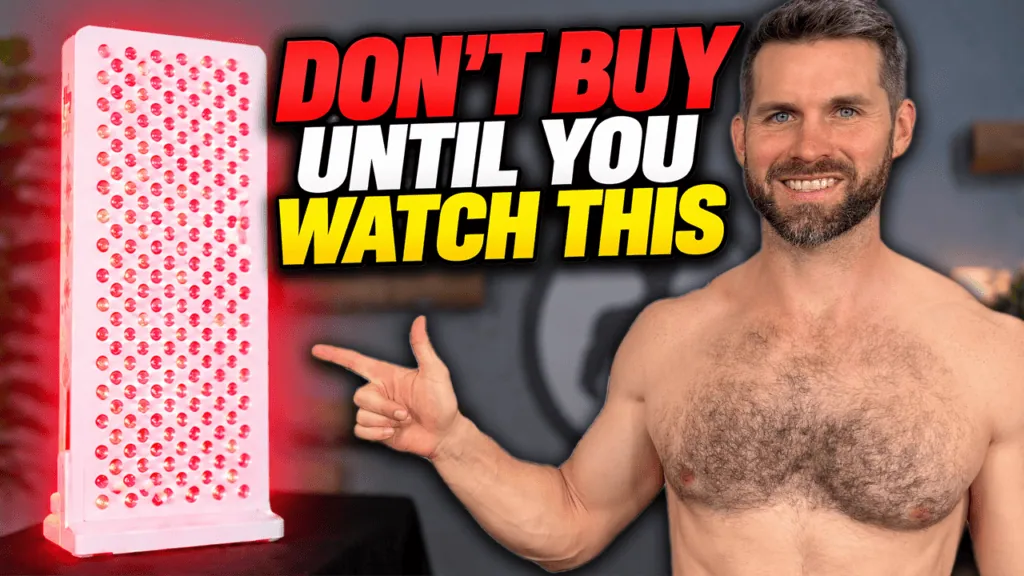
I spent nearly $8,000 buying eight of the most talked-about red light therapy panels, then put every one through the same 15 scored rounds – same meters, same room, same distances. What follows is the full write-up of that test, with every number pulled from the master data sheet.
Disclosure: This article contains affiliate links. If you buy through them, Man Flow Yoga may earn a commission at no extra cost to you. Every panel here was bought and tested by me.
Quick Results: Best Red Light Therapy Panel Under $1000
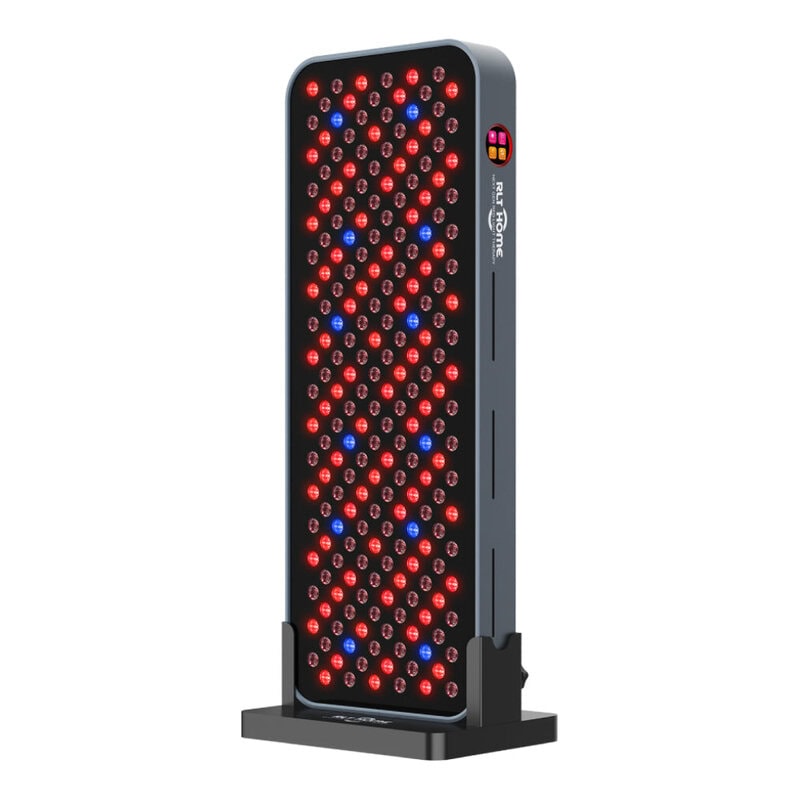
BEST OVERALL
RLT Home Total Spectrum Compact
$995
6.70 average points. Top three in 13 of 15 rounds.
Prefer to watch? The full test video is on Youtube:

Watch the full test video: https://youtu.be/zTBg2TD-ynU
If you have followed Man Flow Yoga for a while, you know I do not chase shortcuts. I look for tools that actually support recovery, energy, and sleep. Red light therapy has been in my daily routine for several months, and the change in muscle recovery, joint stiffness, and morning energy has been hard to ignore. The catch: the market is loud. Dozens of panels call themselves “medical grade.” I chose to measure instead of guess.
The Eight Panels I Tested
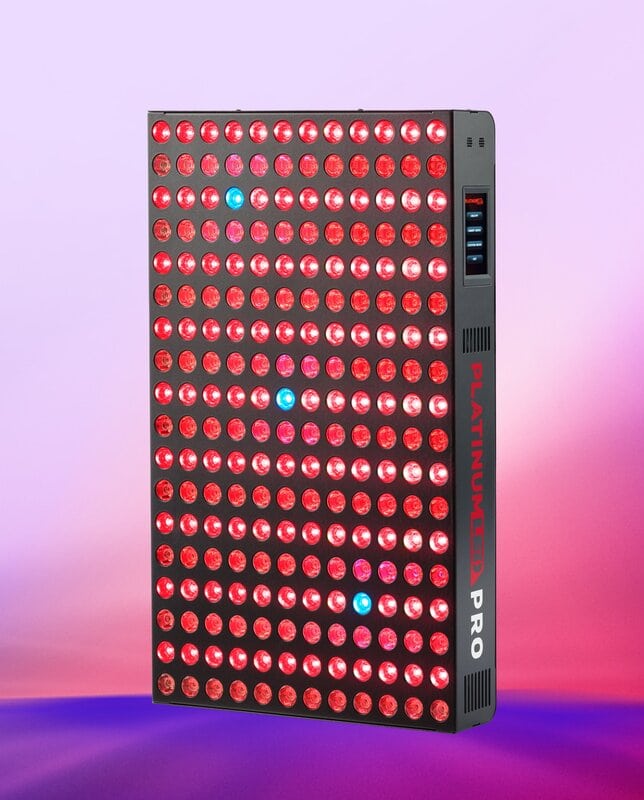
PlatinumLED BioMax Pro Midi
$999
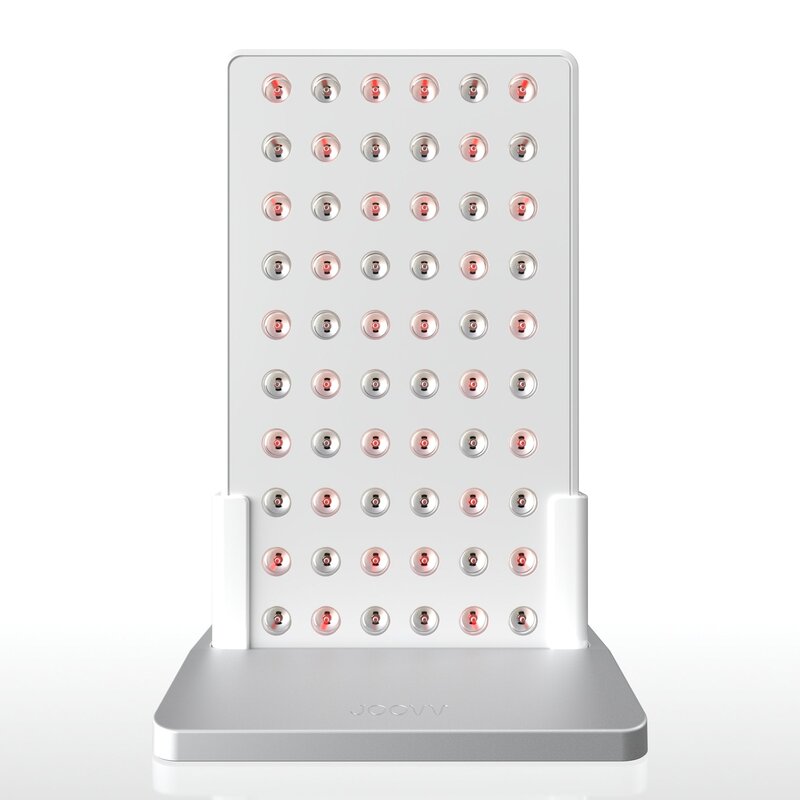
Joovv Mini 3.0
$1,199
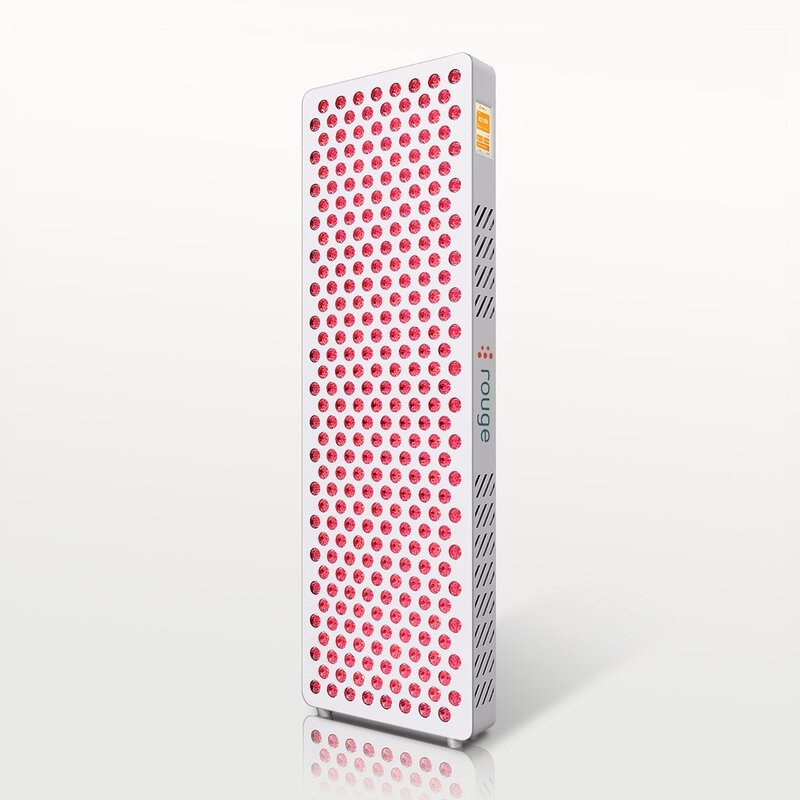
Rouge G4 Pro
$1,121
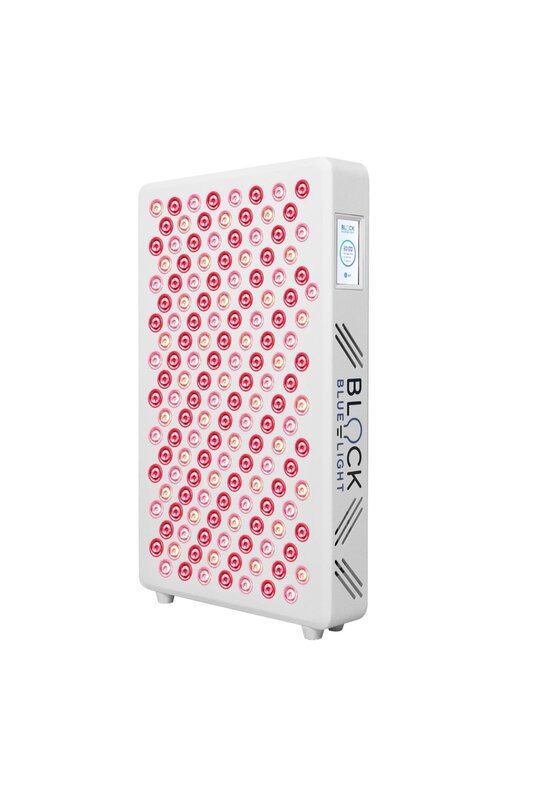
Block Blue Light Power Panel Pro
$899.95
$799
$1,099
| Panel | Price |
|---|---|
| RLT Home Total Spectrum Compact | $995 |
| PlatinumLED BioMax Pro Midi | $999 |
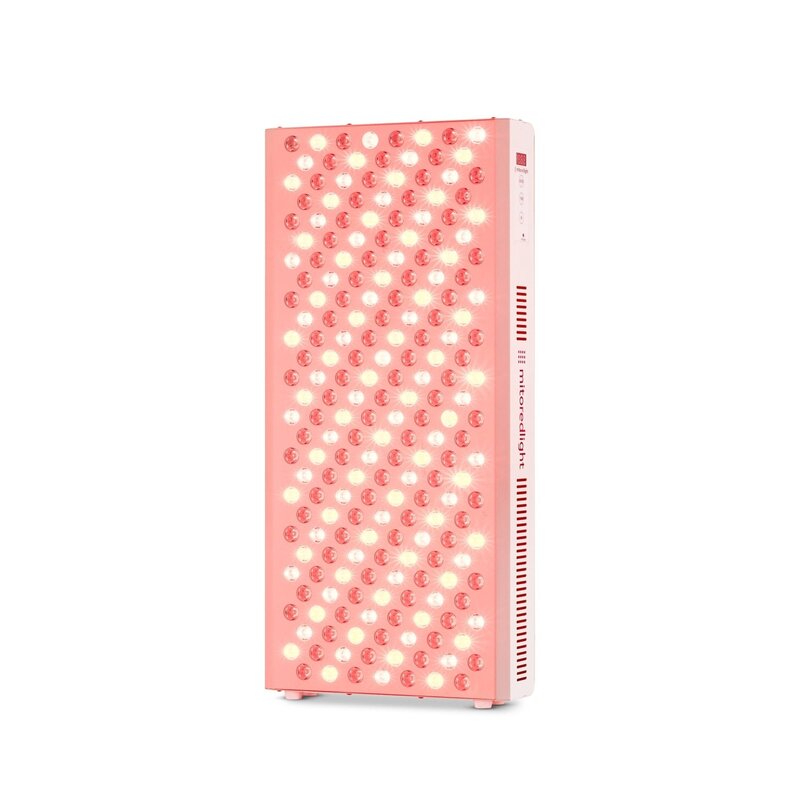
| Mito Red Light Pro 1000+ | $869 |
| Joovv Mini 3.0 | $1,199 |
| Rouge G4 Pro | $1,121 |
| Block Blue Light Power Panel Pro | $899.95 |
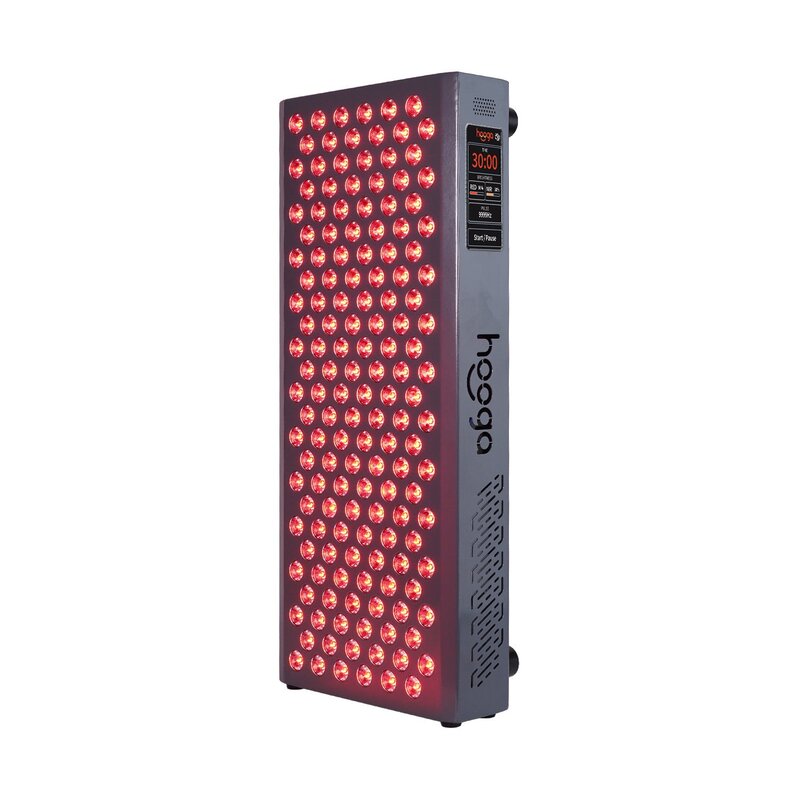
| Hooga Ultra 750 | $799 |
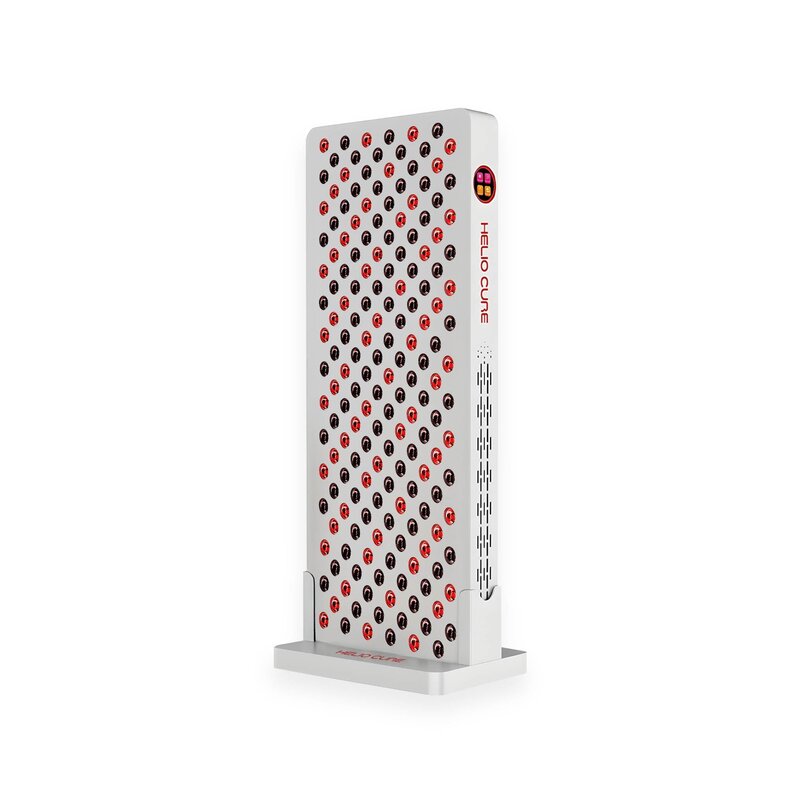
| Heliocure Glow | $1,099 |
Note on the title: several panels sit just over $1,000. I still included them so you can see how the best under-$1,000 option stacks up against pricier names.
How I Scored Them
Fifteen ranked rounds. First place earns 8 points and last place earns 1 (points equal 9 minus rank). Tied panels split the points – two panels tied for first get 7.5 each. The winner is decided on average points per round. Every panel was scored in all 15 rounds.
The kit: a solar power meter for irradiance, a spectrometer for wavelengths and peaks, an EMF meter, a flicker meter, a wattage meter at the wall, a decibel meter, and a tape measure. Same room, same ambient conditions, same distances for every panel.
Rounds 1-4: Irradiance at 6, 12, 24, and 36 Inches
Irradiance is how much light power actually reaches your skin, measured in milliwatts per square centimeter (mW/cm²). It is the single most important performance number, and because it changes sharply with distance, each distance is its own scored round.
Round 1: Irradiance at 6 Inches
| Rank | Panel | mW/cm² | Points |
|---|---|---|---|
| 1 | BioMax Pro Midi | 107 | 8 |
| 2 | RLT Home Compact | 100 | 7 |
| 3 | Hooga Ultra 750 | 98 | 6 |
| 4 | Block Blue Power Panel Pro | 96 | 5 |
| 5 | Heliocure Glow | 94 | 4 |
| 6 | Joovv Mini 3.0 | 88 | 3 |
| 7 | Mito Pro 1000+ | 84 | 2 |
| 8 | Rouge G4 Pro | 75 | 1 |
Up close, BioMax leads at 107, with RLT Home at 100 and Hooga punching well above its price at 98.
Round 2: Irradiance at 12 Inches
| Rank | Panel | mW/cm² | Points |
|---|---|---|---|
| 1 | BioMax Pro Midi | 85 | 8 |
| 2 | Hooga Ultra 750 | 83 | 7 |
| 3 | Heliocure Glow | 78 | 6 |
| 4 | RLT Home Compact | 75 | 5 |
| 5 | Block Blue Power Panel Pro | 73 | 4 |
| T-6 | Rouge G4 Pro | 71 | 2.5 |
| T-6 | Mito Pro 1000+ | 71 | 2.5 |
| 8 | Joovv Mini 3.0 | 60 | 1 |
Round 3: Irradiance at 24 Inches
| Rank | Panel | mW/cm² | Points |
|---|---|---|---|
| 1 | RLT Home Compact | 63 | 8 |
| T-2 | Block Blue Power Panel Pro | 60 | 6 |
| T-2 | BioMax Pro Midi | 60 | 6 |
| T-2 | Heliocure Glow | 60 | 6 |
| 5 | Rouge G4 Pro | 57 | 4 |
| T-6 | Mito Pro 1000+ | 51 | 2.5 |
| T-6 | Joovv Mini 3.0 | 51 | 2.5 |
| 8 | Hooga Ultra 750 | 50 | 1 |
Round 4: Irradiance at 36 Inches
| Rank | Panel | mW/cm² | Points |
|---|---|---|---|
| 1 | RLT Home Compact | 53 | 8 |
| T-2 | BioMax Pro Midi | 48 | 6.5 |
| T-2 | Heliocure Glow | 48 | 6.5 |
| 4 | Block Blue Power Panel Pro | 46 | 5 |
| 5 | Rouge G4 Pro | 44 | 4 |
| 6 | Mito Pro 1000+ | 37 | 3 |
| 7 | Joovv Mini 3.0 | 36 | 2 |
| 8 | Hooga Ultra 750 | 28 | 1 |
RLT Home sweeps both distance rounds: 63 at 24 inches, then 53 at 36 inches – the best long-range number in the test. That matters because almost nobody trains pressed against the panel. If you are doing mobility work or a stretch routine in front of your light, you are two to three feet away. Hooga, third up close, falls to last at distance (98 down to 28). Strong if you stand close. After four rounds: BioMax owns the close game; RLT Home owns distance.
Round 5: Wavelengths
Red light around 630 and 660 nanometers works at the skin level. Near-infrared from 810 through 850 reaches deeper into muscle and joints. And 1064 penetrates deepest of all. More wavelengths means broader coverage of that spectrum – on paper.
| Rank | Panel | # | Claimed wavelengths (nm) | Points |
|---|---|---|---|---|
| 1 | Rouge G4 Pro | 8 | 630, 650, 660, 670, 810, 830, 850, 1064 | 8 |
| T-2 | RLT Home Compact | 7 | 480, 630, 660, 810, 830, 850, 1064 | 6.5 |
| T-2 | BioMax Pro Midi | 7 | 480, 630, 660, 810, 830, 850, 1060 | 6.5 |
| 4 | Heliocure Glow | 6 | 630, 660, 810, 830, 850, 1064 | 5 |
| 5 | Block Blue Power Panel Pro | 5 | 630, 660, 810, 830, 850 | 4 |
| T-6 | Mito Pro 1000+ | 4 | 630, 660, 830, 850 | 2.5 |
| T-6 | Hooga Ultra 750 | 4 | 630, 660, 810, 850 | 2.5 |
| 8 | Joovv Mini 3.0 | 2 | 660, 850 | 1 |
On paper, Rouge takes the round with eight claimed wavelengths. RLT Home and BioMax claim seven, including blue 480 for skin. Joovv, at $1,199, gives you exactly two. Claiming a wavelength and delivering it are different jobs – the next two rounds are where the spectrometer separates marketing from reality.
Round 6: Wavelength Densities (Measured Output by Wavelength)
This is measured irradiance at the panel face, wavelength by wavelength – penetration power right at the source.
| Rank | Panel | 630 | 660 | 810 | 830 | 850 | 1064 | Total | Pts |
|---|---|---|---|---|---|---|---|---|---|
| 1 | RLT Home Compact | 294 | 380 | 490 | 475 | 483 | 442 | 2,564 | 8 |
| 2 | Heliocure Glow | 309 | 347 | 440 | 441 | 437 | 435 | 2,409 | 7 |
| 3 | Rouge G4 Pro | 186 / 75 | 213 | 459 | 489 | 600 | 370 | 2,392 | 6 |
| 4 | Block Blue Power Panel Pro * | 163 | 196 | 478 | 472 | 659 | – | 2,255 | 5 |
| 5 | BioMax Pro Midi | 201 | 265 | 390 | 473 | 424 | 363 | 2,116 | 4 |
| 6 | Mito Pro 1000+ | 180 | 322 | – | 261 | 290 | – | 1,053 | 3 |
| 7 | Joovv Mini 3.0 | – | 381 | – | – | 628 | – | 1,009 | 2 |
| 8 | Hooga Ultra 750 | 122 | 117 | 157 | 167 | – | – | 563 | 1 |
* Block also emitted a small 590nm peak measuring 50 mW/cm², included in its total. Mito’s four peaks correspond to its claimed 630/660/830/850; Joovv’s two to 660/850. All values in mW/cm² at 0 inches.
RLT Home tops the table with the highest total irradiance at the panel face across all wavelengths. In plain terms: this panel throws the most light – visible and invisible – and spreads it evenly across all seven bands.
Here is the BioMax Pro Midi story the box will not tell you. It claims seven wavelengths, but spectral analysis showed roughly 80 percent of its energy concentrated in just 660 and 850, with blue and 1060 negligible. It behaves like a two-wavelength panel wearing a seven-wavelength badge. Hooga sits last at 563 total – roughly a fifth of the leader.
Round 7: Peak Accuracy
Red light research is built on specific wavelengths. If a panel claims 660 nanometers but fires at 642, you are not getting the wavelength the studies used. I measured every peak and averaged how far each panel drifts from its claims.
| Rank | Panel | Measured peaks (nm) | Avg drift | Pts |
|---|---|---|---|---|
| 1 | Mito Pro 1000+ | 637.9, 660.4, 830.7, 851.7 | 2.7 nm | 8 |
| 2 | RLT Home Compact | 633.5, 660.4, 812.6, 836.7, 852.8, 1067.4 | 3.2 nm | 7 |
| 3 | Block Blue Power Panel Pro | 634.6, 660.4, 814.5, 833.7, 854.7 | 3.6 nm | 6 |
| 4 | Hooga Ultra 750 | 632.6, 661.5, 812.6, 857.7 | 3.6 nm | 5 |
| 5 | Heliocure Glow | 634, 662, 813, 838, 847, 1068 | 4.0 nm | 4 |
| 6 | Rouge G4 Pro | 633/637, 649/660, 812.6, 831.6, 851.7, 1048.5 | 5.3 nm | 3 |
| 7 | BioMax Pro Midi | 641.7, 648.4, 813.6, 835.5, 857.7, 1060.6 | 6.8 nm | 2 |
| 8 | Joovv Mini 3.0 | 641.7, 853.6 | 11.0 nm | 1 |
The surprise winner is Mito: only four wavelengths, but every one lands within a hair of its claim. RLT Home is right behind it – across seven wavelengths including 1064. At the bottom, two big names stumble. BioMax’s 630 claim measured at 641.7 and its 660 at 648.4 – more than 11 nanometers off each. Joovv only has two wavelengths to get right, and its 660 fired at 641.7: an 18-nanometer miss on half of its entire spectrum.
Round 8: Loudness
The room sat at 40.6 decibels ambient. Every panel stayed quieter than a normal conversation, but if you meditate or wind down under your light, the quiet ones matter.
| Rank | Panel | dB at full output | Points |
|---|---|---|---|
| 1 | Heliocure Glow | 43.3 | 8 |
| 2 | Block Blue Power Panel Pro | 43.5 | 7 |
| 3 | Hooga Ultra 750 | 44.8 | 6 |
| T-4 | Rouge G4 Pro | 46.5 | 4.5 |
| T-4 | Mito Pro 1000+ | 46.5 | 4.5 |
| 6 | Joovv Mini 3.0 | 47.1 | 3 |
| 7 | RLT Home Compact | 48.3 | 2 |
| 8 | BioMax Pro Midi | 48.5 | 1 |
Heliocure and Block Blue Light are the quietest of the group in the low 43s, and Heliocure manages that while pulling over 450 watts – impressive cooling. The two loudest, at 48-plus, are RLT Home and BioMax. Everything here is background-noise territory, but the points still count.
EMF measured at 6 inches – a realistic minimum treatment distance – with the room’s ambient reading subtracted.
Round 9: EMF at 6 Inches
| Rank | Panel | µT at 6 in | Points |
|---|---|---|---|
| T-1 | RLT Home Compact | 0.0 | 7.5 |
| T-1 | Heliocure Glow | 0.0 | 7.5 |
| 3 | BioMax Pro Midi | 0.1 | 6 |
| 4 | Rouge G4 Pro | 0.2 | 5 |
| T-5 | Block Blue Power Panel Pro | 0.3 | 3 |
| T-5 | Mito Pro 1000+ | 0.3 | 3 |
| T-5 | Hooga Ultra 750 | 0.3 | 3 |
| 8 | Joovv Mini 3.0 | 0.4 | 1 |
Two panels measured a flat zero at treatment distance: RLT Home and Heliocure. Almost everything else is negligible too. While the meters were out I also checked flicker: every single panel measured zero. Eight-way tie, no points move – everybody passes.
Round 10: Power Consumption per LED
I measured each panel’s real draw at the wall, then divided by LED count. That shows how hard each diode is driven – and harder-driven LEDs mean more light per diode, which is exactly what showed up in the density round.
| Rank | Panel | Wall draw | LEDs | W per LED | Points |
|---|---|---|---|---|---|
| 1 | RLT Home Compact | 460.2 W | 216 | 2.13 | 8 |
| 2 | Heliocure Glow | 455.2 W | 216 | 2.11 | 7 |
| 3 | Block Blue Power Panel Pro | 305.0 W | 150 | 2.03 | 6 |
| 4 | BioMax Pro Midi | 384.7 W | 216 | 1.78 | 5 |
| 5 | Hooga Ultra 750 | 245.8 W | 150 | 1.64 | 4 |
| 6 | Rouge G4 Pro | 467.4 W | 288 | 1.62 | 3 |
| 7 | Joovv Mini 3.0 | 76.5 W | 60 | 1.28 | 2 |
| 8 | Mito Pro 1000+ | 260.7 W | 210 | 1.24 | 1 |
RLT Home drives each diode at 2.13 watts – hardest in the test – with Heliocure right behind at 2.11. That is the engine behind their chart-topping density numbers. Rouge pulls the most total power at 467 watts but spreads it across 288 LEDs, so each diode is underdriven. And before anyone worries about the electricity bill: even the hungriest panel here costs a few cents per 15-minute session.
Round 11: Size and Treatment Area
How much of your body can you treat at once?
| Rank | Panel | Panel face | Area (sq in) | Points |
|---|---|---|---|---|
| 1 | Rouge G4 Pro | 12 × 36 in | 432 | 8 |
| T-2 | RLT Home Compact | 12 × 30.5 in | 366 | 6.5 |
| T-2 | Heliocure Glow | 12 × 30.5 in | 366 | 6.5 |
| 4 | Mito Pro 1000+ | 12 × 24.5 in | 294 | 5 |
| T-5 | BioMax Pro Midi | 12 × 19 in | 228 | 3.5 |
| T-5 | Block Blue Power Panel Pro | 12 × 19 in | 228 | 3.5 |
| 7 | Hooga Ultra 750 | 8.5 × 20.5 in | 174 | 2 |
| 8 | Joovv Mini 3.0 | 8.5 × 14.5 in | 123 | 1 |
Rouge is the giant of the test: a full foot wide and three feet tall – 432 square inches of light. It is also the second most expensive panel here and ships without a stand (covered in the last round). RLT Home and Heliocure sit right behind at 366 – still full-torso panels. At the bottom, the Joovv Mini gives you less than a third of Rouge’s area at the highest price in the test.
Round 12: Single vs Dual and Quad Chip LEDs
A single-chip LED dedicates the entire diode to one wavelength, which delivers more irradiance per wavelength. Dual and quad chips split one diode between two or four wavelengths, and each wavelength gets a fraction of the punch. The density round showed exactly that.
| Rank | Panels | Chip type | Points each |
|---|---|---|---|
| T-1 | RLT Home, BioMax, Mito, Heliocure | Single chip | 6.5 |
| T-5 | Rouge, Block, Joovv | Dual chip | 3 |
| 8 | Hooga Ultra 750 | Quad chip | 1 |
Four panels run dedicated single-chip LEDs: RLT Home, BioMax, Mito, and Heliocure. Hooga is the only quad chip in the test – four wavelengths sharing every diode – and that is a big reason its density total was the lowest on the board.
Round 13: LED Count
| Rank | Panel | LEDs | Points |
|---|---|---|---|
| 1 | Rouge G4 Pro | 288 | 8 |
| T-2 | RLT Home Compact | 216 | 6 |
| T-2 | BioMax Pro Midi | 216 | 6 |
| T-2 | Heliocure Glow | 216 | 6 |
| 5 | Mito Pro 1000+ | 210 | 4 |
| T-6 | Block Blue Power Panel Pro | 150 | 2.5 |
| T-6 | Hooga Ultra 750 | 150 | 2.5 |
| 8 | Joovv Mini 3.0 | 60 | 1 |
Rouge gets a clean win with 288 LEDs – most in the test – though it is also about $400 dearer than the next panel once you include a stand. Three panels tie at 216. Joovv Mini brings 60 LEDs to a fight where everyone else brought at least 150, at the highest price on the table.
Round 14: Price per Square Inch of Treatment Area
Sticker price is one thing. What you are really buying is treatment area – so I divided each panel’s price by its square inches of light.
| Rank | Panel | Price | Area (sq in) | $ per sq in | Points |
|---|---|---|---|---|---|
| 1 | Rouge G4 Pro | $1,121 | 432 | $2.60 | 8 |
| 2 | RLT Home Compact | $995 | 366 | $2.72 | 7 |
| 3 | Mito Pro 1000+ | $869 | 294 | $2.96 | 6 |
| 4 | Heliocure Glow | $1,099 | 366 | $3.00 | 5 |
| 5 | Block Blue Power Panel Pro | $899.95 | 228 | $3.95 | 4 |
| 6 | BioMax Pro Midi | $999 | 228 | $4.38 | 3 |
| 7 | Hooga Ultra 750 | $799 | 174 | $4.59 | 2 |
| 8 | Joovv Mini 3.0 | $1,199 | 123 | $9.73 | 1 |
Rouge’s size finally pays off at $2.60 per square inch, just ahead of RLT Home at $2.72 – and remember RLT Home delivers far more light per inch and ships with the stand and accessories included. The most expensive real estate is Joovv at $9.73 – nearly four times the leader. Hooga has the lowest sticker price, but its smaller face means you pay more per inch of light than for an RLT Home or a Mito.
Round 15: Accessories
These panels need a stand or mount to use properly, and only two companies include a stand in the price: RLT Home and Heliocure. Every other brand in this test charges extra for it. When you are already spending $800 to $1,200, being told the stand costs more is a bad look. Mito’s booklet even describes a stand that is not in the box.
| Rank | Panels | Stand included? | Points each |
|---|---|---|---|
| T-1 | RLT Home Compact, Heliocure Glow | Yes, included in price | 7.5 |
| T-3 | Rouge, Block, BioMax, Mito, Joovv, Hooga | No, sold separately | 3.5 |
The Final Leaderboard
Fifteen rounds. Every panel ranked on every metric I could measure. Here is the final table.
| Rank | Panel | Total pts | Rounds scored | Avg pts per round |
|---|---|---|---|---|
| 1 | RLT Home Compact | 100.5 | 15 | 6.70 |
| 2 | Heliocure Glow | 92.5 | 15 | 6.17 |
| 3 | BioMax Pro Midi | 75.5 | 15 | 5.03 |
| 4 | Rouge G4 Pro | 71.5 | 15 | 4.77 |
| 5 | Block Blue Power Panel Pro | 67.5 | 15 | 4.50 |
| 6 | Mito Pro 1000+ | 57 | 15 | 3.80 |
| 7 | Hooga Ultra 750 | 47.5 | 15 | 3.17 |
| 8 | Joovv Mini 3.0 | 28 | 15 | 1.87 |
8th: Joovv Mini 3.0 ($1,199), 1.87 avg
Gorgeous packaging, and its optional stand is well made – but you pay extra for it. Beyond that: 60 LEDs, two wavelengths with one of them 18 nanometers off target, the smallest panel, the highest EMF, and the highest price. Last place, and it is not close.
7th: Hooga Ultra 750 ($799), 3.17 avg
This one hurts, because I like this panel. Third-best up close and the lowest sticker price here. But the quad-chip LEDs gave it the weakest spectral density in the test, it collapses at distance, and there is no 1064. Seventh on the scoreboard – but Hooga is not leaving empty-handed. See the awards below.
6th: Mito Pro 1000+ ($869), 3.80 avg
The most accurate peaks in the entire test, single-chip LEDs, and strong value per square inch. But only four wavelengths, no 1064, bottom-tier irradiance at distance, the lowest drive per diode, and a build with exposed screws that feels cheaper than it should.
5th: Block Blue Light Power Panel Pro ($899.95), 4.50 avg
The honest workhorse. Second-quietest, accurate peaks, a hard-driven 2 watts per diode, and fair pricing. What keeps it out of the top four: no 1064 nanometers at all, and one of the smallest treatment windows in the test.
4th: Rouge G4 Pro ($1,121), 4.77 avg
The panel of superlatives: the biggest surface at three feet tall, the most LEDs at 288, the most claimed wavelengths at eight, and the best price per square inch at $2.60. So why only fourth? Because the fundamentals wobble: the lowest close-range irradiance in the test, a 1064 that actually fires at 1048, a clunky arrow-based screen, no stand, and the second-highest sticker price.
3rd: PlatinumLED BioMax Pro Midi ($999), 5.03 avg
The close-range irradiance king – winner at 6 and 12 inches – with single-chip LEDs and near-zero EMF. So why third? Because the spectrometer showed 80 percent of its energy packed into just two wavelengths despite a seven-wavelength claim, its peaks drifted more than 11 nanometers on 630 and 660, it is the loudest panel in the test, and the interface genuinely confused me.
2nd: Heliocure Glow ($1,099), 6.17 avg
A superb panel and the clear number two. The quietest fans in the test, a flat-zero EMF reading, one of the biggest treatment areas, 216 hard-driven single-chip LEDs, a stand included in the price, and the strongest 1064 output on the board at 435 – spread almost perfectly evenly across six wavelengths. What kept it from the crown: its peaks drifted a touch more than the leaders, it gives up the close-range rounds, and at $1,099 it is the only top contender over the thousand-dollar line.
1st: RLT Home Total Spectrum Compact ($995), 6.70 avg
The champion – more than half a point clear of the field. Top three in 13 of the 15 rounds. It won total spectral density with the most balanced seven-wavelength spread in the test. It swept irradiance at 24 and 36 inches, the distances you actually stand at. It won watts per diode, finished second on price per square inch, tied for zero EMF, and it is one of only two panels that includes the stand in the price. Its only weak spots all test long were fan noise and the 12-inch round. That is not a panel that is great at one thing. That is a panel with no real holes – under a thousand dollars.
The Awards
BEST OVERALL
RLT Home Total Spectrum Compact
This is the one I use. It did not win every round, but it finished top three in thirteen of fifteen, it delivers more usable light for your money than anything else in this test, it is one of only two panels that ships with its stand included, and it does it all with a balanced, accurate, seven-wavelength spectrum including 1064. When one panel is this good at this many things at $995, that is your Best Overall – and the best red light therapy panel under $1000 in this test.
Best Entry Point
Hooga Ultra 750
Seventh on the scoreboard, first for beginners. My scoring rewards spectral completeness and long-range performance – exactly the things a first-time user often pays a premium for without needing yet. At $799 the Hooga is the cheapest way into quality red light therapy, it posted a 98 up close (beating panels that cost hundreds more), and there are no menus, no modes, no learning curve. Flip the switch, stand close, get your session.
Best Deep Penetration
Heliocure Glow
For targeted muscle recovery, joints, and deep tissue, this is the specialist. The strongest measured 1064-nanometer output in the test at 435, nearly 20 percent of its entire spectrum committed to the deepest-penetrating wavelength, delivered by hard-driven single-chip LEDs across a full-torso panel. Only one other panel here even comes close at 1064, and it costs about the same.
How to Choose a Red Light Therapy Panel
If you take one thing from fifteen rounds of data, take this: the spec sheet is not the panel. BioMax claims seven wavelengths and behaves like two. Joovv claims 660 and fires at 641.7. Rouge claims 1064 and fires at 1048. The only way to know what you are getting is to measure it – or trust someone who did.
Beyond that, the four things that separated the top of this table from the bottom were: irradiance at the distance you will actually use (two to three feet, not six inches), balanced output across every wavelength the panel claims, peak accuracy within a few nanometers, and whether the price on the box is the price you actually pay once you add a stand.
Frequently Asked Questions
Final Thoughts
Investing in your health means filtering out the hype and looking at the raw data – and you have now seen every number I measured: fifteen rounds, eight panels, no favourites. Whether you go with the RLT Home panel I use, the budget-friendly Hooga, the deep-tissue Heliocure, or something else, red light therapy has been working very well for me and I would recommend trying it.
If you have tried red light therapy, let me know in the comments which round mattered most to you.
This article is for general wellness information only and is not medical advice. Red light therapy devices are general wellness products and are not intended to diagnose, treat, cure, or prevent any disease. Individual results vary. Consult a qualified healthcare professional before starting any new therapy, especially if you have a medical condition or take photosensitizing medication.