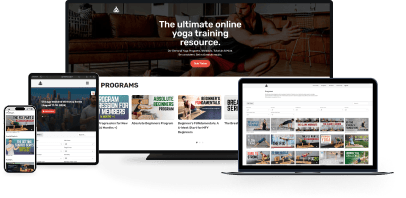
Nothing is a better one-two punch for burning fat, building muscle, and building a pain-free and injury-free lifestyle if you’re over 40 than by combining strength training with yoga.
But not just any kind of strength training.
And not just any kind of yoga.
That’s why I partnered with Funk Roberts, a strength and conditioning coach for men over 40, to create a brand-new way to train your body:
Nobody understands all the nuances that go into programming a strength training program like Funk. Plus, Funk’s style is a lot like my style: we both make follow-along workouts with muscle and body cues at the exact time you need them.
In today’s show, Funk and I reveal…
- Why Man Flow Muscle is the most effective way to workout if you’re in your 40s, 50s, 60s, or 70
- How to avoid the common mistakes men make when they first start lifting and when they first try yoga
- How to join Man Flow Muscle at a fat 50% discount
And so much more.
The Better Man Podcast is an exploration of our health and well-being outside of our physical fitness, exploring and redefining what it means to be better as a man; being the best version of ourselves we can be, while adopting a more comprehensive understanding of our total health and wellness. I hope it inspires you to be better!



Use the RSS link to find the Better Man Podcast on other apps: http://feeds.libsyn.com/404744/rss
Episode 193 Highlights
- Why yoga is actually the missing piece to becoming jacked after 40 (0:54)
- The BEST way to eliminate your anxiety and overwhelm about the gym entirely (3:10)
- What most men over 40 who stop lifting because their body hurts don’t understand (your body doesn’t need to hurt as long as you do THIS) (5:39)
- How doing yoga will make you stronger when you lift weights (and also makes every other aspect of everyday living more enjoyable) (6:26)
- Why Funk stopped training MMA and UFC fighters to help men over 40 build strength instead (13:29)
- 3 big fears that cause most men to shy away from yoga (even though it’s perhaps the best way to sustain your fitness, improve your lifts in the gym, and make you more fulfilled in everyday life) (21:29)
- Why 95%+ of yoga programs simply don’t work for men over 40 (21:56)
- Why “metabolic training protocol” (which the entire Man Flow Muscle program was built around) is the single most effective way to build muscle safely – and as quickly as possible – if you’re 40+ (28:50)
- The “sweet spot” of time spent in the gym for men over 40 according to Funk (and why it’s far LESS time than you probably think) (32:02)
- How shorter workouts actually improve your results after age 40 (and the opposite is even more true: overtraining jacks up your hormones in a bad way) (32:58)
- The Afterburn Effect: How Funk’s lifting system sometimes causes men to keep sweating even two hours after they complete the workout because their body is still burning calories (33:35)
- How to burn fat while building muscle at the same time (35:24)
- The “Active Reminders” method naturally baked into Man Flow Muscle that will prevent your fatigue from deteriorating your technique (41:52)
Dean Pohlman: What’s up guys? It’s Dean.
Funk Roberts: And it’s Roberts here.
Dean Pohlman: And we are here to talk about man flow muscle our new program.
Funk Roberts: Yeah it’s pretty exciting. And I think what we’re doing today is we’re going to combine our podcast myself the over 40 Alpha podcast and Dean.
Dean Pohlman: Yep. So Better Man podcast which you guys know I do wellness and fitness. And today I’ve got I’ve got the the great Funk Roberts here. And we’re going to be talking about combining yoga and weightlifting.
Funk Roberts: Yeah I think it’s going to be good because it’s one of those things that I know in the, you know, over the even you’ve been working with your guys for well over a decade as well as I have. And I know that for me, putting, you know, mobility and stretching and those things into the program, that’s not my, my, my number one wheelhouse.
Funk Roberts: Yes, I do have that, but I know that that is one of the missing links to most guys out there. You know, they want to get Jack. They want to, you know, improve their strength. They want to build muscle, but they don’t understand. In order to do that for a longer period of time, pain free, injury free, you’re going to have to implement, you know, some type of mobility, yoga, what have you in order to keep you keep the muscles, bones and joints.
Funk Roberts: You know, moving specifically, you know, through a program.
Dean Pohlman: Yeah. And so a lot of people who are coming to manfully and this message might resonate with you guys, but a lot of you guys have been lifting for, you know, most of your adult lives. Maybe you started in high school. So, you know, you lifted weights in your 20s and 30s, your 40s, and at some point along one of those decades, you got to a point where you realize, oh, okay.
Dean Pohlman: Like things are not recovering like they used to. Little aches and pains are now, you know, way more significant to the point that I can’t you’ve got to skip workouts. You’ve got to just omit entire exercises entirely. And so you get to this point, we’re like, okay, I’m going to look for something mobility focused, work on my core strength.
Dean Pohlman: And so that’s how you found Mantle Yoga. On the other hand, we also wanted to make this program to appeal to guys who have not done strength training. And I think most of our guys in our community understand the benefits. They know that it’s important, especially for longevity, for injury prevention and just for staying healthy as you get older.
Dean Pohlman: But we don’t know where to start. Or maybe you know, you’re you don’t want to be a gym bro. Maybe you’re you’re intimidated, you don’t want to get injured. And so we kind of designed this program as a way to appeal to to both guys.
Funk Roberts: Yeah, I love that you just said that because that was the biggest thing that I, that I saw when I first started the over 40 Alpha program, when guys were coming into the program, I quickly realized they did not know how to eat a program, be just specific exercise like squats or lunges or, you know, bicep curls. Like they didn’t really remember because yes, they worked out back in their 20s and 30s and maybe a little bit in the 40s, but like it was old school, you know, traditional bro splits, you know, magazine, get the muscle and fitness magazine and try to, try to try to mimic that.
Funk Roberts: Or they had buddies that they would go to the gym. But now you’re in your 40s or your 50s or your 60s or even your 70s and getting back to the gym and it’s just like, oh man, you’re looking at everybody at the gym and, you know, you it’s almost feels foreign because you’re walking in there. You’re like, oh yeah, I remember the dumbbell.
Funk Roberts: So you walk up to the dumbbells, you start doing bicep curls. But then he started looking around and other people are doing bicep curls better. You got a girl beside you who’s lifting heavy and you’re like, nah, man. So you put it down and then you walk around the gym and you’re like, oh, there’s a machine that’s a little bit safer, right?
Funk Roberts: The machines a little bit safer. So you jump into the machine, you don’t even change the freaking thing. You just jump in the machine and you start pushing the chest press. Right? And it was like, okay. And then again, that just feels very odd and and foreign because that’s not what you did before. So now you’re looking around and you’re getting a little bit more intimidated.
Funk Roberts: And it’s like, man, I don’t even know what to do here. And then you just go to the treadmill, right? And that’s that. And then even starting that and getting that going can be a little bit overwhelming. And in the end you finish. Right. So I realized, I realized that putting a program together that helps take that anxiety away, right.
Funk Roberts: Like I don’t know what to do. I haven’t trained in a while, you know, I don’t want to get injured, you know? So that’s that’s where the the follow along workouts and kind of keeping things a little bit. I don’t want to say simple because it’s not simple, but you know, a little bit more comforting.
Dean Pohlman: Yeah. I mean that makes me think of two things. Number one, you know, your your mind doesn’t realize that your body is older than you were when you were working out before. So a lot of guys getting back into things, and it doesn’t matter if it’s 10 or 20 years or if it’s just like two years later, there’s a two years is a long time, right?
Dean Pohlman: Even even even a year is a long time. You come back into things like, wow, this hurts way more than it used to. And so not only are you fighting that, I think we’re also dealing with there’s there’s so much more information available. And standards are so much higher than they used to be across every field, including exercise in weightlifting.
Dean Pohlman: And so I think when you go into a gym, you’re dealing with a higher standard of fitness than there was 20 years ago. And so you’re looking around, comparing yourself to, you know, to people who are devoting a lot of their time and energy to this, who have maybe been doing this for years, who who know what they’re doing, who might be getting information from a lot of really good or really bad sources.
Dean Pohlman: But it’s just it can be really intimidating. It can make you feel like, oh, I just maybe I can’t do this anymore. And that’s that’s the thing that I hear a lot that I really want to like, you know, push back against. I talk with a lot of people who just say like, oh, I’m 40 now, so I don’t lift weights because my back hurts every time I do.
Dean Pohlman: And this is where like an effective mobility program comes in. It’s not just that you haven’t been working out for a while, it’s also that you’ve been sitting in a chair for ten years. You can’t just go into doing full body exercise and expect something to not break down. You’ve got to work on the root causes of knee pain, of back pain, of shoulder pain.
Dean Pohlman: And that’s where we bring in, you know, the corrective mobility exercises that you get with something like, man, Floyd.
Funk Roberts: Yeah. And it’s so powerful when you do that because, you know, I mentioned before like injury free or dealing with injuries, but when you when you’re when you’re more mobile, right. Hey, you’re going to get stronger B you’re going to have like just even more mobility in your shoulder will allow you to build a little bit more muscle because your range of motion is going to be better.
Funk Roberts: Right? In a lot in a lot of the exercises, you’re going to be able to do exercises, the technique, but then just transition that into everyday living. Right? Like just being strong, being able to to move, you know, in being able to sit in a deep squad and play with your grandchild or, you know, those are the those seem like they’re simple things, but those are like the, the, the biggest benefits of being able to to be more mobile and move around without knee pain, going up and down the stairs without knee pain and and understanding that, oh, wait a minute, I got to balance like balancing that, that that alone, you know, putting
Funk Roberts: the, you know, a leg up and trying to balance, being able to get up and down from, from, from the, the floor. You can have all the muscles in the world and be big and strong. But if you can’t do those and they seem difficult, but they are pretty basic, like being able to squat that deep down, being able to get up and down from the floor.
Funk Roberts: Their basic things that we did when we were younger. But obviously as we get older and like you said, sitting and driving or doing whatever we do that keeps us away from from continuing that mobility and strength and core strength and balance. It can be and I’ll tell you that from my own experience because, you know, I, I was a professional athlete weight back a long time ago, and I never stressed, I never I barely warmed up, but I never stretched like after.
Funk Roberts: It was like, what are you what do you mean, what? What is that? I gotta go, I got something else to do. And I caught up to me after I retired. Right. And so when I started to fight and became a mighty fighter, that was huge for me. Stretching after training and warming up before and developing a full, you know, body warm up just to ensure that I was able to train eight months, nine months before a fight.
Funk Roberts: And then as I got older and now I have this back injury, you start to you start to to see the remnants of not being able to do certain things like, hey, I want to be my mom needs me to put this box up on the shelf. Well, oh, I can’t man my shoulder like, you don’t want to be the guy you want to.
Funk Roberts: I can bum shoulder. Oh, you can you help me move, blah blah blah. I can my back or can, can you walk up these I, you know, we just came to France. Let’s go walk up the Eiffel Tower. Tower. Oh, I can’t because of my knee. Like you don’t want to be that guy. You don’t want to be the grandfather taking your grandkids to the zoo, and you’re sitting at the freaking.
Funk Roberts: You’re sitting at the entrance because you can’t walk, walk and run around with your kids, right? So even that, more importantly, as we get older, because that’s what we’re going to enjoy more when we get older, that’s the big that’s the big kind of void in a lot of guys anyway, when it comes to training.
Dean Pohlman: Yeah, yeah. And it’s I’ve talked to some people lately and apparently like longevity is now, now like the buzzword and fitness. And I’m like, man, I’ve been doing longevity for ten years. Stop. Just stop. Get off my train, man. This is this is my thing. And, you know, but I think longevity is about finding balance with your fitness, you know?
Dean Pohlman: So I know a lot of guys who don’t lift weights because, like, I don’t want to turn into, like, a a bodybuilder. I’m like, well, you probably won’t turn into a bodybuilder just by, you know, lifting consistently three times per week. And on the other end, we’ve got people who, you know, who who just do bodybuilding and they’re not functional.
Dean Pohlman: And so the goal here is trying to find a balance. And I find that most people that I talk with, you know, in your 20s, your 30s. Yeah. The goal is like, how can I get muscles as big as possible? I want to look a certain way. And then as you get older, once you realize your mortality, once you realize like, oh, there are things that are more important than how I look.
Dean Pohlman: Then we start to have goals that are, you know, the the how you look becomes secondary to the oh, I want to be able to do things. I want to be able to be healthy. I want to live independently for as long as I can. More often than not, when I have conversations from people within the mantle yoga community, and you probably get this in the over 40 brotherhood as well.
Dean Pohlman: But you know, everyone has that person in their life who you look at and you’re like, I don’t want that to be me. Like, I don’t want to end up like Uncle Fred because he’s 70. He can’t do anything with his body anymore. Or, you see, you know, your mom who’s in a nursing home, and she has to, you know, that’s that’s that’s my grandma, you know, she’s like, she’s she’s got her walker and she can’t do.
Dean Pohlman: She used to be used to golf. She used to do a lot of stuff and she can’t do anything. You know, granted she’s 90, so she’s, you know, we’re lucky that she’s alive. But, you know, there’s there’s we all have, like, that motivation. Most of us have that motivation in our life. Like, we don’t want to be like that.
Dean Pohlman: And that’s where, you know, getting a good combination of both mobility work and strength training can help delay that for as long as possible.
Funk Roberts: For sure. Let’s, let’s, let’s kind of let people know who we are. Like. So you start off with because.
Dean Pohlman: That’s what I that’s what I wrote down. I said, introduce Each other, man. We’re on the same wavelength. This is great.
Funk Roberts: This is why we did this. This is why we did that. So why don’t you start? Why don’t you start so that, you know, people know the the breadth and depth of your of of what you’ve done. Okay. 100%.
Dean Pohlman: Yeah. So so this is me I am I am Dean Pullman. I’m the founder of Mantle Yoga, started in 2013 as a fitness focused approach to yoga for men. Since that time, I have I think I have like 60 million views on YouTube. We’ve got 600,000 subscribers. I’ve helped over 5000 guys through our website. I’ve sold, 200,000, over 200,000 copies of both my books and my deads.
Dean Pohlman: This is the book Yoga Fitness for men, the second book, yoga for athletes. And, we’ve also I’ve also been able to create this amazing community of guys who who support one another, who have the courage, to, to be vulnerable, but also to support one another. And it’s it’s a really special community that we’ve, that we’ve created.
Dean Pohlman: And yeah, over the years I’ve moved from just being like the yoga for men guy to also being a kind of approaching wellness as a whole. And so the Betterment podcast is more of an exploration into non fitness. You know, getting into what I call men’s work, getting into the deeper, the deeper therapy work and, and understanding yourself, you know, understanding patterns that you adapted as a child that don’t work anymore, figuring out alignment in your life.
Dean Pohlman: And so that’s, that’s that’s my passion. Ultimately, I want to help men be the best that they can be so that they can be more connected to the people in their lives, more connected to themselves. And just be be happy and fulfilled. And so that’s that’s who I am. But, funk I, I really I was excited about the prospect of working with you because as far as, like the guys in this space, you know, fitness is a crapshoot.
Dean Pohlman: When it comes to fitness professionals and, you know, you are a guy who has created a community. For men over 40. And you know what it takes to help guys get strong. And I was really excited about the idea of creating this program with you. So. Yeah. Introduce yourself please.
Funk Roberts: Yeah, I know I was very excited as well. We’ve talked about this for years. I just couple of years, few.
Dean Pohlman: Years.
Funk Roberts: And finally yeah but I’m Funk Roberts, former professional athlete. I’ve been in the fitness industry online since 2007. You know, with YouTube workouts, I used to train fighters, UFC fighters, MMA fighters, jiu jitsu, what have you. But 12 years ago I moved into the men over 40 space because I saw there was a void, right? There was a void of I looked everywhere and it’s like, okay, how do you get healthy after 40?
Funk Roberts: How do you not really increase the source from what have you? And it was always about women, right? Women over 40, women over 40 few things for men. But it was the information wasn’t there. So I decided to get the over.
Dean Pohlman: Men didn’t want to admit there were over 40, right?
Funk Roberts: Yeah. And no one wanted to help him. That was the thing. No one wanted to help if they were. So I started the over 40 Alpha program. Brotherhood. With that in mind, bringing men together, helping them transform their bodies, their lives. And also, like you mentioned before, it was more about being and showing up as a man.
Funk Roberts: But I used the fitness as kind of like the, you know, the, the, the, the intro into becoming a better person. Right? Completely a better man in their 40s. 50s. So yeah. So over the last 12 years created the over 40 Alpha Brotherhood. We have over 10,000 members and actually that program, because so many people stayed in that program, they don’t generally leave.
Funk Roberts: I’ve had to create the resistance band membership, which is 12 months. To create the body weight. I have to create a kettlebell because I’m a specialist too, and also a muscle like an actual over 40 muscle membership. All of those memberships are one, two, three, or four, four years of training. And the key is again helping that transformation and seeing that every single day, like someone will post in the Brotherhood or Facebook group or community, which also is very vulnerable.
Funk Roberts: Right? The community for me, you know, having men from all over the world, different colors, races, backgrounds, different religions, all of those things. My goal was, okay, we’re not talking religion, we’re not talking politics, we’re not talking pop culture. We are going to focus on our similarities, which is everyone’s doing and trying to transform their bodies through this program.
Funk Roberts: And what happens, like your, membership, like your community, it’s very vulnerable. Guys come in and like, yeah, this week was really bad. They’ll share things about personally about their struggles, whether it’s with family or whether it’s themselves. You know, they tell each other they love each other, you know, this, like, these are. And I love that because that’s that’s who I am.
Funk Roberts: I do the same thing. And being able to show up coaching calls, you know, like especially like you do. But yeah, I’ve been in this industry for, for a long time, but really helping men over 40 and the transformations are endless. And, you know, I think that’s a testament to what myself and the team does in order to help these guys transform and the trust.
Funk Roberts: Right. Because we have built trust. The one thing I can say about, and also just to add one last thing, it’s like, this isn’t about bodybuilding, although, you know, building muscle is is part of it. The nutrition is huge for us. Sleep is huge for us. The mindset is huge for us. It’s a full program that allows guys to and the mobility, but that allows guys to to stay consistent, right, for a year or two years or three years.
Funk Roberts: I mean, we’ve got guys who are have gone there going to be getting a ring, which means they’ve been in the program for three years. They haven’t stopped the program in three years. But you see that in their transformation. And so that’s what drives me really, truly, because I the way I create my membership is, is, you know, follow along workouts because I understand how difficult it can be getting back.
Funk Roberts: So I’m going to be training with you and, you know, just just the way I’ve created my, my programing is the opposite of what most other people do. So it’s taking longer. But, yeah, that’s that’s what drives me every day and continue to help men. So I think the two of us are literally on the same path.
Dean Pohlman: Yeah, yeah. For sure. So what’s a let’s talk unless you want to talk something else I was thinking let’s, let’s, let’s talk combining yoga and weightlifting. Let’s kind of get into some of some of that. And I think the I think a good way to start is to talk about where people get it wrong. And obviously the first way is people not doing enough mobility work.
Dean Pohlman: Right. And so, you know, I’ve seen this, you know, and I’m curious to see what you see within your community. But the the overall sense that I get from especially men is if you have an hour to work out and you only have that hour to work out, you’re like, hey, do you want to do yoga today or do you want to do weightlifting?
Dean Pohlman: The man’s going to choose weightlifting. He’s like, I need to build. Like, I don’t care if my body feels good. I need to look good. So I’m going to choose weightlifting, right. And so we’ve got the guys for so these guys, you know, weightlifting or the gym is the essential and yoga is the nice to have. And so for those guys the challenge is, okay, let’s shift that mindset.
Dean Pohlman: Because if you don’t do mobility work you’re not going to be able to lift weights. But I’m curious like what do you hear within your community for the guys who are resistant to adding immobility training.
Funk Roberts: 1,000,000% you you hit the nail on the head with that because not only is if you only had an hour, you definitely want to wait, train and just wait. Train to not even ABS in core, not even a warm up and not even a stretch. So those are the things that I see that I have to kind of, hammer out.
Funk Roberts: Like the warm up is important, the stretching is important. But yeah, if they only have an hour, they’re going to want to wait. Frame and this is the thought of yoga. Now, I think the reasoning for that is just the way yoga has been presented to the fitness industry for so many years, and the fact that it is difficult.
Funk Roberts: Right. Like, but but yoga is difficult. Mobility is difficult. Like all of it is difficult if you have never done it. Like once you start doing it, you find, my God, this is great. But I think the it’s very humbling for someone who’s never done yoga before because we have a one of the girls that I started off with, she gave us some yoga that we put into the program, and that’s very challenging for the guys right off the bat.
Funk Roberts: Now, her yoga, just like the quick, quick one position, the next position exposition, next position, which is which I realize isn’t really built for men. It’s more of that classic yoga. And so yeah, they, they, they steer away from that. Right? They steer away from okay, I’m just going to get the workouts in 3 to 4 times a week.
Funk Roberts: You know, that’s really the big thing for me. That other stuff doesn’t matter until the knee starts hurting when they’re doing a lunch right. Or the shoulders hurting when they’re doing chest pressing. Okay. Well do you have something structural that happens? No, no. It just started hurting. So what can I do instead of the lunch? What can I do instead of a chest press.
Funk Roberts: And my answer to that is no, you’re doing lunch. Angry chest press. What I have to ask you is, are you warming up before? Sometimes I do. Are you stretching after? If I have time. Are you doing the the mobility, the yoga, the the the recovery day? No I haven’t, it’s like dude, that’s exactly why where you’re at, you’re not doing the things that will help sustain you.
Funk Roberts: So yeah, I see the exact same thing as well for sure. Yeah, yeah.
Dean Pohlman: And I think, you know, we’ve pulled guys we’ve done we actually think we, we paid Google to do a study. We posted this I don’t know where we posted. I gave somebody some money and he posted it somewhere. But what I what we learned is there are three reasons why most men shy away from yoga. Number one, it’s perceived as too feminine.
Dean Pohlman: Number two, they don’t think it’s a good enough workout. And number three, they’re not as interested in the spiritual side. And so, you know, I think a lot of those fears are are true though. Like, so like that is the reality with a lot of yoga. So like, you know, I’ve been getting on a lot of podcast recently and, and one of the things I’ve been trying to like differentiate is like, hey, like, I know I’m coming on here and I’m talking about yoga, but I, I feel like I’m being an ambassador for yoga.
Dean Pohlman: And really what I am is I’m being for manual yoga because most yoga doesn’t really work for men, especially men over 40, like, men just don’t have the level of flexibility that’s required to go into a yoga studio or even do a quote unquote beginner class, because they and if they do try to replicate what they see the instructor doing, they could injure themselves.
Dean Pohlman: They can herniated disc. They can. That’s probably the most common injury. But or they could be doing something that sets up incorrect movement patterns that could lead to injury later on. And so, you know, there is a big difference between what I’m doing with mantle yoga versus typical yoga. The poses don’t require as much flexibility. There’s much more emphasis on techniques so that you’re doing a properly, engaging the right muscles, telling you what not to feel, what you should feel.
Dean Pohlman: And there’s also the poses are held a lot longer, or they’re structured in a way that the goal is improving functional strength and flexibility. So we’re not doing as much passive stretching. We’re doing a lot more active mobility work, which translates into functional flexibility for your workouts. So if the goal is increasing your shoulder mobility so that you can do a shoulder press without pain, that’s something that we’re teaching you how to do versus if you do that in a yoga class, you’re not going to have as much emphasis on the the active mobility or the strength side.
Dean Pohlman: You’re going to get emphasis on stretch, push further here, but not as much emphasis on how do I actually use this muscle in extended range of motion. So that’s where, you know, that’s where there is a big data.
Funk Roberts: That’s the missing piece, I think, when it comes to introducing yoga ferment, because I love when you said that like the it’s not the same like like I went to a yoga class across the street and I was like, it was I stayed in the back and I was the only guy in there. And the poses were very, very difficult.
Funk Roberts: And, you know, I’m just I’m just just getting this one pose. And now they’re already on the third post. Right. So it’s kind of like it wasn’t geared towards. Oh yeah. I remember her trying to put me into into positions and poses that just weren’t conducive to my, my body type. Right. And, and and trying to fit me and mold me into what they kind of have and I’m not that’s not all yoga, but this specific class is trying to mold me into that as opposed to, you know, okay, just do the best you can or sit in this post for a little bit longer or, you know, having the understanding, okay, for us guys,
Funk Roberts: we can’t, you know, this pose. We can do a pose similar, but this is going to give us better results. You know, if we sit in this pose or whatever, that functional strength and I love the technique to and I and I think that is the missing piece, specifically for, for this piece in regards to recovery and mobility and yoga 100%, which is why I love that.
Funk Roberts: And and honestly, you can sit here and talk about yeah, this is the reason why this works better for men. But your testimonials are so incredible. And that to me is always the the key. Like, if someone can talk about all this, this is the system that works and what have you, and here’s the science behind it and all this stuff.
Funk Roberts: But if I’m not seeing the consistent, you know, testimonials for you, for me in your Facebook group, it’s like guys are just posting them in their pose and they’re like, you know, I couldn’t do this for weeks ago. I couldn’t do this two weeks ago, I couldn’t do this a month ago, you know, and, and and now they’re doing these incredible poses.
Funk Roberts: That’s that’s a testament to the fact that this works. And it’s all shapes and sizes, too. It’s not just, you know, the, the traditional what a yoga guy would look like, you know, very skinny and just kind of. So, yeah, I just I just thought that’s why I was so excited about this. And I think a lot of the guys in my program are excited about this because they understand the, your, your, your protocol.
Dean Pohlman: Yeah. Well, I appreciate that. One other aspect about the yoga program that I want to talk about, and then we can move on to the weightlifting portion. So, you know, I am a big proponent of a lot of people ask me, well, how do I combine yoga and weightlifting? And I give a really simple answer. I say, just do it every other day.
Dean Pohlman: Right? So you do yoga on your off days and you do your weightlifting on your main workout days. So days one, three and five are lifting. Days two, four and six are yoga. The problem there is there’s so many different ways to do yoga. Like I have this conversation with other people who say like, oh, I teach yoga.
Dean Pohlman: And I’m like, oh, what kind? Or they’re like, oh, I do yoga. I’m like, oh, what kind of yoga do you do? Like restorative really stretching. Like really easy to do. You do super intense power yoga. Are you doing big cream yoga? Like what kind of yoga are you doing? And and so when the question becomes, how do I combine yoga with this weightlifting program rather than weightlifting in general?
Dean Pohlman: There are some considerations like, you know, if you’re doing a very intense weightlifting program to the point that like those three workouts are really challenging every week, then you want to do a really low intensity yoga program, right? If you’re giving everything you got to this weightlifting program right now, you probably can’t do a challenging yoga workout on top of that, right?
Dean Pohlman: Because yoga is still it’s not just active recovery. There’s also strength work. There’s balance work. There’s there’s isometric. It’s it can be really hard depending on, you know, the intensity. Whereas if you’re doing like a more, you know, maintenance focused weightlifting session, weightlifting program at currently, then you could push the intensity more with yoga. Right. In that case I might do like, hey, let’s do two intense yoga sessions per week and then in the middle in the sandwich, like let’s do a more restorative or like a balanced routine.
Dean Pohlman: And so yes, the simple answer to how do I combine yoga and weightlifting is just alternate days. But when you get down into what’s appropriate for this program that I’m doing, the answer is it depends. And so and that can that can make it so that either one you’re not getting enough results from your program. You’re not pushing yourself enough.
Dean Pohlman: Or with most people it might be the other way where you’re doing too much and you’re like, oh, this isn’t sustainable. Then you give up, then you hate yourself, you know, then then the shame, then then the shame based motivation begins. And and that’s a, that’s a hard train to get off of. So anyways, those are yeah, those are my thoughts.
Funk Roberts: That’s great. Because when we decided to create this program, Mansfield Muscle is what the program is called. If you guys haven’t seen already for muscle I.
Dean Pohlman: Know I need my hat. I just gave you my address. I gotta get my hat.
Funk Roberts: Metal muscle. The very first thing Dean said to me is like, send me your workouts because I want to make sure that I design the routines around the workouts. And the other thing is, this isn’t a like a workout and then day off like an off day. This is six days a week, right? But the but the point is, you should be training training six days a week.
Funk Roberts: But the training changes, right? So you’re one part of your training is metabolic resistance training. The other part of your training is mobility and yoga. That’s a six day training right? That’s what we’re doing. Right. And we’re complementing each other with the, the the the workouts and the yoga. Right. And so that was really I love that you said that to me when, when we started.
Funk Roberts: So I’m going to talk kind of transition to the workouts. Right. What are the workouts and why. So for me metabolic training has been what I’ve been preaching from day one. I actually got my certification way back in the day by BJ, who used to be the man. Yeah.
Dean Pohlman: We had him on the podcast. Yeah.
Funk Roberts: So way back in these different ways. Great. But way back in the day, he had the certification. I got my certification through BJ, and then BJ kind of went off to Men’s Health and had an incredible career there, with metabolic training. And so I created the the metabolic training certification. But my whole from training athletes to training sometimes bodybuilders to everyday men and women and the men of 40, I’ve always used the metabolic training protocol, which generally is moving from one exercise to another with little to no rest in between.
Funk Roberts: For me, it’s timed workouts that works the best for me. Sure, I have some with reps, but I find when you when you when you focus on reps, you’re counting and you’re not really focusing on, you know, focusing on the technique. You’re not focusing on the connection, the mind muscle connection. You’re just trying to get to the number and you miss everything else, right?
Funk Roberts: Because that’s where we are. You go to the gym, you’re trying to get 10 to 12 reps because that’s what the hypertrophy is. And you’re just getting you not even thinking about, you know, slowing down the tempo or anything. You don’t have time because you’re counting county, county, county counting. So for me, it’s it’s time based 30s of work 30s rest or 40s 20 or 45, 50.
Funk Roberts: And it’s usually a minute. That’s the that’s the key. And so you’re either moving from one exercise to another or you’re sticking with that one exercise for two, three, four rounds. In this case, it’s four rounds where you’re moving from one exercise like a circuit was a big, Mike Metzger guy. When I was younger. I was a big Mike Metzger guy when it came.
Funk Roberts: And my Mike Metzger was a bodybuilder, former bodybuilder. But his type of training was circuit training, which was completely different from everybody else. And so even as a when I was younger, I was always kind of geared geared toward that type of training. And so, the other thing with metabolic, so this is metabolic training, and you can use any type of equipment and create a metabolic training workout.
Funk Roberts: The other thing that I was blessed with is I learned from the best programmers, like people who know how to program, like Nick and Pat Rigsby and and so programing for me is really important, making sure you put the right exercises with the right, you know, sequence and, and, and that sort of thing. So again, metabolic training, it’s like circuit training, but it’s for time.
Funk Roberts: And the reason why this is so powerful is you’re not training for a long period of time. Right. For us guys in our 40s 50s and beyond those long 60 minute workouts in the gym, you know, you’re doing splits, squat or it’s or leg day or chest and back or what have you. They don’t work for us anymore because there’s so much volume.
Funk Roberts: And, the time that you’re in the gym spent working out, you want it to be under 35 to 40 minutes, 30 minutes, 20 minutes, 25 minutes. That’s a sweet spot because that’s where your cortisol levels, which are already going to be high after the 40 minute mark. Studies have shown that usually your cortisol levels will start to decrease.
Funk Roberts: That’s what you want, right? Because we’re already breaking down muscle. That’s what we’re doing in these workouts. If you go to long, then your course levels are going to stay high. You’re going to continue that catabolic environment. And so you’re you’re jeopardizing your overall, your overall hormone hormonal ability because.
Dean Pohlman: You’re overtraining at that point. You’ve you’ve already done what you needed to do to get stronger and provoke the stimulus required. And now at this point, you’re just you’re you’re.
Funk Roberts: So that’s why the other thing too is what’s called epoch or the afterburn effect. So when when you’re moving from one exercise to another with little resting between you will you’ll quickly find out that it’s very difficult. You know, if you’re doing chest press with 30 pound dumbbells, even, you know, 30 pound dumbbells, 40s of work, you’re getting as many reps as possible.
Funk Roberts: Then with 20s rest. And then let’s say you’re doing it again. Again, 40s and you’re doing as many reps as possible. You’re hitting your failure. So you’re getting that that mechanical muscle fatigue, muscle failure, you’re getting metabolic stress, you’re getting some mechanical tension depending on the exercise you’re doing. But you’re also getting the afterburn effect. So a short workout, it’s going to take your body.
Funk Roberts: Sometimes 24 hours to get back to homeostasis. Homeostasis is where we start, right. And if we do like like get on the cardio machine and just do like moderate cardio for 60s 60 minutes, as soon as you’re done, your homeostasis is going to be back. Your body’s going to be back to normal in 30 minutes. Right. So you’re not going to be continually burning calories with a workout like this.
Funk Roberts: I often get guys always saying the coaching calls like funk. There’s a problem because I’m two hours after the workout, I’m still sweating. So I think I have a sweating problem like, no, no, no, that’s your that’s your body burning calories. Getting back to homeostasis. That’s good. It’s not you having a sweating problem. It’s just your metabolism is still going your body strong to get back to where it is.
Funk Roberts: So we’re really focused and intentional in these workouts. So for the my mental muscle I’m using school. And generally what these workouts are. They’re 24 minutes. They’re six exercises and their total body. And that’s the other thing with us guys. It’s better for us to do 3 to 4 total body workouts a week. And really three is all you need.
Funk Roberts: You only need three workouts a week, right? You don’t need anything else, anything more because the muscle is not being built in the in the workout. We’re we’re actually tearing muscle fibers. We’re causing damage in the workout. We’re being catabolic. In the workout. It’s everything else. It’s the recovery. It’s the nutrition. It’s your sleep. It’s all of those things that will help you build that muscle.
Funk Roberts: Muscle to repair, grow, and building it stronger for your next workout. And that day in between when you’re doing yoga and that sort of thing. It’s not overtraining because you’re doing a lot of things that are different, right? Corrective mobility buildings that you’re not doing in the workout. Right. So that’s the other powerful thing about this program, is you’re going to benefit from so many things, and you’re going to find in week 2 or 3 that not only getting more out of your workouts, but you’re also getting more out of your your mental yoga routines as well.
Funk Roberts: And so that’s and I’ve been using that for years. Well, obviously since the beginning. And that’s kind of like the sweet spot for building muscle and burning fat because that’s what we’re doing. Want to burn fat, not generally lose weight while we’re building muscle. And although it’s only 24 minutes. Believe me, when you plug the dumbbells and you hit those mechanical, you know, sorry, the, the mechanisms of building muscle, which is muscle fatigue or damage, metabolic stress, which you’re getting from moving from one exercise another, and mechanical tension depending on the workout.
Funk Roberts: And one final thing I’m going to add is one is total body. So we hit the legs. We hit the upper body which is biceps tries chest, you know back. So you’re getting with different variations of exercises throughout the week. So you’re not doing the exact same exercise. So we’re hitting the total body. We’re I’m using different protocols.
Funk Roberts: So unilateral training one metabolic another. So you’re going to really get a feel for the different ways of training that we used to do when we’re younger. But in this metabolic protocol 2024 minutes. But it’s a difficult 24 minutes. It’s challenging. And it doesn’t matter what level you’re at because I’m going to be there training with you. So whether you pick up a ten, 10 pound dumbbell or 50 pound dumbbell to do, goblet squats, you’re going to do it at your own pace and at your own level.
Dean Pohlman: Yeah, yeah, yeah. And so, you know, some that I was thinking about as you were talking is, you know, I think what’s cool about the, the yoga workouts to complement this is that it isn’t just, it isn’t just active recovery. We’ve talked about how it fills the gaps. So some of them and keep in mind, like yoga postures and the exercises that I selected are directly based on the exercises that funk selected for his workouts.
Dean Pohlman: So for some of the movements, you’re getting some active recovery to those muscles that were tight that were that were utilized. On the other hand, sometimes we’re prepping the muscles for the day ahead, like we’re we’ve got glutes the next day that I’m doing some glute work to make sure that. Oh, okay. That’s what it feels like to get those glutes firing.
Dean Pohlman: So you’re kind of doing some prep work at the same time. And we’re also fitting in, you know, always working on core, always making sure that your core is strong so that when you’re lifting, like the most common injuries and lifting are going to be are going to be low back pain and knee pain and then shoulder pain if you’re doing upper body.
Dean Pohlman: But you know, for those full body movements, most people break down at the knees or the back. And so we’re constantly working on hips. We’re constantly working on core, we’re working on shoulder mobility so that we can do our best to strengthen those weaknesses that lead to those common injuries. So what can, you know. So so let’s talk about kind of like the aggression of because this is a six week program and you can do it for longer than that.
Dean Pohlman: But for week program we can cool. Well you could do it for six weeks for a week.
Funk Roberts: But do it for six.
Dean Pohlman: Yes. Four, six 8 or 50. 52. But so and I want to I want to I guess I want to, you know, emphasize you’re still going to feel sore, right. There’s a, there’s this adjustment period. Right. So within the first 1 to 3 weeks of the program, it’s going to feel like it’s a lot. Because if you are new to weightlifting your body’s adjusting to weightlifting.
Dean Pohlman: If you’re new to isometric and mobility work your body is going to be adjusting to that. So it will feel challenging for those first two three weeks. I think once you get to that fourth week, though, your body starts to really adapt and that’s why you’ll you’ll feel less and you’ll you’ll look back at how you were doing the workouts in week one compared to week four and realize like, oh, I’m getting a lot stronger here.
Dean Pohlman: But, but yeah, I’ll turn it back to you to, to help people understand.
Funk Roberts: Week number one is going to be it’s going to be disaster. In this sense, you’re just getting used to the exercises. You’re just getting used to the the movement so you can’t beat yourself up. I always say that, you know, it’s like, okay, this is the first time I’m doing this workout, so you don’t even know the weights.
Funk Roberts: Sometimes you’re going to pick up something that you think you’re going to use, but then you realize, okay, I could probably go heavier. So tracking your weights are going to be key, right? Just knowing that okay, for this workout next week I’m going to go up or go down or stay where I’m where I’m at.
Dean Pohlman: Yeah. And we give you a PDF to help with all of this.
Funk Roberts: PDF there. Yeah. So so you can do that. But that’s something we should be doing no matter what. Even if there’s no weight involved. We should also always be tracking and like just how I felt this was challenging. So yeah week one is going to be you’re going to figure things out. Week two is going to be a little bit and you’re going to be sore.
Funk Roberts: Week two, you’re going to adapt a little bit better with the exercises and get more confident with with some of the exercises. And yeah, I think week three are definitely by the end of the week three, you’ve got week three is going to be the the the turning point. I think when it comes to like, okay, I got to some of the things I’m still going to be challenging, don’t get me wrong, but you’re going to feel more confident coming in either going to be feeling like, oh God, I got to do this workout.
Funk Roberts: Oh man, it’s a tough one. Or you’re going to be like, all right, I get to do this workout or or vice versa. Okay, I got this this routine that I got to do and I want to work on that one. You know, that one pose that has been challenging me, like when you’re doing this program, like I want everyone to be super excited.
Funk Roberts: Excited that this is something new, never been done before. We have two people put like, and remember, these are follow along workouts too. So this isn’t just take the PDF, look at the exercise and try to figure it out like Dean’s coaching you through. I’m dying with you.
Dean Pohlman: The only thing you need to do is press play. Like at that point you have done what you needed to do and then just follow along and stick with it.
Funk Roberts: Yeah. I think the great thing about, well, what Dean was talking about with Prep and active recovery is, you know, a lot of times with me when I’m, when I’m, I talk quite a bit through because I’m trying to feel you give you cues all the time. Right? Cuz. Right. So a lot of times.
Dean Pohlman: We’re, we’re trying to distract them. So they keep doing the exercise. We’re telling them a story like, hey, I’m just going to tell you a story while we do these curls here.
Funk Roberts: I’m always giving you cuz I’m always trying to like because I remember a friend of mine quickly. Quick story. One of my very close friends was doing one of my programs and he said, you know, the good thing I like about your programs is like, you always give me reminders like, okay, keep the back straight, roll up by your hips.
Funk Roberts: And that comes at the times, like in the fourth round or third round when I’m dying, like I’m literally dying. Like I can’t even lift. But then so my technique breaks down. But then there you are in my ear going, okay, keep that back straight. You put your your butt back row by the hips. Good, good. And he’s like that is so important for him at the time.
Funk Roberts: And that was so important for me and why I do talk quite a bit in those workouts and I’m dying to remember I’m actually doing the work out with you. So I’m also dying to show you. But this is real. So I’m hoping by week for you guys are kicking my butt. That’s what I want. I want you guys by week four to be lifting more heavier or or faster or, you no longer.
Funk Roberts: But putting these two together with follow along, having it programed properly. Right. So it’s not just, oh, we’re going to throw random yoga flow yoga routines with random, you know, funk Roberts. And so this was planned out. This was programed properly. And I think that this is extremely exciting. If you’re someone who only does the functional style workouts and, you know, kind of does some of the mobility, this mental yoga to me is the is the the top of the food chain when it comes to mobility, flexibility and yoga fermenter.
Funk Roberts: Nothing touches the program and your programing. And if you’re someone who’s just been doing mental yoga and all of those things, and knowing that muscle is the key to long Jeremy, we got to build muscle. Not saying you’re not building muscle in man flow yoga, but adding resistance training, adding, you know, that’s the goal here. We’re building muscle.
Funk Roberts: We’re going to build strength as well. But adding that should be also exciting because now you’re adding this, you can work out at home. It’s just dumbbells. That’s it. You have to have dumbbells though. And yeah, it’s just it’s going to open up for both audiences. It’s going to open up a whole a brand new ecosystem of training that, is going to last for the for the rest of your life.
Funk Roberts: I think you can do this because that’s what we want. We want, we want to be training like this for the rest of our lives. Right?
Dean Pohlman: Truth? Yeah, yeah. Modify. Sure. You know, modify is needed, but, like, hopefully we can we can maintain some semblance of this for a, for many decades. And I just want to reiterate, like I’m also the same way with technique like that is my like, that’s that’s the thing people are like, oh, I really like how you’re, you know, that’s a what’s also one of our biggest criticisms is like, you talk too much.
Dean Pohlman: I’m like, well, you’re doing it wrong. Like if you’re if you’re listening to that and you’re getting mad about it, you know, but that is like one of the biggest things people like about the instruction that I give is like, hey, it’s really technique focused, the reminders to, you know, to engage this, to relax that, to breathe here, to, you know, to keep your core engaged.
Dean Pohlman: It’s all it just makes it easier to, you know, to have better techniques. So what’s a let’s do, let’s go like timeline here. Right. So, if all things go as planned between those podcast recording and when we put this out, I’m just going to say mid-October, because we are in mid-October and this is mid-October. This program is is going live.
Dean Pohlman: And so, yeah, whether you’re, you know, whether you’re part of the over 40 Brotherhood or if you’re part of the mantle yoga community, you’re going to get an email from us. We’re going to tell you the program is live and then emails. You’re going to get miss many emails. Yeah. And if you don’t if you don’t want the email, just just delete the email.
Dean Pohlman: Don’t unsubscribe. It actually like really hurts our ability to like reach people don’t don’t hit unsubscribe. It’s mean. And yeah and we’re going to do this. We’re actually going to do this program together starting in November. So special deal when you get that email. And then we’re going to be doing the program together as a community in November.
Funk Roberts: Yeah that that part is exciting. So yeah October 19th will probably be no it will October 19th that week.
Dean Pohlman: Let’s commit. Let’s commit here.
Funk Roberts: Funk launch October 19th. Everything’s pretty much ready. So October 19th it’s going to be it’s going to be the launch you’re going to get. Everything is going to be. So you’re going to get emails that and of course we’re excited about this. So of course we’re going to tell you, like if we’re not going to we’re not whispering it, we’re shouting about it because nothing like this has been done before.
Funk Roberts: I know we both know this is going to be very powerful for men in their 40s. 50s even if you’re in your 30s, doesn’t matter. This is going to be a very powerful program for, for you to, to get results, to truly and and enter different types of training that you’ve never done before. But you’re going to get an email, you’re going to purchase it.
Funk Roberts: We’re going to start in November. November is also a men’s mental health month. I believe it’s where. Yes. Is there.
Dean Pohlman: And yeah.
Funk Roberts: To natural national testosterone. There’s actually in that month as well. That’s one of the days that I created. So November 17th. So November is a perfect time because it’s like sets you up perfectly for, you know, the holiday season. Right. And you can like I say go to six weeks if you want doing it together. It’s going to be great to because we’re all going to be doing it at the same time.
Funk Roberts: Yes, you’re going to get up before and finish whatever programing you’re doing right now. So that November we can all start doing this together. And, yeah, the program comes with a book schedule, follow along workouts. You’re going to get access to this on the website and your app. Right. So it’s on on Flow Yoga. Both the website and the app.
Funk Roberts: Also with the workouts too, there’s a warm up, there’s Abby core finishers as well. So you’re going to hit the core finishers and stretch. And then of course with your routines about 30 minutes. The routines from what I saw, which is perfect. And you’re just build one day’s build one day is flow. Next days build next day’s flow.
Funk Roberts: So that’s kind of how it how it is. And then the last day, the day number seven is recovery to everyone is going to be recovering and getting ready for for the next week. And you know, they’ll be upgrades for nutrition if you want and other things. But I think like I said before, this is, this is 100% is the most powerful program ever.
Funk Roberts: I think this is going to be great. And doing it together to as a community, combining communities, are also going to be awesome too.
Dean Pohlman: Yeah, I like that this program feels sustainable and manageable and simple and yeah, the community atmosphere, it really does help, especially for those first couple of weeks while you’re getting situated. You know, figuring out something new can be challenging and be frustrating. But when you’re seeing that there’s a bunch of other guys doing the same workouts, that you are getting the same emails going through, the same bad jokes that funk and I make and like all of and my terrible counting skills, like all that stuff, it just it just makes it way more fun when you’re not doing it by, by yourself.
Dean Pohlman: So even if you think like you’re a self-motivated guy and probably are and you’d be able to hold yourself accountable, it just makes it a lot easier and a lot more fun when they’re in when there is a community behind this. So I’m looking forward to that aspect.
Funk Roberts: Yeah, and I think combining both communities is good. I think the two, both of our communities have the same mindset. Like my guys, as I mentioned, very vulnerable, very open there. Just if everyone’s doing kind of the same thing, we’re all on board. And I think that’s I’m part of your community. So I see it in your community all the time.
Funk Roberts: It’s great the way you guys, you know, the Flex Fridays we’re going to keep, you know, Flex Fridays, sweaty selfies. So after our workouts we posted sweaty selfie. So we’re kind of combining these these rituals that only we know. And the other thing guys both both both guys guys who are going to do this program, no one in the world is doing this program.
Funk Roberts: This is like puts you in a in kind of like, an upper echelon when it comes to the level of training you’re doing. So, yeah, some people do CrossFit, some people do. God, I just forgot the, you know, the.
Dean Pohlman: High rocks.
Funk Roberts: High rocks. Some people do all these other things, but nobody is doing swole and shredded. No one’s doing man flow muscle, right. No one’s doing that. And combining both right. And two of the most important aspects of fitness and health, which is building muscle, getting stronger, you know, while you’re burning fat and mobility, yoga flexibility, longevity. Because that’s what this is going to create.
Funk Roberts: Longevity in the end. That is what it’s going to create, right? You’re going to have the strength, you’re going to have the muscle, you’re going to have the metabolic health, and you’re going to have the ability to move pain free, injury free. And, you know, just just continue to to live incredible life.
Dean Pohlman: Yeah. And then just one more thing on this does does include lifetime access to the program. So this is something that you know you can do for four weeks. Maybe you do it eight weeks. Maybe you do it 12 weeks. But then you can always come back to it later on. You know, you want to change things up.
Dean Pohlman: You don’t want to be doing the same things over and over again. So this is a program that you can easily come back to six months, 12 months from now. And you’re like, I’m going to go through manifold and muscle again. So this is something that you can continually use.
Funk Roberts: And one last thing is the way that, my programing happens Monday, Wednesday, Friday, Saturdays bonus if you, you know, after we’re done here, like, man, I want more mentally. It’s very simple because you can implement Metaflow Yoga three days a week with all of the phases and programs that you do on my side, which is a perfect mix.
Funk Roberts: And then if on the flip side, you can still do man flow yoga and and do some funk workouts Monday, Wednesday, Friday or whatever works best for you. So you, you, you’re able to do both right and implement both. This is kind of going to give you a introduction into why, you know, building muscle and yoga mobility is like the one two punch, right, for longevity.
Funk Roberts: So this is kind of the intro. And also maybe if you guys love this, we may do more, but it may be pulling things out of the we may have to pull some things out of the library for the next one. But yeah yeah, yeah, yeah. Well who knows what.
Dean Pohlman: Well, depending on when you’re, when you’re watching this, use the link in the show notes. Grab it, sign up, brag about it in our in our groups. Whether you’re in the community section of the members area, the Facebook groups, and yeah, we’ll look forward to to welcoming you when we get started.
Funk Roberts: Awesome, man. Thanks so much for doing this with me too. I appreciate you. Who finally did.
Dean Pohlman: I know, finally took.
Funk Roberts: A while.
Dean Pohlman: We got around, we got around to it. We made it happen. So. All right guys, well, we hope to see you on the program. Thank you for tuning in. I hope this inspires you to be a better man.
Funk Roberts: Yeah. And also, guys, tune in to over 40 off podcast anytime. And once again, thank you so much for being part of this suite.
Dean Pohlman: All right, guys. See you on the program.
[END]

Resources mentioned on this episode:
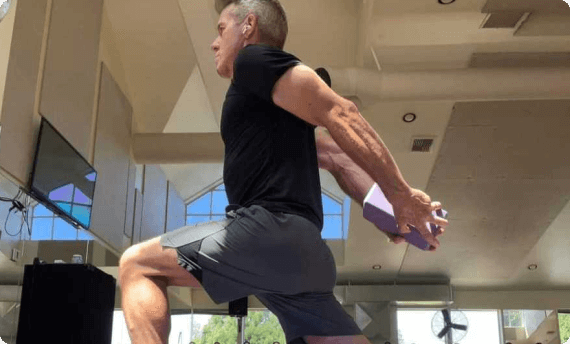
Man Flow Muscle: If you’re ready to combine Man Flow Yoga and Funk’s “Swole & Shredded” dumbbell workouts, this brand-new program from Funk and me is currently available at a hefty 50% discount until Sunday, October 25, 2026 here: https://manflowmuscle.com/
Like what you’re hearing? Sign up for the mailing list:
Rate & Review
If you enjoyed today’s episode of The Better Man Podcast, hit the subscribe button on Apple, Spotify, or wherever you listen, so future episodes are automatically downloaded directly to your device.
You can also help by providing an honest rating & review over on Apple Podcasts. Reviews go a long way in helping us build awareness so that we can impact even more people. THANK YOU!
More Podcast Content
Man Flow Muscle: Why Combining Yoga with Weight Lifting Improves Your Results When You’re 40+ | Funk Roberts| Better Man Podcast Ep. 193
Nothing is a better one-two punch for burning fat, building muscle, and building a pain-free and injury-free lifestyle if you’re over…
Take Off Your Mask & Remember Yourself! | Be The Better You Retreat Recap with Coach Patrick | Better Man Podcast Ep. 192
At the latest Be The Better You Retreat we focused on a powerful idea: remembering yourself. Today we explore how the…
Dark Motivation Works … But It Causes a Mid-Life Crisis (Try this instead) | Connor Beaton from ManTalks | Better Man Podcast Ep. 191
Do you ever feel like you’re just wandering through life without a purpose, or stuck in the middle of a frustrating…
Fitness After 40: How To Start When You’ve Never Exercised (The Man Flow Yoga Catalyst Effect) | Bobby B. | Better Man Podcast Ep. 190
Turning 40 was Bobby’s wake-up call. After a lifetime of skipping workouts, a doctor’s visit revealed warning signs in his blood…
Gut Health Goes Way Deeper Than Weight Loss | Ben Brown (Founder of Body Systems Coaching and Head Nutrition & Fitness Coach) | Better Man Podcast Ep. 189
Gut health impacts far more than weight loss—it directly governs your energy, immunity, and mental well-being. If you grew up in…
Moving From Your Survival Path to Your Soul Path | Caleb Campbell (Former NFL player & West Point graduate) | Better Man Podcast Ep. 188
If you’re an endlessly striving achiever, you know the path forward lacks clarity. Former NFL linebacker Caleb Campbell used his feelings…