The difference between success and failure with any fitness plan usually comes down to how consistent you are. But today’s guest, David, had nearly all the odds stacked against him when it came to his consistency…
He admitted he’s a chronic starter and stopper: In fact, it took him years to build up his consistency muscles and finish his first Man Flow Yoga Program.
He’s a cook at a nursing home, and his shift begins at 4:30 am – adding another obstacle blocking his consistency.
And, because he’s forced to wear non-stick shoes, his feet have overpronated and led to immense back pain.
But you know what?
Despite all of this, David never gave up. He learned to stop beating himself up (even when he wasn’t as consistent as he wanted to be). And best of all, just this year, he’s finally figured out how to be consistent.
Since then, he’s managed his back pain, dropped 10 lbs, and changed his body composition.
Here’s what David and I discuss in this episode:
- How attending an in-person event created a snowball effect of consistency
- Why standing all day for work is almost as bad as sitting all day
- The unique challenges that come from having a wildly different sleep schedule than most of the world
Listen now!
The Better Man Podcast is an exploration of our health and well-being outside of our physical fitness, exploring and redefining what it means to be better as a man; being the best version of ourselves we can be, while adopting a more comprehensive understanding of our total health and wellness. I hope it inspires you to be better!



Use the RSS link to find the Better Man Podcast on other apps: http://feeds.libsyn.com/404744/rss
Episode 146 Highlights
- How David’s overpronated feet caused him immense back pain (and how he’s made the pain manageable) (2:39)
- Why kids in the family is a literal cheat code for consistently working out (even if you’ve struggled to be consistent for years like David has) (12:16)
- How to trick your brain into working out even when you’re exhausted and unmotivated (14:51)
- David’s favorite stress relief pose that he does whenever stress rears its ugly head (17:10)
- The weird “dancing while standing” secret for eliminating back pain caused by standing all day (18:11)
- How a tiny change like swapping processed sugar for natural sugar can help you take back control of your cravings (22:36)
Dean Pohlman: Hey guys, it’s Dean and welcome to the Batman Podcast. Today’s episode is a member interview with David C. David attended one of the wellness weekends we had in January of 2025, and in this conversation, we’re going to talk about David’s struggles with back pain. We’re going to talk about his struggles with sleep. He has a different sleep schedule than most people.
Dean Pohlman: He has to wake up really early for his job, so if he wants to do his yoga, he’s got to fit that in, earlier and also go to bed earlier. We’re also going to tell how his strategy of being kinder to himself helps him be more successful with his fitness. Ultimately, David has a very clear why he wants to be able to play with his kids, his his nieces and his nephews.
Dean Pohlman: And, I think this is a a great conversation, with a guy who’s just trying to do, better and trying to stay healthy. So I hope you enjoy this episode. I hope it inspires you to be a better man. Hey, guys. Justine, welcome to the betterment Podcast. Today we have a member interview. I’m talking with David C and, David, thank you for being here.
David C.: Well, thank you. Thank you very much.
Dean Pohlman: Yeah, man. So I met David at a, wellness weekend that we hosted a, a few months ago or. Yeah, January of, 20, 25. So at the beginning of the year, and this, was a kind of a full weekend focused on, you know, comprehensive health. We had, we had both of our, all of our coaches there.
Dean Pohlman: We had Patrick, Jesse, and, Josh there and, some that was yoga, some was talking about mental wellness and, and, kind of our goals and what gets in the way of that and, yeah. David, you, you attended that. So that was your kind of your first exposure to the community of man for yoga.
David C.: Now, there’s no not my first exposure. Remember my first event that I wanted to go to, and I was able to, but I wanted to I want to I attended the event for many, many years, and I was actually able to do it at that time, which was very fortunate.
Dean Pohlman: Yeah, yeah, that was cool to see everyone get, that was one of the first of these types of events we posted. Done a few more at this point this year and hope to do more next year. But, so for you there, you know, so you’re not new to me and you’ve been here for a few years now.
Dean Pohlman: So what was your kind of your OSHA moment? What was, what was it that made you start doing manual yoga consistently?
David C.: At a particular time? When I started as the back in 2020, 2020, during the pandemic, I think July of that year, I noticed a, six week and, six week strength Foundation course, and I signed up for it. At the time, I didn’t know about it, but it was a few years by then that my feet was hurt and so bad.
David C.: I was wearing bad shoes. My back was aching so bad, I couldn’t. I didn’t I couldn’t really move a whole lot. I have, so I have noticed over time there is actually over pronation where your feet goes inwards a little bit when they goes inwards. And so I’ve worked with straighten my feet, and I still do what it says at work as, at work as a cook.
David C.: I’m standing where the preparation table is and where the, serving table is, which is lower than my waist, and I’m about six foot. And so bending over it doesn’t help, but I do that.
Dean Pohlman: Yeah, you have to. So what was, Did you try anything else in addition to yoga to help with back pain? Initially?
David C.: I was, I, I was going to a contractor at the time. I was living in Texas. I was in Texas for 13 years. I moved here to Florida three years ago, and I have not been one since, but I had a chiropractor in Texas that helped. Okay, definitely with, but it helped temporarily in my back.
Dean Pohlman: Got it. So it would you would go in, you would get a treatment. It would help for like a day or two, but then the pain will be back. Or how long did it help with relief for.
David C.: It would it be. It will be. It’ll be a couple of days and then, right about, right back to what I was doing. Then at the time, I didn’t know what I was doing. I wasn’t really paying attention to my body.
Dean Pohlman: Yeah. Did, did your chiropractor give you any exercises or did they just treat you and then said, okay, come, come back later? Like what was, what was the support there?
David C.: One exercise. One exercise that I remember. I can’t recall exactly what it is, but basically, you work your neck 45 degrees this back and forth.
Dean Pohlman: Okay. So just like my.
David C.: And go upward and go down is like, 45 degrees.
Dean Pohlman: Okay. Now give you anything else?
David C.: Now not not a time, not 19, I recall.
Dean Pohlman: Okay. How did you figure out it was, over pronation issue?
David C.: Because I noticed.
David C.: I kind of notice, I wanted 1 or 2 things that really wanted. Two thing that really pointed out was when I talked to you, during that, question in small group. Yeah. At the Wellness Weekend. He has says something about it and it didn’t really click, but it would come back. It was on the back of my mind.
David C.: And so I went. I did, and I did a little bit of research and I’m like, that’s what it it’s because, part of the issue was, was trying to franchise, which I can’t pronounce it. Right. And heels and heel pain. What, I don’t know, there’s Hillsborough, but I never went to the doctor to figure it out.
David C.: So I tried that, and I basically self-diagnose and, you know, figure out what’s going on with that. Try different medicine and try different, insert treatment shoes and it helps. But it, it also better is also based on.
David C.: The only reason why I have that pain right now is because the type of shoes with this slip resistance slip water, slip resistant shoes. I hate wearing them, but I have to wear that particular type of shoes at work.
Dean Pohlman: Gotcha.
David C.: When I wear everyday shoes and then it didn’t affect me that much.
Dean Pohlman: Okay. Got it. So let’s start. Let’s go back to, you know, so you do the chiropractor, you move. The chiropractor really isn’t providing long term relief anyway. So how did you did you try manual yoga at that point or what did you start doing to work on your back pain?
David C.: As I did a strain foundation course, I started it, but I didn’t finish it. And then I kind of just picking dues as I just kind of pick and choose whenever I felt like I wanted to do something. I’ve been, I know, but it was never a habit. It was never, it was no, I never built a habit.
Dean Pohlman: Yeah.
David C.: To do it daily or multiple times during the week. But I can pick and choose. I know one, but one thing that really caught my attention. And I’m already with your, forward proven back program.
Dean Pohlman: Yeah.
David C.: And that one that came out and I worked with that and that seemed to help Matt and I. You finished later.
Dean Pohlman: Got it. So you’re, you’re a chronic starter and super.
David C.: Exactly.
Dean Pohlman: Yeah. Yeah.
David C.: Unfortunately.
Dean Pohlman: Yeah. So. All right. So. And did you start doing Strength Foundation course after you had the foot pain, or was that before you had I. Sorry after or was that before the back pain.
David C.: Way after.
Dean Pohlman: Yeah.
David C.: Okay. I, I started experiencing back pain feeding back pain back in 2014.
Dean Pohlman: Oh, wow. Okay. You were taken from ago.
David C.: But roughly 2014. And my only relief, I only only relieve at the time was to get home, set my foot up and lay down, assist, don’t get on my feet in this. Or just take medicine all the time.
Dean Pohlman: Gotcha. Did you try any other workout programs?
David C.: No, not really, because I was I was in and out with the gym. And I didn’t have any. I didn’t, I didn’t really have any structure routine or anything like, going to the gym, you know, work with this, you know, work with that. Okay. I didn’t have any of that.
Dean Pohlman: The gym help at all?
David C.: Not really. I was more I was just more like, just I kind of didn’t. I kind of didn’t want to associate socially with anybody. Just going to that work, going home. I was on more school at the time, too, and just kind of, yeah, I have multiple things going at once. And it’s and it’s kind of like I just wanted to be by myself.
Dean Pohlman: Yeah. Did you did the gym provide any back pain relief to those workouts you were doing there? Help at all?
David C.: It did for a little while, but then I was right back into it. I didn’t know why I was doing it to that guy, to trainer. The trainer at the time was would tell him I was suggesting, well, you can do this work and that work and not work out, you know, do this many reps just there’s many certain things like that.
David C.: But it was never really explaining why, why you do this and why you do that.
Dean Pohlman: Yeah. So tell me what was kind of like the is there there’s a is there some progression to your workout program. Like it sounds like for a while you were your bulletproof, your back kind of worked and then you were picking workouts here and there. Did it. Did you do a point where you’re starting to be more consistent or like what?
Dean Pohlman: How did that progress over time?
David C.: I mean, when you start to be consistent. And go about this year.
Dean Pohlman:
David C.: Yes. Because even now even I’ve been, I’ve even, I’ve been with man for yoga. I, I’ve listened to, I have listened to the video on which was explain things but it never really clicked in my mind. And not to, not to really not to really to about to this year. And I’ll tell you, I’ll tell you a funny story about that one in just a minute.
David C.: But I would think, okay, I’m feeling this, I’m feeling that. So let me try to do this post. I’m going to try to do this post. And I stretch here, char post here, the needle thread here. Just to kind of just give myself a little bit of a stretch. The but exercise is it exercises and poses just started to stick and I’m like, okay, let’s try this and we’ll try this.
David C.: My mom drop a bunch of hangers and the car was parked right in front of the garage, the hanger right in the neat and out. And in my mind I would just like, lay down and reach. Reach, my arms under the car and it gather and all it is. But I did a job. I was immediately right there.
Dean Pohlman:
David C.: Protect you back. Striking strength in your core. And so that’s what I did it. I got on my knees and got on my knees and, foot and, And I just reach and no pain. I’m like.
Dean Pohlman:
David C.: That’s a good thing. That’s a good thing right there.
Dean Pohlman: Yeah. Yes. No back pain. Great. So this year you started being consistent. What was it that enabled you to start being consistent with change? Did you make.
David C.: I’m back. A couple of years ago, I, when I wasn’t really being in, when I was ready, being consistent, I was failing on his pain. And his pain were just the body. Pain would just stay there and stay there and stay there and not being addressed. I would go see my nieces and nephew. They are very active.
David C.: Yes, they want to play, play, play, play, play, play. You know, outdoors and whatnot. And so our because I would be so tired of me, I would be tired. And then when I started being more consistently exercising consistently I noticed a big difference. I’m being more all right, let’s go. Come on. You want to play. Let’s go.
Dean Pohlman:
Dean Pohlman: So that was your motivation to be able to play with the kids in song. Yeah. And that is that what has enabled you to continue to be consistent is you get to you know it’s time to do your workout. And you’re like tired. You know, I’ve been working on my feet all day, but I need to be able to play with the kids.
Dean Pohlman: So that’s is that what makes you that? Stick with it.
David C.: Yes. And, my, my other sister just had a my sister just had her first baby girl last week. I saw that and.
David C.: He went, oh she just babies. And I noticed she’s going to be very active. And so she’s right here in town and she’s probably going to, she probably going to be a very active little child. So I want to be consistent, to be around her.
Dean Pohlman: Yeah. Okay. Sounds like a solid motivation. So did you you know when you encounter you know we’ve talked about this, but you know, when you come home from work and you’re really tired and you don’t want to exercise or, you know, maybe it’s just been a long, a long week or whatever it is, how do you how do you make yourself do the workout even when you don’t want to?
Dean Pohlman: What’s kind of like, what does that look like? This is kind of like, walk me through it.
David C.: Sometimes I don’t do anything because based on my arm, based on the hours that I work, I don’t get enough sleep the night before. So I ended. I’m sleeping 3 or 4 hours on, after and now, of which, whether it causes my runs or a REM sleep cycle to be destructed in that night. But,
David C.: I usually work at 430. I usually work for 30. In the morning. I get home roughly 2:00, sometimes later on, depending on what’s going on at work. Sometimes I get so tired I just want to just eat, sleep. But I’m eating. Go to sleep.
Dean Pohlman: Yeah.
David C.: But there are other times that I. Well, I actually just get myself ready and get myself added. Or even though I’m feeling low energy, I’m like, nope, I, I may not be, I may not want to go for man for yoga right now, but at least let me take a walk.
Dean Pohlman: Yeah. And when you do that, you can do that a few hours after you get home from work or what’s your what’s kind of your workout schedule?
David C.: I really don’t have a workout schedule as of right now is still 1 or 2. I’m picking choose, but I have been more active in Do. Sometimes I get home and get change. A little something small, get myself or some water whatnot and I’m out the door. Or I’m doing walks or doing math or yoga or doing math or let’s pull up the phone, get my mat out.
Dean Pohlman: Yeah.
David C.: I have to. I have to catch, two cats. One of them is, one of them’s 12 weeks. And so she would call everything I had to move my, my uncaught blocks away. So because I notice some calls, but, yeah, I don’t leave my man out. So I have to put it away. So this bring on the match.
David C.: Get it ready, pick and just go. Go with the video and just do something.
Dean Pohlman: Yeah. And you do that right after you get home. Do you wait a couple of hours or take a nap? Or like what? When do you do it? Exactly.
David C.: It really depends. Yeah, it really depends. Sometime I take a sometimes I take a nap just to get myself more energy. Yeah, at a time. Just go straight into workout.
Dean Pohlman: Yeah. Okay. Makes sense. So you talked about being able to play with your, you know, your nieces and nephews, but what about the rest of your life? Have you noticed that there’s been other improvements in other areas of your life as a result of being consistent with your workouts?
David C.: Yes. I remember, back in 2020 or 20, 2021, you had and your in your workout videos, you had as I was do mountain pose.
Dean Pohlman: Yeah.
David C.: And that was one of the poses I remember in the back of my mind, whenever I’m feeling stressed in my back, I’m stressed, stressed. And so I would just stop and just do a mountain voltages, just,
David C.: Just, to stand and just do a mountain pose and just start from the back. Yeah. So there are times there are times that I will just stop what I’m doing when I, if I could, and just do something that. Just. So that really is helpful.
Dean Pohlman: Yeah.
Dean Pohlman: Do you have less back pain at work?
David C.: Lately? Yes.
David C.: I’m constantly kind of moving my feet. It looks like I’m dancing whenever I’m standing at the kind of like I’m. I’m looking. I’m kind of dancing. Yeah. Guys. Skiing. And still he doesn’t work. He doesn’t work.
Dean Pohlman: So if you. I mean, you’ve been doing manual yoga for a few months consistently does it is has that helped with the back pain at work or is it mostly moving your feet, or what do you think is working.
David C.: A little bit about.
Dean Pohlman: Little both okay. All right. Happy feet plus man for yoga equals less back pain. Got it. So is this inspired you to make other improvements and other aspects of your health and wellness? You know, usually what we see is people start being consistent with their workouts and then they start, I’m going to like, you know, I’m going to start changing up my diet or I’m going to start thinking differently or, has that has this led into other improvements for you or other practices?
David C.: Yes. It has. I always wanted to eat better, make better choices. But I never really knew what to do. I never knew why. Why I made some changes. Not until now, until I got involved with where to engage. And then I started learning. And even Avery and Gage whenever, whenever I, whenever coast and wherever. Coach jazzy will post a lot of videos talking about Marcus, talking about this, talking about, you know, talking about different things.
David C.: And that’s what and when and in a sense, and as well as your video as well, explaining why I made these choices, I have really. No. That’s good. Thank you. A couple years for three, a few years back, I would eat whatever I wanted, but I noticed I started gaining weight and then when I started gaining weight is not been good for me.
David C.: Okay. My energy is low. Yeah, my energy’s already low. But all this extra added sugar and everything out, it just it makes. It makes me crash easier.
Dean Pohlman:
David C.: Whereas I started getting rid of these choices substituting with fruit 70 to 7 during managing, managing my portion of rice, managing the portion of starch, you know, different mold. I mean there’s I can do a whole list that just considering what you’re eating.
Dean Pohlman:
David C.: And knowing me, if I take a large intake of sugar, doesn’t matter if it’s liquid or food I go to, I will have a really high energy and then I would have a strong crash.
Dean Pohlman:
David C.: So that’s why I have keeping back in my mind bread could do that. Starch can do that diet. And I mean and sodas, sugary snacks. Yes. So that’s where I have to really monitor rise and just consider my choices.
Dean Pohlman: Yeah. Got it. So are there things that. So so you said, I think making substitutes is one of the easiest things to do. Or one of the. Yeah, it’s I mean, it’s one of the it’s one of the basic strategies when improving your nutrition is starting to make substitutes. Can you talk about some things that you used to eat and things that you eat instead?
Dean Pohlman: Now?
David C.: I used to eat a lot and I still do to a point. I is a very low moderation. Now. I use lard cookies. All kinds of cookies. A lot of Debbie cakes and a lot of surgeries. Snacks. Because they were cheaper than fruits. Yeah, they were cheaper than granola bars. And, you know, I think that that.
David C.: Yeah, a lot of times I would just go for that because they’re cheaper and more easier. And if I’m not careful, I will eat, eat all of them but not eat anything more healthier. And so making this, making substitution is spent a little bit more on grapes, bananas, making more pro smoothies. As a I do, I do, frozen fruit and bananas with oak milk and a little bit of honey that gave me, they get that gives me a little bit of sugar that I really like, but it also means are healthier choices than grabbing one of them Debbie cakes.
Dean Pohlman: Yeah. Yeah. I mean, you’re right, though, it is cheaper to buy junk food than it is buy real food, which is. Which is unfortunate, but that’s just the reality of food cost. Which sucks, but I’m glad you made those, made some changes there. So when you get those cravings now, you know, for a Debbie cake, what’s what’s your response to it?
David C.: Do I need it? Am I really that hungry for it? I can just drink some water and just destroy it. Is trying to decide just to censor, saying the, hunger?
Dean Pohlman: Yeah.
Dean Pohlman: Okay.
David C.: No, I have to painfully think. Do I really? Do I really need it or do I want.
Dean Pohlman: Yeah. Gotcha. Do you ever really need it?
David C.: No.
Dean Pohlman: No.
David C.: I mean, it’s tasty, but it’s tasty, but, you know, do you need it? Not really.
Dean Pohlman: Yeah. All right. So, you know, you talked about being in engage for a while and engage with this kind of experimental community that we had for the better part of 2024, which we ultimately had to, sunset. But it was basically a kind of like a hyper, engaged, community within the band for your community.
Dean Pohlman: And that was was that so as far as external support systems go, as that was that was helpful. But, what else has been helpful for you in terms of external support systems? Like, you know, we talked about the community within mental yoga. Are there other things? Are there other people that you’re able to kind of rely on for support with your health or, motivation support or tell me about that?
David C.: Yeah. So the few people that I don’t, I don’t stay in regular conversation with, but I do, I do stay and I kind of stay in touch with some of the coaches, some of the people that I manage to engage in and through the mental yoga community, you know, I say interact with them. I don’t always where I don’t always have, like, the best friend communicating every day kind of deal.
David C.: But just from once in a while, I just kind of, I kind of just dance out, like, how are you doing? You know, what’s your food choices? Like? You know, things like that.
Dean Pohlman: Yeah. Okay. Awesome. How would you say that’s been helpful?
David C.: Is been helpful by level of accountability, so to speak. Can we even know is not a accountability program of sorts. Is more like.
David C.: I don’t know, it’s kind of hard to explain, but it isn’t. It isn’t in a sense is a sense of accountability.
Dean Pohlman: Yeah. Okay. So one of the other questions I was thinking of is, you know, you talked about not knowing nutrition, like not knowing what to eat. And you know, as someone who’s for me, like, you know, I just kind of live in this world where a lot of what I see, like a lot of my social media or a lot of like the things that I read or a lot of the things that I talk about just happen to be about nutrition.
Dean Pohlman: So, you know, I don’t understand kind of your experience. So I’m kind of want to understand like what is your knowledge of nutrition? Like where does that prior to be able to prior to you being able to talk with other people? You know, within mindful Yoga or our community or our coaches, where did you get your nutrition information from?
Dean Pohlman: Like what did you know or like what what did you think you were supposed to do? Just talk me about that.
David C.: The basic knowledge of nutrition for me was quick and easy.
Dean Pohlman: Okay.
David C.: Okay. There was one. No, it was one thing that I was raised on. I wasn’t really raised on, very strong, like meat, routine starch, some kind of brand, things like that.
Dean Pohlman:
David C.: I wasn’t really it was quick and easy going microwave and that soup. That was my diet back in college too quick and easy. Go to camp area or get something. The store quick and easy. Throw it in the microwave but not. But I wasn’t understanding what I was eating.
David C.: And then then learning different things. Like considering what kind of protein, what kind of protein you want to eat, what kind of starch which you got to be careful about how much starch which.
Dean Pohlman:
David C.: Where you know, what food, you know for instance purging historic. I’m just going to stick with H2 because there’s so much within you. You don’t have to go with always me. Good. I don’t always have the ability to get meat. So I kind of substitute some things. I kind of substitute some things. Which vegetable? That’s starch. In a vegetable that is approaching, I have noticed that I would eat a lot of mashed table and gravy at work, because that’s one of the things that I cook and make for a residence that has cut back on that is, I know good, because I know the level of sugar that I have, and then I
David C.: can end up crashing. So it’s just one of them is I’m I’m still learning to in this one. And as I learn to master over there and I’ve learned through my own personal researches and through the 90 day, counter, do we program the last time?
Dean Pohlman:
David C.: As when I really got really deep into nutrition.
Dean Pohlman: Gotcha. Okay. Awesome. What’s your weight loss as you do? Have you experienced weight loss or what’s your what’s your weight fluctuations been over the last couple of years?
David C.: I was is I’m going to say about to I’m about to 20. Give or take.
Dean Pohlman: Okay.
David C.: Bigger I’m gonna say slightly bigger than I am now I’m back I’m back in college.
Dean Pohlman:
David C.: And but I was more of fat weight and then as a, as, as closer to, to, to modern and to current time and roughly about to and so I have is not significant weight loss but is kind of fluctuates. Yeah I let things I love heavy things at work. You know could these I eat some food that I get are very heavy.
David C.: And so I have built a little bit of muscle mass. So when I look at my weight and the numbers, I know okay. Part of that is my muscle mass okay.
Dean Pohlman: So body composition is improving then. So 10 pounds off. But adding muscle I mean that I think anything like any even 5 pounds feels is is significant. You know, you know when people come to me and they say like I’ve lost 10 pounds, I’m like, that’s a big deal. Like that doesn’t just happen automatically. You know, that’s like, so I think 10 pounds is something to be proud of.
Dean Pohlman: That’s when people come and they see even bigger numbers. They’re like, I lost 50 pounds. I’m like, really, dude, that’s a lot. I mean, you hear about it a lot, but I don’t think people understand just how much goes into actually losing that much weight. So, I’m glad that, you know, congrats on your 10 pounds. It sounds like that’s a do you feel more energetic now?
Dean Pohlman: Like, how do you how does that feel for you?
David C.: I do, with my choices, with my choices of food and drinks and whatnot. And, just being try to try to be more active. I notice that my energy is, Is you better? Yeah. The only thing that I’m still working on is sleeping habits, but that’s work in progress.
Dean Pohlman: I mean.
David C.: That’s because I’m a work.
Dean Pohlman: Schedule.
David C.: Mama. I work at 430 in the morning, and it’s just. It’s not easy. Is not easy.
Dean Pohlman: Yeah. No, I mean, if you’re you got to work at 430, that means that your bedtime is probably going to be like 730 or like seven if you really wanted to have like a full night of sleep, which makes it difficult for your social life, you know, if you’re going to, you know, starting your bedtime routine at 6:00, but.
David C.: Right, right.
Dean Pohlman: Just got it. You got to do, like, a cook dating website or something, I don’t know, is some something for people who go to bed at 7:00 and just.
Dean Pohlman: Yeah. So what’s kind of the next thing you want to work on in your fitness? You. Sounds like you’ve really been improving your nutrition. You know, you’re. I don’t know if you’re still dabbling in the gym or not. But what’s kind of the next thing that you want to work on? What’s the next milestone?
David C.: I haven’t really been to the gym, but I’ve noticed,
David C.: We start over again. One thing that I really want to do is, since I kind of dabble in this, when I kind of dabble in that, one thing that I really want to work on next is I have somewhat of a routine, but I want to get a better routine in place.
Dean Pohlman:
David C.: To where I can actually stick with the program and follow through with it.
Dean Pohlman: Yeah.
David C.: As well as an in and Jewish and point in a future ad in a day or two going to the gym.
Dean Pohlman:
David C.: But the gym workout themselves is a whole nother, is a whole nother avenue for me because it’s like, yes, you can tell me, you can tell me, you do this exercise, this exercise this and these reps.
Dean Pohlman: Yeah.
David C.: But it’s hard for me to comprehend why I’m doing this.
Dean Pohlman: Okay.
David C.: You know what? What muscle, what muscle. Where to hit. You know? You know what what how to do it correctly.
Dean Pohlman: Yeah. So you need our beginner’s weightlifting program that we launched in the members area. It’s exactly what it does. So when you do get started, you’re ready. And that doesn’t need, that just needs bar that doesn’t need barbells. We just use resistance bands and dumbbells in that one. So when you are ready. Yeah. I mean, I watch a lot of, I’ve watched a lot of exercise tutorials on online and I think people favor the simple explanations because they’re like, I just want to know how to do it and get started.
Dean Pohlman: But I’m just kind of the person who wants more in-depth explanations like, I want to know, well, how do I know if I doing it correctly? Like, where am I going to feel this? What is this even for? Like, what does this good for, you know? Or like, how do I know if I’m making mistakes? Like, how do I know?
Dean Pohlman: And so it’s and that’s kind of how I approach all of my yoga instruction too. So I basically did the same thing but with weightlifting and put that into our beginner’s weightlifting program. You’ve also got Josh, who is, you know, in our community. And he can you can help out with that as well. So is is sleep.
Dean Pohlman: Is that the main thing getting in the way of you being consistent, or what do you think is the biggest obstacle?
David C.: Yes. Sleep is sleep is one of deb is obstacles. Guys, there are times that I’m wide awake at nine, 10:00 at night and I know I have to be up about three 3345. I have to be up and ready to leave the house early enough to go to work. So, I definitely try. I personally try not to take melatonin at night because it can knock me out and keep me easily.
Dean Pohlman: Yeah.
David C.: But there are times that I have to do that just so I just so I can get myself to sleep. But one that’s one of the things that it’s work in progress is get my self, get myself into a routine where my body naturally makes no matter telling my melatonin. Yeah, so I can actually sleep more restful.
Dean Pohlman: Right. So when do you notice, I mean, do you know what keeps you up at 9 or 10? Do you go to bed and then you just, you know, you you wake up for no reason? Or do you notice that there are things that keep you up at night?
David C.: My mind go and my mind is going in all different directions. You know what to do. I’m replaying. Things are going on in my head on replaying things. I’m thinking about what’s going to happen tomorrow.
Dean Pohlman: Yeah.
David C.: I have a tendency to look at my phone where the, with the blue screen.
Dean Pohlman: Yeah.
David C.: You know, because I, because I work pretty much. I work pretty much today, and then I don’t have, I don’t have the ability to get on the phone. And so, I feel like I’m missing now, but I’m not really missing out. And so. And that ends up being in, in this growing, I mean, it can be a number of things, but that’s the, that’s what’s happening.
David C.: I mean, you need to work on that more.
Dean Pohlman: Yeah. Well, you know, unsolicited feedback here is, it sounds like you definitely need to create some time in your evening before you go to bed, where you’re able to kind of be alone with your thoughts and process them for the day, because if you don’t do that and then you get into bed, what usually happens is all of those thoughts and all of those stressors from the day that you haven’t experienced yet, you lay down and they’re like, okay, we’re going to get you.
Dean Pohlman: And they jump in like, right when you’re starting to try and relax because they haven’t had a chance to yet. So, I’d highly recommend if you can, you know, finding some time in your evening where you can process all of those thoughts from the day and then also, you know, just get your phone out of your room.
Dean Pohlman: Just don’t let it don’t let it be in your room. Just you just got to get it out. I mean, that’s it sounds it sounds simple and it is, harder to do, but, I mean, that’s you just got to get your phone out of your room, not having a bed.
Dean Pohlman: So. Yeah. All right, all right, all right, let’s get into our rapid fire questions. So what’s one habit, belief, or mindset that’s helped you the most with your overall health and wellness?
David C.: Be kind to yourself. Because I had a tendency of growing up, I had a tendency to work at big muscular workout men. And just that, that looks very good. And I say, that’s why I want to be. But I don’t always know what they have gone through to get to that point or what they’re going through at that period, at that, that period of time.
David C.: So I always tell myself, be kind to you. Be kind to yourself because I have a process I have to go through.
Dean Pohlman:
David C.: To and eventually I may not get to that point to where I’m big and jacked and everything else, but I know that I’m strong at some Armstrong at one point, but on some other points I’m not as strong. And that’s something and that’s something that can be worked on.
Dean Pohlman: Yeah. Well said. What’s one thing that you do for your health that is often overlooked or undervalued by others?
David C.: I personally cannot stand, and diet stabbed trends.
Dean Pohlman: Okay.
David C.: No fat, no carbs. You no longer slow that.
Dean Pohlman: Eat.
David C.: Enjoy what you can in moderation.
Dean Pohlman: Yeah.
David C.: You can. You can enjoy some things. Yeah. Might make better choices, obviously, but enjoy things in a level of moderation.
Dean Pohlman: Yeah. All right. What’s the most stressful part of your day to day life?
David C.: Is waking up early to be at work? I know I hate that schedule, but I rather do that schedule other I rather do this year than work 12 to 838 nine. That screws up everything else. And one of the things that I’ve noticed to do when I wake up in the morning, I don’t know if I fully rested the night before.
David C.: Okay. So that’s stressful knowing that I’m going to be drinking some. I have a, our type of energy drink. Did I drink? I sometimes will drink two of them, and when I drink two of them, I know that. Yeah, I’m very tired. I didn’t get I didn’t get enough I didn’t get enough restful sleep. And I’m for it.
David C.: And there are times that I only drink one. I’m alert and I’m low and I’m alert and focused.
Dean Pohlman: Got it. Okay. And, last question. What’s your best piece of advice, for men who want to be healthier?
David C.: One of the things that Coach Patrick, will always will share often, is celebrate your moments. I don’t know if it’s an exact words, but celebrate your moments. You may. Some men might want to go for these. These goals. They might want to go for this gold. They might want to go for multiple older ones work. Or you can at that moment, but along that way celebrate them.
David C.: Yeah. Because you never achieved something. Whatever you achieved here because your next step is yeah, work on achieving that and go from there.
Dean Pohlman: Yeah. Well said. I think that’s something. Yeah. All those are great, great tips, man. Those are great answers. Thank you for thank you for that. And thank you for doing this conversation. By the way.
David C.: I mean, you.
Dean Pohlman: Yeah. You did really well. That was awesome. And then, you know, I think it’s also I think this is a great conversation because you highlight, you know, you have a lifestyle that is different from a lot of the guys who demand for yoga. You know, you’re on your feet most of the day versus most guys. Or, you know, a lot of guys are sitting kind of in an office chair setting and, you know, and, you know, you’re also going to bed.
Dean Pohlman: You have a different schedule than a lot of people. You know, you’re getting up so early. And struggling with sleep in different ways. So I think that’s, you know, it’s a good just different story to highlight. So thank you for again for, for sharing that.
David C.: We thank you. Thank you I appreciate it.
Dean Pohlman: Yeah. And then last thank you. Just thank you for being part of our community because, you know, you, you know, engage was a super active part of mental yoga, which ultimately we kind of absorbed into the entire mantle yoga community, rather than having it off in its own section, which is, I think been great for our overall, you know, motivation and our overall kind of the feeling of momentum in our community.
Dean Pohlman: So thank you for being part of that.
David C.: Man. Thank you.
Dean Pohlman: Yeah. All right man. Well, I’ll look forward to your continued progress. And, thanks for doing this interview. I will, I’ll see you next event, maybe, or definitely. And you know, the the mental yoga app and the Facebook group.
David C.: It’ll be in the plans sometimes. I’m hoping to make it at least one event next year, but it’ll be in the plan and in progress, too. But I appreciate it. Very, very welcome.
Dean Pohlman: Yeah. And, yeah, I appreciate you being here. All right, guys, I hope you enjoyed this interview. With David C. I hope it inspires you to be a better man. And I’ll see you on the next one. All right, guys, thanks for joining me for this episode. I hope you enjoyed it. Check the show notes for anything that we talked about in this conversation.
Dean Pohlman: And then, if you are not already part of our community, you can learn more and get our free seven day challenge at Mandalay yoga.com/7 DC. If you are part of man for yoga already, I want to say thank you so much for being here. I hope you are already taking advantage of our community, both in the app and in the Facebook group.
Dean Pohlman: And then also, I hope to see you at some upcoming events in the near future. If you’re enjoying the podcast, please leave a review. You can do that, wherever you’re listening, either on, Apple or Spotify. You can also watch video versions of the podcast in the members area, the mental yoga app, as well as on the Betterment Podcast YouTube channel.
Dean Pohlman: Thanks, guys for listening and I’ll see you on the next episode.
[END]
Want to improve your sexual wellness, get stronger erections, and last longer in bed? Then join the FREE 7-Day Sexual Wellness Challenge here: https://shrtlnk.co/uA27H
Want to unlock more flexibility and strength, reduce your risk of injury, and feel your absolute best over the next 7 days? Then join the FREE 7-Day Beginner’s Yoga for Men Challenge here: https://ManFlowYoga.com/7dc.
Tired of doing a form of yoga that causes more injuries than it helps prevent? The cold, hard truth is men need yoga specifically designed for them. Well, here’s some good news: You can start your 7-day free trial to Man Flow Yoga by visiting https://ManFlowYoga.com/join.
Like what you’re hearing? Sign up for the mailing list:

Rate & Review
If you enjoyed today’s episode of The Better Man Podcast, hit the subscribe button on Apple, Spotify, or wherever you listen, so future episodes are automatically downloaded directly to your device.
You can also help by providing an honest rating & review over on Apple Podcasts. Reviews go a long way in helping us build awareness so that we can impact even more people. THANK YOU!
More Podcast Content
Dark Motivation Works … But It Causes a Mid-Life Crisis (Try this instead) | Connor Beaton from ManTalks | Better Man Podcast Ep. 191
Do you ever feel like you’re just wandering through life without a purpose, or stuck in the middle of a frustrating…
Fitness After 40: How To Start When You’ve Never Exercised (The Man Flow Yoga Catalyst Effect) | Bobby B. | Better Man Podcast Ep. 190
Turning 40 was Bobby’s wake-up call. After a lifetime of skipping workouts, a doctor’s visit revealed warning signs in his blood…

Gut Health Goes Way Deeper Than Weight Loss | Ben Brown (Founder of Body Systems Coaching and Head Nutrition & Fitness Coach) | Better Man Podcast Ep. 189
Gut health impacts far more than weight loss—it directly governs your energy, immunity, and mental well-being. If you grew up in…
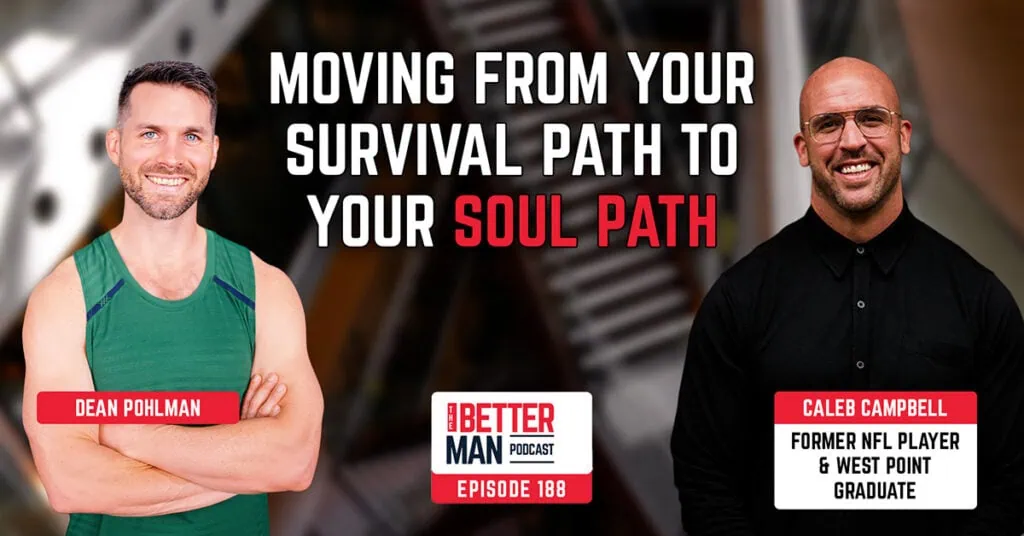
Moving From Your Survival Path to Your Soul Path | Caleb Campbell (Former NFL player & West Point graduate) | Better Man Podcast Ep. 188
If you’re an endlessly striving achiever, you know the path forward lacks clarity. Former NFL linebacker Caleb Campbell used his feelings…

The Ethics & Use Cases of AI | Ted Phaëton | Better Man Podcast Ep. 187
The topic of AI is unavoidable. Ted Phaeton, productivity coach and host of the Modern Man Podcast, joins the show to…
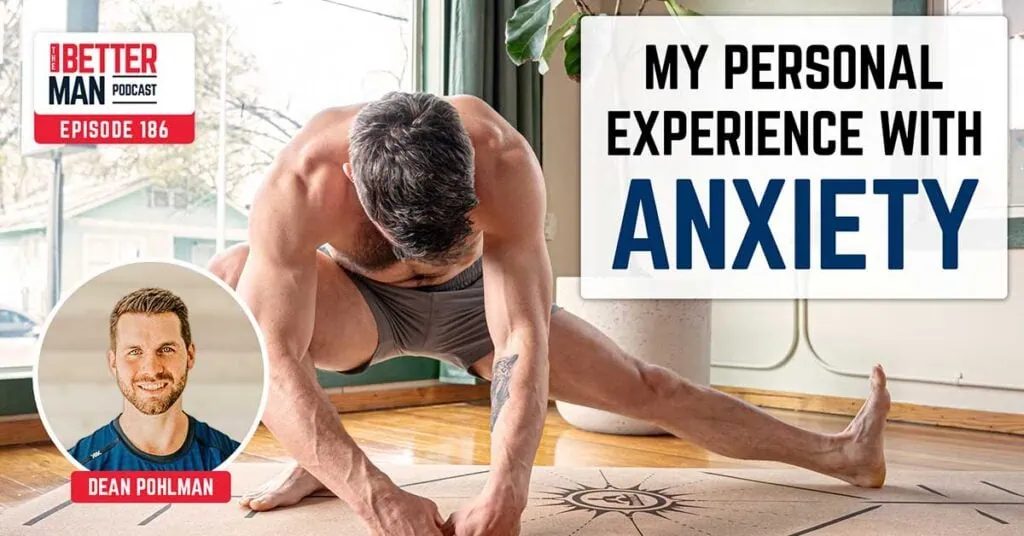
My Personal Experience with Anxiety | Dean Pohlman | Better Man Podcast Ep. 186
After an accidental mushroom trip triggered a panic attack, I realized I’d actually been living with low-grade anxiety my whole life….