If you’ve spent the last few years sitting at a desk, driving, and just not moving as much as you used to, you’ve probably noticed your posture starting to suffer—along with some nagging neck and shoulder pain.
This upper back and posture-fixing routine is designed to help undo years of that daily stress. As part of our Flexibility After 40 series, the goal here isn’t just passive stretching; it’s building flexibility that lasts by combining deep stretches with targeted upper-back strength. Do this routine once, and you’ll immediately notice yourself standing taller and breathing easier. Stick with it consistently, and you’ll see real, long-term improvements.
Fix Your Neck & Shoulder Pain (No Flexibility Required)

1. Active Child’s Pose
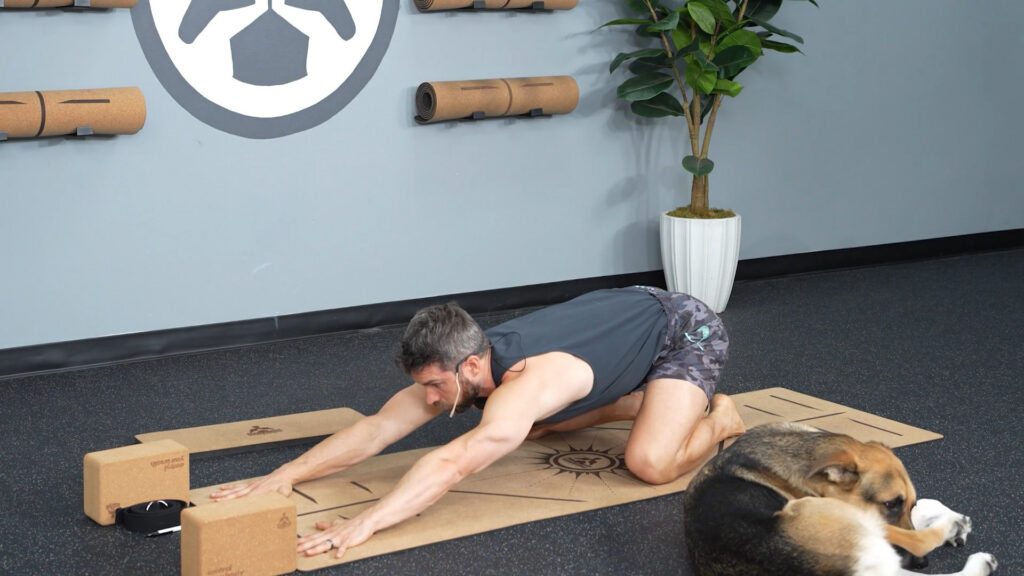
Child’s pose is one of the most basic yet effective exercises for opening up the shoulders—as long as you keep it active.
- How to do it: Bring your knees wide and let your big toes touch. Walk your hands out in front of you about shoulder-width apart, spreading your fingers wide. Relax your head toward the ground (if it doesn’t touch, just let it hang) and sink your hips back toward your heels.
- Form cues: Keep your arms straight and engaged—flex your triceps, biceps, and forearms while lightly pressing your hands into the mat. Crucially, do not let your lower back arch. Keep your abs tight and pull your sternum toward your upper back so the stretch stays focused on your shoulders and chest rather than your spine. Breathe deeply in and out through your nose.
2. Forearm Plank
Before we go deeper into stretching, we need to get your shoulders, upper back, and core warm.
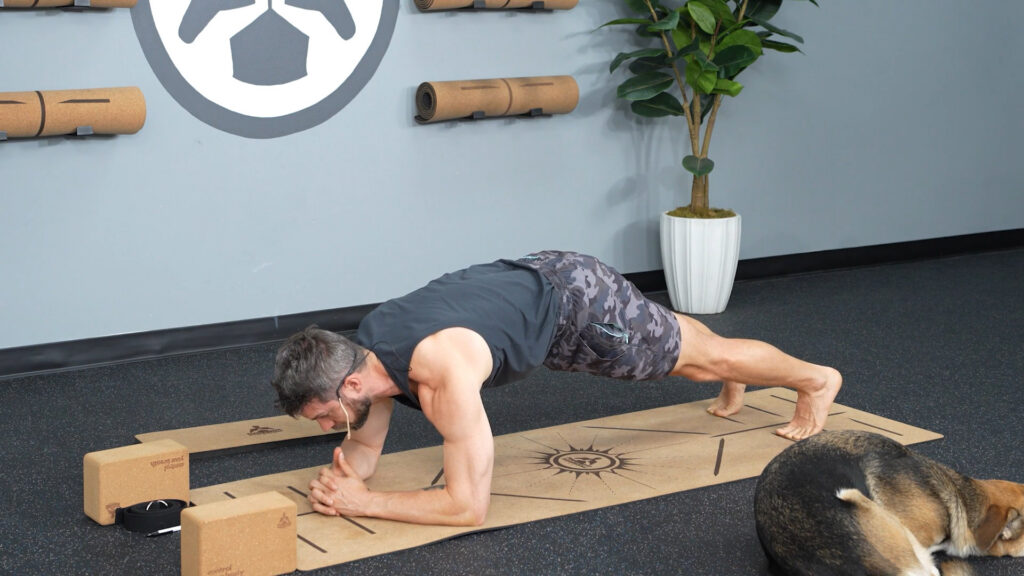
- How to do it: Place your forearms on the mat parallel to one another. Tuck your toes and lift your knees into a forearm plank. (If that’s too intense, keep your knees down on the ground.)
- Form cues: If keeping your forearms parallel is tough on your shoulders, clasp your hands together for a more traditional forearm plank. Pull your belly button up toward your spine to engage your abs, which directly supports better posture. Hold strong, focusing on generating heat in the upper back and shoulders.
3. Sphinx Pose
From your plank, lower your hips to the floor to transition into a supported backbend that wakes up the muscles along your spine.
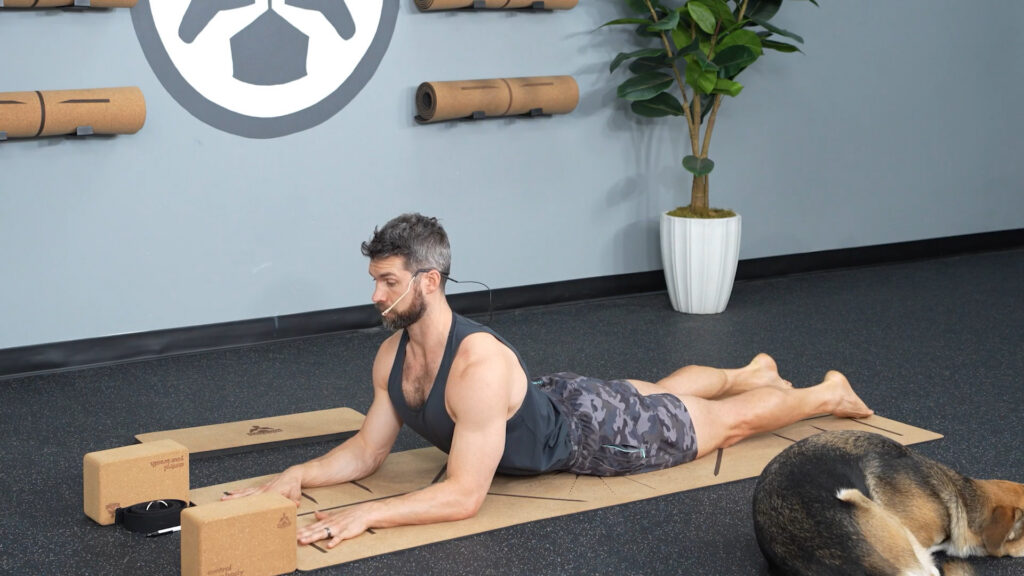
- How to do it: Keep your forearms parallel at shoulder width and let your hips rest on the ground. Hug your elbows in toward your body, press down through your forearms, and lift your chest.
- Form cues: Stay active through your entire body. Press the tops of your feet into the floor and squeeze your thighs so your kneecaps lift off the mat. Pull your shoulders down and away from your ears, draw your chin slightly toward your throat, and press the crown of your head toward the ceiling. If your lower back pinches, lower your chest slightly closer to the ground.
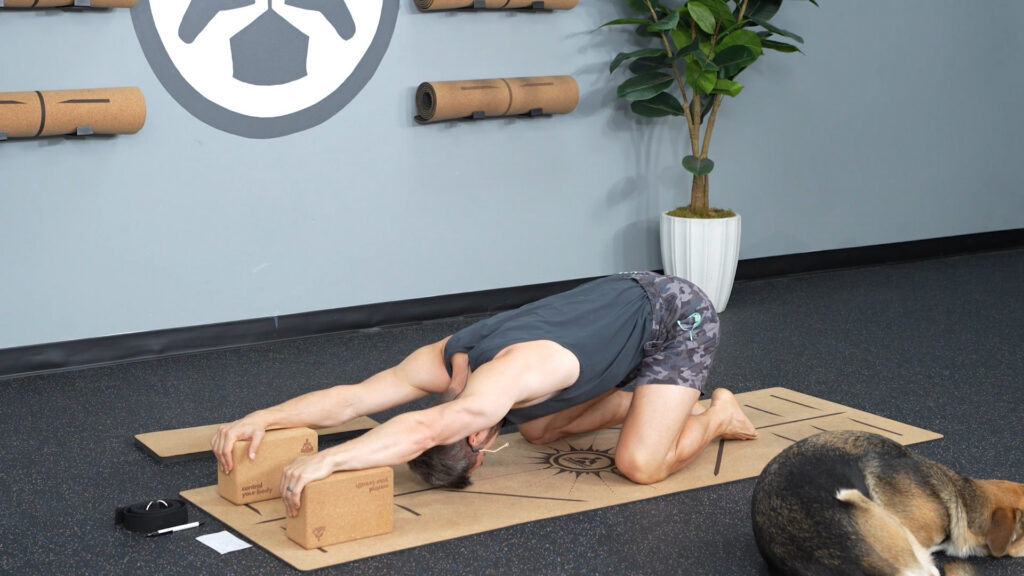
4. Puppy Stretch
This move puts a bit more weight into the upper back to really open up tight shoulders and chest muscles.
- How to do it: If you have yoga blocks, place them shoulder-width apart on a mid or high setting and grip them firmly with your fingers and palms. (No blocks? Just place your hands flat on the floor with your knees positioned further back than in child’s pose.) Pull your hips away from your hands and let your chest melt toward the floor.
- Form cues: Just like in child’s pose, keep your arms straight and active, and avoid arching your lower back. Pull your heart toward your upper back, tuck your chin slightly, and keep your abs engaged. Hold for about 20 seconds, letting your chest sink a little deeper with every exhale.
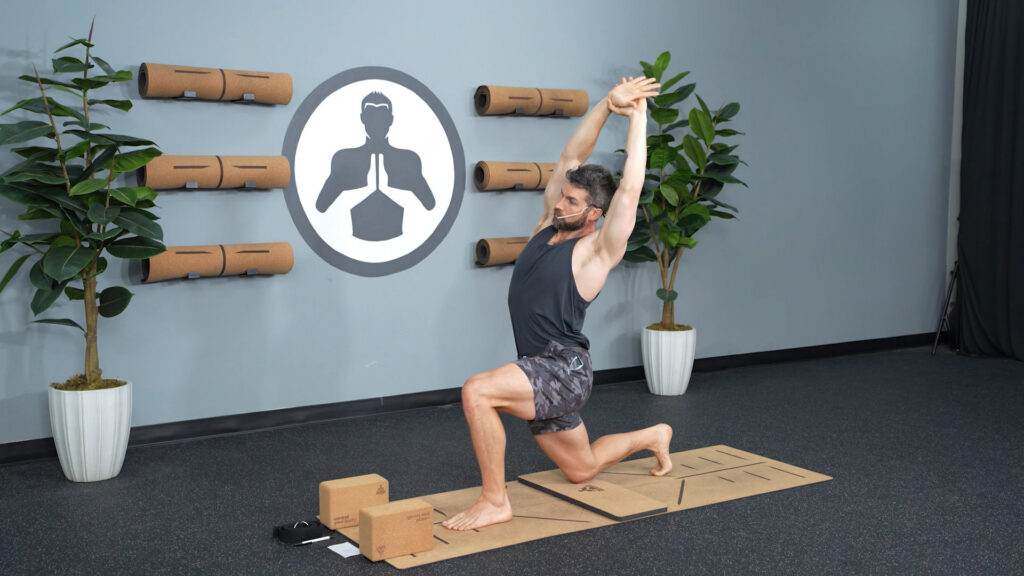
5. Low Lunge with a Side Bend
True shoulder and upper-back health requires side-to-side mobility—and opening up tight hip flexors is essential for fixing your overall posture.
- How to do it: Step your right foot forward and your left knee back (use a towel or knee pad if you need extra cushioning). Keep your stance shallower than a traditional deep lunge. Reach up overhead, grab your left wrist with your right hand, and bend up and over to the right. Switch sides after a few slow breaths.
- Form cues: Reach your tailbone straight down and engage your core and back glute so your lower back stays completely flat and neutral—you should feel an honest stretch through the front of your hip flexor, not tension in your low back. As you bend to the side, actively squeeze your arms back. If your upper back starts getting tired, that’s a good sign—you’re strengthening the exact postural muscles that combat rounding and tech neck.
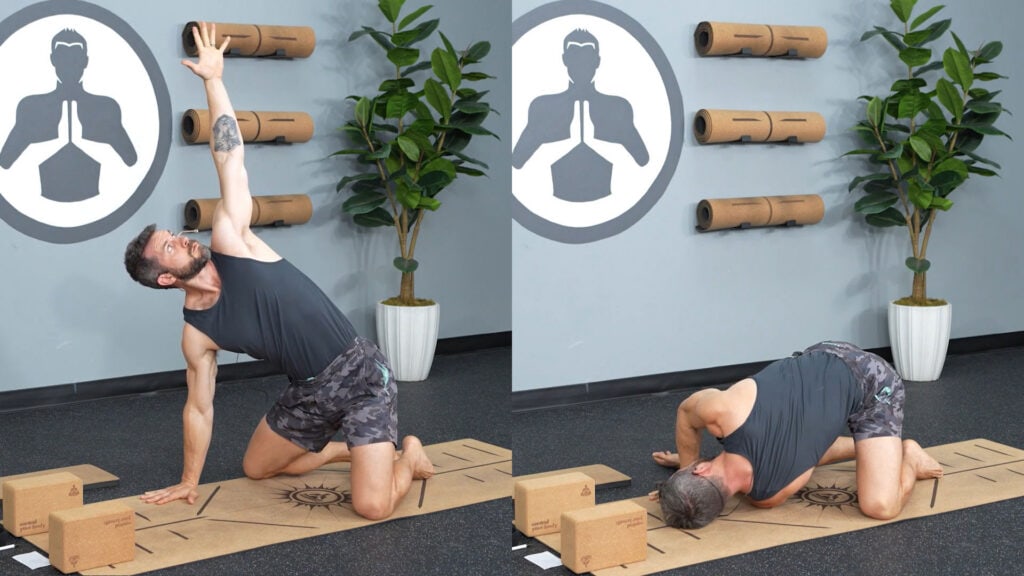
6. Child’s Pose Ceiling Stretch to Needle Thread
Next, we add rotational mobility to target the thoracic spine (mid and upper back).
- How to do it: Return to a child’s pose base with knees wide and big toes touching, but keep your hands planted directly under your shoulders. Place your right hand in the center of the mat and reach your left arm straight up toward the ceiling for a grounded twist. After a couple of breaths, slide your left arm underneath you between your right hand and right knee, resting the back of your left arm and shoulder on the ground. Hold for three deep breaths, unwind back up to the ceiling, and repeat on the other side.
- Form cues: Keep your hips pressing back toward your heels throughout the twist so you isolate your mid and upper back rather than cranking your lower back. Once you’re in the needle thread, only apply light pressure with your supporting hand. Push the back of your bottom arm (tricep side) into the floor to create a deep, active stretch across the upper back. Breathe into your rib cage on every inhale, and twist a little deeper on every exhale.
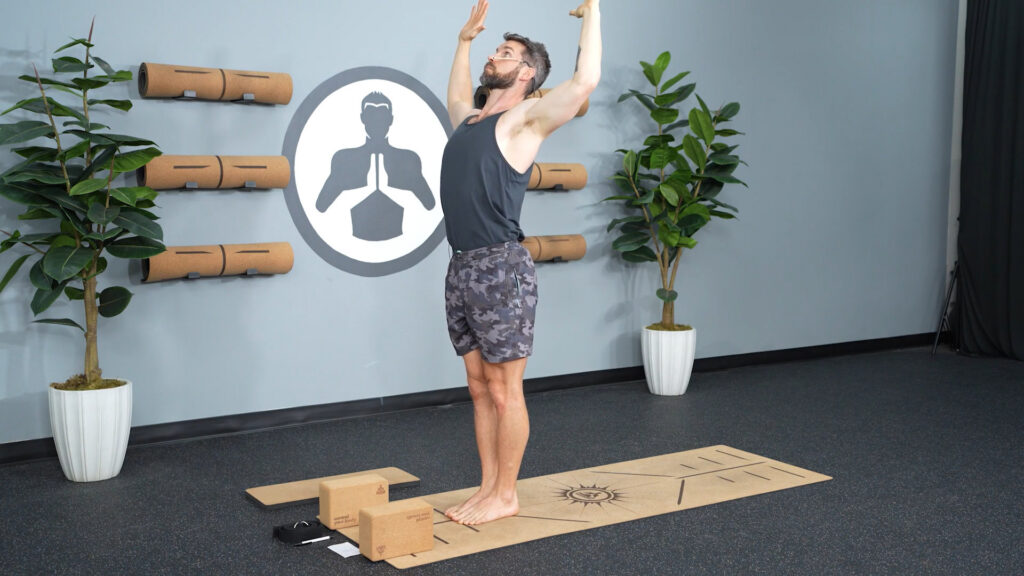
7. Standing Y Back Bend
Finish on your feet to lock in that upright alignment.
- How to do it: Stand up with your big toes touching and your heels about an inch apart. Raise both arms overhead into a “Y” shape, lift your chest toward the ceiling, and hold for 45 seconds.
- Form cues: Press your arms up as high as they’ll go and gently squeeze them back until you feel your upper-back muscles firing. Keep your neck strong—don’t let your head drop backward; instead, press the crown of your head toward the ceiling. Tuck your tailbone down, squeeze your glutes, and keep your abs tight so your lower back doesn’t arch. (Need a modification? Drop your elbows slightly toward a goalpost position while keeping your chest lifted.)
How Do You Feel?
Take a moment to stand naturally and notice the difference. When you challenge your spine, strengthen your upper back, and open your chest, you feel upright, confident, and able to take a fuller breath in just a few minutes.
If you want to keep building on this progress, check out the rest of our Flexibility After 40 series—along with dedicated routines for men in their 50s and 60s—over on the Man Flow Yoga YouTube channel, or explore full-length structured programs inside the Man Flow Yoga app and members area.
More Workouts
How to Release Pelvic Floor Tension: A Daily Routine for Stiff Hips and Stress
Yoga for Sarcopenia: Fight Age-Related Muscle Loss
Stiff Shoulders? Here is a Quick 10-Minute Routine That Actually Works
A Yoga Routine Built for Total Beginners (No Flexibility Required)
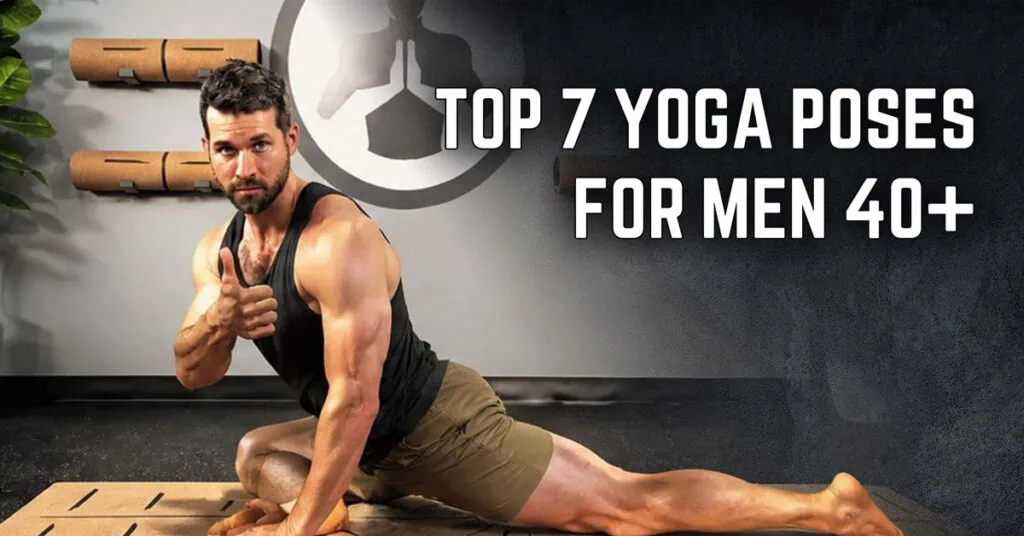
7 Best Yoga Poses to Fix Posture, Mobility, and Core Strength for Men 40+
Breathwork & Movement To Find Peace: Morning Yoga For Anxiety
Your Anxiety Doesn’t Define You – 20-Minute Power Yoga
20-Minute Yoga Routine for Anxiety (To Calm Panic & Get Out of Your Head)
15-Minute Balance Routine for Men in Their 60s
About Dean Pohlman, Founder & CEO of Man Flow Yoga, Author of Yoga Fitness for Men, Expert on Yoga Fitness for Men.
Dean Pohlman is making yoga more accessible to fitness-minded men. A former collegiate lacrosse player, Dean discovered yoga while recovering from injuries and quickly realized its potential to boost strength, mobility, and overall performance.
Since launching Man Flow Yoga in 2013, Dean Pohlman has built a global community that speaks for itself:
- 195,000+ customers
- 42+ million YouTube views
- 200,000+ followers across Instagram, Facebook, and TikTok
Dean’s book Yoga Fitness for Men has sold over 50,000 copies, while his Body by Yoga DVD series has surpassed 120,000 units sold, earning him consistent #1 rankings on Amazon and thousands of five-star reviews. He’s also been featured in Men’s Health, Muscle & Fitness, GQ Magazine, Fox Tampa Bay, The Chicago Sun, and on influential podcasts like The Ready State and Ben Greenfield Fitness.
With a focus on real results, community, and technique-focused instruction, Dean Pohlman continues to change the conversation around yoga. He’s not just teaching poses—he’s helping people build stronger, more capable bodies for life.