Have you ever wanted to meditate but you just don’t know where to start? And then you get overwhelmed by the sheer volume of different types of meditation?
If so, you’re not alone. I go through the same cycles myself.
And that’s what led to me inviting Jon Macaskill – a retired Navy SEAL turned performance coach, mindfulness teacher, author, and podcast host – onto this episode.
When Jon was a SEAL, he was supposed to be deployed on an operation where 19 men died, but he was stuck at a desk instead. And then he became riddled with survivor’s guilt and PTSD because he should’ve been there with his squad.
This caused all sorts of mental health problems that medication and even therapy on its own didn’t solve. But he was lucky enough to have a therapist who recommended meditation and mindfulness – and those two practices ended up saving his life.
If you ever wanted to start meditating, learn more about its benefits, or just hear an incredible story about how meditation and mindfulness saved Jon’s life, listen to this episode now.
Here’s what Jon and I discuss:
- How to start meditating and living a more mindful life
- Why Jon says meditation saved his life
- The many health and personal benefits you unlock when you start a consistent meditation practice
And so much more.
The Better Man Podcast is an exploration of our health and well-being outside of our physical fitness, exploring and redefining what it means to be better as a man; being the best version of ourselves we can be, while adopting a more comprehensive understanding of our total health and wellness. I hope it inspires you to be better!



Use the RSS link to find the Better Man Podcast on other apps: http://feeds.libsyn.com/404744/rss
Episode 196 Highlights
- The one habit that most in the MFY Community don’t do that everyone really ought to do on a daily basis because it’s been proven over and over again (1:01)
- Why meditation and mindfulness are the closest you can get to performance enhancing drugs (without actually using drugs!) (4:57)
- How Jon came down with a severe case of survivor’s guilt and post-traumatic stress while being a Navy SEAL (and how meditation helped him free himself from his mind) (9:13)
- Why exercise can work against depression (and other mental health ailments) up to a point … and then it can actually become harmful (13:40)
- How medications took both the negative and positive edge away from Jon (and why he personally preferred the benefits of meditation & mindfulness) (15:20)
- Why therapy combined with mindfulness is the best combo for leaving your mental health problems in the rear view mirror (20:21)
- Want to start meditating but don’t know where to begin? Jon takes you through his step-by-step process from when he first started up into what he’s doing now (21:29)
- Why setting the bar low (whether for yoga, meditation, or any other wellness practice) leads to better long-term results than setting it high (22:38)
- The best way (according to a Navy SEAL) to become less reactive at work, more present with your family, and calmer under stress (23:49)
- Why thinking you’re bad at meditating during your meditation is actually proof that you’re doing it right! (28:33)
- Jon answers my rapid fire questions at (51:13)
Dean Pohlman: Hey guys, it’s Dean. Welcome to the Betterment Podcast. Today’s episode I interviewed John MacAskill of the Men Talking Mindfulness podcast. John is a Navy Seal, former Navy Seal, and he came back from his deployment with some very challenging mental health issues. He eventually got into meditation and he from there started a podcast with his co-host, Will, who is a New York City based yoga instructor and mindfulness coach.
Dean Pohlman: And they’ve been doing episodes ever since. It’s actually a very popular podcast in the top 1.5% of podcast worldwide. And this is our conversation. We get into his experience with meditation, how it helped him and his mental wellness. We talk about some of the experiences that he’s had that have helped to improve his mental wellness over time. We talk about his experience with with mindfulness.
Dean Pohlman: So this is a great conversation. I think that meditation is one of the things that all of us need to strive to do, on a, on a regular basis. It’s just one of those things that has been proven over and over again. Regardless of you know who you are, where you live, what you do in your life, one of those things that helps.
Dean Pohlman: And so this is something that I’m always working on, and this conversation inspired me to be more consistent with my meditation practice, and I hope it does the same for you. Hope it inspires you to be a better and better man. Hey guys, it’s Dean. Welcome to the Betterment Podcast. Today’s episode is an interview with John MacAskill from the Men Talking Mindfulness podcast.
Dean Pohlman: And we’re going to be men talking mindfulness. So yeah. John, thanks for coming.
Jon Macaskill: Hey, Dean. Thanks for having me, man. I appreciate it. And thanks for. Thanks for squeezing me in. I know today is a busy schedule for you, so I appreciate that too.
Dean Pohlman: Yeah, well. You too. You know, we’ve got, the reality of of, you know, being a entrepreneur and a father, and you’ve got two kids who may or may not allow you to do this, so we’ll just we’ll just see what happens.
Jon Macaskill: That’s right, that’s right. I’ve got three kids, but one of them’s out camping. So the two of that, the two remaining ones are still outside the door here, and we’ll see whether they crash the show.
Dean Pohlman: Yes. Okay. How old are your kids?
Jon Macaskill: I’ve got a nine year old. A seven year old and a five year old.
Dean Pohlman: Okay.
Jon Macaskill: Two little girls. Your boy in the middle.
Dean Pohlman: Okay. Got it. Very cool. Yeah, it’s. I guess it’s still summer. Yeah. Yeah, I lived in. I lived in Cleveland, Ohio before moving to Austin. And so, you know, you had a very good idea of, you know, the time of year because there’s seasons, right? And here it’s just it’s hot or not hot and you’re like, well, I’m wearing a tank top.
Dean Pohlman: I’m sweating. It could be October, or it could be July. It could be April. I have no idea. Yeah. You know. Yeah.
Jon Macaskill: Yeah. So I’m here in Colorado. We get seasons, but they’re they’re weird, man. There. We don’t get four seasons. It’s like 12 different seasons. Oh, it’s a wild man. Yeah.
Dean Pohlman: That’s that’s exciting. Well, I, you know, I learned about you through a. So I hired a podcast agency a couple of months ago just to get me on more podcasts. Sure. And, you know, so I have a whole list of people that they’re reaching out to. There’s, like, probably, like, I don’t know, 200 different podcasts that they’re reaching out to.
Dean Pohlman: And I scan through it. And I just looked through the titles and I saw one said, men talking mindfulness, like, oh, that’s I feel like that’s a good one. And so, you know, so what I so what I do is I, I, you know, I, I go through and I look through the list and I’m like, oh, let me like message people who I, who I think like would actually respond and you know, who have enough synergy.
Dean Pohlman: And so I messaged you guys on Instagram and that is how we that is how we connected.
Jon Macaskill: That’s right. Yeah. Yeah. Exactly man. And I appreciate you going through that list. And and I’m glad that our, our name stuck out as something that would be a would be helpful. So yeah, we’re looking forward to having you on our show. Yes.
Dean Pohlman: Me too. And, and so I, you know, I didn’t know anything about you guys, but, you know, we’ve had a conversation since then, and and so you are a former Navy Seal and your co-host, what does.
Jon Macaskill: It say? Wiltshire.
Dean Pohlman: Yeah, well, Schneider is a from what I can understand, a popular New York City based yoga instructor.
Jon Macaskill: That’s right. Exactly.
Dean Pohlman: Okay. All right. How did.
Jon Macaskill: How did that how did.
Dean Pohlman: That.
Jon Macaskill: Fashion was coming.
Dean Pohlman: Come up? Yeah.
Jon Macaskill: Yes, indeed it is. Funny enough, it is a match made in heaven. So I got to start with my kind of background in mindfulness and how I got into that and that, that ties how Will and I met and that kind of lays the foundation for the podcast. But, I, I struggled with some mental health challenges in the Seal teams based on what I did do, what I didn’t do, what I, was exposed to.
Jon Macaskill: I mean, you could make a whole list, but ultimately I was introduced to mindfulness and meditation. To address those. I initially pushed back. The guy who was telling me about it was a psychologist, and he kind of resold it to me as a performance enhancement. And once he sold it to me as a performance enhancement, then I was going to try it.
Jon Macaskill: So yeah.
Dean Pohlman: Performance enhancement good. Emotional bad. But like. Yeah. Yeah, exactly.
Jon Macaskill: So I did use it to enhance my performances both physically and mentally and at work and at home. And and it worked. But it also helped to address some of those mental health challenges that I was having. So it did help with the emotional side. And then I was starting to look at what I was going to do when I retired from the Seal teams.
Jon Macaskill: And I thought, you know what? Maybe, maybe I could find a way to turn this into a career. And so I started networking with people, telling them what I was going to do. And I ran into an Army guy who was in a similar kind of phase of military transition from the military into civilian life. And he had recently gone to this retreat, yoga retreat, and Will had been one of the facilitators for this yoga retreat.
Jon Macaskill: And he introduced me and Will, and so Will and I had a phone call, much like you and I did. Dean. And at the end of that phone call, a lot of, you know, these days you have a lot of zoom calls. And at the end of the calls, it was a great call. And you say, hey, let’s talk again sometime.
Jon Macaskill: And you never do just because life gets a hold of you and kind of takes, takes charge. But at the end of every single phone call, Will would be, hey, let’s get it on the calendar before we hang up. And so we would. And I was like, man. Well, this guy, he’s he’s really adamant about having these phone calls and these phone calls turned it in, turned into more than network and phone calls that turned into.
Jon Macaskill: Hey, let’s talk about what we’ve discovered in our mindfulness practice. What enlightenment? What challenges are we having? What whatever we talk about it. And and then Covid hit. And will being a fellow yoga instructor, as yourself. He lost his in-person teaching practices. Right. And so he had to go virtual pretty quickly. So he started doing stuff on Instagram.
Jon Macaskill: He pivoted, and I saw the stuff that he was doing on Instagram, and I was like, hey, man, what if we turned the phone calls that we had every month into an Instagram Live and just ask the questions? Because I’m sure we’re not the only ones who are having these questions answered them on online and see what see what happens.
Jon Macaskill: And, you know, long story short, we had like zero listeners. Initially it was just two guys on Instagram Live, nobody watching. And we figured out how to rip the audio off of Instagram Live. So if you ever go back and listen to our first few episodes, you’ll hear it atrocious because it’s literally filmed with our iPhones and then and then ripped off.
Jon Macaskill: But over time we figured out how to rip it off. And then we started recording on on different platform and, yeah. Long story short, here we are six years later, and we’re right in there with you in the top 1.5% podcast in the world. So we’re pretty excited about it. Pretty excited for what it’s doing. More importantly, like we get messages like we discussed on our original call.
Jon Macaskill: We get messages from people about, hey, I needed to hear that very podcast, that very episode today, and it changed how I handled a, you know, something that happened with my kids or something that happened at work or whatever. And I tell you, there’s, there’s no amount of money that that can make up for that.
Dean Pohlman: Yeah. That’s awesome. Sounds very, sounds very rewarding for you guys. You know how it how it feels. So I want to go back to. If you’re comfortable with it. Like you mentioned, mental health challenges. Yeah. What? We’re. What were you going through?
Jon Macaskill: Yeah. So, in 2005, I was in Afghanistan, and there was an operation that I was supposed to be on, and then I was pulled off of, and I was stuck behind a computer and a radio for this operation, its operation Red wings. And being in Austin, you may be familiar with it. It’s the kind of the lone survivor mission that Marcus Luttrell was involved in.
Jon Macaskill: And Marcus, you know, from Texas, he and his brother are both tech big Texas boys. But if you guys and your if you’re not and if your audience isn’t familiar with that operation, operation Red wings was we sent in foreign Abby seals to do a surveillance and reconnaissance mission. Basically just observe a village compound for a couple of days and then report back.
Jon Macaskill: And what they saw was either going to drive a follow on assault mission or not. And they these four guys got compromised by some goat herders in the mountains. And then there was this ethical dilemma. What do we do? And, ultimately, the only thing they could do was let these goat herders go. And they went straight down the mountain to this Taliban village and told the people who were there that there were enemy in the mountains.
Jon Macaskill: And I don’t know exactly what happened after that. Nobody really knows. But the story is that there was a massive firefight after that. We lost three of those four guys on the ground, and they did have enough time to call back to headquarters and request a quick reaction force. And this quick reaction force was two more helicopters full of Navy Seals, and then the air crew and one of those helicopters got shot down.
Jon Macaskill: So we ended up losing the three guys on the ground. And another 16 men in the helicopter that was shot down. And I had gone on combat operations prior to this, and I went on combat operations after this, and that didn’t really affect me that much going on those operations. But what affected me most was not being on this one and then losing those guys and not being able to do anything about it.
Jon Macaskill: I wasn’t out there on the on the battlefield, you know, with my boys. And so I carried, I don’t know what you want to call it. Post-traumatic stress, survivor’s guilt, warrior withdrawal, operator syndrome. I mean, there’s all sorts of names for these different things, but that’s. I came back and I addressed all the pain and, shame, honestly, that I was carrying, with alcohol and abusing prescription medication.
Jon Macaskill: And I got to a very dark place, got divorced, got remarried, was still in a pretty dark place, even though I love my wife and was was very happy in that regard. There was still something just eating at me. So that’s when I went and saw that counseling, and that’s when I got introduced to to mindfulness and meditation.
Dean Pohlman: Yeah. Okay. So I have questions because I always like to. So you got divorced and then you remarried. Different life.
Jon Macaskill: Yes. Yes. Sorry. Yeah. That was clear. Yeah. So, pretty quickly, divorce. My my first wife and I, we probably should not have remained married as long as we did, but we did. We, we were married for ten years. No kids between the two of us.
Dean Pohlman: And you. And you did not get married until after your deployment? No.
Jon Macaskill: So I was married to my now ex-wife. I was married to her for that deployment. Okay. And the, the divorce didn’t happen until about eight years after that deployment. Maybe nine years. And then. And then got remarried after that.
Dean Pohlman: Okay. Got it. Okay, so what were the, what were the physical symptoms or what were the symptoms of the I mean, I don’t know. Yeah. Was it ultimately depression or like, whatever it was?
Jon Macaskill: Yeah. I mean, I, I guess you could call it depression. I, really didn’t have any interest in doing the things that I used to be interested in. My sleep was pretty bad. It was really bad. I did, I sunk myself into exercise, which, you know, that that I think is a healthy outlet to a point until you start almost abusing it.
Jon Macaskill: But yeah, I the the physical manifestations.
Jon Macaskill: I didn’t really think about it at the time, but it was probably, you know, physical pain, tense shoulders, lower back pain. You know, all the all the pains that, typically come with emotional pain, all the physical pain that typically comes with emotional pain. I know I had gut problems, so never really, actually, until you just asked that question.
Jon Macaskill: Never really thought about how that manifested as physical pain or physical disruption, but it was definitely there. And yeah, the mindfulness looking back on it definitely help with that too.
Dean Pohlman: Yeah, there’s the body was trying to make something, something known for sure. So, All right, so you start mindfulness. What was the you know, what was the what was the inspiration behind mindfulness. Like what what were the other treatment options available, I guess.
Jon Macaskill: Oh yeah. Yeah, I mean, I tried all the other treatment. Oh, well, that’s not true. Not all of them, but I tried a lot of them. I’d been on antidepressants, anti-anxiety medications, all the different types, you know, the the types were that I can take. And it will help right now, the type that would take weeks or months to help.
Jon Macaskill: And, and they did they did help to ease the pain or at least numb the pain. And I, I am not one I’m not a clinician of any sort. So I’m not one to sit here and say, don’t take these medications. I think they have their time and place. And that’s a whole different discussion. But I’ll just say for me, what they did for me was they took the edge off in a, in a they took that negative edge off, but they also took any positive edge that I had, any drive that I had any, any kind of sense for adventure or, fun.
Jon Macaskill: I just felt like I was this hollow shell of who I used to be. And that wasn’t working for me either. What’s the I forget what the word is for it, but there’s word for just being flat. That’s that’s where I was. I wasn’t I wasn’t feeling happy. I wasn’t feeling down. I was just flat, and and that’s not where I wanted to be.
Dean Pohlman: Yeah. Okay. And so you started mindfulness. How many years ago?
Jon Macaskill: Ten years ago? Ten years. 11, 2015. So 2015. Yeah. It’s coming up on coming up on 11 years.
Dean Pohlman: Okay. All right. So you didn’t have any. So luckily at this point you didn’t have any you didn’t have any kids. Correct.
Jon Macaskill: Yeah. Yeah. Okay. Funny enough, I started meditating before I had kids. Got to a pretty good place mentally and emotionally. And much like a lot of people, when they go to the gym, you know, they they go, they lose their ten, 15 pounds, they get a little bit stronger, and then they kind of feel as though they’ve arrived and then they stop.
Jon Macaskill: Well, that’s what I did. Unfortunately, I stopped with mindfulness and meditation and, and then we had our first kid and when she was very young, still like three, two, three weeks old. And this is, this is a little embarrassing to admit, but my wife and I would split the split in the evenings, right? She would have one evening where she’s feeding my little girl, and then I would have the next, and I would.
Jon Macaskill: When it was my turn, I would hear my little girl crying in the middle of the night, and I would get frustrated. I was like, oh man, this this little baby is interrupting the little bit of sleep that I’m getting. And I would go through one the bottle, take it through to her, and then and then feed her.
Jon Macaskill: And the whole time I’m there, my mind is kind of spinning on other things. My mind was thinking about work or what I had screwed up in a relationship or a friendship or whatever. You know how your mind goes, kind of that monkey mind. And, and then I would put her down after feeding her. And now, because I’ve kind of worked myself up into this frenzy mentally and emotionally, I would go lay back in my bed and I would not be able to go back to sleep.
Jon Macaskill: And so my performance again started to decline. And I thought to myself, you know what? I I’ve learned a tool that has helped me with this before. So I went back to mindfulness and meditation, started doing some breathwork, you know, nothing super in-depth, just like ten, 15 minutes a day. And after, you know, about two months or so, I found myself looking forward to those times when I was my turn to feed my little girl in the middle of the night, and I when I was with her, I was paying attention to her in the moment, right?
Jon Macaskill: Paying attention to the noises that a little baby makes and the, you know, her reaching up and grabbing my fingers and just being a baby. Right. And and I was enjoying being a father. And then I would put her down in her crib and I would go back to sleep because I had not worked myself up into this kind of tizzy.
Jon Macaskill: And that’s when I was like, okay, I’m sold on this and I’m sold on it for good. And that’s I’ve been meditating since then. Permanently.
Dean Pohlman: Yeah, yeah. So this was just, well, congrats. I mean, you were you were saying you were embarrassed and I was like, I did that for that was my mindset for five years. Like, what does this baby want? Like Dean no dad for five. It’s been six years now. Are you still like, yes, I am, I’m still upset. Yeah.
Dean Pohlman: So, you know, good for you. I, I yeah, I, I good for you, I think there, but, so just so during this time, like, it was just meditation, you weren’t doing, like, were you’d seen a therapist. Were you doing.
Jon Macaskill: Oh, yeah. No, I, I continued seeing the therapist, the same guy who introduced me to mindfulness and meditation. I’ve since moved from the area, and I’ve got a therapist out here in Colorado. I’m a big fan of combining the two talk therapy and mindfulness. I feel that, yeah. I feel that you’re going to know better what to speak about with your therapist if you practice mindfulness and meditation.
Jon Macaskill: Because, as Deanna, I’m sure you have felt this yourself. Not all mindfulness and meditation sessions are going to be very relaxing, and you’re going to come out all feeling hunky dory. Some of them things that you haven’t thought about but need to be processed, they bubble up in those meditations and and now it’s maybe something that you haven’t thought about or felt in a while, but it needs to be addressed.
Jon Macaskill: Well, now you now you know what can be addressed with that therapist. So I’m a big fan of the two together.
Dean Pohlman: And what what are your meditation sessions look like? Or you’ve said mindfulness. I’m assuming meditation. But like what what what did they look like in practice. Like what were the. So for.
Jon Macaskill: It initially it started as very simple breathwork. Right. Some box breathing for 510 minutes just to get that foundation built, get used to sitting still, not doing anything for a while. And then I started to get into more in-depth types of meditation, metta meditation, lovingkindness meditations, self-compassion. These, these types of things that were really helping me do some of that inner work.
Jon Macaskill: And I was I started, you know, much like most much like a lot of people. Anyhow, start is with a, with an app. I started on Inside Timer that I moved over to calm, and I played with all those different apps, and I think they’re all great in their own right. But yeah, I started with some guided meditations.
Jon Macaskill: Then I went on a meditation retreat to Costa Rica and, and continued developing my, my practices. Now what that looks like at the I guess the very basic level is I meditate twice a day, sometimes three times a day. Between 12 and 15 minutes each session, once in the morning, once after lunch, and sometimes if I need it before bed.
Jon Macaskill: But yeah, keep it, keep it pretty simple. I don’t I don’t sit and meditate for an hour. I rarely do anyway. And and when I do, I definitely feel the effects. But it’s just the day again gets away from us. And being able to squeeze a an hour straight of meditation in is, is something that if I, if I set it on my schedule and then I don’t get it, then I start to beat myself up about it.
Jon Macaskill: So I’d rather set the bar low and achieve it regularly because that’s again, as you well know, being it’s not about the the volume of the meditation or the length of that meditation. It’s it’s consistency. And if I can stay consistent with it, build that habit, that’s when it makes the changes.
Dean Pohlman: Yeah. So so the progression here was just start with box breeding. Then you started doing guided meditations. What did you notice in terms of yeah, I guess in terms of results like in timeline. What did you start to notice? How long did it take?
Jon Macaskill: Yeah, the first time. I actually didn’t notice it myself. Somebody else at work. Fellow seal, he pulled me aside and he thought that I was abusing some type of medication, taking something because I was. I was much calmer. So he pulled me aside and put his arm around me, and he kind of whispers in my ear, he’s like, John, what are you taking?
Jon Macaskill: Because he thought, like I said, he thought I was taking something that had changed me. And I was like, oh, what do you mean? He’s like, hey, man, you’re you’re more you’re more present. Your eyes look more clear. You communicate differently. You receive feedback differently. I want to know, like what’s happening. I was like, hey, do I tell them, do I do I admit that I’m meditating?
Jon Macaskill: And and I did, and I thought in my mind I kind of pictured what was going to happen, pictured that his eyes were going to glaze over and that he was going to turn around and never talk to me again and think that I was this kind of weirdo. And he didn’t. He was like, what? Really? That’s that’s what’s been doing this.
Jon Macaskill: I was like, yeah. And so he actually got into meditation as well. Afterwards. So looking back on it, I saw just the changes that he had mentioned. I saw that I was less reactive at work. I was more present with my wife, you know, and then years later, when I fell off and then came back on, I was more present with my my kids.
Jon Macaskill: I’m more present with them now. They will tell you that I’m still not the perfect dad, right? None of us are. But but I’m better than I would have been without it. I know for a fact I catch myself, when I’m starting to lose my temper. Or if I do lose my temper, I catch that and I’m able to reset and go back and kind of mend things before they get to a point where it’s yond repair.
Dean Pohlman: Hey guys, it’s Dean interrupting my own podcast to talk about Magic Mind. Magic mind is a caffeine supplement that I’ve been using for the last few years. It’s something that I use as a alternative to coffee some days, and also something that I use maybe right before I do a podcast or from a video as a way to get a energy boost without the crash that usually accompanies caffeine.
Dean Pohlman: If you want to try it out. I put a link in the show notes below, but it’s a nice little supplement. It’s a drink. Two ounces that you can take just for a little boost of energy, a little more focused throughout your day. Give it a shot. Let me know what you think. So I’m I’m. You know, I’ve started in stop meditation many times.
Dean Pohlman: And, you know, there’s so many different ways to meditate, which is why I like asking about, like, what does your meditation practice actually look like? Because you could do like you mentioned, you do box breathing. You could do just focus on your breath. No specific, you know, no, no altering the breath whatsoever, but just focusing on it.
Dean Pohlman: You could also, you know, do a body scan.
Jon Macaskill: Scan meditation.
Dean Pohlman: So there’s just so many different ways to do it. And so when you’re, you know, when you were box breathing for five, ten minutes, where you just counting one, 234123412341234. And then like if you notice yourself getting distracted, you’re like, oh, I got to count. Or like, what’s what’s the mental process for you look like.
Jon Macaskill: Yeah. No. Exactly. I was doing just that. I actually learned that level of box breathing from a fellow seal. His name’s Mark Devine. I think.
Dean Pohlman: We had him on the on the podcast. Yeah, yeah.
Jon Macaskill: He’s great. He’s great man. So I learned that, like, I’ve done box breathing or some level of box breathing actually on the shooting range to calm my breath, calm my respiratory rate down, to call my heart rate down so that I could shoot better. But I’d never used it for, like, longer than a minute. Mark was kind of who introduced me to doing much longer box breathing exercises.
Jon Macaskill: I mean, that one counselor also did, but he didn’t tell me how long Mark was like ten, 15, 20 minutes. And yeah, I tried to sit there and just breathe in for four, hold for four, breathe out for four, hold for four. And yeah, I’m literally counting that. But yes, my mind goes elsewhere. Sometimes I lose myself mid count and I’m like, okay, where was I?
Jon Macaskill: And and I used to be very judgmental about myself. I’m like, I can’t do this. I’m a bad meditator. It’s not working. And then I found that’s actually where a lot of the magic happens, is where you notice your mind has wandered off, noticing that in and of itself is a win, and then bringing yourself back without any judgment kind of gent.
Jon Macaskill: Be gentle with yourself. That allows us to strengthen, if you will, that focus muscle and a that is a rep. It’s a it’s a mental push up. And you’re going to each time you notice that your mind is wandered off and you bring it back, bring it back and bring it back, you’re going to get stronger, at meditating.
Jon Macaskill: But more importantly, what you do outside of the meditation that’s going to you’re going to notice yourself wandering in, in life, and you can catch yourself and bring yourself back to what it is that you were doing, whether it’s, you know, whether it’s work or more importantly, a discussion with a loved one or playing with your kids instead of wandering off, you’re there, you’re present.
Jon Macaskill: And if you do wander off, you bring yourself back quickly. But yeah, I’ve done the the the body scans, I’ve done progressive relaxation. I’ve done transcendental meditations. I’ve really experimented with them all. And yeah, I think they’re all great in their own right. And I think we got to figure out what works for us and stick with that.
Dean Pohlman: Yeah. So how do you think your meditation complements the other mental health work that you’ve done?
Jon Macaskill: Yeah. Well, I talked about the, the, going and seeing a counselor doing some type of therapy. What that does for you. I’ve done plant medicine as well. I’ve done ketamine. And I think having the ability to stay grounded with your breath through those other types of therapeutic processes, modalities, whatever you want to call it, ultimately, I think that’s the foundation for them all is is being able to be in the experience, but then come back to your breath if if things start getting a little sideways or you start to feel uncomfortable to a point that you need to, you need to come back to something.
Jon Macaskill: Your breath is that anchor. So I think the mindfulness and the meditation has all helped in that regard. And I say mindfulness and meditation, to be clear, for me, meditation is a part of mindfulness, but it’s not everything. And you can do a mindful or a mindfulness meditation. But I can also practice mindfulness when I’m out walking my dogs, right?
Jon Macaskill: I’m there with them. I pay attention to the sensation of the the wind on my skin, or the sound of the leaves blowing or whatever. I’m mindful in a in a communication. I’m mindful right now with you, Dean. I don’t have 25 windows open on my computer. I’m paying attention to what we’re talking about right now. When I’m with my kids, I do my best to be mindful and I turn my phone off or put it aside so that I’m there.
Jon Macaskill: That’s mindfulness. Mindfulness is a way of living. Mindfulness is being present in the here and now, intentionally without judgment. Right. That’s essentially the paraphrasing of John Kabat-Zinn, who is the father, quote unquote, of mindfulness in the West. But I, I like to just say it’s, it’s a way of living, whereas meditation is the practice.
Dean Pohlman: Yeah, yeah. I think what’s the I can’t pronounce the Vietnamese guy.
Dean Pohlman: Yeah. He talks about you can be mindful when you’re washing the dishes as long as you’re focusing on washing the dishes. That’s right.
Jon Macaskill: Exactly, exactly.
Dean Pohlman: So, you know something I was thinking about, because I mentioned this, I go through phases when I meditate, when I don’t meditate, and something I’m working on now is getting back into meditation. And for me, I find that I go through this kind of progression where initially the meditation seems easier because it’s newer, because it’s like more novel.
Dean Pohlman: Like, I haven’t done this in a while. Oh, I’m doing this. There’s excitement behind it. Like, oh, it’s going to do so much for me, right? This is helpful. And and sometimes there also are those moments where you get to the point where you’re like, oh, wow. You know, I’m really not thinking about anything right now. Like the, the, the thoughts stopped.
Dean Pohlman: And that’s like, that’s the magic moment, right? And I think everyone has to meditate for, you know, weeks, months, probably months, I would assume until you get to that point where you’re like, oh, it’s meditating yesterday. And I didn’t think I wasn’t thinking about anything for like 25 seconds. It was amazing, you know? Yeah.
Jon Macaskill: But yeah, I mean, you’re lucky if you get to that point, right? And I think a lot of people never get to that point. But what I like to say for them is, hey, compare the state of your body, your mind and your nervous system before you went into that practice to what it is like now, you may not have completely cleared your mind, but it’s probably settled down.
Jon Macaskill: And that, to me is the goal is settling your mind, not clearing it. I rarely find myself in a in a spot where I’m completely without thoughts, but if I do, it’s 2 or 3 seconds at a time. I mean, if my goal is to get up to 25 seconds like you, Dean, but yeah, that’s a that’s that is the Blissfield right?
Dean Pohlman: So yeah. Yeah. And so it’s I think with that that progression that I was mentioning like it’s it’s easy to get discouraged once the novelty phase kind of wears off. And I guess what I’m asking not what I guess what I’m asking you is, did you notice that in your own meditation progression, was there this initial stage of, oh, it’s really working, followed by I’m getting bored and it’s not doing what I wanted to do anymore, and then followed by like an initial, you know, so you had this initial, oh, this is really great.
Dean Pohlman: Oh, this is not so great. And now it’s picking back up again. Or like, what was that like progression.
Jon Macaskill: To you. I won’t say it was certainly not a linear progression by any stretch of the me, by any stretch of the mind. It was, ups and downs. I still have ups and downs with it. There’s there’s mornings when I’m like, you know what? I’m too tired to meditate. And I ideally do it anyway, and even when it is boring, I mean, meditation can be very boring, but it’s not about the, it’s not about the exercise itself.
Jon Macaskill: It’s about the benefits. And I know the benefits from it. I know that I’m a less reactive father. The days that I make time to meditate, I know that I’m a more present husband. The days that I make time to meditate. I know that I’m a better communicator at work with with Will, my co-host. I mean, we’re we’re good friends, but we’re also business partners now.
Jon Macaskill: And there’s times when we disagree on something and I can I can get pretty reactive if I haven’t been practicing. That’s.
Dean Pohlman: That must be a fun way to check each other. It’s like you’re a bit. You’re a little little. You’re a little much right now. John, did you meditate this morning? Will.
Jon Macaskill: Will bless his heart, man. He’s got he’s got a tremendous amount of patience. And he, he does check me on that stuff pretty regularly.
Dean Pohlman: So that’s funny. Yeah. What was your experience like with the meditation retreat? Something that I thought about doing. Yeah. Oh, my side. Two kids, three and six. Don’t know, but you know. Right. You’d like to do something.
Jon Macaskill: So Will. Will has done the silent vipassana retreats. I have never done one of those, but I did. The retreat that I did in Costa Rica was a combined meditation and plant medicine retreat. And,
Dean Pohlman: What kind of medicine?
Jon Macaskill: We did psilocybin mushrooms. Yeah, yeah. And, it was, aside from the plant medicine, just meditating in a group. I, I actually thought it was tremendously powerful. The the energy that is there initially, as you go into the meditation, you can feel everybody’s a little anxious. They can you feel this, vibration that’s a little bit different.
Jon Macaskill: And then as you’re meditating, you can actually feel that vibration change, not just your own, but you can feel the vibration amongst the group change and kind of settle down. And that’s where I think it’s really powerful to see and carry that forward in your, in your own life and say, you know what if if a meditation can change an energy of a group, then can I, with my meditation, change the energy within a group?
Jon Macaskill: Like can I change the energy in my family when I come home through the door at night? Can I be that that calming energy versus that anxious energy? You know, and I’m certainly not calm every single time I come through the door, but ideally it’s I’m better and I’m helping my family out. But yeah, the the meditation retreat, was fantastic, connected with people in a way that, I don’t typically connect with groups.
Jon Macaskill: And, yeah, it was it was a bonding experience. And then the plant medicine on top of that was was life changing.
Dean Pohlman: Yeah. Do you find it hard to bond with people who haven’t been through combat experiences? Oh.
Jon Macaskill: I don’t know that. I find it hard to bond once the once once the initial connection is established, but it’s it’s hard. Like, I honestly, as a as a 48 year old man, that’s probably where I struggle most is making new friends, right? Yeah. It’s like it’s like reaching out and it just in the Seal teams, we had friends kind of given to us.
Jon Macaskill: They were the platoon that we were a part of or, you know, most, most people, they’re their friends or their work colleagues or their church friends or their, you know, adult kickball team or whatever. If you don’t have that thing, it’s sometimes can be challenging to make friends. And I think that’s where I don’t know that it’s necessarily the fact that I’m a combat veteran that that makes me struggle.
Jon Macaskill: I think it’s just the fact that I’m a I’m the average man, and most men just they get so focused on their job and, and winning life that they forget. Hey, making friends is, is a big part of it.
Dean Pohlman: Yeah. Yeah, yeah, just just curious about that. I know, like, that’s something that I, I think I did a. Yeah. A few weeks ago, I did a solo podcast, and I specifically talked about how I’m making efforts to create more, you know, more male relationships in my life. I think it’s just something that gets seen as a non necessity, especially with having kids and wanting to be there for your partner and then, you know, putting that other time into, well, I’ve got to provide with this other time or I need to be with the kids and then any time like, you know, I never want to be that guy who the
Dean Pohlman: weekend comes and he’s like, he’s golfing all day. And then he’s like, going hunting the next weekend. And, you know, at the same time, I bet that guy’s probably like, you know, socially much better off than I am. Yeah. So it’s like, you know, finding the balance of finding the balance of like, like something I did is I set up a dads group, little dad meet up, and we go bowling like, every other week.
Jon Macaskill: Oh, fun.
Dean Pohlman: It it initially started as I wanted to have like mindful conversations, but now they just want to go bowling. And I’m like, you know, I can’t fight it. We’re just gonna go. So now we’re just going bowling. It’s it’s it’s not what I initially expected, but like. Yeah, so so now we just go bowling. But there’s also like instances I can think of where, like, there’s this, there’s just a guy who lives on the street behind me who I see him running, you know, he’s a big, like Jack dude.
Dean Pohlman: So I know it also works out. I’ve had a couple of conversations with him, and I’ve run into him in a couple of times in public, and I’m like, I think I would be friends with with this guy. And I’ve honestly thought about just like going over to his house and knocking and be like, hey, like, we met a couple of times, I think, would we be good friends?
Dean Pohlman: You want to go hang out? But like, I’m also, you know, I’m also kind of a I’m also kind of a weirdo in that for thinking that, but also because like, I, I just don’t really when I’m in public, not when I’m in a social situation. I just kind of like ask for what I want. And if the conversations like happening and we’re talking about something stupid, I’ll just interrupt.
Dean Pohlman: I’ll be like, this is a dumb conversation. What do you guys think about this? Like, if people are just talking about, oh yeah, like the weather in Texas, the so much different like, fuck this. Can we not have a conversation about the weather? Like I get it. We’re establishing like they were talking about whether because it makes us feel safe with one another and like cool.
Dean Pohlman: Like now we know that we’re both human beings. Great. But, like, let’s move on from this. And so, like, you know, but anyways, yeah, I think it is, I think it is hard to, to, to just, you know, establish friendships, especially as we.
Jon Macaskill: Get older. I mean, again, when, when we’re kids, that’s kind of you get you get playdates and you, you hang out at school and you have. Yeah, you have sports or whatever. And now as a, as an adult, it’s it’s hard to find something that we haven’t common. That’s not work. That’s not, you know, some type of forced social structure.
Jon Macaskill: It’s it’s not as fun. Right. And honestly, I think there’s also this weird, stupid stigma that we build into our own minds, like, oh, my gosh, what’s what’s another guy going to think of me if I go over and I’m like, hey, you want to be friends? Like, oh, I all I can think about is that scene in stepbrothers when they’re like, do we just become best friends?
Jon Macaskill: Like, right. Like, yeah, you know, we all we all want to find that best friend. But I think it’s just, time and energy and then, and then we have that story in our minds, like what? What’s deemed. And I think of me, if I go over to his house and knock on the door and say, hey, let’s be friends.
Dean Pohlman: No subconscious or even conscious homophobia is a real thing with magic. Yeah, yeah, yeah. And especially with like, I don’t know, especially with men like, I don’t know, I’m just. Is that with you? Is that the case with you? Is there like, you know, some, some, some layer of I don’t want this guy to think I’m gay or like, yeah, I like growing up in like, sports.
Dean Pohlman: Like, you know, that was just the unspoken like, oh, I don’t want to think of gay. You know, it’s sure it’s not something that we choose. It’s just like, this is this is we’ve learned that being gay is a bad thing, and you don’t want to do things that are associated with that, right?
Jon Macaskill: Which is ridiculous because I have plenty of gay friends. I’ve got gay relatives. And, you know, in the in the conscious mind, I don’t have anything against that. But yeah, maybe the way that I grew up, I grew up in Louisiana in the in the 90s, 80s and 90s and, you know, that was that was a bad thing.
Jon Macaskill: I mean, I even remember in the military when I was first in for the first few years. You know, the don’t ask, don’t tell policy existed. And, and there were people when we would get together, somebody would ask a, I don’t know, a silly question, and people would yell, don’t be gay. That’s that’s a gay question, right?
Jon Macaskill: Oh, yeah. So, like, there’s probably some weird, some conscious thing that I don’t want to be perceived as gay. It’s like Chandler Chandler Bing on on friends. And when somebody is like, hey, Chandler’s gay, they just assumed that he was gay. He’s like, whoa, whoa, whoa. Why would you assume that? Yeah. Yeah, there’s definitely that that weird construct that’s built into our DNA after being raised in the 80s and 90s that.
Jon Macaskill: Yeah, we don’t want to be perceived as gay, but yeah, it’s definitely more subconscious than conscious.
Dean Pohlman: Yeah. And then, there was something else that you mentioned that I think is important worth bringing for important to bring up again. But you mentioned what energy are you bringing into your home. And that made me think about how there are days where my kids like me, and there are kids where my day where my kids like, don’t want to be with me at all.
Dean Pohlman: Oh, and they are so incredibly in tune with your mood. Like, they just know like like they’ll be times where, like, I’ll go sit next to Meili, my daughter, she’s three, and she’ll be like, yeah, yeah. She’s just just like, get away from me. I don’t want you near me at all. And there’ll be other times where I’m just sitting down and I’m calm and she’ll come just sit on me.
Dean Pohlman: I’m like, who? Who are you? What are you? You don’t normally do this. You must. I must be in a good mood right now. Yeah.
Jon Macaskill: See, that’s the question. It’s not. Who are you? It’s like, who am I right now? Who am I like? Who am I that you want to be with me? Who am I? How am I that you want to be with me? I think that’s the question we’ve got to ask. And then. And then try to be more like that more often.
Jon Macaskill: Yeah.
Dean Pohlman: But but I do notice, like, you know, it’s on those days when I’ve done some sort of mindfulness practice, when I am in, you know, that much better mood. Yeah. For sure. Yeah. And like, I want to come back to this topic and then I’ll go to our rapid fire questions. But I know that, you know, there’s this there’s this connection between doing more meditation, doing more mindfulness practice, and then being able to be more aware of your emotions so that you’re just you’re having the appropriate conversations.
Dean Pohlman: And sometimes that is and, you know, your regular therapy session, you’re like, okay, I’m meditating more. I’ve noticed that I have a lot more, you know, I’m, I’m there’s that my inner voice, you know, my not my monkey brain, but like, my inner voice is like saying, I don’t want to do this. I don’t want to do this about something in your life.
Dean Pohlman: And so I noticed that I’m much more in touch with that inner voice when I am being mindful, when I’m meditating, when I’m, you know, right now. I had a podcast guest last week, Connor Beaton, who’s a. Yeah, I had you did okay. Yeah.
Jon Macaskill: Awesome.
Dean Pohlman: Yeah. He’s amazing. He’s, I wish he’s doing a retreat in October that I really want to go to, but I can’t, but, you know, he mentioned stream of consciousness journaling. So I’ve been doing stream of consciousness journaling right now, and, when I do it, I notice, like, wow, I am much more in touch with that inner voice.
Dean Pohlman: And, okay, I’m, you know, much more willing to have the conversation that I want to have versus my wife versus the one that I’m kind of putting off and not having. So, you know, I’m curious for you. Where else have you noticed that showing up?
Jon Macaskill: Yeah. The I don’t do stream of consciousness journaling. I am familiar with it, but my my journaling practice is more of a gratitude journaling that I do in the morning, and that that’s helpful. And I would say it has a similar effect in changing the inner voice into a more positive inner voice, right where we’re wired to where that interval is, is negative.
Jon Macaskill: It’s supposed to be wired that way to protect us. That negativity bias sees threats and protects us from those threats. But we also convince ourselves that, you know, an email from our boss that says, come see me as a threat, or we convince ourselves that, a social media notification is a threat or that our, our kid, you know, shouting outside is a threat when maybe they’re shouting out joy.
Jon Macaskill: And but we also convince ourselves that we’re bad people or that we’re not good fathers, or we’re not good husbands, or that we’re failing as an entrepreneur or that we’re, imposters. You know, all these other things come with that negativity bias. And when I do the gratitude journaling, that’s when I notice the the times that I’m like, I wish I was this or I am bad at that.
Jon Macaskill: Instead of that, I’m like, I don’t wish I was that I yeah, I wish maybe I had more of that in my life, but what I am is what I want, right? It’s I don’t want something else. I want what I have. And and when I start saying, hey, I want and I am, I’m appreciative for what I have in my life.
Jon Macaskill: That’s that’s when that interval waste changes dramatically for me. And I show up again differently from my myself and my family.
Dean Pohlman: And so it changes the default thoughts you’re having, not just your responses to the thoughts.
Jon Macaskill: Yes, yes, 100%.
Dean Pohlman: That’s cool. Okay. Another another another drop in the hat. Another boat in the hat. Drop in the bucket. I’m confusing my my my phrases here. Another another vote for meditation as a what I was trying to say. So okay, keep keep working on that. I try to I try to parrot my, the part of me that wants to be productive at all times, is satisfied when I pair meditation with red light therapy.
Dean Pohlman: Oh yeah. It’s like, oh yeah, we can do that. So. Right, right. You know, it’s it’s it’s, you know, in many ways it’s not helpful to give in to the productive one, the productive person. But, you know, I in this case, I make a compromise. I say, okay, we’re going to do red light therapy, and we’re going to meditate.
Dean Pohlman: Yeah, right.
Jon Macaskill: Yeah. It’s better than you’re not doing it. Whatever you whatever it takes to get you to do the meditation, that’s that’s for me a win. Yeah.
Dean Pohlman: All right. Rapid fire questions. I’m going to guess I’m not going to guess what you say, but in my mind, I’m going to guess what you’re going to say as you answer them. But. All right, what do you think is the one habit, belief, or mindset that has helped you the most in terms of your overall happiness?
Jon Macaskill: Yeah. The the belief it was a belief change. And that was the initial belief was that mindfulness was for, you know, monks up on a on a mountain somewhere. And it has changed to that. We can all do it. We can all meditate and it it has it in and of itself has changed my life for the better.
Jon Macaskill: And I would even go so far as to say it’s saved my life.
Dean Pohlman: Okay. What is one thing that you do for your health that is overlooked or undervalued by others? Walk aside from meditation?
Jon Macaskill: Yeah, yeah. No. Get it? Walking. I think people think that, hey, you’re not getting your heart rate up super high. You’re. Then it’s not worth it. But yeah, I’ll walk my dogs and I count the steps. I try to get, you know, between 10 and 15,000 steps a day. And and I think that’s hugely underestimated by people just walking.
Dean Pohlman: Yeah. Okay. What is the most stressful part of your day to day life?
Jon Macaskill: Getting my kids to put their shoes on every single morning. I don’t know why. That’s a fight every single morning. Getting them to put their shoes on is a fight. And I think that’s that. And and, bedtime. Putting them down, like convincing them, hey, it’s it’s it’s time to go to sleep. Especially in Colorado in the summer.
Jon Macaskill: You know, the sun doesn’t go down until almost 9:00. And they’re totally confused when we’re putting them down at eight and the sun’s still up. But, yeah, that’s, that’s the most stressful part. I like I yeah, I can handle corporate stress. I can handle battlefield stress. But man, the stress of the family is totally different.
Dean Pohlman: Yes, yes. Every scream they make is a is is a is them saying you’re not a good parent?
Jon Macaskill: Yeah. You may you may hear them right now in the background. So yes.
Dean Pohlman: What do you last question. What do you think is the biggest challenge facing men and their wellbeing right now?
Jon Macaskill: Oh man. We’ve talked about it already and we’re actually doing an episode on that here in a couple hours. Is is loneliness? I think men are lonely and and that is what I believe is the biggest mental health challenges. They have nobody to tell. They don’t want to tell their partners. They don’t want to tell their friends they’re lonely.
Jon Macaskill: They don’t have someone to to share their pain.
Dean Pohlman: Yeah. Truth. Well go, go knock on your go knock on your neighbor’s door and ask if you want to ask if you want to be friends. Right. I’m going to have to do it now. Now that I’ve said that and do.
Jon Macaskill: It man.
Dean Pohlman: Do it.
Jon Macaskill: Do it and turn it into a social media post, it’d be awesome. People need to do it. Yeah, I’ll.
Dean Pohlman: I’ll record it as I’m.
Jon Macaskill: Doing it. Make it even more awkward.
Dean Pohlman: Yes, yes. That’d be great. I’m sure.
Jon Macaskill: Right on man.
Dean Pohlman: All right. Man. Well, John, thank you for coming on and and. Yeah, thanks for having me mindful here. And, Yeah, I want to make sure I mention the Men Talking mindfulness podcast.
Jon Macaskill: Yeah. Thank you. Thanks again. And yeah, we’re looking forward to having you on.
Dean Pohlman: Yes, I’m excited, but, anything else you want to say? Anything else you’re working on that you’re excited about or.
Jon Macaskill: Right now, my, my number one priority is getting this house sold, and we’re moving to New Zealand, so we’re that’s that’s the next big step. Wow. Yeah.
Dean Pohlman: Okay.
Jon Macaskill: Yeah.
Dean Pohlman: Wow. That is a that is a step. Yeah.
Jon Macaskill: Extend to it. Adventure.
Dean Pohlman: Okay. Yeah. Great. Tell me how the tell me how hobbit land is when you get there.
Jon Macaskill: That’s right. That’s that’s what everybody always tells me.
Dean Pohlman: Yes. All right. Well, Jonathan, brother, for coming on. Guys, I hope this inspired you to be a better man. And I will see you on the next episode. All right, guys, thanks for joining me. I hope you enjoyed that conversation with John MacAskill of the Men’s Hockey Mindfulness podcast. Check him out. We’re going to put his links in the show notes below.
Dean Pohlman: If you’re enjoying this podcast, please leave a review and I’ll say that again. If you haven’t left review yet, please leave a review for the Betterment podcast. You can do that wherever you listen. On Spotify, on Apple. We also have video versions of the podcast on in the Mantle Yoga app and members area, as well as for free in the Betterment Podcast YouTube channel.
Dean Pohlman: So, I hope you guys are meditating. I’ll just leave it at that. But if you want to practice mindfulness in a different way, we also have a lot of mindfulness focused routines and the Mantle Yoga app and members area. It’s one of the reasons why people start with Manifold Yoga in particular. We’ve got a great program called the Breath series, as well as Stretch and De-stress.
Dean Pohlman: Those are really good mindfulness building series. So anyways, I’ll just mention those. You can get a free seven day trial to that at join. All right guys, that’s what I got for you today. Hope you enjoyed this episode and I hope it inspires you to be a better man. And I will see you on the next one.
[END]
Guest Bio:
Jon Macaskill (pronounced Muh-KAS-kill) is a retired Navy SEAL Commander turned performance coach, mindfulness teacher, author, and podcast host. He’s taking what helped him excel in his professional life and heal in his personal life and now sharing this with others to help them do the same.
Resources mentioned on this episode:
- Check out Jon’s Podcast, Men Talking Mindfulness: Visit the site here: https://mentalkingmindfulness.com/ or tune in wherever you listen to podcasts.
- Keep in touch with Jon: If you’d like to learn more about Jon, you can find all his links (including a link to his latest book, his email newsletter, his free Awareness Self Assessment, and more) using the link below:
- Magic Mind: Magic mind is my favorite caffeine supplement for when I need an extra boost of energy. Try it here: https://ManFlowYoga.com/MagicMind
Want to unlock more flexibility and strength, reduce your risk of injury, and feel your absolute best over the next 7 days? Then join the FREE 7-Day Beginner’s Yoga for Men Challenge here: https://ManFlowYoga.com/7dc.
Tired of doing a form of yoga that causes more injuries than it helps prevent? The cold, hard truth is men need yoga specifically designed for them. Well, here’s some good news: You can start your 7-day free trial to Man Flow Yoga by visiting https://ManFlowYoga.com/join.
Like what you’re hearing? Sign up for the mailing list:
Rate & Review
If you enjoyed today’s episode of The Better Man Podcast, hit the subscribe button on Apple, Spotify, or wherever you listen, so future episodes are automatically downloaded directly to your device.
You can also help by providing an honest rating & review over on Apple Podcasts. Reviews go a long way in helping us build awareness so that we can impact even more people. THANK YOU!
More Podcast Content
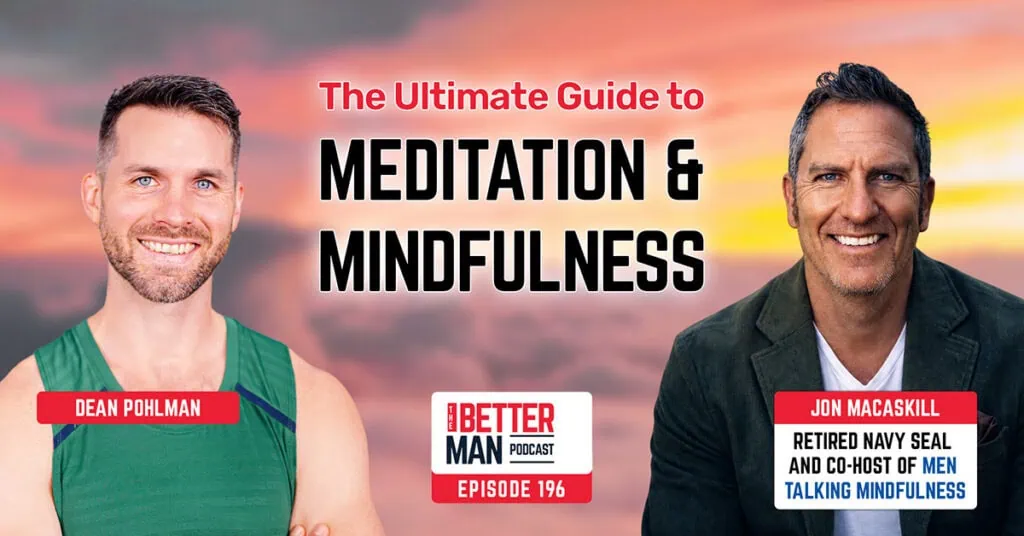
The Ultimate Guide to Meditation & Mindfulness | Jon Macaskill (retired Navy SEAL & Co-host of the Men Talking Mindfulness podcast) | Better Man Podcast Ep. 196
If you want to meditate but feel overwhelmed by all the options, you’re not alone—I go through the exact same cycles…

How To Succeed with Fitness Even During Late Middle Age | Jeff Weiss (Ultra Marathon Runner & Author of Racing Against Time) | Better Man Podcast Ep. 195
Today’s guest, Jeff Weiss, went two decades without exercising after starting a family. But nearing 50 after his father’s passing, he…
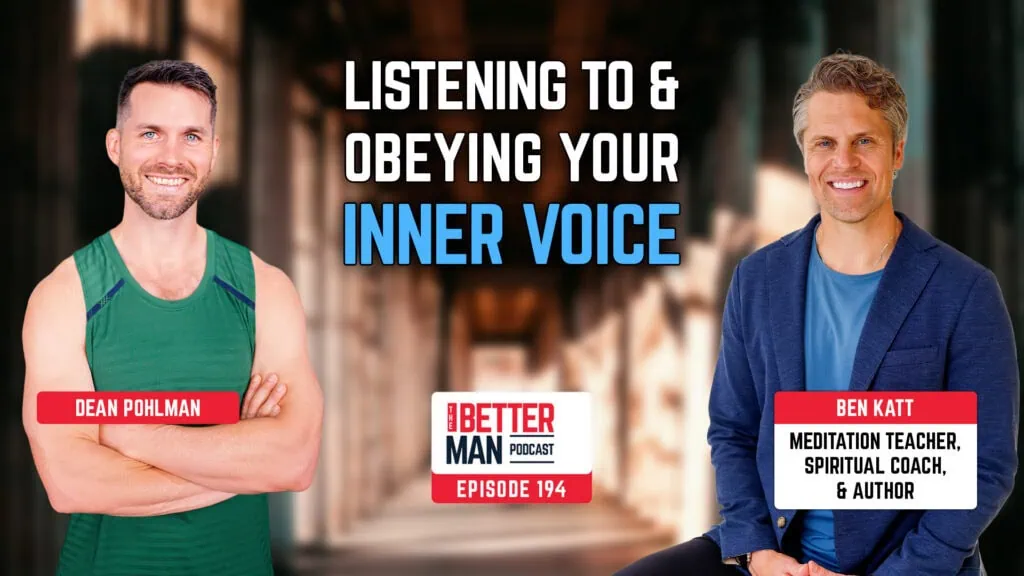
Listening To & Obeying Your Inner Voice | Ben Katt – Meditation Teacher, Spiritual Coach & Author | Better Man Podcast Ep. 194
Every one of us gets called to an adventure that leads to a deeper, more fulfilling life—usually right in the middle…
Man Flow Muscle: Why Combining Yoga with Weight Lifting Improves Your Results When You’re 40+ | Funk Roberts| Better Man Podcast Ep. 193
Nothing is a better one-two punch for burning fat, building muscle, and building a pain-free and injury-free lifestyle if you’re over…
Take Off Your Mask & Remember Yourself! | Be The Better You Retreat Recap with Coach Patrick | Better Man Podcast Ep. 192
At the latest Be The Better You Retreat we focused on a powerful idea: remembering yourself. Today we explore how the…
Dark Motivation Works … But It Causes a Mid-Life Crisis (Try this instead) | Connor Beaton from ManTalks | Better Man Podcast Ep. 191
Do you ever feel like you’re just wandering through life without a purpose, or stuck in the middle of a frustrating…