Every human on the planet gets called to a different adventure at some point (usually around mid-life) that opens up the doors to a more fulfilling life.
But the problem is, we’re not great at hearing this call-to-adventure. It shows up in different ways for everyone. And modern life puts so many distractions at our fingertips that it’s hard to create the necessary space to listen to (and obey) your inner voice.
But you know what?
You don’t have to put your entire life on hold to embark on a years-long spiritual journey that completely transforms you.
In fact, today’s guest, Ben Katt (meditation teacher, spiritual coach, and author) embarked on such a journey even though he was married, had children, and was drowning in the pressures of work.
But how can you actually slow down enough to listen to – and then obey – your inner voice that wants to help you lead a more fulfilling life?
That’s what you’ll discover from Ben in today’s show.
Here’s what else Ben and I discuss:
- Why the soul is in a battle with the ego (and how to notice when your ego’s pretending to be your soul)
- How to accept your masks, grieve them, and eventually direct them on command
- Why guilt, shame, and distractions are NOT the enemies you think they are (the real “enemy” is far more insidious and destructive)
And so much more.
The Better Man Podcast is an exploration of our health and well-being outside of our physical fitness, exploring and redefining what it means to be better as a man; being the best version of ourselves we can be, while adopting a more comprehensive understanding of our total health and wellness. I hope it inspires you to be better!



Use the RSS link to find the Better Man Podcast on other apps: http://feeds.libsyn.com/404744/rss
Episode 194 Highlights
- How to go on a deeply fulfilling inner journey that makes you whole (even if you’re married, have kids, and have job responsibilities) (5:39)
- Why removing your masks is the critical first step towards building a more rewarding life (and how to do it) (8:55)
- Do you constantly ruminate on your past or worry about your future? Here’s how to slowly tap into the chaos of the present moment (11:15)
- Why getting back into a relationship shortly after getting divorced begets another divorce in your future (12:24)
- The “Hero’s Journey” method (which has been used to tell ancient myths as well as recent stories like Star Wars) for letting go of your attachments, trusting the unknown, and feeling safe no matter what external events happen around you (13:51)
- 4 different types of life calling you into a different adventure that most modern men completely miss (16:33)
- How to know when to trust your gut instinct and when it’s misleading you (21:08)
- The creative, crafty, and cunning ways your ego tricks you into betraying your soul (and how to work with your ego instead of against it) (29:15)
- Why subtracting things from your life is the best way to create more space for internal development (and how to start “microdosing solitude” today) (33:36)
- The secret to having life create mystical and magical opportunities for you (40:43)
Dean Pohlman: Hey guys it’s Dean. Welcome to the Better Man Podcast. Today’s episode is an interview with Ben Katt, who is a meditation teacher, a spiritual guide, and an author. And this is a conversation that I’m really excited about. I recently read Ben’s book The Way Home, and there’s a lot of themes that I noticed throughout the book that were relevant to my own life, relevant to my own interest.
Dean Pohlman: He talks a lot about midlife and some of the transitions that we go through in midlife. He talks about his experience very in depth, very personally. I think what I really like about this is there is no 12 step program for this. It is not a quick fix, but he is very transparent about what he goes through, about the different practices, the different realizations that he went through all of this stuff.
Dean Pohlman: It’s a beautiful book. This is a wonderful interview. I came away from this with some really good principles to incorporate into my own life. And I think that if you are a guy who is feeling like something is missing from life. And if you’re not sure what your inner voice is saying and you want to be able to hear it, this is for you.
Dean Pohlman: So I hope you enjoyed this interview. I hope it inspires you to be a better man. Here we go. Hey guys, it’s Dean. Welcome to the Better Man podcast. Today I’ve got Ben cot bingo, I got it. Yes. Here today. Ben is an author of the book The Way Home, which has a longer subtitle that I cannot remember, but something about the mid middle life hero’s journey as kind of portrayed by Joseph Campbell.
Dean Pohlman: But in modern modern life, that’s a way longer way to say it. But anyway, Ben, thank you for being here.
Ben Katt: Yeah. Dean, thanks so much for having me.
Dean Pohlman: Yeah. And, I love your book. I think it took me took me, like, I think three chapters to get into it. And then once I was in, I was like, okay, I’m in. I’m locked it now. And there were so many different things in the book that I, that I loved. You know, this I think this is the big one that I want to come back to in our conversation.
Dean Pohlman: But this idea of listening to your inner voice and all the different things that you did in order to do that, there’s also you have this, this, this, this, this weird connection with a spiritual connection. What’s you have a connection.
Ben Katt: An encounter. Is it with.
Dean Pohlman: With jaguars?
Ben Katt: With the jaguars. Yes, yes. Which which is.
Dean Pohlman: This is my that was my, 34 year old tattoo that I, that I will at 34. I.
Ben Katt: Mean, you know, when I had that moment, I was 34. So. That’s interesting. Wow.
Dean Pohlman: Interesting. Okay, so we can form a black Jaguar club. In that case, only 34 year olds, though when you experienced it, you you got naked in front of a cactus in the desert. I mean, there’s just a you you do a very good job with crying, which I’m jealous of. That sounds very healthy. Yeah. So there’s just.
Dean Pohlman: And you love coffee. This this theme is repeatedly throughout.
Ben Katt: Throughout the I do I do enjoy coffee. Absolutely. Yeah.
Dean Pohlman: So, yeah, I mean, and kind of the whole book starts with this idea of you which, which I, which I sympathize with a lot. The idea of you being very involved in your work, being very attached to your work, being having your self-worth tied up in your work and your ability to produce there. You also, you know, it seems like you made it a point to do everything as early as possible and be ahead of the game as much as possible.
Dean Pohlman: So you had kids early, you know, you had your career early, and then it sounds like you got into your mid 30s and you had this moment when you were out running and you heard your inner voice come through and say, what did it say? If you don’t have your heart, you have nothing.
Ben Katt: Yes. Yes, exactly.
Dean Pohlman: I should let you talk at some point.
Ben Katt: Yeah, well, let me jump in there. I mean, there’s so much I think you’re setting you’re setting the stage here and you’re painting a picture. I think with with some of the stories you named or things I write about, of what I, what really is the central idea. So the subtitle of the book is It’s the Way Home Discovering the Hero’s Journey to Wholeness at Midlife.
Ben Katt: And two things I want to flag. One is I actually didn’t initially want the term midlife in the book, because I really see it as this is about an inner journey that we are all invited to go on multiple times in our lives. And it’s not necessarily just for people in midlife, however. You know, midlife scientifically is described as like right now, 35 to 75.
Ben Katt: Wow, that’s 40 years. That’s a long time. It’s a long, but I really like to think of it as not just an age range, but a life stage. It’s the it’s that hinge point or transition point between who you’ve been and who you’re becoming. And for me, really, the first big version of that happened to be when I was 34.
Ben Katt: So just outside that age range. And yeah, you’re right, I had kind of built the life that I wanted, only to discover that somewhere along the way it is like I lost my heart, snuck out the back door, and I didn’t even notice. But the other thing I wanted to just quickly add about just what you’re bringing up, is this idea with the subtitle.
Ben Katt: I actually wanted it to say something about the everyday Hero’s journey or something like that because I, as you know in the book, I share this. It’s this inner journey. Fundamentally, it is an epic adventure. And yeah, and it did involve some travel. I was traveling for work, but I think it’s really important to say that if you are in a moment where you you’re trying to find yourself or you know, there’s something more, sometimes there’s society tells us you got to, like, leave everything behind.
Ben Katt: And for me, I really wanted to create this story that using Joseph Campbell, the mythologist Big Hero’s Journey framework, distilling that down in such a way that it could be, you know, someone the everyday person could relate to. How do I go on this inner journey when I’ve. I’m married and I have kids and I’ve got job responsibilities and all these other pressures, you don’t have to check out of your life.
Ben Katt: You don’t have to eat, pray, love your way around the world. You can do it in the midst of everyday things.
Dean Pohlman: Yeah. And I remember there’s one specific part in the book where you were talking about, you know, how do I find more fulfillment in basically your day to day activities? And I think and at some point you realized, okay, right now the what is appropriate for me is not to give up my job and give up my career.
Dean Pohlman: And I’m going to find that in other places instead, which I think in today’s world, in the conversations, you know, everybody wants to have that dramatic. I gave up my job and I started thinking, and I didn’t know how I was going to go. And, you know, that’s great if if that can happen. But at the same time, you know, the reality of your life was you had three kids.
Dean Pohlman: They depend on you. You have, you know, financial realities. And so while you may have wanted to blow up your career, that was not something that you could have done. And rather than beating yourself up for it, you recognize this is what it is right now, and I’m going to seek fulfillment in other areas of life.
Ben Katt: Yes. Beautiful. So I think there is a way, sometimes with that pressure to do something dramatic that in leaving something, say, leaving the job and starting the new thing. Yes, we may be on to something, right? Like there’s dissatisfaction, there’s something maybe we’re feeling called towards. But by just jumping into it, I think there’s a way that we can bypass a whole process of development, inner development that’s really critical.
Ben Katt: We could think of it as, you know, if there’s something ahead like I’m going to bring, you know, wherever you go, there you are. You’ve probably heard that phrase, right. So when we have those moments where maybe feeling, calling or yearning for something else, I actually think the first place to begin is internally. And and that for me was, you know, I was burned out.
Ben Katt: So I had that. I was out on a rainy morning run where in Seattle at the time. And I get to the top of this hill and just stop in my tracks because this voice wells up inside of me, this inner whisper. If you don’t have your heart, you have nothing. And I knew right away I was like, okay, not a heart rate issue.
Ben Katt: It’s I’m burned out. I’m burned out. I had been in the midst of transitioning out of one of the nonprofits I started, had three young kids. But as I began to pull back the layers, and this is what I mean by going internally before jumping out of something or into something, is I realized there’s these operating patterns that had served me for most of my life.
Ben Katt: They had been helpful. The the, psychotherapist James Hollis calls them provisional personalities. I like to think of them as masks, but these are ways we learn to interact with the world, to keep us safe, get our needs met often in our, you know, family of origin, maybe to earn love and affection. And for me, those patterns were, I would say these masks I wore were achiever, perfectionist, people pleaser.
Ben Katt: And that shaped how I showed up in my work and in relationship. And, you know, I had to get curious about those things and that work. It takes some time, and it’s not like you just peel off the mask. There’s actually, again, these things have served their purpose. But what I realized is for me to go where I’m going and to move forward, I, I can’t continue being or functioning the same way.
Ben Katt: So I had to do some work around. That’s what the whole journey was about. It’s shedding those masks.
Dean Pohlman: Yeah. That’s the second time this week I have heard James Hollis mentioned I did buy his book. It just came in the mail. So it’s it’s on my stack of unread books. So good. Good to hear that. But I like how you say that this is a process because you talk about this in your book, but this isn’t like, oh, yeah, I realized that, you know, my heart wasn’t in what I was doing.
Dean Pohlman: And so I went to a week in seminar, and then next week I was all better. Right. It’s this is like a I think this was a this is a five year process for you. You.
Ben Katt: Yes.
Dean Pohlman: Yeah.
Ben Katt: Long. And I think the thing that I forgot to mention, I brought up that phrase, wherever you go, there you are. The reality is, if we don’t go through this process, we will carry forward those same patterns and we’ll find ourselves in the new place, in the new job, in the new relationship, functioning in the same way, and will realize, oh, actually, it’s something about me.
Ben Katt: Like I’m the problem. And I say, you know, problem in quotes. It’s like, But I’m the one who needs to experience a shift. I’m the one being invited to to evolve. And so if there’s something I’m really desiring, you know, think about this, and you’ve probably heard this before, but when we desire something, some kind of outcome, we’re hopeful for something relationship, work, financial something.
Ben Katt: We’re not necessarily wanting the thing in and of itself. It’s actually what we’re craving is what we imagine we will feel like when we have it. Yeah. And that really is a part of why this process is important is how can I learn to live here and now amidst the chaos of, you know, a young family or for me, teens?
Ben Katt: How can I learn to be present in such a way now that I’m not constantly either looking back or looking forward? But there’s a sense of abundance in the present moment.
Dean Pohlman: Yeah, and you just mentioned it before too, but it’s the it’s going internally before going to the external. Right. So it’s the same as it’s, it’s the same concept we come up with we encounter and mindfulness and meditation and Buddhism. It’s instead of trying to change the external situation it’s okay. Well I could, I could change my I could try to change that or instead I could change my response to it.
Ben Katt: Yes.
Dean Pohlman: And I think the other really good example you mentioned is relationships. I think this is really common. This is a really easy one to see. But if you, you know, if you get divorced and you go right back into dating and you get married again, you’re probably going to get divorced again because you haven’t done any of the internal work to change the way that, you know.
Dean Pohlman: And it all goes back to like you were talking about. It goes to the, what masks did you put on as a child in order to fit in? What did you do so that you felt accepted? What did you do so that you felt appreciated, so that you felt worthy, so that you felt secure? And it sounds like it’s a very common theme, but that gets you through your 20s and then maybe your 30s maybe.
Dean Pohlman: But like, it sounds like most people hit that kind of realization in the 30s that, okay, well, something isn’t good. And I and I think most people I don’t know, you will probably answer this better than I, but I think that most people probably hit that realization and they don’t do anything about it. I think they just go through their 30s, their 40s, their 50s, their 60s.
Dean Pohlman: They’re just like, this is what my life is. And they never get the what is, I don’t know, the permission, the feeling of safety, the the maybe they don’t have the courage themselves to take the leap. And so a lot of what, you know, I’ve been this has been a kind of a theme in my life in the conversations that I’ve been exploring recently.
Dean Pohlman: But it’s how do you get to how do you get comfortable standing at the precipice of the unknown and just being like, okay, let’s see what happens and be able to let go of the attachments?
Ben Katt: Yes. Okay. Beautiful. So just this might be helpful for listeners just to talk about briefly this framework of the hero’s journey, right. Which Joseph Campbell, the mythologist, identified this. He like a single storyline. He called it a monomyth, running through all these ancient stories, religious traditions, sacred texts, folklore, etc. and he, you know. Identify these three phases. And I, after living this, you know, this five year experience, I was reading his book, The Hero with a Thousand Faces, his big old book, and I was like, oh, this is what I lived like.
Ben Katt: I did this and so I, I felt prompted to like, how would I articulate it in my terms? So I see these three phases leaving the familiar, which is like the status quo. It’s what is. And it’s been good for a while, but there’s a sense that you’ve outgrown it. There’s a restlessness, it’s time to leave. And then there is, like you said, you’re standing on the precipice.
Ben Katt: There’s falling into the unknown. And this is where the old maps don’t work anymore. There’s big identity questions. Who am I? Why am I here? It’s very disorienting. This is the part that in our in our world, we want to bypass. Like, let’s get through the discomfort. And yet we would say, you know, part of why Campbell’s work was became so popular is because filmmakers like George Lucas saw this pattern.
Ben Katt: They’re like, oh, this is how we tell stories in movies. We actually love the unknown. It’s like we’re all the the magic happens, all the action trials and challenges.
Dean Pohlman: And you’re a fan of movies. You talk about The Avengers very often throughout.
Ben Katt: Your book. Yes. Well, you have to realize, I know there’s like a new Spider-Man movie coming out, but you have to realize when I wrote when I was living this, I had a young son at home and like, it was like the the golden era of the Marvel movies. Now there’s like a million of them and you can’t keep track and whatnot.
Ben Katt: So for me, I think using some of those movies alongside like ancient wisdom stories, it’s like helpful to see this pattern. So leaving the familiar, falling into the unknown, rising to wholeness. And then within, if we zoom into the leaving the familiar you just named a couple of things you’re saying, well, why do people, why do some people not like they have a sense that something’s not working, but why don’t they do anything about it?
Ben Katt: And I think this is where the language of the call to adventure is helpful, which I see the first step on the journey is answering the call, like saying yes. So what is the call to adventure? It’s like something interrupts your life and says, you know, this ain’t working anymore. It’s it’s either an invitation to move into something else or really to leave something, or it’s sometimes it’s an alarm.
Ben Katt: It’s like a five alarm fire. And this is this is where we do get multiple calls to adventure. But are we paying attention? It might come in like, for me, if you don’t have your heart, you have nothing. I call that like a mystical call. But it might be our bodies telling us something we’re dealing with and not even a major health issue, but we’re just getting these cues, and I feel like this would be some of your space.
Ben Katt: But there’s also transitions in life, like chosen ones. Maybe we’re becoming a parent or we graduated or chosen job change. That kind of external transition is an opportunity to ask, like, what’s the deeper transformation that wants to take place? And then just quickly, one other one would be like the the UN chosen transition, which is like a tragedy or trial.
Ben Katt: It’s like a major illness, loss of a loved one. Those are things that if we’re paying attention to our lives, we can see them as. It doesn’t mean there’s not grief and pain and suffering, but there’s also an invitation in those things to really become, to evolve, to grow into a fuller version of ourselves. So a lot the call comes.
Ben Katt: The question is, will you answer it? And I think we’re so busy that and this comes to one of the things you want to talk about. We we’ve tuned out that inner voice. Yes. Which, like the Quakers call the Quaker tradition, calls that still small voice. And that’s really yes, in my journey, it’s all, how do I hear that again?
Ben Katt: Or if I feel like I’ve never heard it, what does that look like to start to cultivate that level of awareness where I can pay attention to those subtle cues?
Dean Pohlman: Yeah. I mean, I know that for me, that resonates a lot just because I think I never did a good job growing up of listening to my inner voice, I, you know, didn’t trust myself enough. And so I listened to other people or I, you know, instead of practicing feeling things with my gut, I would, you know, make a make a list instead.
Dean Pohlman: I’d like pros and cons. Right. I would do it very logically. And so, you know, now I’m now I’m practicing. One of the things I’m doing is I’m practicing like, well, me practice. What the what do I not what’s the logical decision but like, what’s the you know, what’s the gut decision. One really good example, I a few months ago I hired a YouTube company to run ads for me, and it was a pretty big initial upfront investment.
Dean Pohlman: It was like 20 K, which is a lot for me. And so, and so we paid it and, you know, I was like, okay, let’s give it three months, right. The smart thing to do is to give it three months to figure out, like if they can figure it out right. At that point, we’ll make a decision.
Dean Pohlman: And we got less than a month in. And I was like, you know what? Pull the plug. I don’t I don’t care if it’s not the right decision. This is like this is the right. I don’t care if this is the logical decision. This doesn’t feel right to me. Yes, yes. Losing a bunch of money? Yes. Big lesson.
Dean Pohlman: But, Yeah. So. So I.
Ben Katt: Think that’s a great example.
Dean Pohlman: Yeah. So I think people don’t have that ability to hear them. Or like you said, they’re busy with distractions, TV, phone, all of that stuff. And then I’m going to let you go back in one second. But I just want to thank you because I read the Joseph Campbell book and it was just over my head. I think it, I think it was because I was never part of a Bible study.
Dean Pohlman: And so, like, I never had to analyze text that was hard to read. Maybe it was because I was reading it before I went to sleep, but I’m like, I heard this is a great book. I don’t get it.
Ben Katt: Yes. Oh, yeah, that’s that’s part of why I wrote it is I, I mean, first of all, I was like, what’s the what’s the book I wish I had when I began the journey. And also as someone who, like, I went to divinity school, I’ve studied religion and philosophy and myth and all this stuff. And I was like, I’m reading that book and I’m like, this is people are familiar with the pattern, like, or they’ve heard of the hero’s journey, but that doesn’t mean they have any familiarity with how this would apply to their own life.
Ben Katt: I was like, let’s take this huge tome and let’s put it in a book that’s like, and by the way, he has 17 steps or stages. I’m like, let’s get to ten. Okay. So so it’s all about like, this is the incredible wisdom. And so it was fun for me to figure out a way to convey that.
Ben Katt: Right? And. Yeah. What? You’re talking about this. You’re exactly right. We have to practice our way into, like, paying attention to our intuition. Like, don’t. This is where you don’t just make some huge decision because your guts telling you if you’ve been living from your intellect forever, don’t trust your gut for, like, some big decision. It’s like you have to begin with the small things.
Ben Katt: Like, you know what you’re saying? That’s that’s an example. But that still is probably bigger. That’s probably a sign that you’ve been experimenting in other ways. It might be as simple as well I want to go or like I always go to said party, I go to a party or this person’s gathering or whatever, or it’s maybe I never go.
Ben Katt: But if you notice that what’s coming up for you is actually the opposite, like so, you never go and you’re like, actually want to go? Interesting. Well you go that’s all you do. You just pay even though your head’s like why don’t go. It’s inconvenient. It’s like you’re doing this checklist. There’s a little subtle prompt. Pay attention.
Ben Katt: You go there and maybe nothing happens. But maybe you find yourself in a conversation that goes, you know, super deep and it’s your meeting. You’re meeting the exact person you needed to meet because there’s something they said to you that was really important or vice versa. There was someone you needed. There’s a gift you had to give someone.
Ben Katt: So we start with these smaller things, and then what happens is we now we develop a whole backlog of, you know, we have a lot of information that now our intellect can look at and say, oh, yeah, I can actually trust. I can trust Dean when he follows his intuition. So your intellect isn’t fighting anymore. It’s not cooperating and it’s cheerless.
Ben Katt: It’s like a cheerleader, like, go. Good things happen. Actually, things happen more quickly because you’re in the flow. Now, this is a good thing. So we have to practice. But obviously other practices would be what are the other ways we’re slowing down. And you know, there’s so many different things and meditation lots of different things. But we have to, you know, organize our lives in such a way.
Ben Katt: There’s a design element here. So how do I cultivate the kind of life where I have these pauses? And because of the pause now, even when things are crazy fast and busy, I can still hear that subtle prompting from the inner voice.
Dean Pohlman: Yeah. That makes a that makes a lot of sense. And I’m, I like to do big dramatic movements instead of doing little day to day things. I’m like what’s the biggest, most dramatic. Like a, like a few like a few weeks ago I was reading a book, surge. And I’m a big system of a down fan.
Dean Pohlman: Or I forgot that I was. And then I started reading the book and I was like, oh my God, I love system of a down. And they don’t have any concerts because the band like disbanded essentially in like 20 or 32,000, but they do a couple of concerts a year. And so they have one in Dallas, which is about three hours away from me.
Dean Pohlman: And I’ve never like, gone somewhere for a concert before. But I was like, you know what? I really want to go to this concert. And I came to Marissa. She’s like, why don’t you just, like, want to go out for a walk sometimes? Like, just go for a hike for three hours? Why is it always like, I have to take a trip in order to do that?
Dean Pohlman: I’m like, okay. Yeah. I mean, yes, this is what I want to do. And also I do recognize, like, yes, I do tend to want to do like dramatic big things instead of just like, I’m going to take the afternoon off and go for a hike. So, yeah, I think that’s because I don’t do enough of the little things that I feel like I need.
Dean Pohlman: Like the big dramatic things.
Ben Katt: Yes, that makes sense.
Dean Pohlman: I don’t I don’t do enough workouts. So instead I’ll just do like one big workout to make up for it, which is, you know, I know that that does not work, but same, same concept, different practice.
Ben Katt: Yeah. Yeah. Well and that’s so what’s interesting about that. And I’m not going to put you on the spot. But with some of these things, this is where if we’re coming back to that first phase of leaving the familiar essay, answer the call. Step two is you get help in all the stories. Help always arise. It’s Gandalf or it’s Obi-Wan Kenobi.
Ben Katt: You know, it’s.
Dean Pohlman: The other big example in the.
Ben Katt: Oh, I do love Lord of the rings. I you know, I still love it. Try to read that book every few years. And and like so you get help or help arrives. It comes in surprising ways. But then the third piece is the let it go. And this is where a lot of people get stuck to is letting go is actually the it’s our final expression of saying yes to the call to adventure.
Ben Katt: And like we were talking about at the beginning, people often want to treat the letting go like it’s letting go of the external thing. I see this is actually it’s about that, that limiting operating pattern, that thing that we’ve relied on so much and maybe even gave us a successful career and a lot of good things in our life, but we know it’s starting to work against us.
Ben Katt: We’re feeling exhausted, stressed, overwhelmed, disconnected, bored, whatever it might be. And, you know, for me, it was the achiever that, you know, for some people it’s like controller, it’s a lone wolf. There’s all these different ways we can do. It’s unique. There’s we’re very creative. The ego is very creative. We have all kinds of masks that we wear, but there has to be we have to kind of acknowledge this thing and say thank you.
Ben Katt: You’ve given me a lot of gifts, but also you’re now hindering me, maybe even harming me. Maybe I’m even harming others by continuing to wear this mask. And so there’s grief there too, right? This is you’re bringing up kind of this the tears and sadness piece. It’s the grief of letting go of this thing that’s been so central.
Ben Katt: It’s the grief of maybe harm we’ve cause. It’s it’s the grief that’s related to perhaps the fear of the unknown. There’s a lot there. But that’s a part of it, too. Now we let go and typically then that’s expressed externally. But maybe just let me give you an example because there’s some nuance here. Like some people say, oh, I’m uncomfortable in this relationship.
Ben Katt: Say you’ve been you’ve been with someone for like three years. It’s been a great relationship. But now, like you’ve got this itch, you’re like, oh, I got to let go of this relationship. I’m out. Right? Something’s not right. Well, interesting. If you’re deciding at that point, the reality might be that what if there’s actually an inner pattern? It’s like your fear of intimacy, your fear of commitment, your whatever.
Ben Katt: There’s some mask that you’re wearing. And that’s the thing you need to let go of, not the external relationship. You let go of that. And over time, then you gain clarity like this is your growth is like you need to learn the reason you’re kind of in this cycle of a new relationship every few years is because you have these, this fear of intimacy or something like that, or you’re not showing up fully.
Ben Katt: So that’s what I mean by it’s like often the it’s not beginning with the external thing. It’s noticing the internal pattern. And that takes time. And I will just add at some point you will reengage as part of you. It’s not like you’re taking out back and like, you know, killing it and bearing it. It’s like I still do really rely on the achiever.
Ben Katt: Like I wrote a book. I needed to say. It’s like my soul needed to say, okay, achiever, let’s go, let’s do this. But I knew this is a new level of awareness. I knew when when that phase was over and I still knew. I knew that I wasn’t defined by that. That’s the difference, right? When that part of us is suppressing other aspects of who we are.
Ben Katt: So hopefully that’s helpful.
Dean Pohlman: Yeah. It brings up a couple things. First off, internal family systems, which really cool stuff. Yeah. Interesting. Like having a different conversations with different, different parts of yourself and talking to the Cheever and saying like, hey achiever, can you just can you wait outside for a second? We’re going to handle this for like, this, you know, but I think there’s there was a concept in your book where you talk about instead of the, instead of the ego, instead of the something serving the ego.
Dean Pohlman: It’s making the ego work for your, I don’t know, what do you call it?
Ben Katt: Talk about the soul. And I interact like the just flagging the work of Bill Plotkin, who’s like an ego psychotherapist and wilderness guide. He runs a place called the Animus Valley Institute. Has these huge books, ones called Soul Craft, but they’re just really they’re like Bibles, and the so a lot of that he talks about like the relationship of ego and soul, and he talks about how we live in a soul egocentric society, which means he actually says a pathetic adolescent society, which means we are sort of stuck in adolescence.
Ben Katt: What does that mean? I mean, you can look at our leadership politically. It’s like the ego is front and center. And a lot of ways it looks like you’re watching a bunch of middle schoolers. It’s like they’re the people who haven’t grown up. And he talks about the shift from, says the, the inner, the inner journey of evolution towards this soul centric identity, which, yes, there’s multiple ways to talk about that.
Ben Katt: It’s that deeper, truer part of who we are. It’s our it’s our essence. It’s both something that we might have language for. But also at the end of the day, it’s a great mystery. And so the whole journey that I’m out in this journey to wholeness is really about shifting from egocentric living where which is squelching or, you know, blocking the full expression of the soul and self, or to becoming someone now whose sole living soul centric where the ego, like you said, is it’s like it gets deployed in service to this fuller, freer version of who we are.
Ben Katt: And, I realize that can sound kind of abstract to some people. However, I think we all can see moments in our life where it’s like where we feel in alignment, in flow. It’s like that’s where we are in tune with that deeper part of who we are. And that or those experiences of wonder, of connection, of aliveness like that.
Ben Katt: We want more of that. And while ego has its place like we do need it, someone’s got to send the emails. Someone’s got to, you know, set up the meetings and publish the podcast. Like if we’re living lives ruled by that, we just are constantly caught in reactivity. And I think that’s what we see at large in our society right now.
Ben Katt: And if we’re curious, we can see it in our own lives.
Dean Pohlman: Hey guys, it’s Dean interrupting my own podcast to talk about magic Mind. Magic mind is a caffeine supplement that I’ve been using for the last few years. It’s something that I use as a alternative to coffee some days, and also something that I use maybe right before I do a podcast or from a video as a way to get a energy boost without the crash that usually accompanies caffeine.
Dean Pohlman: If you want to try it out. I put a link in the show notes below, but it’s a nice little supplement. It’s a drink. Two ounces that you can take just for a little boost of energy, a little more focused throughout your day. Give it a shot. Let me know what you think. I kind of want to go back to this.
Dean Pohlman: You know, this this idea of being able to hear that inner voice. And we talked about how, you know, we have realities of life. We’re all busy. We also willingly engage ourselves and distractions. And so for you, when you were going through this initial period where you had, you know, you had the the voice, your inner voice say, hey, if you have your heart, you have nothing.
Dean Pohlman: If you don’t have your heart, you have nothing. And now you’re in this like, okay, I know that something’s off. And how do you start to create space for things to fill in? Because, you know, I’ve, I’ve tried to do lots of different things with what I do with the betterment podcast, with Man Flow Yoga, and I try to create space to be able to.
Dean Pohlman: Okay, like, what else do I want to do? Rather than just like doing the same thing over and over again? How do I create the space to be able to hear things and and what ends up happening for me a lot is I just, you know, I’ll like, distract myself somehow. I just willingly engage myself in distractions. Like, I’m going to watch a movie, or like, my son has this terribly addictive dinosaur game that he plays on my phone called Jurassic World Alive, which is basically Pokemon for Jurassic World.
Dean Pohlman: And so, like, I’ll get that out and I’ll, like, waste no time doing that and then I’ll get to the end of the movie. I like think last week I watched Captain America Winter soldier, and then I’ll get to the great movie, right? But like, you know, you’ll get to the end of the movie and be like, great.
Dean Pohlman: I still feel the same way I did when I started. I don’t think I’ve created any inner wisdom for myself. What’s the what should I be doing instead?
Ben Katt: Yeah, I love it. Let me just frame it with a story that you might remember from the book. So this was about two weeks after that rainy morning run. And I will say like so at the time I was a pastor. I have a background in, you know, a particular spiritual tradition. From a young age, I sensed a connection with something more.
Ben Katt: So in a lot of ways I have like been open, and yet I totally lost myself. And so coming out of that moment, I was like, okay, okay, God, okay, universe, I like I’m open, like give me more signs. So two weeks after that moment, I’m out with my daughters and circling back to the tattoo story, my my daughter says, dad, you should get a tattoo.
Ben Katt: Well, she’s two and a half. I didn’t know she knew the word. Well, what should I get? And she says, A jaguar. I was like, and I didn’t know she knew that word either. And so that day I’m like, okay, Jaguar, maybe I’m on the lookout. Like, what does that mean? Later in the afternoon, watching college football, like eating chips and salsa and, like, scrolling on my phone and, you know, very glamorous picture.
Ben Katt: And I’m, I’m like, oh, yeah, I should like Google Jaguar. And I had spent a summer in Mexico in a Mayan village years ago. I’m like, maybe something about the jaguar in Mayan culture is relevant for me right now. I was about to google it, but as I’m doing that in about to switch the channel to another football game, this commercial comes on.
Ben Katt: There’s this car like winding on these roads, and I’m like, what is it that gets to the end? Sure enough, it’s a Jaguar automobile. It’s like this new F-Pace SUV. It was new then. And so at that moment I decided I’m going to go Jaguar automobile, Jaguar car model. And I think to this day, one of the first searches that will come up, you’ll see this, but three words.
Ben Katt: It was a 1950s, 1960s like Mad Men era ad and it said grace, space, pace. And they like I mean those words like pierced my soul. I was like, oh my gosh, this is exactly what I need right now. For the car. It meant elegant and fast and roomy, but for me it meant grace. And this is why I wanted to start with the story is it’s like we really need to show ourselves grace on this process.
Ben Katt: Be kind yourself. Don’t you know this idea of, like, constantly criticizing every decision we make? Or like, feeling a lot of guilt around watching the movie or doing the other thing, feeling distracted. That kind of energy is not going to help us move forward. It’s going to I think we’re going to find ourselves stuck in a, you know, a cycle where we keep repeating some of those distracting behaviors.
Ben Katt: So instead, just be aware of it, notice it, and be like, oh, there you did. And maybe you enjoyed watching the movie and try something else next time. But also, the grace is like being open to the fact that there’s going to be breakthroughs. There’s going to be epiphanies. Be ready to receive. Right? In a sense, we’re talking and this is parallel to like the a world of like entrusting yourself to a higher power.
Ben Katt: When you work in the the 12 steps. Like that’s the core thing like this. Grace. So I’ll just say the other, you know, and obviously space and slow down and then make room and you ask, how do you make room? I think there’s specific practices we can talk about, about what to fill the space with. But the first practice I always start with is subtraction.
Ben Katt: We can take an honest assessment of our life and see we’re not looking for hours at a time. We’re actually just looking for small little moments. Like I like to talk about microdosing, solitude. Five minutes, ten minutes, 20. And so what are we subtract subtracting is yeah, it’s too much. You know, scrolling on social media binge watching shows.
Ben Katt: But it’s it can be things for some people. Even good things like I’m exercising too much. Could be hobbies you love. Like, do you really need to golf 2027 holes? How about like just do 18 or 9, right? Or would your constant constant home improvement projects? Maybe you’re doing that to avoid something else. Over extended no lack of, you know, a lack of boundaries for work or like, engage in like, social commitments.
Ben Katt: You never say no to anything, so you just start to look at that. There’s more. But we can like it doesn’t mean cutting it all out. But what’s like a new boundary or just removing something a little bit. And then now we’re suddenly finding those small moments for meditation, for journaling, for a walk in nature. So that’s that’s my it’s like, keep it simple, and realize it’s going to be an ongoing thing.
Ben Katt: But like, don’t just when you say, I don’t have any time when someone says that’s like, get curious about that, is that really true? And how could you create time.
Dean Pohlman: Yeah. So it sounds like instead of which now I say it to myself and I’m like da. So instead of getting mad at myself for not creating, you know, time or space with every, you know, every potential hour that I have. It’s okay. Just create 20 minutes here and then be okay with what else happens. Like for me, right now, I’m really prioritizing time for meditation, time for yoga, and time for conscious stream of stream of consciousness journaling.
Dean Pohlman: Beautiful. And if I can, if I can do those things which, you know, I, I recognize that everybody has the the flexibility, the good fortune to be able to have time to do things. So I’m grateful for that. But if I can, if I can just make time to do those things, then I can be okay. You know, if I end up spending, you know, some time watching a movie or God forbid, playing Jurassic World Alive on.
Ben Katt: My phone, it sounds fun. I’m gonna check it out. Actually, the the.
Dean Pohlman: My clan.
Ben Katt: Nice. The, the thing is, and you’re, you know, you and I, it’s like I teach meditation and in my coaching and you’re like, you’re you’re yoga. It’s like we’re in. In some ways it can be framed in, like, the self-improvement space. But I think I always caution people that I, I’m whether it’s coaching or workshops or anything, it’s like, don’t treat.
Ben Katt: This journey is not about treating yourself as a self-improvement project, like something that needs to be fixed. And like, this is different. We’re not talking about optimizing here. The soul journey is different. Like soul is like soft. Soul is like fluid. And there really, I see it more as one of the things I like to talk about. It’s like you’re calling your soul think about, but it’s like a relationship.
Ben Katt: It’s like when you have not been, you know, in a marriage, if you aren’t giving or you know any partnership, you’re not giving that person time and attention. You’re not pursuing them at all. Like, man, that’s where there starts to be, you know, there’s this gap and you can think about if we haven’t been tending to that inner world, interior landscape soul for a long time, there’s probably there’s a bit of a chasm between us.
Ben Katt: And so it’s like just start to get curious and like, lean in and yes, give that 20 minutes and you’ll find. Oh, wow. 20 minutes. I don’t even know if I journaled anything important. Like, that’s why I love the stream of consciousness. It’s not about a product, but it’s like you showed up and I do think, and you see this in my story, and I see this in all the people I work with, like these kind of magical, mystical things start to happen in your life, and suddenly you feel like you’re part of this great conversation.
Ben Katt: And that, to me, is the way to approach it. It’s not just like I need to fix these different things. It’s like I am on a journey. This is exciting. And so we begin to it’s like our desire shift. We start to desire more of that space. Right? So yeah, but I love all the practices you, you describe.
Ben Katt: Those are like you read my book. You know, yoga was like a game changer for me. It’s like I need I and I went to a class. It’s like someone telling me what to do. It was a set amount of time. No one could bother me. That’s exactly what I needed. So. But there are lots of practices. Yeah.
Dean Pohlman: One other thing that you have, you have a tall was tall Tim. Tall Tim. So you had a, you know, you had a spiritual guide. So, so initially some of this first phases for you were okay. You heard the voice. Okay. What does it mean? You know, creating space grace pace so that you can hear more of that inner voice.
Dean Pohlman: And then you found Tim Tall Tim, and now you had someone to kind of have conversations with to make sense of. Here’s what I was thinking about or here’s what I feel drawn towards.
Ben Katt: Yeah. So the term I love to. So he was officially a spiritual director and they’re different kinds of spiritual director. He was part of what’s called like the Ignatian tradition which is in like it’s part of the Catholic tradition, but it’s a particular way of spiritual direction. But it is all about being present inquiry. He’s not someone there to, like, give me the answers.
Ben Katt: He’s there to help me listen. He’s in many ways. And so one of the terms I love for this comes from the Celtic Christian tradition. It’s the term Arnhem cara, Arnhem cara and Arnhem cara means soul friend or soul companion. And so in Arnhem Cara, when we’re on this journey, is someone who holds up a mirror for us so that we can see things that maybe we can’t see, or they’re the person that helps declutter or turn down the noise so we can hear what we need to hear.
Ben Katt: And so this is it’s different than a therapist. So some therapists might be like an Cara. It’s different than a leadership coach though. Some leadership coaches might be like an autumn Cara. It’s different than a best friend, though. Some best friends might be like a car. The point is, it’s like so these can show up in many forms.
Ben Katt: And there’s, you know, it might be through a faith community or might be through a 12 step program, or a men’s group could be any number of things. But it’s so it can show up in a lot of ways. But it’s really there’s a quality of presence and listening and attentiveness that separates us out. And this isn’t someone who’s, like, trying to fix you, and it’s not someone who is going to let you play it safe.
Ben Katt: It’s not someone who’s necessarily going to, you know, help you take the easiest path forward, like they’re going to be someone who is fiercely fighting for Dean, like I, I want, I want Dean to be the fullest version of Dean he can be. And so they can call you out of your bullshit or help you see your masks when you can’t see them.
Ben Katt: So, yeah, Tim was transformative. Just a powerful presence for me. And, and I think it is like if you find yourself on this journey, like if this is resonating, like, yeah, I am sort of in this process of answering a call and trying to tune in and maybe something I need to let go of. I would say look for others, or at least set an intention to be open, to find others who can be those who accompany you on the journey.
Ben Katt:
Dean Pohlman: Yeah.
Ben Katt: Now, I mean the fun thing, I mean Tim was so impactful. It’s like that’s really what I do now in, in my work I get to be this. It’s like I am I like a spiritual coach spiritual guide, your spiritual director soul campaign I don’t really know what it’s called, but when people are navigating a transition, it’s like I serve as a bit of a soul catalyst, like help them move through it more quickly, but also really enhance their capacity to hear from within themselves.
Ben Katt: Because at the end of the day, that’s like I always think the way forward is within. It’s not some external thing out there. It’s like it begins on this inner journey. Yeah. And I think.
Ben Katt: Yeah, I just think we need more of that. This is like an ancient way that we see across traditions. And so in our world where there is a lot of chaos and change, it’s like we we really need to be cultivating that, living from the inside out.
Dean Pohlman: Yeah. I remember looking at looking up your, your job title now, I was like, oh, that’s interesting. And I can’t remember exactly what it was, but something along the lines of midlife instruction.
Ben Katt: Yeah. Well, so that that’s the thing I do. One of the places I, I teach workshops regularly at a place called currently called Modern Elder Academy, which is people. It’s being rebranded because elder a lot of people hear that. Like, what does that mean, old irrelevant. But elder is a wisdom keeper. That’s what a that’s what an elder is.
Ben Katt: And it was started by Chip Conley, who was like a boutique hotel guy. And then early on at Airbnb, their chief of chief hospitality officer. And he had this vision at midlife, you know, it’s like to create this midlife wisdom school where people can explore wisdom and get equipped to navigate transitions and reconnect with their purpose and all these important things, that there’s really nothing else out there.
Ben Katt: I mean, I think there’s some growing other things around midlife now, but it’s this vast period of life, as we talked about the beginning. And and it’s not like we’re all in the same grade. You know, we all graduate high school together. I’m the class of 99. Like when we’re younger, there’s these these rites of passage we all go through, but suddenly we’re in midlife.
Ben Katt: It’s this vast, you know, it’s like four decades, but like a 30. You know, someone in the mid 30s, somewhere in the mid 40s. We might have a lot in common. I can learn from someone in their mid 60s. They’re at a different stage in some ways externally, but internally it’s the same terrain. So yeah, I get to I’m faculty in residence at M e, a modern elder academy for people who want to check that out.
Dean Pohlman: Yeah, that sounds awesome. So I know we got to wrap up one question I did have, and then I usually like, do follow up interviews, and I asked the guests on the show so that they have to commit to it. And so I’m like, pigeonholing you into it. Awesome. We got a thumbs up.
Ben Katt: We have a lot more to talk about.
Dean Pohlman: So yes, we do. We have a lot of talk, a lot more to talk about. Did you have other did you have any physical symptoms? I mean, did you have depression? Did you have anxiety when you were first going through this? Did you have body aches or like fatigue or like what was going on?
Ben Katt: Oh, I mean, I would say leading it was like the cue that I was there was a call to adventure was probably my anxiety and that that was like, but I was just like, oh, whatever. There’s just a lot going on. Right? And so then it took something else coming through and definitely was enhanced. Like we said at the beginning, I like coffee, though.
Ben Katt: I told you, I go, I go half caf now, but I would just it was like that didn’t help with my anxiety. But it wasn’t just, oh, I’m drinking too much coffee. It was I just I was in some transitions with one aspect of one nonprofit I was leading, and it was there was something deeper trying to get my attention.
Ben Katt: And I had no meditation practice back then. And I had, I didn’t know how to slow down. And so that’s which is funny, I did before, and then I had kids, and then I got caught up in the impact of the work I was doing, as opposed to embodying the spirit of the work, which should really flow out of that.
Ben Katt: We could say gray space and pace. So yes, body. Absolutely. But not like a specific physical injury or anything like that.
Dean Pohlman: Okay. Good to know. All right. Got to wrap up. We’ll have to do our rapid fire questions next time. Let’s do it. Leave. Leave that for then. Anything else that you want to mention? We’ll put links or anything else in the show. Notes? Definitely the book.
Ben Katt: Yeah. I think that what I just want to say is it does take courage to embark on this journey, and it can look kind of weird. And it isn’t necessarily even though we’re in a moment where there’s a lot of talk around, like spirituality and inner work, like, this is a journey, the journey to wholeness. It’s a journey like integration is the key.
Ben Katt: And I think this is what’s missing in a lot of spaces right now as we’re chasing after that epiphany, that spiritual high, that transcendent moment. But in a lot of ways, we’re not necessarily doing the work of figuring out like, how do I bring this back? How do I what does this mean integrated into my daily life? Instead, we kind of get in the cycle of chasing after the next thing.
Ben Katt: So perhaps this is a direction we can go in the next call, in part because we didn’t talk about that, the unknown and we didn’t talk about rising to wholeness. And that’s really where the, the integration of what’s emerging really starts to happen. Okay.
Dean Pohlman: All right. To be continued. Ben, thank you for joining me. I appreciate appreciate your wisdom. It’s a great comment.
Ben Katt: Good to be with you. Yeah. Thanks for having me, Dean.
Dean Pohlman: And we’ll work on setting up your your Jaguar tattoo. For whenever you’re ready for that.
Ben Katt: I never got it. That’s the thing. I never got it. So I’ve got.
Dean Pohlman: I’ve got a guy. You just come hang out in Austin, we’ll go on some hikes. And we’ll find a cactus, and we’ll get a tattoo. Great.
Ben Katt: Perfect. Thanks so much.
Dean Pohlman: Yeah. Thanks, guys. You’re listening. I hope this inspires you to be a better man. All right, guys, I hope you enjoyed that interview with Ben Kot. Really, really great interview. Looking forward to our follow up interview with that. If you’re enjoying this podcast, please leave a review. You can do that wherever you’re listening. We also have video versions of the podcast on the Better Man Podcast YouTube channel, and also in the app and members area.
Dean Pohlman: If you want anything that we mentioned in the in the podcast, you’ll find in the show notes any books we mentioned as well as Ben’s book. And then if you’re wanting to get started with a mindful yoga program, one of the best programs I have for this is called Stretch and Breathe. I also have a program called the Breath Series.
Dean Pohlman: Those are awesome. Beginner programs encourage you to try an up for a free seven day trial. Check it out. Yoga.com/join. It’s something that I use to kind of compliment all of the mindfulness mindfulness work that I do. It sounds like Ben Nelson does it too. So there. All right guys. Hope you enjoyed this interview and I will see you on the next one.
[END]


Resources mentioned on this episode:
- Buy Ben’s Book, The Way Home: Discovering the Hero’s Journey to Wholeness at Midlife: Available on Amazon here: https://www.amazon.com/Way-Home-Discovering-Journey-Wholeness/dp/1250910447
- Visit Ben’s website: And learn more about his coaching, meditation trainings and courses, and other ways he can help you here: https://benkattofficial.com/
- Man Flow Muscle [Sale Extended]: If you’re ready to combine Man Flow Yoga and Funk’s “Swole & Shredded” dumbbell workouts, this brand-new program from Funk and me is currently available at a hefty 50% discount until Monday, November 2, 2026 here: https://manflowmuscle.com/
- Magic Mind: Magic mind is my favorite caffeine supplement for when I need an extra boost of energy. Try it here: https://ManFlowYoga.com/MagicMind
Want to unlock more flexibility and strength, reduce your risk of injury, and feel your absolute best over the next 7 days? Then join the FREE 7-Day Beginner’s Yoga for Men Challenge here: https://ManFlowYoga.com/7dc.
Tired of doing a form of yoga that causes more injuries than it helps prevent? The cold, hard truth is men need yoga specifically designed for them. Well, here’s some good news: You can start your 7-day free trial to Man Flow Yoga by visiting https://ManFlowYoga.com/join.
Like what you’re hearing? Sign up for the mailing list:
Rate & Review
If you enjoyed today’s episode of The Better Man Podcast, hit the subscribe button on Apple, Spotify, or wherever you listen, so future episodes are automatically downloaded directly to your device.
You can also help by providing an honest rating & review over on Apple Podcasts. Reviews go a long way in helping us build awareness so that we can impact even more people. THANK YOU!
More Podcast Content
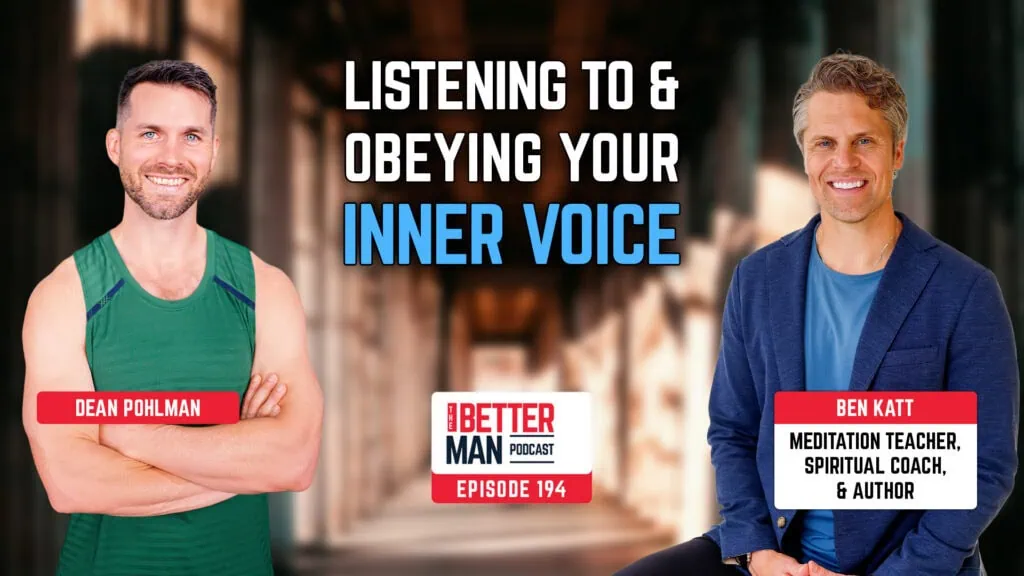
Listening To & Obeying Your Inner Voice | Ben Katt – Meditation Teacher, Spiritual Coach & Author | Better Man Podcast Ep. 194
Every one of us gets called to an adventure that leads to a deeper, more fulfilling life—usually right in the middle…
Man Flow Muscle: Why Combining Yoga with Weight Lifting Improves Your Results When You’re 40+ | Funk Roberts| Better Man Podcast Ep. 193
Nothing is a better one-two punch for burning fat, building muscle, and building a pain-free and injury-free lifestyle if you’re over…
Take Off Your Mask & Remember Yourself! | Be The Better You Retreat Recap with Coach Patrick | Better Man Podcast Ep. 192
At the latest Be The Better You Retreat we focused on a powerful idea: remembering yourself. Today we explore how the…
Dark Motivation Works … But It Causes a Mid-Life Crisis (Try this instead) | Connor Beaton from ManTalks | Better Man Podcast Ep. 191
Do you ever feel like you’re just wandering through life without a purpose, or stuck in the middle of a frustrating…
Fitness After 40: How To Start When You’ve Never Exercised (The Man Flow Yoga Catalyst Effect) | Bobby B. | Better Man Podcast Ep. 190
Turning 40 was Bobby’s wake-up call. After a lifetime of skipping workouts, a doctor’s visit revealed warning signs in his blood…

Gut Health Goes Way Deeper Than Weight Loss | Ben Brown (Founder of Body Systems Coaching and Head Nutrition & Fitness Coach) | Better Man Podcast Ep. 189
Gut health impacts far more than weight loss—it directly governs your energy, immunity, and mental well-being. If you grew up in…