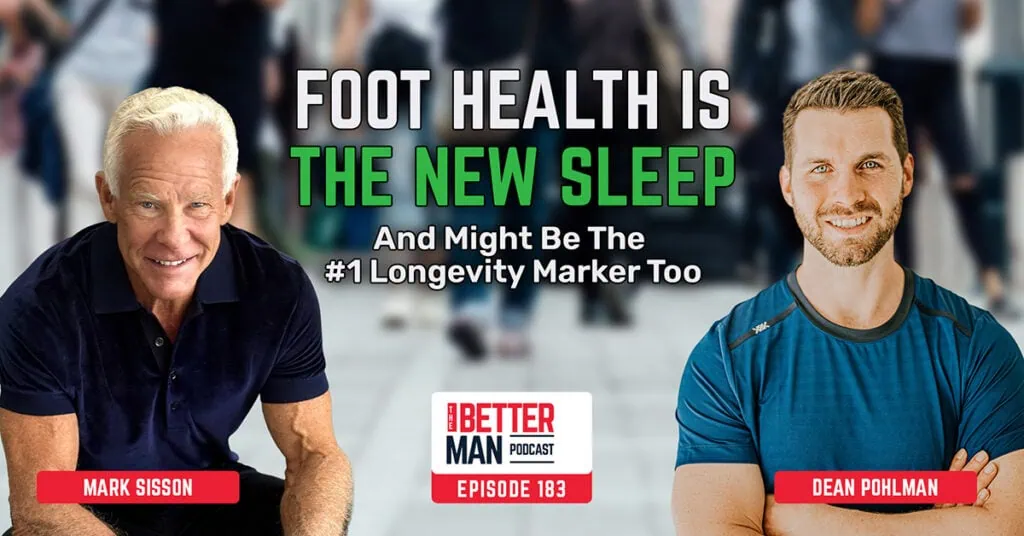
“Foot health is the new sleep” … [And] it may be that big toe strength is probably the greatest proxy for longevity, well beyond VO2 max and grip strength over the age of 65.” – Mark Sisson
The most neglected, overlooked, and downright ignored aspect of your overall health and longevity isn’t your VO2 max, your grip strength, or even your sleep.
It’s your foot strength and health!
The reality is that your feet have evolved over thousands of years to be your interface with the ground and the universe. But modern society forces us to stuff them into cushiony shoes, which leads to foot muscle atrophy.
You might be wondering what the big deal is. But a lack of foot strength causes problems up the entire kinetic chain.
In other words: your feet may be responsible for your knee pain, your hip pain, your lower back pain, and even your neck pain!
It’s also one of the primary driving factors behind why falls are often so fatal after 65.
But bestselling health author, co-founder of Peluva, and friend of the show Mark Sisson has you covered in this episode. Mark reveals why foot health is the new sleep, why it may be the greatest longevity marker we have, and how modern shoes have ruined your foot health.
Here’s what Mark and I discuss:
- Why foot health is more important than I ever realized
- The importance of your feet being in contact with the ground
- How weak feet lead to feet problems (as well as knee, hip, back, and neck pain)
- How to ease your feet into being able to wear barefoot shoes
The Better Man Podcast is an exploration of our health and well-being outside of our physical fitness, exploring and redefining what it means to be better as a man; being the best version of ourselves we can be, while adopting a more comprehensive understanding of our total health and wellness. I hope it inspires you to be better!



Use the RSS link to find the Better Man Podcast on other apps: http://feeds.libsyn.com/404744/rss
Episode 183 Highlights
- What actually causes bunions (and why it has nothing to do with your genetics)? (4:47)
- Do balancing poses cause your feet to “hurt?” This is a common problem I hear … and yet Mark’s reasoning about why you’re feet aren’t actually hurting demonstrates just how far our foot health has fallen (6:30)
- Why you don’t have flat fleet (even if your foot has lost its arch) (8:02)
- How to roll your ankle without spraining it (and how this also prevents knee tweaks and pain) (8:44)
- The bizarre reason running shoes are the primary driver of runner injuries (15:31)
- The scientific “up the kinetic chain” reason why having weak feet results in bodily pain and injuries all over your body (21:30)
- Try these overlooked foot exercises to strengthen your feet enough to wear barefoot shoes without pain (29:31)
- Why weak feet are the silent culprit behind life-altering falls that shatter your hip in your 50s, 60s, and beyond (32:35)
- Why big toe strength may be the greatest proxy for longevity over age 65 (that means it could be MORE important than VO2 max and grip strength) (35:45)
- The “glove-shaped shoe” secret for strengthening your feet by doing nothing other than walking (44:30)
Dean Pohlman: Hey guys, it’s Dean. Welcome to the Better Man podcast. Today’s episode is an interview with Mark Sisson. And you might know Mark from a lot of different things. He is the creator of the Primal Blueprint. He also has a Primal Kitchen’s brand. And he after all of that, he started the Palooza Company, which is a minimalist toe shoe.
Dean Pohlman: So in this episode, we talk about foot health. We talk about some things that I didn’t even realize, but we talk about the importance of your foot being able to be in contact with the ground. We talk about all the different problems that arise, not just in your feet, but in your knees and in your hips that happen as a result of not being able to have good contact with the ground, not having appropriate footwear.
Dean Pohlman: We talk about how you shouldn’t be using overly cushioned or supportive shoes, and how that’s actually leading to poor, more worse feet health. So if you’re interested in, you might not even be interested in foot health, but this episode will help you understand the importance of your foot health and how having a minimalist toe shoe will fit into that.
Dean Pohlman: So I use as myself. I’ve been using minimalist footwear for probably 15 years now, and I noticed the difference in my feet when I’m using them regularly and appropriately versus when I am not. So if you’ve been thinking about minimalist Toto Toto shoes and you’re not quite sure where to start, definitely give this episode a listen, learn some stuff and make the decision for you.
Dean Pohlman: But I hope this inspires you to be a better man and I’ll see you on the next episode. Hey guys, it’s Dean. Welcome to the Betterment podcast. Today I have the legendary Mark Sisson back to talk about foot health. This is a big topic. So Mark, thank you for being with me. Dean.
Mark Sisson: Good to be here. It’s been a minute.
Dean Pohlman: Yeah, it’s been a while. Every time I go to the grocery store, I think of you because I walk by Primal kitchens. I’m like, oh, there’s the mustard. You know, there’s the there’s like sex.
Mark Sisson: Aisles there.
Dean Pohlman: Now that’s amazing. Yeah, it’s been really cool to see some of these, these brands who were like just tiny little, you know, brands initially and now they’re everywhere. I’m like, I know that guy. So and then your project after that became palooza, which is minimalist toe shoes. So and that’s where I want to lead the conversation, because I get so many people in my community who have questions about shoe, about footwear.
Dean Pohlman: They’re like, should I be wearing, you know, should I be wearing this shoe? Should I be wearing a minimalist shoe? Should I be wearing Hocus? And you know, my answer kind of. My answer usually ranges. It changes based on, well, where is your foot health right now? Because I don’t think it makes sense for everybody to just go straight to a minimalist foot, especially if you are overweight.
Dean Pohlman: Like, I probably wouldn’t recommend you go straight to a barefoot shoe. And at the same time, I talk with people who are overweight, who are at a lower than average baseline fitness level, and they’re only wearing Hakkas. And, you know, they don’t have a wide toe box. And I’m like, okay, we got to change up your shoes. So yeah, there’s a lot of questions that come up here.
Dean Pohlman: What are the what are the big questions that you hear when it comes to or some of the common concerns that you hear about when people are exploring appropriate footwear?
Mark Sisson: Well, I mean, that’s a that’s a great starting point, which is I’ve read or heard about the benefits of minimalist footwear. Should I jump right in? And, you know, because of my background as a runner decades ago, like back starting in the 60s and in the 70s and into the 80s, and someone who was kind of harmed by the design of modern footwear, I got injured from doing a lot of miles in overly cushioned shoes that scrunched my big toe against the rest of of my feet, thinking I was doing myself a favor.
Mark Sisson: And and, you know, optimizing my stride through these overly built shoes with a, you know, a built in arch that then unburdened my arch of having to work too hard and, and raise my my heel up an inch higher than the metatarsal in front of my shoe, in front of my foot, which shortened my calf muscle, but certainly had me leaning forward when I was running.
Mark Sisson: So maybe there was some utility that in that. So you know what I, what I looked at, what I look at now generally today with people is like what you know, again, are you overweight? Are you out of shape? How old are you? Do you have foot dysfunction from decades of wearing bad shoes? You know, nobody, by the way, has.
Mark Sisson: For instance, nobody has bunions as a result of genetic predisposition or. Or it’s not your DNA that causes bunions, right? It’s not your. It’s not your familial DNA. It’s bad footwear that does this. Well, if people start to understand about footwear and understand how the foot is supposed to work and how the foot is your main contact with the universe, this is the this is the piece of you that touches the earth and from which every move you make, every every step, every running step, every jump, every dance move, every time you set up to hit a baseball or a or a golf shot or a tennis shot, whatever.
Mark Sisson: It starts with the feet and looking at at people’s feet in general, and understanding that something like 83% of Americans complain a foot pain at some point in their lives. Wow. We you know, we start with the kind of not a diagnosis of dysfunction as much as what are your feet look like? How how strong are you? Can you, can you walk barefoot upstairs without without being in pain?
Mark Sisson: Can you, you know, sprint down a grassy field barefoot without being in pain? If you can do those, then maybe it’s okay to start with a minimalist shoe. But if you’re somebody who’s been wearing Hokies your whole life and you’re used to having the shoe unburden your foot of of doing any work at all, it may take some getting used to.
Mark Sisson: It may take maybe getting just a wide toe box shoe initially to just get take a few steps and have a little bit of cushioning, but drop that cushioning down from, you know, 40mm of cushioning down to 10 or 15 to start with, eventually working right down to a minimalist shoe.
Dean Pohlman: Yeah, I think it’s I think a lot of people get surprised when they do, let’s say a yoga workout for its focused on balance for the first time. And I just, you know, I have people just stand on their foot for 90s just stand on one foot and then after, you know, 15 minutes of these different variations of balance exercises, they’re like, oh wow, my feet really hurt.
Dean Pohlman: And you’re like, yeah, those are those are the muscles in your feet. You don’t work them at all. So it’s a yeah.
Mark Sisson: By the way, it’s you know, just that subjective term hurt. They probably don’t hurt. They probably are just tired because using muscles that you haven’t used for so long just for, you know, again we I do one of the exercises we do is stand on one foot with your arms crossed and your eyes closed, and see how long you maintain that, that position.
Mark Sisson: And it’s one thing to stand on one foot with eyes open and arms counterbalancing, but cross your arms, or close your eyes and see how much your foot gets involved in maintaining that upright posture and not falling over. That’s using all of those what we call the intrinsic, the small muscles of the feet. And and involving the big toe, which is probably the most important joint in the entire foot that big toe wants to pull away, wants to abduct away from the other toes.
Mark Sisson: It wants to splay outwardly to create a firm pedestal, a foundation for you when you’re barefoot. And if you spent almost all your life with shoes on that are scrunching that big toe against the other toes and taking away that that device that is part of your foot that maintains balance, it’s no wonder people lose balance, and it’s a wonder that they become their toe muscles become atrophied.
Mark Sisson: It’s no wonder that they lose an arch. And then they think, oh my gosh, I have flat feet, I have no arches, you have no arches because you’ve been artificially propping that muscle up for 30 years, 40 or 50 years, never really working it. And now all of a sudden you think you have flat feet. You know, it’s just the feet, the muscles and the feet want to work, the toes want to move up and down and outwardly and splay outwardly independently so that you can, when you walk barefoot outside, your feet can conform to whatever surface you’re walking on, whether it’s a dividend, the ground or a stick you’re stepping on, or a stone,
Mark Sisson: or a tilt or a texture of the of the ground your feet want, they crave the feeling that that gives the sensation. There’s 200,000 nerve endings under the foot. And and by weighting that front foot by the time you put weight on the front foot, if you’re barefoot, the brain has all the information it needs on exactly how to orchestrate your kinetic chain, how much to scrunch that arch, how much to let those toes articulate, or that big toe splay outwardly, how much to roll the ankle a little bit?
Mark Sisson: And by the way, the ankle is supposed to roll the the ability to, to roll your ankle almost in a 360 degree of, of plane is, is that’s the design of the human foot. So you should not be spraining your ankle. You only reason people spraying their ankle is their ankle muscles. Those all the muscles surrounding get weak over time.
Mark Sisson: But you should you should roll your ankle outward a little bit to offset the tilt of a rock that you’re stepping on. If you’re barefoot so that your knee doesn’t tweak sideways when you when you wait it. All this information is supposed to go to the bottoms of your feet and inform your brain of how to how to work your kinetic chain.
Mark Sisson: So when you put on these thick, overly built, structured shoes, you take away that what we call the ground feel. You take away the ability of the toes to articulate, display outwardly. You take away the you put an arch in there, which then negates the opportunity to continually strengthen that arch and use it as the primary driver. When you when you push off, when that last point of contact, when you walk is the end of the big toe.
Mark Sisson: When you walk, you basically plant the heel and roll off the big toe. All that stuff gets bypassed or thrown out the window when you wear Hocus or thick Nike’s or regular street shoes or fashion where particularly the pointy the ones that women choose to wear. It’s crazy what we do to our feet over a lifetime. And like when you go to a yoga class and you like, you get into a downward facing dog and you go, oh my God, I’m splaying my toes out.
Mark Sisson: That’s part of the movement is to, you know, display the toes outwardly or to any, any of the balance moves, any of the, any of the poses that, that are on, you know, forward on one knee. You want that ground of being, you want that splayed outward toe. And if you if you haven’t done the work because you’ve been scrunched in regular shoes, it’s not going to be effective.
Dean Pohlman: Yeah. I think one of the most telling visualizations, if you want to do this for yourself next time you’re at a computer, not you, Mark, you’ve already done this. But if you take a picture, if you look, look at a picture of a foot and then look at a picture of a traditional shoe and you’re like, where are my pinky toes?
Dean Pohlman: And my big toes supposed to go like they don’t fit? And I remember doing that in one of I was doing a live broadcast once and I was I just did a screen chair. I’m like, this is a shoe that has a wide toe box, and this is a shoe that does not have a wide toe box. And people are like, oh, wow.
Dean Pohlman: It’s like a it’s like a it’s a big light bulb moment. But one thing I wanted to ask you about, because this is kind of where I struggled, I think I did the my problem was I heard the argument for barefoot shoes and I was like, got it, I’m all in. And I went all in all the time.
Dean Pohlman: But the reality is that, you know, I’m walking on spent a lot. I am I was walking just a lot in general. And if I was walking on trails that were very firmly packed trails which were, you know, not as hard as spent, but probably pretty close to it. And so I got to a point where I started experiencing foot pain.
Dean Pohlman: I had some inflamed sesamoid, as you know, and it took me a really long time to get to the point where I could go barefoot shoes again. So for you. How do you recommend somebody go from wearing supportive footwear for decades for most of their life to, okay, now I can go on a on a one mile walk wearing a minimal issue.
Mark Sisson: Well, and again, let’s let’s be clear that there’s a range of minimalist footwear. There are some companies that make a wide toe box that have a substantial amount of cushioning and even a little elevated. Hillary. So that’s a wide toe box. They might call themselves a minimalist shoe. They’re not they’re not really right. There are other shoes that have a wide toe box that have very minimal cushioning, like like three mil or four mil of hard rubber underneath.
Mark Sisson: That’s not a shoe that I’ve ever been comfortable with for the same reason you just did, I, I could not as strong as I am, and I have some of the strongest feet that my reflexology has ever seen. I can’t walk three miles on concrete in those shoes because I will get metatarsal stress fractures. So there’s a there’s and then there’s a true foot shaped shoe, which is what we have, which is a it is it has five individual sleeves, five pockets for the toes because we want the toes to splay outwardly.
Mark Sisson: We want the toes to articulate up and down. Now, the first time you put on our shoes, the shoes, the five code shoe, it’s a different experience from putting on, you know, just the wide toe box shoe that calls itself a minimalist, a minimalist shoe.
Dean Pohlman: You know, there’s a there’s there’s a there’s a funny learning curve. You’re like, how do I get my toes into. Because most people don’t have the toe dexterity. To be able to put one toe where they wanted to.
Mark Sisson: Dexterity is the awareness. It’s just a lot of people, yeah, I’ve got them on. I’m good and and I’m they’ll stand up like, no, you got two toes jammed in the water. What’s there. Yeah. So it’s not it’s it’s the dexterity but it’s also just the awareness. Like blows my mind. We have a saying at that that if you’re, if your feet slide right into these shoes, you want these shoes.
Mark Sisson: If your feet don’t slide right into these shoes, you need these shoes. And that’s what we’re doing. We’re realigning and relaxing the toes to allow you to be able to walk around in sort of a neutral position, but be able to play them according to the topography in a way that is, as long as you’re walking and not running in the early days, that and then as you were, as you work your way into it.
Mark Sisson: So some people who haven’t spent much time in minimalist footwear or been outside barefoot for for very long, we say, you know, the first time you put them on, just wear them around the house for an hour or two and then just get used to them. The next time you put them on, you know, go out and walk the dog, do a half mile or a mile and kind of ease into it.
Mark Sisson: If this is something that’s not going to be, if you’re not, if you don’t have the basic strength in your feet to be able to do this out of the gates, you know, there was a company that preceded mine, a five toed shoe company, was very successful. They had an amazing idea. I think they executed poorly on some of the designs, and I think they made the shoe too thin.
Mark Sisson: But there was a book called Born to Run that came out in 2010, about about the time that this first shoe company was making five toed shoes. And a lot of people read the book Born to Run, which hypothesized that humans are natural born runners and that we should be running barefoot because that’s what promotes an optimal stride.
Mark Sisson: And it has sort of the same argument that I’ve given in all of my work, which is that modern running shoes are horrible for your feet because they encourage bad striding, they encourage a heel strike, which has all sorts of ramifications for injuries and and things later on, you know, depending regardless of how much you’re running or how good you are.
Mark Sisson: But the the idea that we could have a shoe that would allow us to go out and walk with, you know, with relative ease and comfort is different from putting on a shoe that’s minimal and then saying, you know, I read that book Born to Run, I think I’ll go run seven miles my first day in, in these new glove like shoes.
Mark Sisson: And people got injured, right? They got Achilles issues.
Dean Pohlman: I’ve been there. Yeah. That was I stupidly went on run. My feet were yelling at me, hey, this hurts, don’t do it. But I kept doing it anyways.
Mark Sisson: And I read that it was good for me, so, you know. Right. So that was part of the execution. The poor execution. The first go around 20 years ago was there wasn’t the education about okay, you got to if like you wouldn’t go to the gym after not having trained for ten years and then go in and do 300 curls of 75 pounds the first day, you know, because you want to build your biceps up.
Mark Sisson: No, you take it easy. So we say the same same thing with with shoes and with footwear. These will make your feet very, very strong. But you have to you have to be, you know, cognizant of the fact that if you haven’t done this work for a long time, ease into it. Having said that, it doesn’t take more than a couple of days or a week to get really comfortable and to have those muscles go, oh, this feels great.
Mark Sisson: And and to be able to walk two, three, four miles. I mean, I designed these shoes so that I could walk 14 or 15 miles on pavement in the south of France where I spend my summers. I’ve been wearing nothing but five toed minimalist shoes for 20 years, but the earlier versions that I wore from other companies would not allow me to do that without getting injured, or without getting bone bruises or metatarsal stress fractures or whatever, because there wasn’t enough cushioning.
Mark Sisson: So what we did was we said, first of all, we said, don’t run in these shoes. All right. If you want to train and walk and hike and work out and spend your day doing errands in the five toed shoe, great. And then when it’s time to go run, go put on your running shoes. Your feet will be stronger and they’ll thank you for it.
Mark Sisson: But don’t run in these shoes now. Wink, wink. These are the best running shoes you’ll ever put on. You just have to know how to run. Not many people know how to run. So we just say just walk. And when you’re walking versus running, you know running puts multiple G-forces every time you land. It’s several g forces of pounding and pressure.
Mark Sisson: When you walk, it’s just it’s just your body weight. And plant the heel and roll off the big toe so you can walk and passively train your feet in these and get stronger just from locking very quickly. There’s a there’s a very short adaptation period.
Dean Pohlman: Yeah. That’s awesome. Yeah, I think about I think back to I was just thinking, as you were talking about how I really do like the cushioning versus a traditional barefoot shoe, because I did use a lot of barefoot shoes for, you know, probably a decade. And it did kind of hurt. I did experience some some toe pain from time to time.
Dean Pohlman: I also noticed that I started being I started over correcting, anticipating the pain of my foot hitting the ground. And that led to some issues. So, you know, putting on the VA’s and having just it’s not much cushion. It’s not like a Hoka, you know, it’s just enough so that it doesn’t hurt when you’re walking on cement.
Mark Sisson: No, that’s that was my number one metric. Dean was to create a shoe where I could walk on pavement all day long and feel like I was walking barefoot on a putting green on a putting surface. Right. Which is hard grass. And what that took was just an extra three millimeters of soft Eva cushioning. So we still have the hard kind of the part of the outsole that is resistant to where.
Mark Sisson: Otherwise you’d wear it, you know, where the soles down, you know, 10 or 15 miles of walking. So we want to put 4 or 500. Maybe I put 700 miles on my first pair of Demopolis, but that’s the outsole. It’s still only 2 or 3mm thick there. And then we have this added Eva cushioning. Which is it. And it’s not.
Mark Sisson: It’s still flat. So it’s the same what we call zero drop from the heel to the toe. It doesn’t it’s the same height. So the total height your heel is off the ground is still less than one centimeter. It’s nine millimeters of total, what we call total stack height, which when you’re walking compresses to about 4 or 5.
Mark Sisson: But it’s that just that little bit of cushioning that is the difference between because people would say, well, why do you have any cushioning, Mark? I mean, that we’re born barefoot. We should be walking barefoot. Well, you know, we’re ancestors walk barefoot, of course, all the time, but they are ground packed, grass on dirt. Yeah. And varying surfaces where they, you know, where they where they would step over rocks and do a lot of different variations.
Mark Sisson: So the feet got strong doing that. But if you put those same ancestors on pavement and concrete and hardwood floors and, and marble and tile floors with needles and dog crap and everything, today they’d have the same problems that we do. So we wanted to create what we said, a kind of a barefoot feeling in the context of a modern civilization.
Mark Sisson: And I think we hit exactly the right little level here.
Dean Pohlman: Yeah. You know, as you’re as you were talking, I had some question came up for me. So you might not understand the all the different ramifications of poor foot strength. You know, we know that. We know that your foot is the first thing of contact with the ground. But I don’t think people realize that things go up the chain.
Dean Pohlman: You were talking earlier about how your ankle should move as you’re walking. And I was thinking about how, yeah, well, your feet and your ankle move. Right. It’s a, it’s a, it’s a ball and socket joint versus a knee which is a hinge joint right there. Knee flexes and extends. It doesn’t it’s not meant to move.
Mark Sisson: Yeah. One not supposed to move sideways. But then you put a stiff hiking boot on and you and where you are hiking in, you know, varied uneven terrain and slippery rocks that slide sideways and a stiff hiking boot that stick. No, no opportunity for your brain to sense what’s underneath. And no, no, you don’t have the ground feel or the thinness of the soul in that boot to adapt to that, the shape of that rock.
Mark Sisson: And so all of that force transforms, transfers up to your knee. And then people are they tweak a knee when they’re hiking, which is the last thing they should be do, be doing because it’s, you know, there’s no worse place to be than four miles up a mountain as the sun’s going down with a tweet me you know.
Dean Pohlman: So yeah, I mean, I know that when I have, you know, when I used to wear those, those bigger hiking shoes, my calves would just be angry the entire time. And then the day afterwards, I’d take my first step of the day and felt my calves seize up. Because I’m not using the muscles in my feet. I’m overusing my.
Mark Sisson: You know, that’s a great point, is that because these things restrict your feet so much and you know that when you take a step, it starts from the big toe all the way up through the knee, you know, all the way up through the hip and actually all the way up through the neck. Your gate is this kinetic chain is being organized and it requires like your the arches and your feet.
Mark Sisson: They want to contribute to this push off. They want to contribute to the landing and the push off if you restrict them and buying them and in case them and and then let them atrophy over years and then sink when I go hike, it’s all going to be emanating from the bottom of my calf, up to my knee.
Mark Sisson: So the entire amount of work is going to be my calves and my quads. That’s so that’s not just courting injury. It’s so antithetical to the use of that full kinetic chain that we that we are all born with, you know, perfectly. I look at, for instance, just to kind of shift a little bit. NFL linemen who are always continuously, you know, tearing their Achilles.
Mark Sisson: Right. Because so much power coming off the line, they’re down in that stance. And then they when they push up they come off the line. But they do it because they’re they’re they’re wearing tight cleats. And then the physical therapists, the trainers have have taped their feet so that there is no involvement in the foot. When you push off that line, it all starts from the Achilles up.
Mark Sisson: It’s no wonder they rip the Achilles when you when you come off that line, 30 to 30% of the force and the power generated should emanate from the muscles in the feet. But by taping the foot up and now you’re forcing all that energy, all of that force and all of that and all those shear forces to emanate from the bottom of the Achilles tendon.
Mark Sisson: And that’s that’s pretty a lot of expectations on this one tendon, where ideally you’d be involving the entire foot. Same thing goes for hiking, same thing goes for sprinting. The same thing goes for playing soccer. People wear these tight cleats like in soccer. People wear tight cleats because the thought process was always running a secondary to hitting the ball.
Mark Sisson: I really, I want to I want to transfer or or conform my foot into the shape of a bat so I could bat the ball with my foot, right. That’s what that’s what soccer cleats are kind of designed to do. So they kind of sacrifice your ability to truly run as fast as you can because they’re they’re constricting the foot.
Mark Sisson: So much. So I don’t know, I’m just kind of going off on a tangent here, but the idea is that the foot is is only it’s an integral part of the entire kinetic chain. We need to involve it for the ground feel. We need to involve it for all the muscles that can contribute to the distribution of forces, whether we’re jumping or running, or landing in a jump, or setting up for a slapshot in hockey, or a golf swing or whatever.
Mark Sisson: All that stuff starts with the with with the contact with the ground. And it blows my mind that high performance athletes just they overlook the foot. You know, people say, I’m going to the gym and tomorrow’s, you know, tomorrow’s biceps and triceps and the, you know, the next day I got or took my back and biceps and then I got chest and triceps the next day and I got what day is foot day?
Mark Sisson: What do you mean foot day? What’s. What’s foot? What day do you train the most important part of your entire anatomy if you’re an athlete and they just overlook it.
Dean Pohlman: Yeah, yeah. I mean, I was thinking about how, you know, things go up the chain again and just thinking about, you know, if you’re not striking the ground with your feet correctly, how that can go up the chain to your knees, to your hips, to your back. And I think people just don’t people just don’t realize the impact that that has.
Dean Pohlman: You were talking about cleats, and I know that, you know, when I played the cross, a lot of the little cross cleats being made were they had ankle support. So they were higher up. And I remember tried some of those when I was younger, you know, you know, at 16 or 17 it really doesn’t matter what you put on your feet, you can still sprint somehow it works out.
Dean Pohlman: So back then it wasn’t as big of an issue. But I do remember trying some bigger cleats with more ankle sport and I was like, oh, I don’t really feel as good in these ones. And I actually actually, as I, as I got older in my lacrosse career and started playing in college, I started actually, I used soccer cleats because they were the smallest cleats.
Dean Pohlman: They, they allowed for the most ankle mobility compared to some other cleats, which, you know, they were just more restrictive. So I guess intuitively, even then, I kind of understood I understand.
Mark Sisson: You want that ankle to roll again. Let’s not you don’t want the ankle to sprain, but we sprained ankle because it’s weak and it’s immobile. It’s been immobilized so long that it hasn’t gone through that range, that full range of motion with the full dynamics that an unrestricted ankle would go through. So now we get back to what we do with the we say, like people say, well, your hiking boot market doesn’t have there’s no way.
Mark Sisson: How come it doesn’t come above the ankles? It’s a hiking boot. I’m like, that’s the whole point. When you step sideways on a rock and you feel that rock and your brain immediately knows exactly how much to again, scrunch the arch around the rock or to accommodate the toes in between the two, the, you know, the two rocks or whatever, and let the ankle roll just enough so that the knee doesn’t get compromised and he doesn’t get tweaked as a result, that you want that mobility.
Mark Sisson: And if you start putting high ankles on any sort of a hiking shoe or hiking boot, you compromise that mobility. Now I’ll give you an example. We make a winter boot. It has high ankles. I could I’ll show you right here. It’s pretty cool shoe. You know the L.L.Bean shoes, have you?
Dean Pohlman: This is you call it the Aspen, right?
Mark Sisson: Yeah. This is the Aspen Winter boot. And it’s got high enough ankles because now I’m talking about. Okay, I want to I want to be warm. This is a winter boot. So this is for hiking and cold temperatures. It has a completely different sort of concept behind it. It’s still very flexible. But we we want to cover the ankles.
Mark Sisson: We’re not stiffening them, but we’re covering the ankles with a with with a material that keeps your entire foot warmer because of the nature of the temperatures outside. But that’s really the only compromise that we would make there in, in service to being warm rather than being flexible. Again, ideally, if you were going to hike in the snow, you’d hike barefoot.
Mark Sisson: Just doesn’t make sense. So yeah.
Dean Pohlman: Yeah, yeah. We’re not we’re not quite that whim Hoff yet. So corrective corrective exercises. So I think some people listening to this will still think, you know, I’ve been using this supportive shoe for all my life. And I tried going down to a minimal issue and it just hurt. And obviously, you know what the barefoot shoe is or what the minimalist shoe is doing there is it is exposing weaknesses for the first time.
Dean Pohlman: So yeah, if you’ve never used a minimal shoe before and you put it on and you go for a mile the next day, yeah, your feet are going to be sore and you might even have some pain because it’s exposing weaknesses. And so I’m curious, like, what are some of the big corrective exercises that you recommend people start to do when they use a minimalist shoe so that they are, you know, strengthening the areas that they haven’t worked out before?
Mark Sisson: Sure, there are a lot of exercises you can do. And, you know, if you go to our website, we have an 89 page book, you know, the definitive guide to barefoot and minimalist lifestyles. And in that book, we have a lot of these exercises that are detailed, but little things like ankle rolls, just putting your feet out from barefoot in front of you and rolling the ankle sideways and or doing it, standing up on one leg and rolling the one that’s off the ground, standing on a half Bosu ball, you know, with one with one foot, again, barefoot for the most part, if you do that, walking barefoot upstairs.
Mark Sisson: I mean, Jesus, just you watch your toes splay outwardly. You know, you don’t land with your heel when you walk barefoot upstairs. You land on that splayed metatarsal part of your foot. So just watching yourself walk barefoot up a set of stairs in your house or, you know, and downstairs, the two taking a towel and, you know, stretching your foot out and pulling your toes, stretching your leg out, pulling your toes close to you, and then forcing yourself to to work against it.
Mark Sisson: Wrapping a rubber band just around the big toe and letting the big toe oppose back and forth, or pulling a rubber band to to pull the big toe away from the other toes and then try and scrunch it back together again, standing on one foot, lifting the big toe up off the ground by itself. See if you can lift your toe.
Mark Sisson: Most people can’t lift their big toe up separate from their other toes because they don’t have that toe dexterity. Those are all just examples of how we lose this ability to, you know, to to utilize our feet in the way that we were designed, that evolution designed us feeder. We have five digits on our fingers that we are very good with manually dexterity.
Mark Sisson: Right. And we have the same ability in our toes. We just put restrictive mittens on them for our entire lives, and then expect that that’s what we’re supposed to be doing because it looks good. Nothing to be further from the truth.
Dean Pohlman: Yeah. My wife, I still have pretty, pretty good toe dexterity movement. So my. But my wife gets freaked out when she sees me. Like being able to move my toes like fingers. She’s like, they shouldn’t. And I, you know, she’s like, why are you doing that? I’m like, they’re supposed to do that. They’re supposed to move like this.
Dean Pohlman: Okay.
Mark Sisson: No, it’s it’s amazing what civilization has done, sort of has given up in terms of fitness and health in, in the name of fashion. Right. And this is probably the worst example. I mean, I tell people foot health is the new sleep. You know, we talk about what do you mean foot health. So I’m not an athlete. I’m not going to be, you know, driving off the line in in an NFL game.
Mark Sisson: I’m not going to be in the Olympics doing pentathlon or decathlon. Why would I be concerned about that? Well, you know, when as you get older, your likelihood of falling increases dramatically. Ironically, everybody trips. You know, when you’re six years old, you trip. Oh catch yourself. Oh, that was stupid. When you’re 15 or 20 or 22, you you trip, you catch yourself, you catch yourself because your feet are strong enough to to be able to recover your reaction speed.
Mark Sisson: Your action time is quick enough to be able to recognize what’s going on and put that foot out in front of you, and your balance is good enough that you don’t even start in the first place. The trip as much now as you get older, as you get weaker, as you lose balance, a couple of things happen. Number one, you tend not to move as much because a your feet hurt.
Mark Sisson: You don’t want to do that. You encase them in thick, pillowy, cloud like shoes because that’s the only way you can move around without causing more of the pain. So you have. So you wear these shoes, your feet continue to atrophy. Now you can’t get your ass to the gym, so you don’t lift the weights that you used to lift or that you should be lifting, especially as you get older.
Mark Sisson: And when you lift weights, you improve bone density. So people who go to the gym and do squats and lunges and deadlifts and and things of that nature, even box jumps or jumping rope build bone density. So now you’ve got atrophied feet that hurt in most. In many cases you develop bunions, which makes them hurt even more. You tend to go to the gym less, you have low bone density.
Mark Sisson: Now you get up in the middle of the night to go pee at whatever time you trip over the cat. And now a couple things happen if you’re strong and if you’re fit, and if you’re 65 or 80, you can catch. You catch yourself and you don’t fall. Or if you’re strong enough that you. And even if you do fall when you land, you put your hands out in front of you and you don’t break your wrists because of low bone density.
Mark Sisson: But if you are not any of those things and you’re over 65 now, you trip. You don’t have the the reaction time or the balance to catch yourself. So you trip and fall. You break a hip. Now why do you break a hip? You break a hip because you have low bone density, because your feet and allow you to go to the gym to do the work to maintain bone density.
Mark Sisson: So now you break a hip and in like 25 or 30% of the cases of people who fall over the age of 65, they die within a year, either of pneumonia or heart failure or something that happens as a result of being incapacitated in the hospital. Another 25% of those people at break a hip never fully recover back to where they are that mobile again, and it’s just a downhill ride for those people.
Mark Sisson: It may be that big toe strength is probably the greatest proxy for longevity, well beyond VO2 max and grip strength over the age of 65, right? Big, big toe strength. The ability to to maintain that stay upright or catch yourself if you trip is is a greater predictor of how long you’re going to live because of the lack of of not falling than any other metric you could devise.
Mark Sisson: And it all comes down to maintaining excellent foot health.
Dean Pohlman: Yeah. Wow. So, like, what are some problems I’m thinking about? I’ve had plantar fasciitis. I forgot when it was maybe a few years ago. And I am always impressed by how much just some basic foot mobility will do for alleviating foot pain. You know, just basic things like stretching your calves or doing some. Well, I’ll sit back on my heels or sit back on my.
Dean Pohlman: I’ll be in a kneeling position and bring my, my, my butt back toward my heels and just stretch out, stretch out my feet like that. But I’m I’m always impressed by how much having, you know, a shoe that allows my foot to actually move mitigates a lot of that stiffness. But but what are some problems that people might have in their lower extremities that would be caused by restrictive footwear?
Mark Sisson: Oh my God. So plantar fasciitis is a great example of of a thing that’s misunderstood. So plantar fasciitis would be better diagnosed as plantar fasciitis, which is a slight death of a tissue as a result of lack of blood flow. So because of that, because the foot if you if you trace a line from the heel all the way to the big toe through the arch, that’s the plantar fascia region.
Mark Sisson: Once you scrunch that big toe over against in a case it against those other toes in a shoe all day, every day you cut off the circulation to the plantar fascia area. And that because that that doesn’t have a lot of blood flow to begin with, that tissue starts to die. It starts to get thick and brittle and starts to die.
Mark Sisson: So it’s not even so much an itis as it’s an oasis. Now, what does that mean? Well, if you could open up that big toe and pull it, abduct it away from those others and open up that blood flow again, that’s probably the best way to address plantar fasciitis or plantar fasciitis or plantar fasciitis. But the typical diagnosis is that is, but not rolling with.
Mark Sisson: If, like a lot of people will put a regular sock on, which again scrunches the scrunches the big toe against the other toes, there’s no magic to being barefoot in a regular sock and roll it out on a lacrosse ball, and then wonder why it hurts more and doesn’t get any better because they haven’t opened up the circulation.
Mark Sisson: So one of the things we talk about with plantar fasciitis is you want to involve that that area, that muscle and the and the halus muscle that, that houses that goes from the big toe across the, that, that region. You want to involve that as much activity as possible abducting away, pulling in. So opening up the regaining circulation to that area.
Mark Sisson: Number one is is a great example of what we can do with with you automatically open that up, you automatically abduct that big toe away bunions a massive problem for a lot of people. If you scrunch that big toe across the foot and press it into the other toes long enough, the foot accommodates by building a bone what amounts to a large bone growth.
Mark Sisson: And now you have a giant, ugly angle. This right angle of a of a big toe that is now with you for the rest of your life. My daughter in law, whose head of she’s had a marketing at. Yeah, she she had bunions when she was 19 and she thought it was genetic. Right. She thought it was because of her family.
Mark Sisson: Her mother had bunions. No, it was because of her footwear. And at the age of 19, she got surgery on one of her feet. She shortly thereafter met my son. They’d been married for a couple of years now, and she’s been wearing nothing but the bunion on her other foot, which she was going to have operated on, is completely healed.
Mark Sisson: No pain at all. She wears nothing but this, and now she wishes to God she hadn’t had the surgery on the first one. So now the one that she had surgery on is still hurts a little bit, but not so much because she’s wearing the policies. The point being, if if you can realign those big toes and I see all, all kinds of devices being sold now for bunion fixing bunions that, you know, that crank the big toe away, you know, over the course of sleeping all night or, or even the toe separators, toast bases of people, yoga toes, you know, people are wearing in sometimes in yoga classes, bunions are caused by poor choice
Mark Sisson: of footwear. Nothing else. There you go. Nothing else. And Achilles Achilles tendon issues. Achilles problems. Typically, when people are spending a lot of time working out, running in elevated shoes, cushioned, elevated running shoes. And when I say elevated, you know, the heel is maybe 15mm higher than the toe. And over time, what that does is it shortens the calf muscle.
Mark Sisson: And by shortening the calf muscle, it puts more pressure on the Achilles. And then when you drop down and do stuff barefoot or do anything that that now is going to stretch the calf muscle out, the calf is fighting it because it’s been shortened. And so all the pressure goes to the Achilles. So Achilles tendon, another big issue that we that we deal with neuroma is a loss of sensation in toes huge who have over this over the years worn socks and then thick thick thick shoes to offset the problems with the pain that comes from from lack of lack of circulation, which happens a lot with diabetics, by the way, and it’s a problem
Mark Sisson: that just exacerbates over time. So now you have people trying to find thicker, thicker, softer, softer, higher, higher shoes to allow them to just get through life, you know, walk from one place to another, when in fact it’s a it’s a circulation problem as much or more than anything else brought on by cramping toes together for too long and not allowing those toes to do any sort of work throughout the day where they would be not just getting stronger, but improving circulation throughout the foot.
Dean Pohlman: Yeah. Are there any specific tools in addition to changing up your footwear. Are there any tools that you like using on the feet or for the feet in particular.
Mark Sisson: Yeah. I mean there’s, there’s companies out there. We have a sister company Nabo. So they make devices that, that help train the feet when you’re barefoot. So they make programs that, that you can access where you’re working your feet out barefoot with these little half balls. And they’ve some of them have nubs on them to, you know, encourage tactile sensation.
Mark Sisson: Yeah. Courtney Conley over at Gate Happens has a program for fixing feet. It’s an amazing program. So gate happens is her Instagram and then Nabo. And a bozo was one of our partner companies. She’s got some great products over there. Those are two that I would highly recommend.
Dean Pohlman: Yeah I can you know, I can imagine. And just also from my own spirit and what you’re talking about as well, some people just don’t have that sensation in the foot. So doing something that just allows you to. Oh, that’s my foot. That’s what that feels like. Just very basic things like that. But obviously getting a minimal shoe that’s going to allow you to feel the foot hitting the ground, as opposed to the thick shoes and the thick socks that are preventing that awareness to begin with.
Mark Sisson: Yeah. I mean, the two major things that we that we deliver is ground. Feel like I want to feel everything I walk on. So if I walk on cobblestones, we call cobblestones foot candy here at Puga on stones. Or, you know, you can feel the dimples on a manhole cover. It’s amazing what you feel under underneath and how that the brain loves it.
Mark Sisson: It’s not like, oh my God, that feels weird or that feels wrong. You know, it feels like you’re getting a foot massage. It feels like foot candy. It feels great. The brain wants to have that so ground feel because it’s thin, just enough cushion to allow obviously to offset the pavement and concrete, but but thin enough to still feel everything and then splay toast play.
Mark Sisson: So if you are having if you’re a minimalist aficionado, you want a foot shaped shoe. Well, just having a wide toe box is not enough to be a foot shaped shoe. We are shaped like a foot where I mean, we’re glove shaped, so that’s shaped like a true foot. And and allowing that the toes to not only splay outwardly but articulate up and down.
Mark Sisson: One one thing to note if your feet have been mistaken over decades of wearing them, where your big toe is scrunched in, you’ve got bunions or whatever your some toes cross over the others, like LeBron James has. For instance, when you put on a wide toe box shoe, your toes don’t automatically find some beautiful, wonderful natural splay. You have to work at it.
Mark Sisson: And that’s what we offer, is the ability to to put those place those toes into each individual toe socket and like you said, takes some time the first time you put them on. But it gets easier and easier to the extent that at some point pretty quickly this slide right on. But you want those individual toe slots to be able to relax and realign and strengthen those toes just by walking.
Mark Sisson: Not by running, not by training, not by working out, not by doing. Just by walking. We get stronger feet.
Dean Pohlman: Yeah. Okay. Cool. Well.
Dean Pohlman: Listening.
Dean Pohlman: Yep. And what does mean.
Mark Sisson: Pelota is a made up word. And in in Portuguese pe is foot and lova is glove. So palooza is foot glove in sort of a made up Portuguese way.
Dean Pohlman: Yeah. All right. Cool. And then I know we have a promo code. I can’t remember what it is exactly. I think it’s mandala yoga. It’s probably mantle yoga, but we’ll put it for show in the show notes that man for yoga doesn’t work. And yeah, I like using them personally. I use them when I work out, I use them when I go on walks, I use them.
Dean Pohlman: I’ve tried doing them some some light hiking. I find that if they’re like a rocky hike and not as great, but.
Mark Sisson: It’s for hiking the at.
Dean Pohlman: I have the I had the ones that I’m familiar with are your older ones and then they’re there. I can’t remember which model. I’d have to look it up.
Mark Sisson: Yeah. The ATR this is our latest ATR. You can see it.
Dean Pohlman: Yeah the ATR yes. That’s that’s I have one of those. Yeah. And that one’s like okay. Yeah I gotta, I gotta wear that one out again. But yeah I keep them in my gym I love using them. And again like because I had some pain in my feet for a while and took me a while to get back to the point where I could actually, you know, and so they’re kind of like, right now, they’re kind of like a transition for me from wearing a more padded shoe, like a, like an ultra shoe to being able to be barefoot again.
Dean Pohlman: But there’s no way that I’d be able to go straight from like, ultra like running shoe to barefoot without having some sort of intermediary. So the the fruit has been great for that for me.
Mark Sisson: Awesome. Love it.
Dean Pohlman: Love it. Yeah. Cool. And then anything else you want to share, Mark.
Mark Sisson: No. That’s good. I mean, like I said, we have the we have this free ebook, The Barefoot Definitive Guide to Barefoot Living. And I’m, you know, if you want to check me out on Instagram, I’m Mark Sisson Primal on Instagram. If you want to check out the Instagram site, it’s where, where? And you know, we’re here to change the way the world looks at foot health and foot strength and longevity.
Dean Pohlman: Yeah. I’m curious. I’m going to I want to look at that, that 89 page book that you mentioned. I want to see some of the exercises that you have in there. The the band exercises for the big toe. Sounds like they would feel feel good.
Mark Sisson: They do good. Yeah. I mean, it depends if you have bunions, it’s got to take a, you know, it’s a little bit of a, of a stretch with a rubber band. But they do feel good for sure.
Dean Pohlman: Yeah. And if you’re looking to follow someone who has been a fitness professional for decades and is not putting out bullshit, then obviously go forward, Mark, because I saw this other guy that I follow who did the same thing he like, he posted a picture of, let’s just say well known influencer who probably shouldn’t have attention, and then they post right next to you and you’re like, here’s a guy who’s been doing this for decades, is extremely knowledgeable.
Dean Pohlman: He’s great at what he does. He only has this many likes. And here’s this other idiot who’s got millions of followers but doesn’t know what he’s talking about. So anyways, I thought I should mention that. All right, well, thanks again for coming on. I appreciate it guys. I hope you enjoyed this episode, Mark. Hopefully we’ll talk again soon.
Mark Sisson: Yeah, let’s do it.
Dean Pohlman: For sure. Cool. All right guys, I hope this inspires you to be a better man. And I’ll see you on the next episode. Hey guys, I hope you appreciated that interview with Mark Sisson. Everything that we mentioned in this episode is going to be in the show notes, so you can see that wherever you listen to your podcast on Apple, on Spotify, on the YouTube channel, the Betterment Podcast YouTube channel, or in the app and members area.
Dean Pohlman: If you’re enjoying this podcast, please leave a review wherever you listen. If you are interested in joining the community where this podcast lives. The Mantle Yoga Community Mantle to learn more, take a free seven day trial. Get in. See if you like it. Hang out for a while and if you want to get some palooza as yourself, I’d highly recommend it.
Dean Pohlman: We do have a promo code that gives you a nice chunk of change off. Just use the Code Man Flow Yoga, and if the code the Mantle Yoga doesn’t work, we’ll have the proper code here. It could be Mantle Yoga ten. It might be MFI, I don’t know, give them all a shot. Anyways, I hope you guys are enjoying this podcast.
Dean Pohlman: I appreciate you listening. I hope it inspires you to be a better man. I’ll see you guys on the next one.
[END]
Resources mentioned in this episode:
- Save 10% on Peluva’s Barefoot Shoes with code ManFlowYoga: If you have lower back pain, hip pain, or knee pain, the problem may be your shoes. Not only do they feel like a mini foot massage with each step, but they’re also the best way to strengthen your feet and relieve knee, hip, and lower back pain. Get your barefoot shoes here: https://peluva.com/MANFLOWYOGA
- Get your free copy of The Definitive Guide To A Barefoot And Minimalist Shoe Lifestyle: If you want to learn more about the health benefits of barefoot living and why foot strength may be the #1 longevity marker of the future, get your free copy here: https://peluva.com/products/the-definitive-guide-to-a-barefoot-and-minimalist-shoe-lifestyle
- Follow Mark Sisson and Peluva on Instagram:
Man Flow Yoga Events: We just announced new locations for 2026 in-person events. Find the full list of cities we’re coming to here: https://manflowyoga.com/man-flow-yoga-events/
Want to unlock more flexibility and strength, reduce your risk of injury, and feel your absolute best over the next 7 days? Then join the FREE 7-Day Beginner’s Yoga for Men Challenge here: https://ManFlowYoga.com/7dc.
Tired of doing a form of yoga that causes more injuries than it helps prevent? The cold, hard truth is men need yoga specifically designed for them. Well, here’s some good news: You can start your 7-day free trial to Man Flow Yoga by visiting https://ManFlowYoga.com/join.
Like what you’re hearing? Sign up for the mailing list:
Rate & Review
If you enjoyed today’s episode of The Better Man Podcast, hit the subscribe button on Apple, Spotify, or wherever you listen, so future episodes are automatically downloaded directly to your device.
You can also help by providing an honest rating & review over on Apple Podcasts. Reviews go a long way in helping us build awareness so that we can impact even more people. THANK YOU!
More Podcast Content
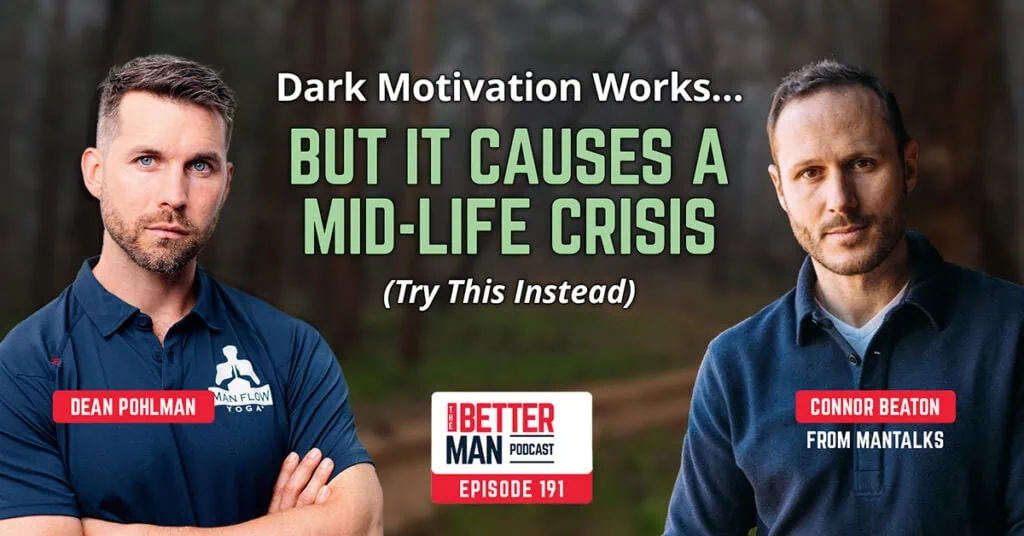
Dark Motivation Works … But It Causes a Mid-Life Crisis (Try this instead) | Connor Beaton from ManTalks | Better Man Podcast Ep. 191
Do you ever feel like you’re just wandering through life without a purpose, or stuck in the middle of a frustrating…
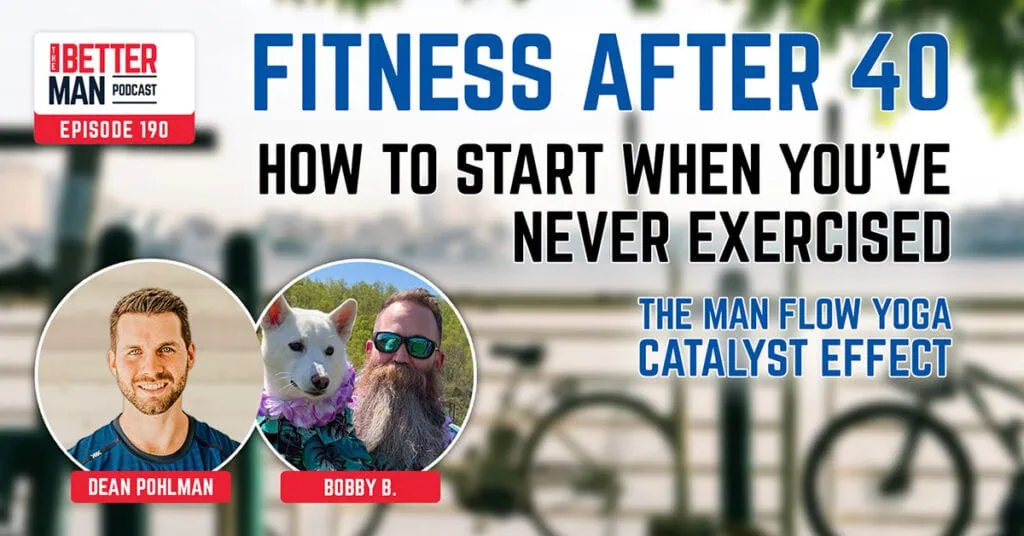
Fitness After 40: How To Start When You’ve Never Exercised (The Man Flow Yoga Catalyst Effect) | Bobby B. | Better Man Podcast Ep. 190
Turning 40 was Bobby’s wake-up call. After a lifetime of skipping workouts, a doctor’s visit revealed warning signs in his blood…

Gut Health Goes Way Deeper Than Weight Loss | Ben Brown (Founder of Body Systems Coaching and Head Nutrition & Fitness Coach) | Better Man Podcast Ep. 189
Gut health impacts far more than weight loss—it directly governs your energy, immunity, and mental well-being. If you grew up in…
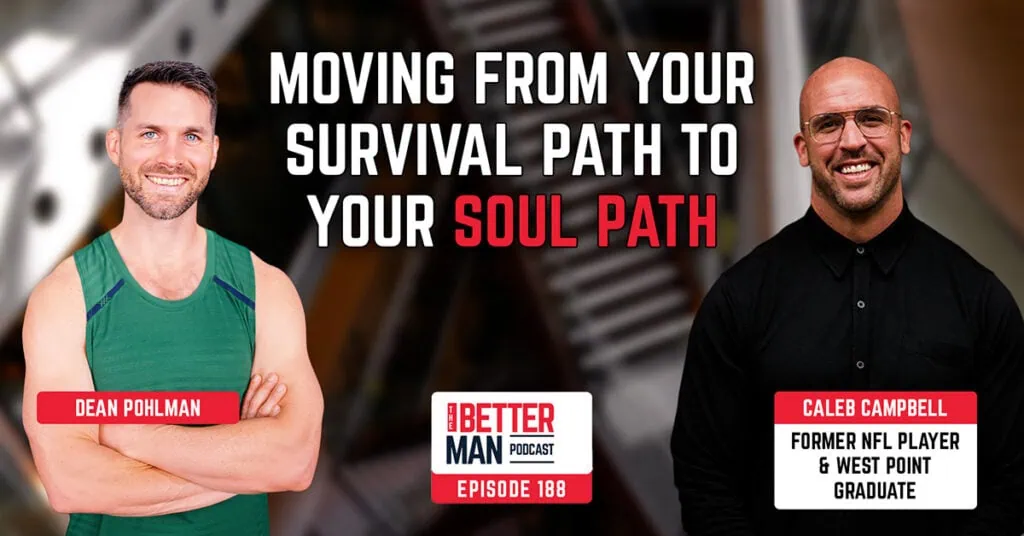
Moving From Your Survival Path to Your Soul Path | Caleb Campbell (Former NFL player & West Point graduate) | Better Man Podcast Ep. 188
If you’re an endlessly striving achiever, you know the path forward lacks clarity. Former NFL linebacker Caleb Campbell used his feelings…

The Ethics & Use Cases of AI | Ted Phaëton | Better Man Podcast Ep. 187
The topic of AI is unavoidable. Ted Phaeton, productivity coach and host of the Modern Man Podcast, joins the show to…
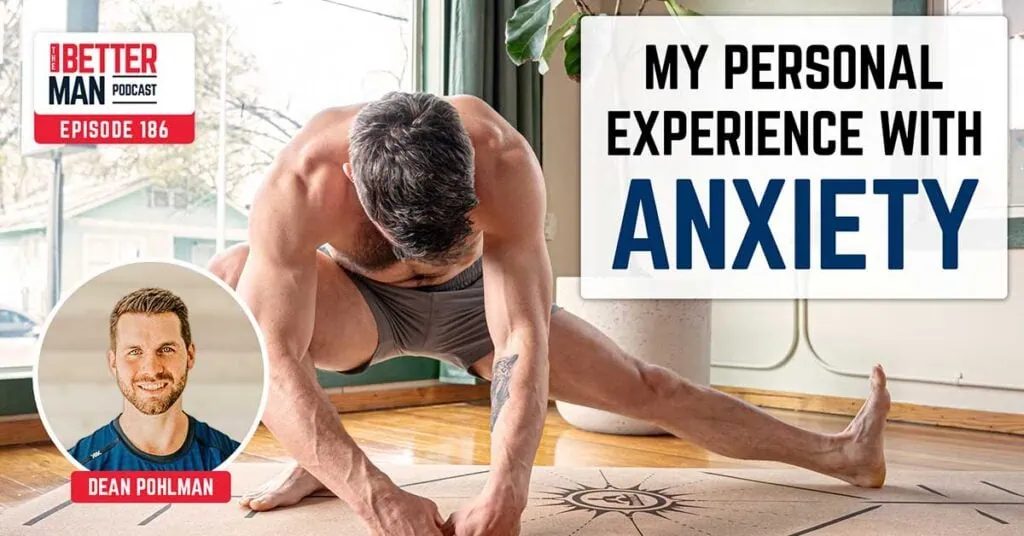
My Personal Experience with Anxiety | Dean Pohlman | Better Man Podcast Ep. 186
After an accidental mushroom trip triggered a panic attack, I realized I’d actually been living with low-grade anxiety my whole life….