These experiences start hitting you between your mid 30s to late 40s – and they bring up a bunch of difficult emotions.
But here’s the good news:
I invited Connor Beaton of ManTalks back onto the show to share a few tricks to reframe your mid-life crisis (and turn it into a positive transformation). He reveals why fueling yourself with Dark Motivation (from internal shame) leads to a crisis in your 30s or 40s. And he also explains why running on shame-based motivation for too long is a recipe for depression.
If you’re feeling off, without a true purpose in life, are in the middle of significant life changes, or feeling a depressive bug lately and you can’t explain why, Connor gives you the step-by-step playbook to conquer these feelings and get closer to your true self.
Here’s what Connor and I discuss:
- How Dark Motivation works in the short-term (and comes with a hefty cost not worth paying over the long-term)
- How stepping into the unknown frees you from the shackles of your rational mind and lets you step into the wisdom of your body
- Why your refusal to let certain things go is the #1 thing keeping you stuck (and how it’s creating stress and disease in your body)
And so much more.
The Better Man Podcast is an exploration of our health and well-being outside of our physical fitness, exploring and redefining what it means to be better as a man; being the best version of ourselves we can be, while adopting a more comprehensive understanding of our total health and wellness. I hope it inspires you to be better!



Use the RSS link to find the Better Man Podcast on other apps: http://feeds.libsyn.com/404744/rss
Episode 191 Highlights
- Why do so many men struggle with therapy and is there a more effective strategy for us? (6:47)
- Do you feel like you’re just wandering through life without a purpose? Here are a few reasons behind why so many men feel like this (9:55)
- How men twist and contort to themselves to please other people without realizing it (and how to feel more comfortable in your own skin) (22:29)
- The “Dark Motivation” trap that fuels some level of success and then causes a full-blown mid-life crisis (29:53)
- How celebrating yourself, recognizing yourself, and validating yourself can save you from the brink of Dark Motivation-induced depression (31:22)
- A simple mindset shift that reframes your midlife crisis as a positive and healthy evolution of your true self (35:33)
- The scary way we let the stock market influence our beliefs about ourselves (even if you have nothing invested into the market) (39:19)
- 3 basic principles (that sound too simple to be true) to choose your own Odyssey and become the man you’ve always wanted to be (46:56)
- How to listen (and then trust) your own intuition (51:45)
Dean Pohlman: Hey, guys, it’s Dean. Welcome to Manvel yoga. This is an interview with Conor Beaton of Man Talks. And we are going deep. This one starts off talking about the kind of predicament that we find the state of men in today. This goes through a lot of Connor’s own expertise in his role as the founder of Man Talks. This also goes into a lot of the things that I see being in my role as as leader of the mantle yoga community, things from my own life as well.
Dean Pohlman: And then this kind of leads into this discussion of what happens in midlife. Not that midlife is a crisis, but more that midlife is a transition, and it is where you get the opportunity to realign with who you truly are versus continuing to do the things and wear the mask that you put on in order to fit in as a child and as a young adult.
Dean Pohlman: So we go into that area of the conversation. We talk about, what do you do from there? Not just, okay, yeah, there’s things that need to be fixed, but what do we actually do? So we go into Connor’s direct experience with the thousand plus men that he work with. And the Man Talks Alliance, the retreats that he’s done.
Dean Pohlman: He’s been in this for for two decades now. He’s got a ton of expertise and experience to share. Here we talk about what can you do to listen to your intuition better, some practices that he recommends for you, being able to listen to your intuition, to be able to make those decisions and start living more aligned with your true self.
Dean Pohlman: This is a great conversation. I had no doubts that it would be a great conversation going into it. This is a repeat guest, but I was, I was pleasantly surprised and I got a lot out of it personally as well. So I hope you guys enjoyed this conversation. Let’s get straight into it. Hey guys, it’s Dean.
Dean Pohlman: Welcome back to the Better Man podcast today. I’ve got Connor beaten here from Man Talks. And we’re going to be continuing the conversation on men’s wellness and kind of leaning into this idea of, of of of midlife as a man. So Connor, thank you for coming back.
Connor Beaton: Thanks for having me back on.
Dean Pohlman: Yeah. And just by the way, I’m saying this for you, but also for our listeners. Your book is fantastic. It’s one of the better books I’ve written in the men’s wellness I’ve seen in the men’s wellness space. I think what makes yours unique is you have the background and you have the expertise in your subject. You’re not just coming at it from like, I think a lot of people in this space kind of repeat what they hear.
Dean Pohlman: Like they’re just things that have been repeated, but they don’t have like the validity behind them. They’re like, oh yeah, that makes sense. And and when I was having my first interview with you, you would actually call me out and say like, no, not that. Like, no, that’s this is what I really mean. And I was like, okay, cool.
Dean Pohlman: This guy’s like actually like not just letting me like, get away with like random, you know, Miss Random, you know, repeated things. He’s like, you’re actually clarifying like, no, this is this is the right thing. So cool. I appreciated that about our conversation.
Connor Beaton: Yeah. Thank you. Yeah. Thank you. Yeah. I mean, I tried to I tried to write men’s work to be something that wasn’t out there, you know, and something that would kind of be perennial and something that men, you know, for decades to come could pick up and they could find themselves in, and then they could do legitimate work, like, I’m every single chapter I created.
Connor Beaton: It’s it’s it’s kind of like, I don’t know, it’s not a normal book in the sense that I put a lot of, like, almost worksheets into it, where each chapter you learn something, you go into a specific topic, whether it’s the shadow or, you know, a father wound or whatever. And then I’ve built in specific work for men to do.
Connor Beaton: And, yeah. And a lot of it was based off of my own personal experience. And then, you know, the work that I did in working with some phenomenal psychologists and therapists and, and apprenticing with them and sort of taking an amalgamation of all these different therapeutic and psychological modalities and compressing them into a book and saying here, like, you know, this is this is where you should this is where you should start or this is what you need to dig into.
Connor Beaton: So yeah. Thank you.
Dean Pohlman: Yeah, yeah. It’s one of those books that you read through the first time and you’re like, okay, those exercises sound good. I’m going to go back and read it again and do the exercisers exercises later.
Connor Beaton: I’ve had a lot of guys be like, I read the book and did none of the exercises because I was terrified or like, you know, but a buddy of mine sent me a photo of the book and he’s like, I’m two chapters in. I’ve broken down three times. I now dislike you more than I did before, like f you, right?
Connor Beaton: You know, and so my my motto is like, you know, love you, fuck you. That’s my that’s my motto. It’s like we have to we have to have that, that dichotomy. And I kind of joke around like, if I don’t, if I don’t hear fuck you from my clients at least once a week, I’m not doing my job right.
Connor Beaton: Because I fundamentally think that, you know, my core belief is that there’s no change without some form of confrontation. And a lot of the times we as men don’t have healthy, loving, supportive confrontation in our life. We have hostile confrontation that we often exist in. You know, that’s what a lot of men are living through inside of themselves.
Connor Beaton: It’s just this constant internal confrontation. I want to kill off this part of me. I want to destroy this part of me. I fucking hate this part of me. And it’s not often that we as men are confronted by another man in a loving way that’s solid and grounded, but also supportive. That calls him forward into a greater version of himself.
Connor Beaton: And that’s really what all great masculine myths have been about. But great masculine heroes and kings have been about is that they stand on something virtuous and call us as men, forward into a larger version of ourselves that you know that we need, that our, our wives and kids need, that our culture needs. And so yeah, yeah.
Dean Pohlman: And I think I swung back like in the opposite direction initially, I think, I think I was so used to the, you know, men should be this and that. I was like, okay, let’s not tell men what be at all. And now I’m like, okay, well, where’s the middle ground of like having it’s. But the missing element was like the trust.
Dean Pohlman: The missing element was like the, you know, there was a missing element that allowed you to. Okay, I will listen to your advice or I will. I will listen to your feedback. And if you don’t have that, you know, what is the what is missing element? Trust or like, what am I what am I trying to say here?
Connor Beaton: I think it’s lived experience. Like we as men respect lived experience. I think it’s one of the big challenges that men have in going to therapy is a lot of the times in the therapeutic industry, you know, number one, it’s it’s predominantly women. It’s it’s a very female dominated industry now. It’s like 75 to 80% of therapist counselors and psychologists are are women, which isn’t inherently a bad thing.
Connor Beaton: But there’s an absence of masculine modeling in our culture and our society. And so when you do get that male figure who you could potentially learn from, you could get feedback from, who could challenge you. I think a lot of the times when it comes to a therapeutic relationship or, you know, a psychologist or whatever, there’s just a question of lived experience, like, have you have you been through what I’ve been through?
Connor Beaton: Have you? Do you have the experience, or are you just like regurgitating shit from a book that you read in your degree? And we do. We do respect lived experience as men. And I think that that’s something that you can it’s not necessarily something that you can quantify, but it’s something that you can experience and feel when you’re around a man who has genuine lived experience, he’s been through some shit.
Connor Beaton: There’s a kind of wisdom that, you know, can’t necessarily be extracted from a book that he possesses. And we as men have always been initiated into manhood by men with the wisdom of experience that have gone through something that we haven’t gone through. And so I think a lot of men in our culture right now are looking for those male figures that have this kind of initiatory quality to their nature, or it’s like, oh, you possess something that I can I can feel inside of you, but I can’t seem to find in a lot of the other men in my life.
Connor Beaton: And I think that that’s a tragedy. You know, I like to say that there’s a lot of older men, but there’s not a lot of elder men. You know, there’s not a lot of men that are that are truly elders that have lived through something and have the experience of that kind of confrontation and the wisdom that that, you know, comes along with it.
Dean Pohlman: Yeah. I mean, it kind of makes me think of, kind of makes me think about something with my dad just, growing up, I think he was. He was busy. I mean, he was a doctor, you know, he was gone from, like, whatever, 4:30 a.m. until, you know, 6:30 p.m.. And there wasn’t a lot of, you know, when he was there, he was he was there.
Dean Pohlman: It wasn’t like he was distracted or not present, but I felt like there was this kind of lack of guidance. And when I talked to him about it, he mentioned that, you know, well, you know, one of the reasons we brought you to church was because we wanted you to have some sense of, you know, we wanted to have some sort of life teaching, some sort of guidance.
Dean Pohlman: And, you know, I don’t know if it was because he didn’t trust himself to give the guidance or like, he didn’t have the time. But, you know, it just I think it brings up this idea of, you know, there’s a lack of there’s a lack of male, you know, or masculine leadership and there’s this, there’s this sense of this sense of wandering that we get with a lot of men.
Dean Pohlman: And, you know, I’m in I’m in my mid 30s. But, you know, this happens to men in their 30s. 40s you, you obviously know this. And so there’s this lack of, you know, men, I think, vaguely know that they’re supposed to be successful, that they’re supposed to be healthy, that they’re supposed to, you know, but there’s this, this, this lack of lack of purpose or there’s this lack of, like, assurance that they’re, you know, that maybe it’s a vision, you know, but there’s this kind of there’s this missing thing.
Connor Beaton: Yeah, there’s there’s a there’s a vacancy in our culture. There’s a masculine vacancy within our culture in the sense that, you know, 1 in 4 kids are going to grow up in a fatherless home in America. You know, they’re going to grow up without any father figure in the household, and then they’re going to go into an education system that is predominantly women teachers, so they won’t have role models there.
Connor Beaton: And then if they seek a therapist or a psychologist, again, it’s a female dominated industry. They’re going to go to a, you know, post-secondary education. They’re going to go to college or university that is now dominated by women and, you know, is becoming more dominated by female professors and female students. You know, it’s by 2030, it’s going to be two, two women will graduate for every one men.
Connor Beaton: And that’s the inverse of what it was in the 1960s when we passed title nine to encourage, you know, women to go into universities and help them to move back into higher education. And so, you know, I think we have this vacancy of masculine role modeling. And a part of that is that we’ve demonized the living shit out of men and masculinity.
Connor Beaton: And, you know, I’ve, I’ve talked about this before and some people don’t like it, but I think this I’ve dubbed it the patriarchy virus, that some people look at our society and our culture and the West, and they say everything that’s wrong in culture and society is is a result of the patriarchy. And if men were just better, and if we could just dismantle the patriarchy, then every problem that we face and that we have would just magically go away.
Connor Beaton: And it’s this kind of utopian thinking. And meanwhile, when you ask those same folks to define what it means to be a man or to define masculinity and what healthy masculinity is, they will give you a laundry list of things that you shouldn’t do. So two things have happened in the last few decades. Number one, masculine and male role models have started to collapse in culture, right?
Connor Beaton: I mean, look at movies and TV shows. It’s all these freaking idiots. You know, there’s no real healthy male role models within most movies and TV shows that completely bastardized and demonized. So. So you have this collapse in male role models. And then secondly, what it means to be a quote unquote good man. What it means to be masculine is now, for the first time, as far as I can tell, is largely defined by women.
Connor Beaton: Women are the ones defining what it means to be a man, what it means to be a good man, what it means to be masculine. And the challenge is that largely what it means to be a good man, or what it means to be masculine is, again, it’s through a deficit. They define it through a list of things that you should not do.
Connor Beaton: So there’s no actual aim, there’s no vision for who you can be or could become, or what it means to be a great man. Or you know what it means to be a healthy man or masculine or whatever that might be. And so I think that’s that’s the sort of like vacancy that a lot of men are experiencing.
Connor Beaton: And this is why you have the conversation around the male loneliness epidemic and men being lost. I mean, we can see through the research and the data that men are in decline in almost every single category that we can study. You know, there’s less Mengoni University, there’s more men dropping out of school, there’s less men in the workforce than ever before.
Connor Beaton: Less men are having sex, less men are in relationships. Less men are having kids. I mean, you just go down the list and you’re like, Holy shit. Like, men are struggling and they’re kind of retreating. A lot of men are retreating from society and from culture, and they’ve. You don’t mind if I swear on your show? I’ve been swearing already.
Connor Beaton: So I.
Dean Pohlman: Think we’re. I think we’re past that point.
Connor Beaton: Yeah. I was like, I was like, but, you know, a lot of men are kind of getting. They’ve kind of got a case of what I call the fuck. It’s, you know, they’re just like, fuck it, I don’t care, you know, let’s decide to burn it. You know, women are angry. All right. Let them be angry. Screw it.
Connor Beaton: I’m out. And so this is what happens when you when you look at the problems and culture and society and you try and play, play, pin the tail and the donkey with an entire sex, you know, and you say everything is a result of men and masculinity and patriarchy, and we need to dismantle that. And I think it’s I think that’s the toxicity.
Connor Beaton: You know, it just doesn’t work, doesn’t function because men need an aim, right? Men need a vision that they can work towards. Men need something to model. It’s why we’ve always had elders. It’s why we always had role models. You know, masculinity in many ways is something that we feel. It’s something that we experience and it’s something that’s transmitted down to us.
Connor Beaton: And so when you collapse those elders and you demonize them and you, you sort of eradicate any possibility of a role model, like, I mean, there’s a whole subset of the West, if you ask them, like, you know, who’s a good man in your opinion? They pretty much can’t identify anybody. You know, there are no good men according to them.
Connor Beaton: And so that’s wildly problematic. So I think all of that’s contributing to what we’re talking about.
Dean Pohlman: Yeah. That makes me think about, I read a, I read a book recently, which I reread. I read it the first time and it didn’t really quick. And then I read it again. It’s called no, No More Mr. Nice Guy. I’m sure you’ve heard of it. One of the bigger books in this space. And the first time I read it, I was very suspicious.
Dean Pohlman: I was and, you know, this is me coming from a pretty liberal background growing up. You know, my mom was a very you know, my mom was a very strong woman. You know, I think now, now being the age that I am and realizing what she went through when she was younger, now I’m like, oh, you had to be in your masculine because you weren’t you didn’t feel safe, so you had to be in your masculine.
Dean Pohlman: And now looking back, you know, I think more, you know, I think if you had had, you know, if you had had better males or better males, however, we want to say that if you had had men that made you feel safer in your life when you were younger, you wouldn’t have had to over. Correct. And so that was the environment that I grew up in.
Dean Pohlman: And so I was very like, kind of like you were saying I was part of that society that was very suspicious of, oh, this is an all men’s group. What is it like? It’s, you know, what are they? What are they doing? What are they plotting? Right.
Connor Beaton: And it must be evil.
Dean Pohlman: Must be evil, right? It’s like, oh, it’s guys getting together and hunting and talking about how they’re better than women. And, you know, like, just. And that was but like I sympathize with that because that was that was my subconscious. That was just a view that I, I didn’t like make a decision to take that on. That was just kind of like what the culture around me taught me.
Dean Pohlman: And so now, you know, coming out and like coming out into the world and like having conversations about like, okay, like I’m starting a podcast. This was, you know, six years ago now, but having a conversation, what does it mean to be a better man, you know, like, can I can I say things like, A man does this without getting canceled?
Dean Pohlman: Like, can I say a blanket statement about, like what? You know, so like, like people are just I mean, and even now I’m like, I’m scared to have some of these conversations. I don’t know what you know. I have a pretty diverse audience. I have a lot of gay followers. I have a lot of, you know, we have men from all different, all different areas, all different lifestyles, all different whatever.
Dean Pohlman: So a lot of the things that I want to say, I, I’m scared of saying because I’m like, I’m an angry, I’m going to anger somebody or like someone’s going to I’m going to say something that’s going, that’s someone’s going misinterpret as, oh, you said this. So you go in this box and I’m like, well, no, I don’t, you know, so it’s it’s even hard to have a have a conversation about it.
Dean Pohlman: But but I bring up the book because I think it also reveals, like you were talking about how women are defining, what it means to be a good man and or how we are, you know, boys are being raised by women predominantly, predominantly in the schooling system, you know, their home with their moms. I mean, that’s not, as, you know, true as it was.
Dean Pohlman: But point being, we are being raised in a way where our goal is to make sure we’re taking care of by our predominantly female caregivers, which means we’re learning to please women from a very young age. We’re not learning to we’re learning to be nice. We’re learning to be agreeable. We’re not being taught to be, you know, whatever, whatever it means to be a man in society.
Dean Pohlman: And so I think that’s a that was a that was for me when I started peeling back the layers on. Oh, wow. A lot of my behaviors are are done with the goal of making sure that my mom loves me, that she takes care of me. A lot of the things that I do as a husband, I do to make sure that my wife is not mad at me.
Dean Pohlman: Like a good example. Last couple of months ago, we lost power, which happens in Texas. We have these, you know, I know you live in Denver now. You lived in New York, you grew up in Canada. But we have these giant rolling storms that come through in Texas. Like it rains for like 15 minutes, and then it doesn’t rain again for another month.
Dean Pohlman: But they’re like torrential storms. And, and so we had one of those come through. Our power got knocked out, you know, like, oh, crap. Got to, you know, got to fix this. So we called an electric company and they came out and they gave us some, like, exorbitant quote. They were like, okay, it’s going to be $20,000.
Dean Pohlman: And we’re like, oh my God, that’s way more than I thought it would be. But I’m sitting there thinking, like, I’ve got to make sure that she feels safe. I have to make this decision now. Like the the, the safety inspector said it was a serious risk. I’m like, oh, I got to make sure she’s okay. Not even.
Dean Pohlman: But it wasn’t even from the perspective of me taking care of her physically. It was like, I’m scared of like her emotions, like what she will think of me if I don’t. Rather than taking the time to make like a, you know, a let me get a second and third opinion. And, and so there’s just all of these, you know, that’s just one example recently, but there’s all these examples from my life where I made decisions to, you know, just appease the woman in my life versus, you know, what did I think was the actual right decision to make here?
Connor Beaton: Yeah. I mean, part of what every man needs to learn is some point in his life is how to stop contorting himself into this sort of woman pleasing autonomy, you know, how do I how do I be, do and say everything to make sure that the women that I’m with, the women that I’m dating, the woman that married to the women that I work with, are never disappointed and are never upset.
Connor Beaton: And that is challenging. You know, a lot of men live a life because in in many ways it is harder for men to get partnership, you know, and there’s a saying that some people don’t like, but it’s largely true. Okay. It’s not maybe true every single time, but it’s largely true in most situations, which is that, you know, women are the deciders of sex and men are the deciders of commitments, and women are really the ones who determine whether or not sexual intimacy is going to happen.
Connor Beaton: And men are the ones that determine the progression of a relationship, of how deep into the commitment things go. And that system has been in place for a very, very long time for a number of reasons, which I don’t think we necessarily need to unpack. But I think because of that, a lot of the times men are twisting and contorting themselves into who they think they need to be to impress the women that they’re trying to date or trying to sleep with or married to that you know, they’ve bought into this notion of happy wife, happy life.
Connor Beaton: So I live to make her happy. And if I can just make her happy, then maybe I have a chance at a happy existence. Yeah. And and so a whole bunch of a man’s behaviors, choices, actions. They’re not. They’re not his own. They’re centered around the woman that he’s trying to get with or centered around the woman that he’s trying to date, that he’s that he is dating, that he’s trying to impress, that he’s married to, and trying to, quote unquote, make happy.
Connor Beaton: And so, you know, this this form has this way of being is just been within our culture and within our society for a long time. And it doesn’t work. You know, it leaves a lot of men dissatisfied. It leaves women dissatisfied. And and it’s a, you know, I think it’s just it’s frustrating for a lot of men because what ends up happening is they try and try and try and try and try.
Connor Beaton: They continue to be put in a position of, I’m the one that’s wrong in the relationship. I’m the one not doing enough or doing the wrong thing or not doing the right thing, and they’re running around trying to figure it out because they’ve never been taught to have any type of tolerance for a woman’s disappointment. They’ve never been taught how to just be like, oh, okay, you’re upset with me.
Connor Beaton: You’re disappointed. Got it. That’s okay. Tell me why you’re disappointed. No. And when most men experience their girlfriend or their wives disappointment or their, you know, their colleague or their bosses disappointment, that’s a woman. They cave inside, they collapse. It’s like it feels like it’s life threatening, you know? And they’re like, oh, my God, I gotta figure out exactly what to do to make things okay for you.
Connor Beaton: Yeah. And then they run around, you know. Oh, wild like. And the on the receiving end for most women that are dating those types of men, they’re like, stop trying to fix shit. Just understand how I’m feeling. Like we totally miss out when we’re doing that. On what our girlfriend, what our wife is actually experiencing. And so then she doesn’t feel understood.
Connor Beaton: So everybody loses in this scenario, right? The woman loses, the man loses. Neither one of them are happy because what we as men have lost is the capacity to be okay when the women in our life are not. And most men have been trained and indoctrinated into this notion that as soon as a woman is not okay, it’s his responsibility to fix it.
Connor Beaton: It’s his responsibility to do something to solve that issue for her. And if he can’t, then he’s a bad boyfriend. He’s a bad husband. He’s not a good man. And this is complete nonsense. You know, it collapses the relationship. And that man never really feel satisfied. And neither does she. Yeah.
Dean Pohlman: Well, I mean, not only that, it also it also, you know, implicitly implies that you are putting whatever woman this refers to at a level lower than you. You’re saying you cannot make yourself happy. I have to do it for you. So like, you know, the idea, it’s kind of ironic that we’re doing this because, like, oh, we need to make you happy because we’d be bad men if we didn’t.
Dean Pohlman: And in reality, we’re like, you’re not human enough to make yourself happy. We have to do it for you.
Connor Beaton: Yeah. So, yeah, it’s it’s a strange it’s a strange dynamic. But, you know, I think, I think for many men, they, you know, a lot of guys are just struggling to find their own worth, their own sense of value, their own confidence in life. And what a lot of men have been told is that, you know, you can find that in you providing for a woman.
Connor Beaton: You can find that in taking care of her. If you can just make her happy, then maybe you have some worth. And a lot of men are fed that notion of, you know, there’s like these online tropes of like, women are born with value and men have to earn their value. It’s like, okay, you might have to earn your net worth for sure.
Connor Beaton: You might have to build up some competency and some credibility, but you certainly have worth and value as a man without question. And so, yeah, so a lot of men will just run around chasing that indefinitely.
Dean Pohlman: Yeah. And so, you know, before you and I started this conversation, we talked about kind of like leading this into this area of, of, of midlife and of realizing we were we’re kind of motivating ourselves in the wrong way. And I think this, you know, kind of tees everything up nicely because I don’t want to just I don’t want this to just be another episode where we talk about, oh, yeah, men are in a shitty position today and it’s terrible.
Dean Pohlman: And here’s all the reasons why, right? It’s like, let’s steer it into the conversation of, okay, cool, we know we’re here. Let’s what can we do about it? You know, and so we have the, you know, we know these things about about how we were raised and how we were, you know, trying to try and do please women.
Dean Pohlman: We also know, you know, this idea of we had to create our own worth through actions that we didn’t have worth to begin with. And so, you know, that means it’s usually figuring out how to create financial success, right, for success. And so now we get into this, you know, this kind of midlife position. And we did what we thought we had to do.
Dean Pohlman: Right. Okay. Well cool. Providing for family. You know maybe we have a long term partner okay. Maybe we have kids okay. We’ve got a professional down. But there’s still that sense that something’s missing or it’s like this sense of burnout. And so that’s where I wanted to bring it to you, because this is where I think this is where really where you specialize in something that, you know, for better or worse, you got to experience earlier than a lot of men.
Connor Beaton:
Dean Pohlman: So I’ll just turn it over to you.
Connor Beaton: Yeah. And I don’t want to make it sound like men have a, you know like a shit lot in life and everything’s terrible and bad. I mean, you know, I think the majority of human beings, if given the choice between being alive right now and being alive 500 years ago, would probably choose being alive right now. You know, there’s a lot of there’s a lot of amazing things, and we just have more awareness around what’s happening.
Connor Beaton: And so I don’t want to feed into that narrow, because I do feel like a lot of men have fallen prey to this, like it’s women’s fault and women are causing this. And, you know, men just have it so bad. And there’s a, you know, there’s the big gender war happening between men and women, and there’s a whole bunch of angry women that, you know, have been hurt by men and haven’t healed.
Connor Beaton: And there’s a whole bunch of angry men that have been hurt by women and haven’t healed, and they’re all online bitching and complaining about each other. And so I don’t want to make it sound like men have, you know, a shit go. But the reality is, is that some men are really struggling, and we do need to be able to talk about those things.
Connor Beaton: And as you’re saying, some men are really struggling with this, what most people would call a midlife crisis, you know, that you reach this place towards the middle of your life, and it usually starts early to mid 30s and spans to, you know, to to mid 40s, sometimes into your late 40s. And for guys that are in that space, a lot of the times they have been utilizing what I call dark motivation or shame based motivation to try and achieve and accomplish.
Connor Beaton: And so a lot of the times when we’re young boys and young men inadvertently, like indirectly or directly, we get taught your value as a man is based on how you perform. Your worth is based on how you perform. If you perform well, you’re good. If you perform bad, you’re not good. If you perform well, you have value and worth.
Connor Beaton: And if you don’t perform well, you don’t have value and worth. So a lot of men have grown up, you know, in environments where maybe they didn’t get the affection that they needed, the love that they needed, the praise that they needed, the support that they needed. Maybe they didn’t get the standards that they needed. And so they’re carrying around this pain and this frustration, or this shame of not feeling good enough, not feeling worthy.
Connor Beaton: And what they usually do is try and use that shame to try and motivate themselves towards success. And the beauty of it is that that works for a period of time. This is kind of the messed up thing about it is that you can use shame internally to drive yourself. You can, you know, beat the living crap out of yourself internally to try and get yourself towards a goal and it can work.
Connor Beaton: The problem is that when you achieve those goals, if you’ve been using shame based motivation, there’s dark motivation of I don’t like myself or I’m trying to prove myself constantly to other people. I’m trying to get other people’s validation and praise and recognition. Whoever it’s, you know, whoever that is, whether it’s dad or mom or, you know, maybe it’s your girlfriend or your wife or, you know, it’s it’s like just society in general.
Connor Beaton: If you’re using shame based motivation and you have all of this, you’ll get there, you’ll get the achievements, you’ll get the money, you’ll get the awards, and you won’t be able to actually enjoy it. You won’t be able to actually recognize yourself for what you’ve accomplished. And it’s this inflection point where men all, like the vast majority of men that I work with, find me.
Connor Beaton: And they’ve hit the platinum records. They’ve sold the business for $100 million, they’ve achieved the gold medal, they’ve won the cup, you know, they’ve they’ve hit those targets and there’s something hollow. You know, they’re like, I don’t feel like I can actually celebrate what’s happening. And they get into a depression. And the reason for it is that nowhere along the way did they learn how to celebrate themselves, did they learn how to recognize themselves or validate themselves or be compassionate towards themselves.
Connor Beaton: It has just been a series of I’m going to grind and prove myself to other people. I’m going to prove that I’m not a worthless POS like my dad said. I’m going to prove I’m going to try and earn that woman’s love and affection and attention. And at the end of it, it’s hollow. And so what happens is that we we get into this midlife place where either we’ve been doing that for so long, it’s worked and we’ve had success, but we haven’t been able to enjoy it.
Connor Beaton: Or you’ve built a life that is in with who you actually are on the inside. You’ve taken on a corporate job, you’ve taken on a gig that you know, with a company that is not aligned with your values whatsoever. You’re live, you’ve built a life that is completely incompatible with your values and who you are and who you want to be, or you’ve built a life to kind of some type of an identity, but inside of yourself, you have no idea who you actually are.
Connor Beaton: And the whole architecture collapses. And this is where you see the guys trying to find, you know, like the the cliche of the guy having a midlife crisis and buying a Porsche. Right? It’s it’s not necessarily about the Porsche. It’s I’m finally going to allow myself to live. I’m finally going to express myself. I’m finally going to celebrate myself in some way, shape or form.
Connor Beaton: Now, for some minutes, I’m I’m going to try and get even more attention from other people to fill the void. That certainly happens. But for a lot of men, it’s I’m going to make these substantial changes in my life to try and find a little bit more alignment, because before there was just an incongruence in one way, shape or form or another.
Dean Pohlman: Hey guys, it’s Dean interrupting my own podcast to talk about Magic Mind. Magic mind is a caffeine supplement that I’ve been using for the last few years. It’s something that I use as a alternative to coffee some days, and also something that I use maybe right before I do a podcast or from a video as a way to get a energy boost without the crash that usually accompanies caffeine.
Dean Pohlman: If you want to try it out. I put a link in the show notes below, but it’s a nice little supplement. It’s a drink two ounces that you can take just for a little boost of energy. A little more focus throughout your day. Give it a shot. Let me know what you think. Well, I like the way that you were talking about this before we started, but like, there’s this concept of it’s a midlife crisis and in reality, it’s not necessarily a crisis.
Dean Pohlman: It’s just this is just what happens in midlife. There’s a correction that occurs. There’s a, you know, there’s a there’s a reevaluation of the way that you’re living or like, you know, you talked about we shame based motivation. Okay, cool. Maybe that got you here. But eventually it runs this brick wall. Right. And now it’s this. Now there’s this sense of burnout.
Dean Pohlman: There’s this sense of, there’s a sense of I can’t keep doing this the same way anymore. And so I’d like to do you want to talk more about, you know, about kind of what happens during this, this, this time and like, what are, you know, what do you generally guide people to do or like? What do people start to do on their own in terms of trying to create, you know, correct that gap of who you were meant to be and who you were because you felt you had to be that way.
Connor Beaton: Yeah. I mean, from a psychological standpoint, the the middle part of life is a very important developmental stage that we don’t often talk about. And for guys that are wondering, just like I, I, you know, referred you to at the beginning of this, there’s a great book called The Middle Passage by Doctor James Hollis that’s an outstanding read on this topic.
Connor Beaton: But one of the one of the ways that we need to correct in this part of life is we need to start to really take stock of all the things that are incongruent or out of out of alignment with who we ultimately want to be. Because the middle part, the middle passage of life, is really marked by the shedding and the letting go of all the things that you’ve accumulated over the years, that you are not, that you, that are actually not who you are as a man or a husband or a father or not, who you ultimately want to be.
Connor Beaton: And it’s that incongruence that starts to create a kind of psychological disease or tension inside of us. And every man can feel that you’re working at a job with people that you don’t like. I mean, I know a guy who works with me now who is in a corporate gig before, worked for a really big company, you know, had some great exits and was in a company that, for the most part, he didn’t like he didn’t like the work that they were doing.
Connor Beaton: He didn’t like the mission. It wasn’t aligned with him. Most of the people that he worked with didn’t feel aligned with him, minus a couple of them. And because of that, and he was just depressed. You know, he’s like, I freaking hate this. But he felt the responsibility because he was the provider for his family, you know, and he had multiple kids.
Connor Beaton: And so, you know, there’s a there’s a kind of pressure that starts to build up in this middle passage is meant to be a letting go. It’s meant to be a shedding. It’s meant to be something that changes us by starting to pay attention to what are the actions, the behaviors, the choices that are no longer true to who I am as the man I’m becoming?
Connor Beaton: Who are the people that I’m still surrounded by that really are just incongruent and incompatible with the life that I am living or want to be living. And it’s really meant to be a kind of stripping away of those pieces so that we can make room for more of the actions, the choices, the decisions, the people, the experiences, the work that really fuel our soul.
Connor Beaton: And so, you know, in in union psychology, this part of our development is really it’s it’s a alchemical term, but it’s called the negrito that we kind of go through this Negrito period. And the the Negrito period is about things falling apart. It’s about things decaying and dying. It’s about old habits, old belief systems that we’ve held on to psychologically for so long that are not functional for who we are.
Connor Beaton: Right. So if you’ve been a man since, you know you were 15 years old, and how you’ve tried to go through life, how you’ve tried to be successful and build connection and, you know, build relationships is by beating yourself up internally and criticizing the living crap out of yourself. Eventually, that framework, that way of being, is going to start to fall apart, and you reach an inflection point where you have the opportunity, where life brings you the opportunity to start to let go of those old ways of being that are literally making you sick, that are making you unwell, that are harming you, and you have a choice.
Connor Beaton: And unfortunately, our culture is very anti decline. It’s very anti breaking down. It’s very anti nigrita right. The stock market just goes up. It doesn’t like when it goes down. We do everything in our power to avoid it. And so men usually adapt this same modality where anytime things start to rupture and fall apart and they start to fray and they start to decay, that’s usually when a man starts to hold on for dear life.
Connor Beaton: And the sad truth is, is that you have to exert so much more energy. You have to work extremely hard to maintain something that isn’t working. And for a lot of men, this is their life. They are exerting a tremendous amount of energy to maintaining a business, a job or career, a relationship that is fundamentally not working. They’re killing themselves to try and maintain something that is not working.
Connor Beaton: And the Middle Passage is the place where we get to say, this isn’t working for me. This isn’t who I am anymore. I’ve I’m changing, I’m shifting, and you get to and this is the last piece that I’ll say, and I’ll let you sort of guide from here where you want to go. But the last piece is that the middle passage is the opportunity where we start to grow deeper into who we actually are.
Connor Beaton: So if you reach 35, 40, 45 and there’s a lot of question marks around, like, I don’t really know who I am as a man or what I want or what I want the rest of my life to look like and stand for it and be for the middle passage is a reckoning, a calling into a a descent, a descent oriented discovery into who you actually are and the mark you want to leave on the people around you for the rest of your life, and the mark you want to leave on the world, and who you ultimately know that you want to become, and who you ultimately know, who you have always known you have
Connor Beaton: wanted to become. And so it sort of rears its head and says, here’s the opportunity, but it requires you to let go of a lot of stuff. You know, sometimes it requires you to let go of relationships. It requires you to move. It requires you to let go of jobs or companies or, you know, friends, circles or whatever it is because it is a it is a decay.
Connor Beaton: It is a falling apart and letting things fray. And for a lot of men, that’s a terrifying that’s a terrifying thing. And so but on the other side is wisdom. You know, there’s wisdom in falling apart. There’s wisdom in letting things go. And for a lot of men, they lack wisdom because they’ve just been holding on to things that don’t serve them.
Dean Pohlman: Yeah. I mean, I think there’s so many things that men fear. And I can say that from personal experience, you know, just in my own life, just, you know, fear of, like, what if I don’t do this? And there’s some of it’s, you know, imagined fears, you know, like, oh, would my family really, really be okay if I didn’t make this much money?
Dean Pohlman: Some of them are, you know, some of them are real fears, like, okay, well, we, you know, I still have to have a job. Like, we still have to still have things to pay for. Health insurance here is expensive. You know, we got you got stuff to got stuff to by. And so, you know, I kind of look at because, you know, at this point I’ve kind of with all the different potential treatment that’s a treatment options.
Dean Pohlman: You know, we’ve got on one end you can okay, I’m just going to sign up for cognitive behavioral therapy. I’m going to go once every other week talk to someone for an hour okay. Great. Good job. We’ll see how far that gets you. And then on the other end you’re like, I signed up for ayahuasca. I’m going next week.
Dean Pohlman: I haven’t done any prep work. Like cool, get ready to blow up your world. You know, there’s just like there’s so many different ranges and it’s like, how do you I think it’s I think the question that I look at is how do I move? And that’s, that’s what everyone wants is like, I want the certainty that I can go through the change, but have all the things that I want to have still intact.
Dean Pohlman: Yeah, right. But it’s like.
Connor Beaton: That’s what you have. That’s what you have to let go of though.
Dean Pohlman: But that’s what you have.
Connor Beaton: Every like okay, a couple of things. One, healing is not linear. If you want to go on any therapeutic journey, it’s not a linear process. And any man that steps into some type of therapeutic journey or some type of personal development journey, the moment that he lets go of the notion that there’s some system that he can follow, some sequential thing that he can do that’s going to fundamentally save his life, the faster his life will actually change.
Connor Beaton: It’s this clinging to I’m going I it’s this omnipotence, right? I’m in control. I’m in complete control of this change. No, you have to let go of that nonsense, because that’s what’s keeping you stuck in the first place. The real test of men is being able to venture into the unknown. This is. This is baked into every religion.
Connor Beaton: It’s baked into every myth. It’s baked into every story about great men. It is about men doing one thing, braving into the unknown. And that’s the unknown of your own psyche that you are terrified of. It’s the unknown of a choice that you know you want to make. Like leaving a relationship. Like committing to a relationship, like starting a business or leaving a company or whatever it is, and not knowing how that’s going to work out.
Connor Beaton: The problem that most men face is when they reach this threshold of, I could step into a deeper version of who I actually am and what I can contribute to life in the world. When they step into that. That decision on the other side is the vast unknown. And most men step up to that precipice precipice and get so terrified as if they’re going to base jump for the first time.
Connor Beaton: And they back off and they say, maybe I’ll just make some small adjustments, and I’ll just keep controlling and pulling all the levers so that I know the outcome. And the real test is you have to choose your own odyssey. You have to choose to venture out into the unknown. And how you do that is somewhat simple. All right.
Connor Beaton: What I’m about to say is going to sound simple, but if you follow it, it will take you into complete unknown terrain and territory. Like my life is just a result of following these basic principles. Number one is live as closely to your own truth as you possibly can. Whatever that truth might be in this moment, and if you are unsure of what is true for you, what you value, what’s important for you.
Connor Beaton: Just start small. Start with really small things and start to clean up your bullshit. Right? So I created this process called autocorrect because in a period of my life, I didn’t know what I wanted. I didn’t know who I was, I didn’t know what really made me happy. I was a complete disaster. It didn’t like myself and I didn’t like I.
Connor Beaton: I was in that space because I was lying all the time. All the time I was fabricating stuff, I was embellishing things. I was omitted details. I wasn’t speaking truth or telling the truth, and the truth pulls you into its own kind of adventure. So align yourself with truth as much as you possibly can. The second thing is to allow change.
Connor Beaton: To change you allow the change that you know is is in your life to change you. A lot of the times, men are taking a very forceful, dominant approach to change to personal development. I have to do the changing know. A lot of the times I would say probably 80 to 90% of the time change is asking you to surrender something, and that’s why you’re not changing.
Connor Beaton: It’s asking you to surrender something. It’s asking you to let go of something. So change is less of an aggressive act that we do, and it’s more of a surrendering to something, surrendering to a routine, surrendering to a ritual, a habit, a new way of being, a way of operating, surrendering to letting go of something that you know fundamentally is not working for you.
Connor Beaton: Surrendering to saying no to something that you know is incongruent for you, that you just chronically say yes to. So align yourself to truth. Allow change to change you, and start to build a tolerance for the unknown. Most men have zero fucking tolerance for the unknown. They cannot tolerate it. As soon as any unknown variable comes into most men’s mind, what will she think?
Connor Beaton: How will this meeting go? Will that client sign with me? They become an overrule mental masturbating mess, and they fall into this trap of just chronically needing to replay over and over and over again the different possibilities of what might happen, and they’re never present to. I can’t predict what’s going to happen. And so they never develop the tolerance or the resiliency for I don’t know how fucking exciting.
Connor Beaton: There’s an acceleration. There’s a vitality, there’s an alive to I’m going to make this decision. And no matter how long I think about it, I’ll never know what the outcome is going to be in till I step into it. And that’s where life really happens. So a lot of men feel like they’re not living life because they’re completely out of touch with any type of unknown.
Connor Beaton: And so the more that you can come into contact with the unknown and allow it to work you and allow it to inform you and allow it to be a kind of intelligence in your life and you can build a relationship with it. I just moved my family to Boulder, Colorado. I had no idea how this is going to go.
Connor Beaton: No clue. I didn’t know how my wife would deal with it, or my son or my daughter. I just knew we needed a change. I just knew, after having multiple conversations with my wife that this was the best option for us as a family, and that this is what we were choosing to do. I didn’t know how it’s going to go.
Connor Beaton: It’s been great so far, but what I can tell you is that there’s a massive amount of aliveness and vitality by allowing the change that was front and center in our faces to change us and to help us make that decision. So I know I said a bunch of stuff there, but hopefully one of those things landed with the audience listening to this.
Dean Pohlman: I love that. And, you know, it brings up one thing for me that I’ve been pondering a lot lately is this idea of, how do you listen to yourself? How do you listen to intuition? How do you listen to what the universe or God or whatever you want to call it? How do you listen to what those things are saying?
Dean Pohlman: Like, I don’t know if you have general advice for that or if you’ve had something that you like to do for yourself. Totally. But I’m very intrigued by this idea of because I’ve I’ve spent a ton of my life like trying to listen to expert experts or doing research, and most of my life I was never really in touch with my own intuition.
Dean Pohlman: And so, like, you know, my my dad used to say, and this is a very dumb long way before you answer the question, but it provides some context. My dad would use my dad. You say all the time, just make a decision, make a decision. And I would always like, oh, well, we could do this, this or this, and if you want to do this, then we could do this.
Dean Pohlman: And there’s a great, you know, Italian place over here if you want to do that or like tacos over here. All because I just didn’t trust myself to make the decision because it was always like spreadsheets and, you know, like, pros and cons list and never what’s the gut decision. And so I’m very intrigued by like, how do you practice listening to that?
Connor Beaton: Yeah. Two, two main things, maybe three. The first one is what I call a stream of consciousness journaling. And so for a few years, every single day, I would sit down with a pen and paper and I would write 2 or 3 pages of stream of consciousness thought, and it was just whatever was happening inside of me everything, anything.
Connor Beaton: It was just a process of meeting my own internal dialog, meeting my own, psyche. And the what starts to happen is if you do this long enough, you start to get underneath the surface of all the normal BS thoughts that you constantly have, right? The majority of men one are disconnected from their internal dialog, the depth of their internal dialog, but two what they mostly interact with are the fears, the insecurities, the worries, the doubts.
Connor Beaton: That’s normally what most men are interacting with. And once you start to stream of consciousness journal, what happens is that these fears, these worries, these insecurities, they come pouring out and you write them down for a little while and eventually they just fade because you’re actually giving them presence and consciousness, and you start to go deeper underneath them, and you start to hear a deeper voice inside of you that is more true to who you are, your wants, your needs, your desires, your dreams, your vision.
Connor Beaton: All of that starts to emerge as you continue this process. And so you just sit down and you just write and can be whatever it is, like I, you know, I hate this exercise. I don’t know why this guy recommended this. This is so stupid. Did you know today I have to do X, Y, and Z? I really want a cheeseburger right now.
Connor Beaton: And you just practice letting your own voice come forward and beginning to beginning to have a relationship with that. And eventually what starts to happen is that deeper truths start to emerge. And you’ll notice that there’s patterns that you write about the same thing on repeat problems, desires, dreams, goals that you want to accomplish. And they’ll just be these repetitive patterns and and goals and desires that just won’t go away.
Connor Beaton: And you’re like, oh, there it is. Right? That’s that’s really a part of who I am. That is true. It just it won’t leave me. So that’s one piece. And the second piece is to make decisions. I don’t want to frame this to, to fail forward, to, to make decisions, to fail. Not with the intention of failing on purpose, but to allowing failure to kind of be like the guardrails towards a deeper sense of intuition.
Connor Beaton: A lot of men are living life white knuckling their decisions and their choices, so much so that they’re they’re living in a way of like, I don’t want to fail. I can’t fail if I fail, I’m weak. If I fail, I’m a pathetic. If I fail, it means that I’m broken. It reinforces something is wrong with me. When failure is the path that we need to walk, that’s going to reinforce.
Connor Beaton: Here’s where we here’s where we truly want to go. Here’s where we who we really are. Here’s what I really believe in, what I really desire. And you start to develop a deeper relationship with your gut, with your intuition, by allowing yourself to see if you can hear that deeper truth of like, what is it that I think it’s this, but I’m not 100% sure, but I’m going to make the decision and see if I’m right or not.
Connor Beaton: And so it’s not the thing that we have to get used to. And this is the thing that really changed my life that I had to kind of force myself into, is that choices and decisions weren’t about being right. Right. And before every choice, every decision that I made, the pressure was, I have to be right. I have to get this right.
Connor Beaton: I’m making this decision to be right. No wrong framework. You cannot learn from that framework. I’m making this decision to get evidence and data and information that will align me and connect me deeper to my own sense of self, to my gut, to my intuition, to my inner knowing and wisdom. And if when that becomes the purpose and the intention of your decisions, you then make different decisions.
Connor Beaton: And the failures don’t seem so big or bad, and you can actually learn the lessons from them, and it pulls you deeper into who you actually are. So we have to let go of or, you know, again, let that let that paranoia of I have to make the right decision, sort of work us in a way where we say, okay, I’m not going to make this decision to be right.
Connor Beaton: I’m going to make this decision to let it inform a deeper knowing in who I am and what I want. So those three things can really help men to. Yeah, to connect to a much deeper version of here’s who I am, here’s what I want. And eventually people will start to feel that you will start to trust it.
Connor Beaton: You’ll start to trust when you hear that voice of like, this isn’t right anymore. I don’t like this. I don’t want this. This is the direction that I want to move. And it will feel so clear that for other people, they’ll be able to rely on you more. When we rationalize a decision, sometimes it’s okay, right? To use logic, to use just pure rationality of like, this is the right choice.
Connor Beaton: Some, some decisions in life, you can do that with many decisions that are personal, that are profound, that are important. Rationality is not enough of the equation, because we have to have a deeper sense of connection to our own knowing. And a lot of men, one of the great, I think, challenges or tragedies of modern culture and society is so many men are disconnected from a deep sense of know who they are, what they want, what is right, what is okay, what is not okay.
Connor Beaton: They’re just completely disconnected from that. And they’re trying to solve all of their life’s problems and questions with purely rational thinking. And it’s making them sick because they’re disconnected from the wisdom of their body. So anyway, that’s a long answer to your question.
Dean Pohlman: That was that was absolutely beautiful. I loved it. Thank you so much. I’m curious to see. I think you did this last time you were here. I have what I call rapid fire questions, and I know you probably did it last time, but I’m curious to see if those answers change for you. So my computer froze, so I don’t have them, but I’m gonna have to remember.
Dean Pohlman: Memorize them. I’ve done that. I’ve done 101 hundred plus of these episodes. Feel like I could do them from memory at this point. So my first question is what is the one habit, belief, or mindset that has helped you the most with your overall life, fulfillment or happiness?
Connor Beaton: Oh man. I mean, the stream of consciousness journaling is is pretty profound. It really is. It really did change my life in a period of my life. That was brutal. So I’ll go with that.
Dean Pohlman: Yeah. That sounds that sounds like a good answer. That’s in my notes, too. All right. What’s the one thing that you do for your health that is often overlooked or undervalued by others?
Connor Beaton: I spend a lot of time with my kids. They spend a lot of time with my kids. I’ve got a five year old son and a two year old daughter, and I know how fleeting these moments are. And I also know how much joy and just like or I get from being with them. And I think that that is incredible for my health because I’m very happy.
Connor Beaton: So spending as much time with my kids as possible and really being in their lives, is great for my health.
Dean Pohlman: That’s so great. I’ve got a three and a six year old. So you know, when you come to Austin, we’ll set up a play date.
Connor Beaton: Awesome.
Dean Pohlman: All right. What is the most stressful part of your day to day life?
Connor Beaton: Oh, it’s mostly existential, honestly. Like, my life doesn’t have a lot of I. I mean, it does, but I don’t see the things in my life, the financial things, the business decisions, those things, you know, they just sort of come and go the most, the most stressful thing is usually the existential questions of how to help more people be okay with the current times that we’re living through.
Connor Beaton: And I think about that a lot. And that does bring me a lot of stress because I, I see how many people are unwell. And I really believe that in the coming years it’s going to get worse, it’s going to get a lot worse. And I think that a lot of people are going to struggle with psychosis and mass anxiety and mass depression, and that’s stressful for me because I care about people.
Connor Beaton: And so I spend a maybe too much time thinking about how to help people, whether the storm that we are in and the storm that is to come. Yeah.
Dean Pohlman: Okay. And last question, what do you think is the biggest challenge facing men and their wellbeing right now?
Connor Beaton: That’s a tough one.
Connor Beaton: You know, I think the easy answer is probably porn. I think that’s like that’s the like that’s the easy answer because it’s like it’s just it’s free. It’s everybody can access it. You know, so many dudes watch it all the time. It’s interrupting their, you know, their intimacy and yada yada yada. But I think, I think the, the biggest threat to most men’s well-being is there.
Connor Beaton: We’ve disincentivize men from not taking risks anymore, you know, like great men have always taken risks. And I think one of the biggest, contributing factors to a man’s on wellness is his unwillingness and inability and deep, deep fear of taking meaningful risks in life and actually come into contact with the unknown in a in a meaningful way.
Connor Beaton: And I think that that has more that does more damage than I think most men would give credence to.
Dean Pohlman: Yeah. Wow. Thank you. This was a I’m getting emotional. This is a really good conversation. I think the I, I know I appreciated it just on a personal level, I it’s it’s coming at a good time. Last week, I had a health health scare that brought up some stuff for me. And I was in an MRI machine, realizing I have no control, and, like, just, like, going through all the list of things in life that, like, you know, I’ve got business, I’ve got kids.
Dean Pohlman: It’s my wife. Okay. Is our relationship okay? Am I okay? Should I work on this foot thing that I have? Do I need to work on my knees? Are my shoulders going to give out one day? Just like all of these, you know, this infinite list of things that ultimately we can’t control and realizing, wow, there’s you know, I can’t control this.
Dean Pohlman: So, being inspired to lean more into the unknown, I appreciate you bringing that up for me. And I know everyone else probably had a great experience as well, so thank you.
Connor Beaton: Thanks, Dean. Appreciate it man. Thank you. Yeah.
Dean Pohlman: And then, what are your what are you. I know you were doing retreats. What what’s what are the other things that you’re doing right now?
Connor Beaton: I mean, the biggest one is we have an online community for guys that are doing personal work. It’s called the The Alliance. The Man Talks Alliance. And we’ve got about 1000 men in there from around the world. And I’ve put a whole bunch of work into that. We’ve got courses in there. I’ve got pathways in there that helped them develop self-worth and, you know, deal with attachment issues and the nice guy stuff.
Connor Beaton: And, all of that is in there. And so you get access to that, but you also get access to just an amazing community of men from all over the world. There’s meetups all over the world. We do in-person gatherings that are just exclusive to the community. So that’s probably the the best place as the Man Talks Alliance.
Connor Beaton: And then I’m, I’m working on a second book, which I’m super excited about. I won’t say too much about it, but I think it’s going to I think it’s going to help men in a big way. So we’ll see. That might take another year or two.
Dean Pohlman: Take. Take your time. We’ll be here for the interview when you’re ready to promote it. So cool. Thank you. All right. Connor, thank you so much for your time. All the wisdom. Guys listening in. I hope this inspires you to be a better man. And I will see you on the next episode. All right, guys, thank you so much for listening to that conversation.
Dean Pohlman: I hope you enjoyed it. We’re going to put everything that we mentioned will be in the show notes below, so be sure to check that out. I will be picking up a couple of books as a result of this conversation. Most definitely the Middle Passage. And then I’m going to plan on doing some stream of consciousness journaling as well.
Dean Pohlman: That sounds like it would be. It would be a be a good 30 day thing to try at least 30 days. We’ll see. We’ll see how long it goes. But if you’re enjoying this podcast, please leave a review wherever you listen. It’s on Apple, it’s on Spotify. We also have a video version of the podcast on the members area, the members area, as well as on the Better Man Podcast YouTube channel.
Dean Pohlman: And then, yeah, if you want to join our community, go to join free seven day trial. If you want to see if you actually like the workouts before joining our community, go to seven DC. And if you’re already part of the community, I want to say thank you for being here and I hope you’re enjoying everything. Everything or some of it.
Dean Pohlman: Or none of it. Hopefully some of it. Anyways, I’m not good at doing outros, guys. I’m going to end here. Thanks for listening. I hope this inspires you to be a better man and I will see you on the next one.
[END]


Resources mentioned on this episode:
- The ManTalks Alliance: If you want to join a group of other men committed to personal development, surrendering, and tangible growth, join Connor’s ManTalks Alliance here: https://mantalks.com/alliance/
- ManTalks Podcast: Check out Connor’s podcast, Man Talks, wherever you listen to podcasts.
- Follow ManTalks on Instagram: @ManTalks or via this link: https://www.instagram.com/mantalks/
- Magic Mind: Magic mind is my favorite caffeine supplement for when I need an extra boost of energy. Try it here: https://ManFlowYoga.com/MagicMind
Want to unlock more flexibility and strength, reduce your risk of injury, and feel your absolute best over the next 7 days? Then join the FREE 7-Day Beginner’s Yoga for Men Challenge here: https://ManFlowYoga.com/7dc.
Tired of doing a form of yoga that causes more injuries than it helps prevent? The cold, hard truth is men need yoga specifically designed for them. Well, here’s some good news: You can start your 7-day free trial to Man Flow Yoga by visiting https://ManFlowYoga.com/join.
Like what you’re hearing? Sign up for the mailing list:
Rate & Review
If you enjoyed today’s episode of The Better Man Podcast, hit the subscribe button on Apple, Spotify, or wherever you listen, so future episodes are automatically downloaded directly to your device.
You can also help by providing an honest rating & review over on Apple Podcasts. Reviews go a long way in helping us build awareness so that we can impact even more people. THANK YOU!
More Podcast Content
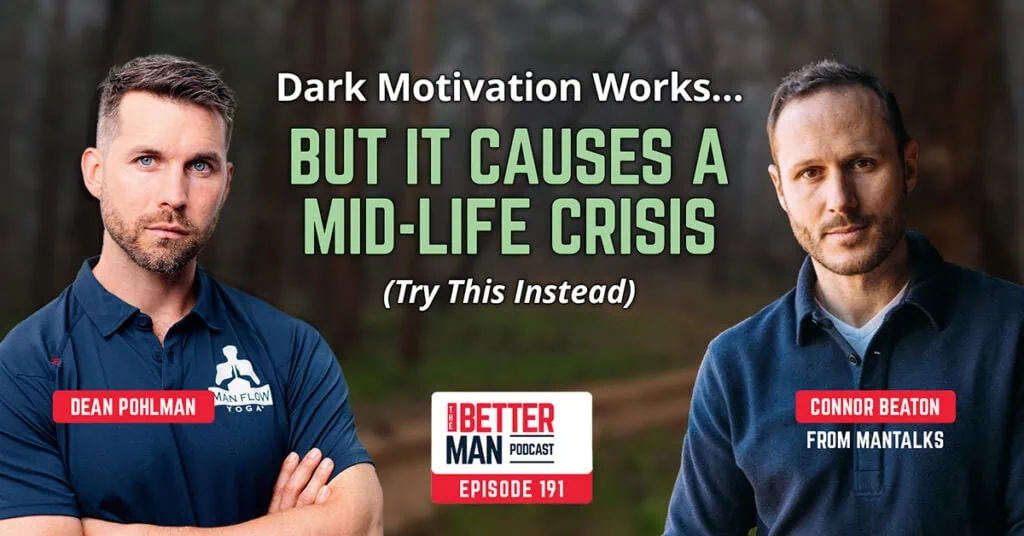
Dark Motivation Works … But It Causes a Mid-Life Crisis (Try this instead) | Connor Beaton from ManTalks | Better Man Podcast Ep. 191
Do you ever feel like you’re just wandering through life without a purpose, or stuck in the middle of a frustrating…
Fitness After 40: How To Start When You’ve Never Exercised (The Man Flow Yoga Catalyst Effect) | Bobby B. | Better Man Podcast Ep. 190
Turning 40 was Bobby’s wake-up call. After a lifetime of skipping workouts, a doctor’s visit revealed warning signs in his blood…

Gut Health Goes Way Deeper Than Weight Loss | Ben Brown (Founder of Body Systems Coaching and Head Nutrition & Fitness Coach) | Better Man Podcast Ep. 189
Gut health impacts far more than weight loss—it directly governs your energy, immunity, and mental well-being. If you grew up in…
Moving From Your Survival Path to Your Soul Path | Caleb Campbell (Former NFL player & West Point graduate) | Better Man Podcast Ep. 188
If you’re an endlessly striving achiever, you know the path forward lacks clarity. Former NFL linebacker Caleb Campbell used his feelings…

The Ethics & Use Cases of AI | Ted Phaëton | Better Man Podcast Ep. 187
The topic of AI is unavoidable. Ted Phaeton, productivity coach and host of the Modern Man Podcast, joins the show to…
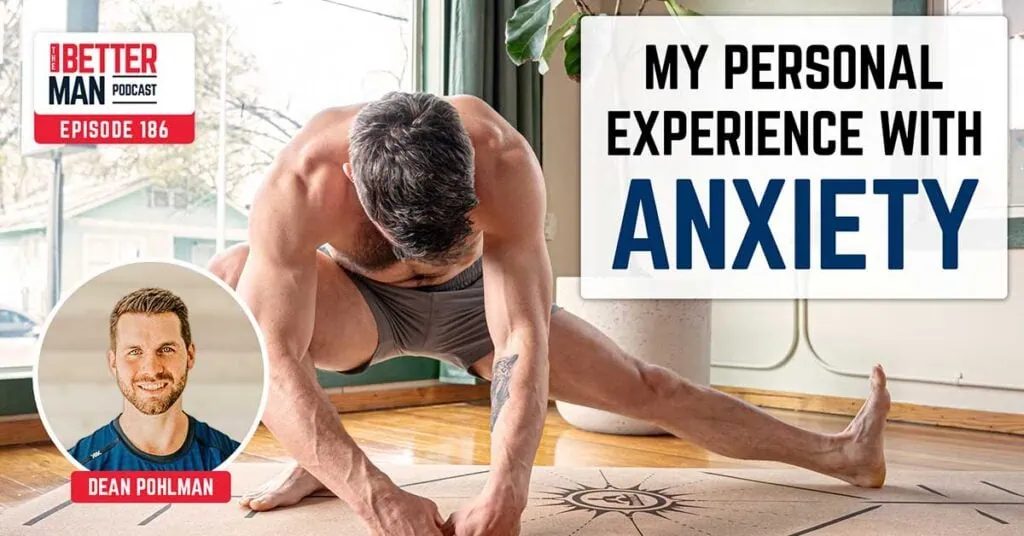
My Personal Experience with Anxiety | Dean Pohlman | Better Man Podcast Ep. 186
After an accidental mushroom trip triggered a panic attack, I realized I’d actually been living with low-grade anxiety my whole life….