After an accidental mushroom experience, I experienced a panic attack and realized I’ve been living with low-grade anxiety for far longer than I realized.
And so, over the past couple of years, I’ve been on a winding and tumultuous emotional journey. It hasn’t always been a linear path of growth either. I’d make some progress, then tumble down. I’d think I’d beaten it, but then it came back.
But the process taught me a lot about myself, about my subconscious beliefs, and what to do when my emotions are overwhelming – both for short-term emergency fixes to get me through the day and long-term strategies to address the root cause of it.
Anyway, I dive into the full details in this episode.
But the reason I turned it into a podcast is because I know a lot of men are going through similar things.
Whether your anxiety influences your decision-making, interrupts your presence, or turns into a full-blown panic attack … or you’ve pushed down your emotions in exchange for unhealthy (or even healthy) coping strategies, today’s show will give you new (and hopefully more effective) ways to think about and approach your emotional health.
The Better Man Podcast is an exploration of our health and well-being outside of our physical fitness, exploring and redefining what it means to be better as a man; being the best version of ourselves we can be, while adopting a more comprehensive understanding of our total health and wellness. I hope it inspires you to be better!



Use the RSS link to find the Better Man Podcast on other apps: http://feeds.libsyn.com/404744/rss
Episode 186 Highlights
- The weird way I used work and productivity to hide myself from my emotions (and how to tell if you’re also doing this) (4:58)
- How stepping out of my head and into my body was the #1 most helpful thing to stopping my frequent panic attacks and low-grade anxiety (9:25)
- Why exercising worked better for emergency relief from panic than busy work or mindfulness (12:03)
- A new way to think about anxiety that reduces some of your fear around it (16:33)
- How I came to realize I struggled with anxiety my entire life (and why I went most of my life without realizing it) (17:27)
- How to actually get out of your head and into your body (this was particularly tough for me – and I’ve heard similar things from other guys too) (23:08)
- Why treating your emotional triggers as gifts empowers you over fear (42:00)
Hey guys, it’s Dean. Welcome to the Better Man Podcast. And today is a solo episode. And I’m going to be talking about my struggle with anxiety. And this is probably the most personal episode I’ve ever done. And I say that because this is something that was incredibly scary to me. It was probably the most challenging thing I’ve ever had to deal with mentally.
Emotionally, it was in many ways an existential crisis. And it it was it was a long experience. And so in this episode, I am going to kind of talk about my own experience with anxiety and just how crippling it was. And everything that I kind of went through the, you know, what day to day life was like living with anxiety for, you know, extended periods of time.
And then I’m going to talk about what I actually did to help move through the anxiety. So the different strategies, the different tactics I really I used and, you know, which helped me get through this, the first of which were focusing on kind of emergency, relief from panic. And then the second of second group of categories, which were focused on the deeper causes and the root of the anxiety.
I’ll talk about what I ultimately learned from the anxiety and through trial and error and many months, how I was able to get through it and I think get through it, you know, we’ll see. But I think get through it for good. And how I came out better on the other side of it. And what I really hope to teach you through this is to give you tactics that you can use yourself to deal with anxiety if you’re struggling with it.
Now, if you’ve been struggling with your entire life or if it comes up, you know, later in life. And also let you know, about a yoga for anxiety program, which I released based on my own experience with all of this, which combines yoga, body and breath awareness and anxiety specific coaching to help you with managing your anxiety symptoms.
So that’s some of those workouts are free on YouTube, and there are also longer full versions of those workouts in the mental yoga app and members area. All right, so where do we start this thing? So I have just so you know, I have notes that I’m kind of going off of, but I also am going to be kind of going this kind of free form because that’s how I like to talk.
Anyways. I don’t like to give you a super straightforward bullet point thing. It doesn’t feel, you know, real to me. So, and I also, I’m going to be honest to say I’m not going to share everything because I don’t want to, and I think that’s enough reasoning. So my anxiety started in response to, an accidental psilocybin dose, and I say accidental because I thought I was taking a microdose and it turned into a full on trip.
And it started off as like, oh, this is kind of a weird feeling. And the thoughts in my head just started getting louder and louder and louder, and I eventually stopped having the ability to respond to the thoughts. And that was the first time that I’ve ever been in a situation where I could not talk to the thoughts that I was having, basically lose the ability to have dialog with the intrusive or the doubtful thoughts that you’re having, and those thoughts just overwhelm you.
And so that was a new experience. And so what followed from that event was, and how do you take a like, how do you take an accidental microdose? I took a chocolate. I took a, a chocolate that had some psilocybin in, and I thought I would get this little buzz, this little tingle of, oh, I’m one with the universe.
And that did not happen. That is not what the what the mushrooms wanted to show me. So, that is that is that is what happened. And so the anxiety that followed that event was largely a fear of having another panic attack. And it took a long time to get through that first wave of panic attacks and anxiety.
I remember I had, you know, I had frequent panic attacks. I think it was like every few days. And there was always kind of this low level of anxiety that was just present. I had difficulty focusing on things, especially when I was not doing anything busy or productive. That was when I would get kind of overwhelmed by the thoughts.
So I found myself kind of unable to have conversations with people. Were unable to be present with my family. I remember being at dinner and just sitting at the dinner table. Was probably the most anxious time that I had. And so there were these, you know, these these period. And I also couldn’t I couldn’t eat for some time.
So, sometimes I just wouldn’t have an appetite at all. Other times I could eat, but my stomach would just kind of rejecting. So I would just essentially exit everything. I would have diarrhea. And so I just everything just kind of came out, okay. Just came out. It wouldn’t stay in my stomach. Didn’t want to hold anything.
And that was the first time that the stress kind of moved out of the back of my head and neck and shoulders and moved into my stomach, and I used to kind of joke with myself at that time like, well, it the stress was okay when it lived in my head and when it lived in my shoulders and neck, but as soon as it got to my stomach, it was like a way of saying, okay, now you have to deal with it, otherwise you won’t be able to eat.
And that’s true. So is it. You know, when I first recognized what was happening, I was like, oh, wow, this is this is this is pretty bad. But, you know, maybe I can maybe I can handle it on my own. I didn’t have a therapist at the time, so I didn’t really have anybody who I could reach out to.
I think I did email a therapist who I had recently parted ways with. He had been a therapist for a long time, but I felt like we were not really making progress. And so I emailed him and didn’t really receive a response and said, hey, I’ve got some anxiety going on, some pretty significant society and some panic attacks going on.
In response to, accidental mushroom trip, bad trip thing. And, he didn’t respond, unfortunately. I had some friends who were familiar with with mushrooms, who I was kind of having a group chat with, and sometimes I would talk with on the phone to, you know, kind of try and work on things with. And that was sometimes helpful.
And then on my own, I was doing a lot of journaling. I was, I was talking with my wife. She really stepped up during that time and tried to help me make sense of everything and was a really great support system. For me, probably too much. So looking back, I think I put too much on her and that caused her to not feel as safe with me as I, as she would have wanted to.
So looking back now, I kind of regret not getting more support, and putting all of that on her at the same time. I think it was important that she understood what I was going through because I didn’t want to be disconnected from her. But it was it was it was challenging, I’ll say that. And, so then I had, so then the panic attacks kind of wouldn’t, wouldn’t go away.
And I realized, okay, I’ve got to do something about this. And so I went looking for, I went looking for therapy. And based on my experience, I knew that talk therapy wouldn’t do it. So traditional, you know, cognitive behavioral therapy wasn’t going to help me get through this. I also had some people who, you know, are in the health and wellness space who I could ask for advice and so I started looking for eMDR therapy, which is, eye movement and rapid eye movement.
I can’t remember what it actually stands for. But it’s a bit it helps go beyond the thought and kind of into the body. Helps with rumination, helps with anxiety a bit more than just talk therapy. So did eMDR therapy. I also, after a few months of doing eMDR and kind of not seeing the progress that I really wanted to, and ultimately realizing that I wasn’t getting to the root cause of things.
And I think the therapist I had just wasn’t as experienced as I needed. I, I got a recommendation to see a guy who focuses on somatic experience. And, and in addition to being a psychiatrist, also did medicine work. So was familiar with mushrooms. And so he was able to, he was able to help out, a lot more and able to help me kind of get out of my head and into my body.
And, and that is the biggest thing. And I’ll come back. I’ll come back to that throughout this discussion, by the way. But ultimately, the biggest thing that helped me was getting out of my thoughts and getting into my body and focusing on those sensations in my body. And that was what really helped. Hey guys, it’s Dean interrupting my own podcast to talk about magic Mind.
Magic mind is a caffeine supplement that I’ve been using for the last few years. It’s something that I use as a alternative to coffee some days, and also something that I use maybe right before I do a podcast or from a video as a way to get a energy boost without the crash that usually accompanies caffeine. If you want to try it out.
I put a link in the show notes below, but it’s a nice little supplement. It’s a drink. Two ounces that you can take just for a little boost of energy. A little more focus throughout your day. Give it a shot. Let me know what you think. So the therapy was, you know, the most important part of all this, that was the getting to the root causes of the anxiety.
That was the long term solution. But as I’m going, you know, day to day life, you know, managing all the different responsibilities that I have, I’m, you know, life doesn’t stop. I’m I’m still, you know, managing, running mental yoga full time. I’m making videos and managing the team. I’m making this podcast, you know, helping customers like all these different things that are going on at that time.
But I’m also, you know, I have responsibilities at home. I have a I believe Malia was a year and a half at this time. So I had a one and a half year old and a four year old at this time. So, you know, young kids are a lot and then, you know, my wife, and then all my other responsibilities and, you know, things that I help out with, like laundry, cooking, you know, cleaning, all that stuff.
And so, you know, life didn’t stop. And so I had to find emergency relief that would just help me get through things. So this was when my exercise habits really helped me. So, you know, going on walks, doing yoga, lifting weights. These are all things that were, really helpful. And I, and I think these were more helpful than, things that were just busywork.
The difference was when I was doing busywork and this could be, you know, work with men for yoga. This could be, you know, doing dishes or cooking when you’re doing busy work, your mind is focused on something else. And so it gives your mind a kind of a break from the intrusive thoughts that you’re having, from those anxious thoughts that you’re having.
But as soon as you stop doing that busy work, you go right back to the anxious thoughts are just kind of waiting for a window. And so as soon as you stop, whatever that busy activity is, the thoughts come right back. And so, you know, those were things that had to get done, like working, you know, doing housework, cooking, whatever it was.
Picking up the kids, you know, all that stuff so that that stuff all had to get done. But it’s only delayed the inevitable of the anxious thoughts coming back. Whereas when I would do kind of, you know, more physical activities when I was walking, when I was doing yoga, if I was, you know, exercising, lifting weights or hiking or whatever, that gave me a chance to be with the thoughts, be with the anxious thoughts, but kind of in a more in a better environment when it was more conducive to me being able to be with those thoughts and be okay.
So a lot of what I was doing for the emergency relief was just working on being okay with the thoughts, just working on not engaging with them, not really. You know, you know, and at times this is really difficult because the thoughts are kind of just screaming in your head, right. There’s not like, right. They’re just very persistent.
It’s, it’s, it’s and those thoughts are your brain’s way. And as I, you know I went through this process I learned a ton about anxiety and rumination. And the anxiety is your brain. Ruminating is your your brain’s way of trying to solve the problem. It’s like, oh, if I can outthink this, if I can create logic from this, then I can, I can, I can fix it.
And unfortunately, anxiety is usually not something that can be fixed with logic. So you just end up going on this loop in your head. That’s what rumination is. You can’t just go on this loop over and over, and sometimes you get to the point where you’re so tired of ruminating that you eventually just give up, but it doesn’t ultimately solve the thing.
Yeah, sure, you might get tired and it ends, but it doesn’t solve the thing. So there were a lot of anyways. So there were there were exercise during exercise, during walking, during these other things, I was able to kind of be present with those thoughts and practice ignoring them. But I want to go kind of into the, the long term, the long term solution, which was therapy, because if you’re having some sort of anxiety, if you’re having ruminating thoughts, if it’s showing up and getting in the way of you, you know, living your life, then that’s something that you need therapy for.
It’s probably not something that you’re gonna be able to deal with yourself. There are definitely tactics, and there are strategies there, activities that you can do to help managing anxiety, you know, so those are things like walking, things like, you know, exercise that’s like breathwork journaling, you know, talking with friends, but ultimately with you need expert advice.
This is a medical condition. You need expert advice to be able to actually work, through, the anxiety. So, you know, a couple months into it, I, you know, a couple of months into the anxiety, realize, okay, I need expert help here. I found a therapist. I started, started working with, and, someone a therapist to practice eMDR and, we started trying to make, make sense of, you know, of the anxiety.
What was it trying to tell me? Because ultimately, your anxiety is trying to tell you something, right? It’s there because it is trying to solve a problem. And so this is when I started to, you know, this the therapy is when I started to learn more about anxiety, learn more about how it directly applied to me and learned what the thoughts were ultimately trying to tell me what they were trying to prevent from happening.
And through this process, I realized that the anxiety was just trying to protect me from my fears of not being good enough, not being worthy, not being able to maintain the life that I had, this fear of losing what I have, losing what I’ve created, losing what I’m proud of. And even though the thoughts were manifesting in one way, what I was ultimately getting at was this fear of not being, not being enough, and not being able to have the life that I had.
And then kind of tracing back the anxiety to where it started, it was able to make sense of, oh, this is where this came from. And oh, this is how it’s been showing up in my life. And I didn’t even know it was showing up in my life. And, you know, after going through that process and understanding where the anxiety came from and how I had been feeding into it with my own thoughts and actions, then it made total sense in hindsight why it came up to begin with.
Now it’s like, oh, wow, of course, no wonder you had anxiety. You know, like you were spending so much time and energy and effort and thought, trying to make sure that you wouldn’t fail, that you were worthy, that you were good enough, that you’d be able to maintain what you have, that you fed into this beast and it came out when I did, you know, it came out when I did, did the accidentally did I say accidentally?
Because accidentally, you know, had that accidental, trip or journey and, and my walls, my defenses were lowered enough that it came through. It’s looked at like, hey, what’s this thing? And grabbed it, you know, and basically grabbed me and kind of and I’ve heard this, this is how it’s described. It’s kind of like picks you up and kind of like kind of picks you up and puts you against a wall and says, why is this?
You know, and it wasn’t like this kind voice. It was this is very, you know, mean, very like shouting. And I also learned to this process that that was not like the divine or the universe speaking to me. That was my own inner psyche. The critic calling, you know, speaking to me and, understanding that was part of what, you know, got me through, all this.
And so. The other part of, you know, my own treatment here was journaling. There was a lot of journaling. Sometimes it was just me writing out random, you know, whatever. I was randomly thinking about whatever was going on in my head and and getting it out of my head and getting it onto, onto paper. Sometimes it was trying to make sense of it.
It was trying to kind of connect breadcrumbs, you know, like connecting like, oh, well, maybe I’m thinking about this because of this. And I would think back to, you know, experiences that I had as a kid and or like maybe, you know, protective behaviors that I adopted as a child just to fit in, which is something that everybody does.
And and so part of it was that, and it was out there was there’s a lot of journaling. And that was, that was helpful. That was kind of a tactic similar to, you know, exercise, similar to doing yoga, going on walks, help keep things at bay. It helps with immediate, you know, relief often. Sometimes it just put me back into it.
Sometimes it was, you know, it didn’t help. But, that was one of the other things that I, that I did that was absolutely essential to this process. I think journaling is second best to therapy. If you can’t have a therapist, then journaling is is what you do. It’s kind of like, I guess the analogy that I would like to make is if you have a personal trainer and you work out with him once a week, or her once a week, then you can do, you know, workouts on your own at other times of the week, but you probably need that, you know, one on you probably need that and you probably need that.
You know, that important one workout per week with the trainer, with the expert. And then, you know, your, your side workouts, which is your journaling to kind of complement that. Hey guys, it’s Dean interrupting my own podcast to mention Firm Tech. If you’ve heard of her interview for this episode before, this is basically an aura ring for your penis.
It helps you measure the health of your penis and helps you measure the strength of your erections, blood flow, how often you’re getting erections at night, which is great for sexual health as well as your overall health. If you’re interested in learning more, check out the link and a promo code that I have in the show notes. So going through all of this, you know, going through therapy, learning about anxiety from, from the therapist, having conversations that some of them were kind of informational, where we were like, okay, here’s what’s happening.
So kind of taking more, you know, a logical approach. And then other times it was more focused on, hey, let’s talk about, you know, why do you think this is the thought, that came up or, you know, what is, what do you what do you I don’t know, but what I eventually, one of the big thing that came up and the I think the, the thing that really helped me, the most with anxiety, with all of this was getting out of my head and getting into my body.
And what I mean by that, I talked about this kind of earlier, anxiety tries to solve itself by thinking about, right, you think about something in order to try and resolve the anxiety, and why the anxiety stays there is because it’s a thought that can’t be solved by thinking. And so the solution for me, I don’t, you know, I can’t speak to everybody, but the solution for me, and I would assume is for most people, because I’m not special, was to get out of my head and get into my body.
So the at first that didn’t really make a lot of sense to me. I didn’t understand how I, I just didn’t I just didn’t know how to do it. And so over time, with practice, I started to get very good at being able to notice when I was ruminating or when I was thinking about something, and then being able to go into my body, noticing where that fear or the anxiety was coming up in the body and then spending time with it.
And the way I like to describe it is focusing on the sensation in the body, as if that was the solution. So instead of believing that you’re going to think yourself to the solution, you’re going to somehow, you know, come up with the solution by thinking about it, the the solution instead. There was no solution. The solution was just to experience the emotion, or the feeling, the sensations in the body.
And so, you know, I would I would sometimes I would journal about it, sometimes I would just sit there and, you know, just feel it. But it would be usually for me, it would be this, kind of this, this, this dull, aching sensation in my chest. Or it could be this, this burning sensation back of my head or my neck.
And it was rather than explaining what was behind that feeling or that emotion, it was trying to describe the physical sensation. So it was like, oh, that’s oh, that’s a very it’s deep, it’s intense, it’s burning. It’s a stabbing. Maybe it’s dull or throbbing.
Usually I would try to attach an emotion to it. It would say fear, or it could be shame or it could be, I liked, one, one, one feeling that came up a lot. Was this this, this feeling of expectations, this feeling that I had to fulfill a certain standard or to be good enough and in a certain way.
And there was this, this feeling of expectation there. And so over time, as I practices, I got a lot better at it. And, you know, initially I had to spend minutes and minutes just focusing on the sensation and usually I would forget that I was focusing on sensation, and I’d go back to rumination and trying to outthink the problem.
And then over time, I got really good at being able to feel it and focus on it. And for the intensity of that feeling to go away, to dissipate relatively quickly. So, you know, now when I feel, you know, an intense feeling and I find myself ruminating or kind of pondering something, I can go into where I feel that coming up in my body and I can spend 15 30s and notice a profound drop in the intensity of whatever the problem was.
It’s not that the problem goes away, you know, it could still be there if, I mean, and it might be something that actually requires attention. But what it does do is kind of remove the emotional intensity. That’s behind it. And so it feels easier, to deal with. Hey guys, it’s Dean interrupting my own podcast to tell you about some upcoming mental yoga events.
We have wellness weekends that are happening in Phoenix, Seattle, and Atlanta. If you’re interested in joining me, they’re meeting others within the man for yoga community. This is an amazing weekend full of yoga improvements, inspiration for your fitness and community connection. Link is in the show notes. Super early bird is going on now. You know I don’t want to spend too much time talking about this, but that was also the, you know, so the experience with the these different practices and kind of this, this, this what I learned about anxiety and kind of the coaching that I was coach through and kind of the self practices that I had mentally to and emotionally and physically
to kind of work through them is what inspired me to create the yoga for anxiety program, which is, you know, this is the kind of things that I did with myself during this period to manage the anxiety symptoms. I won’t say they solve them, but they did help manage. They were a complement to the therapy. It was was focusing on my body, focusing on my breath, focusing on, you know, how does that how does the fear, how does the anxiety, how’s this?
How does it show up? And as a physical sensation in the body, sometimes the approach involves being passive with the anxious thoughts. Right. You’re just kind of ignoring them. Sometimes it is asserting yourself over them. Sometimes it’s saying not here, not now, right? It’s kind of saying, hey, like, we’re going to deal with this, but not right here and not right now.
Sometimes it was just being like, sometimes it was just trying to get out in front of the anxiety because ultimately anxiety is trying to solve something. So instead of listening to the specific thing that the anxiety is saying, it’s going to, well, what is it trying to protect me from? Right? In this case, for me, it was trying to protect me from not being loved.
It was trying to protect me from not being good enough. It was trying to protect me from, not having a life that I did. And so I would say, like, okay, you’re worried that I’m not going to be able to be successful or have the life that I do. And I would look at the life that I have and I would say, I have this life right now.
This is what’s true in the present. And that would be something that I could do to kind of ground myself. So all of this is focused on all of these things that I learn, and all of these things that were helpful to me were ultimately about getting out of my head and getting out of thinking about the future and getting into my body, getting into physical sensation in the here and now and coming out of that, coming out of that situation.
Because I had, you know, this all started in, but September of 2024 and it probably did not the first kind of round of anxiety probably did not subside completely until February or March of 2025. So I was in this for a really long time, and I was still doing, you know, most of my things, like I was still able to be, mostly present with, with work, I was able to get things done.
I was able to, you know, work out to and but I really struggled with being present with my family. That was a really tough time for me. And that, in that area of my life, it was just very difficult for me to, you know, look at my wife or to look at my kids and not go to whatever ruminations I was experiencing.
So that was a really, really tough time. But eventually I came out on the other end. And, you know, I had my first couple of days where I didn’t have any of those physical anxiety symptoms of the things that would kind of like activate me and kind of make me go into woe. Right. And it’s kind of those sensations that start anxiety.
And so for some people, you know, it’s like a tingling in the hands. It’s it could be like a feeling in the stomach. It could be like a burning sensation in the back of the head. It’s honestly been, a long time now and I don’t remember, what it was for me that started physically, which is I think is a good thing, but I think it was like this tingling, burning sensation in the neck or some tingling in the fingers and maybe like a drop in my stomach.
And so it was like going through the first few days where that didn’t happen in response to things that would usually, you know, trigger me, things that would usually, like, bring up this fear of worthiness or this fear of, of not, you know, being good enough. So being having those days, first few days where it wasn’t happening was like, Holy shit, this is amazing.
And, I had a brief little spell come back in June of 2025 was 25. Yeah. 25. Which went away pretty quickly after that. I realized, what I was kind of I realized and the reason that came back up was because I was kind of denying myself a feeling. I was kind of I had a I had an emotion that was trapped kind of in my body that I wasn’t experiencing, that I wanted to experience, but I was kind of holding myself back from experiencing, and, and then it came back again in, October and November of 2025.
So I had had a few months anxiety free. And then it came back again. And this was kind of in response, I think the the event that really set it off was, my dog dying. Kaia. And she had been we knew that she was she was going to die. It had been about a year since we had found, you know, a tumor and we had been operating.
We had been doing all of the surgery and all the things, thankfully, a pet insurance. So it wasn’t too terribly expensive. But we had been we had been, you know, we knew that we had limited time with her. And I felt like I did a good job of letting my emotions flow and letting the grief come out.
But, I guess there was still some stuff for the anxiety to resolve because it came back and I was like, Holy crap, it’s back. I thought we were done with this. You know, fortunately, this time around, I, I had I was much better prepared to deal with it. I had the tools. I knew what worked. I had a support system in place.
I had therapists, you know, I had people to talk to about it. You know, I had Marissa and it was not something that had to be explained to her. It was something that she understood. I think when it came back, you know, the second time, though, that was really difficult for her because she thought it was gone entirely.
And now it was back. And it was, you know, for her, it was it was it was challenging for her to feel safe with me.
With me not being at my best, me not being, you know, as stable as she had assumed I was. And so that was challenging for her. That was challenging for me. I think there’s still some of that, that exist today. Definitely not as much as there was. But I think it took some time, for her to feel safe with me again.
So that was that was challenging. But it was evident that I had not learned whatever the anxiety was trying to teach me the first time around. And so it came back, and this was when I got a different therapist. This was when I, you know, after working with the therapist that I had this eMDR therapist. This was when I ultimately, you know, checked in with my network and said, like, hey, this is not going away.
I thought this was done. What’s happening? And, I had a friend who recommended me to this, to this therapist, to this this guy who also did medicine work. And so he was familiar with this, and so I met with him, talk with him, and started meeting with him on a weekly basis for a few months. And that’s when we really started to practice getting out of sorts and getting into the body even more.
And so kind of understanding, you know, and also having the courage to face the fears, which has been a theme in my life. I’ve always I’ve always come out better on the other end when I have the courage to deal with the things that I’m afraid of. Unfortunately, I’ve had enough of those experiences where I have learned that going through the fear and being honest does lead to a better outcome.
And I’ve been lucky that, for the most part, all of those experiences just kind of also matched up with what I wanted out of life. So I’ve been fortunate there. I think, but it was still scary. And so, you know, being able to have the courage to face those fears and, you know, kind of practicing again, practicing feeling in the body, was really helpful.
Hey, guys. Interviewing my podcast to talk about rapid release. This is a mobility tool that I have been obsessed with for the last few months. It’s something that I use when I’m watching TV. It’s my go to pain relief tool. If I have muscle tightness or soreness, that’s causing pain, and it has been an amazing complement to my overall fitness and my mobility practice.
If you want to learn more, go to the link in the show notes below, and then use the Mental Yoga Code there for pretty nice discount. So there were new thought processes. There are new strategies that came with working with this therapist and and it helped, for a while. But at a certain point, I realized I had to get out of the, you know, the, the thought phase once again and get back into what’s going on in my body here.
You know, I already I know the truth. I know it’s I know what my anxiety’s trying to tell me. So I don’t need to ruminate on this anymore. Right? I don’t need, I don’t need to allow myself to ruminate. And so it was, again, like, kind of getting out of that rumination, getting back into the physical sensation of the body.
That that helps with that. And then it was also recognizing that, you know, to trust in the things that were also helping me. This was a time where I got, where I realized, like, you know, my, my daily walks and doing yoga more consistently and doing it in a way that helped calm me, you know, not doing like these super intense yoga workouts, but really waking up in the morning, and doing these very easy, relaxed, breath focused, you know, stretches, basically, I would lie down on my back, and I would start breathing, I would slow down my breath.
I would bring my, you know, I do it something like a reclined twist right through my legs to one side. And I’d stay there and I’d go to the other side. These were very, very simple physical movements. They were not demeaning at all, but they allowed me to kind of transition from that rumination to going into the physical sensation in my body and getting to that point where the anxiety kind of backed off and released.
So this is a time when I really developed, a reliance on, you know, that type of yoga practice to help with anxiety. And again, that’s kind of that was the inspiration of the yoga for anxiety program that I created, which, you know, kind of it’s kind of funny that I didn’t use it as much the first time.
Right? Because this is what I do. You know, I’m the yoga guy, right? And, I remember I remember a few months ago getting ready for the Be the Better You retreat, which was in April. So April 2026. And around this time I was still kind of I still had some anxiety. I wasn’t like, totally out of the woods again yet.
And, and so I was kind of concerned about, like, going to this, you know, this retreat, hosting this four day retreat and thinking like, shit, am I going to be able to do this? Am I going to, like, keep it together? Or is going to be something that triggers me? And, it was very, and I remember that day, you know, getting ready and getting your stuff packed and feeling really overwhelmed and like, crap and, I thought to myself, you know what I should do?
I should go do yoga. And I did, and I went and I did, you know, about I think I did like 20 minutes of yoga and there’s there’s usually a point when you get like a few minutes into it where you’re really focusing on your body and your breathing. There’s usually a point where the thoughts stop flowing, right where you get to that silence in your brain.
And all you do is you notice your body, you notice your breathing. But suddenly the stream of thoughts have stopped. And I find that if I can get to that point and just spend a couple minutes there, then the anxiety, you know, that goes away entirely, or it goes away, you know, dramatically. And so I did that felt a lot better once the retreat had an amazing time, you know, had an amazing experience, was able to, you know, facilitate the experience, but also was able to be a participant myself in many ways.
And then, I think.
Yeah. And then after, after that, I still had, you know, I still had some anxiety on and off. And what ultimately helped me, you know, part of it was, you know, this, part of it was the, like I mentioned, really getting out of the head, getting out of the body. But the other part was really you finding the things that were scary to me and then leaning into those, activities.
And so whatever it was that gave me anxiety or whatever it was that triggered me, those were the things that I lead into, leaned into. And so I’ve heard this. You’ve heard this phrase before. Triggers are gifts. I actually had an interview with this guy on the podcast. I think his name is Emilio. I can’t remember what his last name is, but I interviewed this guy on the On the Better Man podcast a couple of years ago, and, he said the same thing that triggers are gifts.
And it’s absolutely true. You know, the things that set you off reveal what need to be worked on. And so, you know, looking at the things that triggered me, that things that made me scared and then leaning into them and doing whatever the action was that was associated with it, is what showed me like, oh, I didn’t actually have to be scared of this.
And so it was when I really started to do those things that scared me that I was able to, you know, really move through the anxiety for good and that really only happened. I feel like last month, and I, I, I, I haven’t had any panic attacks for a very long time since before that, since before last month.
But I would still get kind of agitated by certain triggers. Certain triggers would kind of like, you know, perk up my nervous system. And being able to do the things that kind of scare me, that bring up those feelings of not being enough, not being a good enough, fear of being abandoned, doing them and realizing, oh, like, it’s fine.
That’s what allows me to kind of be at the point now where the things that used to trigger me, even if they trigger me just a little bit now they don’t trigger me.
And I has to say, has I hesitate to say they don’t trigger me at all. Because sometimes they cause a little blip in my brain. They’re like, oh, hey, that used to trigger you. But I don’t feel it physically. Like I used to. And so there’s definite progress there. So, you know, now I’m like, well, is it going to come back?
I don’t know, is it, is it gone for good? I don’t know, I feel like this time around I learned what it was trying to teach me. But, you know, the phrase, you know, we make plans and God laughs. So, I don’t know, what’s going to happen? But, overall, I’m, you know, I’m, I’m glad to have had the experience because what that accidental trip did for me was brought out something that I was deeply insecure about that was having, that was consuming a lot of my time, a lot of my energy, a lot of my subconscious, and unconscious behaviors.
And it forced me to resolve it. It took a long time. It took years. You know, so I in the. So people say there’s no such thing as a bad trip.
And I see both sides to it. I guess it was a bad trip in the sense that it caused a panic attack I didn’t have, like a mushy feeling that caused me to feel at one with the universe. It’s definitely a panic attack, but in the end it revealed something that revealed a fear of not being good enough in me that I needed to deal with.
That was manifesting itself in certain ways in my life that was causing me to, take this fear into account with my my daily, ideally actions and decisions and, that are now that I did it. So.
Well, thanks for listening for that. I hope it was helpful to you. If you’re dealing with anxiety now, whether it’s an ongoing thing, whether it’s something that’s come up in response to something new in your life, or something not new that you just realized was there, then I hope you take what I’ve mentioned here as practices you can utilize on your own.
Again, some of them and just emergency relief getting through the day, you know, exercise, walking, yoga or, you know, doing yoga specifically created for anxiety, which is that yoga for anxiety program I just released. And then the other part is the long term treatment, which is getting therapy, which is journaling, to help complement that.
So, yeah, I hope this is a good example of courageous vulnerability. I hope it inspires you to be honest with yourself and with others in your own life. People who deserve it, not everybody. And,
It has taught me that when I continue to, you know, to to feel what triggers me to, to lean into that rather than run away from it. To get out of my head and get into my body more, to be able to recognize rumination when it’s occurring and to, again go into my body to be curious about my thoughts rather than shutting them down.
And, yeah.
So thanks for listening, guys. I hope this inspires you to be a better man. I hope this inspires you to be a better, more honest. You and, I hope if you’re dealing with anxiety, you’re getting the support you need. So I will see you guys on the next episode. And thanks for listening. Take care.
[END]
Resources mentioned in this episode:
- Magic Mind: Magic mind is my favorite caffeine supplement for when I need an extra boost of energy. Try it here: https://ManFlowYoga.com/MagicMind
- Man Flow Yoga Events: We just announced new locations for 2026 in-person events. Find the full list of cities we’re coming to here: https://manflowyoga.com/man-flow-yoga-events/
- 3. Man Flow Yoga: Haven’t signed up yet? Start your 7-day free trial and see how yoga can eliminate aches and pains better than other types of exercise here: https://shrtlnk.co/kP8M7
Want to unlock more flexibility and strength, reduce your risk of injury, and feel your absolute best over the next 7 days? Then join the FREE 7-Day Beginner’s Yoga for Men Challenge here: https://ManFlowYoga.com/7dc.
Like what you’re hearing? Sign up for the mailing list:
Rate & Review
If you enjoyed today’s episode of The Better Man Podcast, hit the subscribe button on Apple, Spotify, or wherever you listen, so future episodes are automatically downloaded directly to your device.
You can also help by providing an honest rating & review over on Apple Podcasts. Reviews go a long way in helping us build awareness so that we can impact even more people. THANK YOU!
More Podcast Content
Dark Motivation Works … But It Causes a Mid-Life Crisis (Try this instead) | Connor Beaton from ManTalks | Better Man Podcast Ep. 191
Do you ever feel like you’re just wandering through life without a purpose, or stuck in the middle of a frustrating…
Fitness After 40: How To Start When You’ve Never Exercised (The Man Flow Yoga Catalyst Effect) | Bobby B. | Better Man Podcast Ep. 190
Turning 40 was Bobby’s wake-up call. After a lifetime of skipping workouts, a doctor’s visit revealed warning signs in his blood…

Gut Health Goes Way Deeper Than Weight Loss | Ben Brown (Founder of Body Systems Coaching and Head Nutrition & Fitness Coach) | Better Man Podcast Ep. 189
Gut health impacts far more than weight loss—it directly governs your energy, immunity, and mental well-being. If you grew up in…
Moving From Your Survival Path to Your Soul Path | Caleb Campbell (Former NFL player & West Point graduate) | Better Man Podcast Ep. 188
If you’re an endlessly striving achiever, you know the path forward lacks clarity. Former NFL linebacker Caleb Campbell used his feelings…

The Ethics & Use Cases of AI | Ted Phaëton | Better Man Podcast Ep. 187
The topic of AI is unavoidable. Ted Phaeton, productivity coach and host of the Modern Man Podcast, joins the show to…
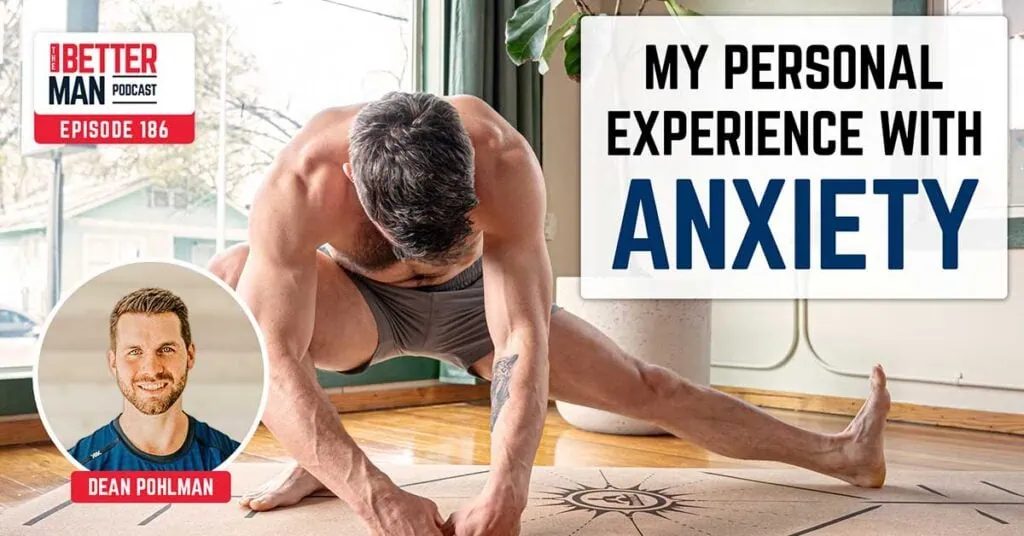
My Personal Experience with Anxiety | Dean Pohlman | Better Man Podcast Ep. 186
After an accidental mushroom trip triggered a panic attack, I realized I’d actually been living with low-grade anxiety my whole life….